
Haircut Styles
Drop Fade: The Curved Fade That Follows Your Head Shape
Short answer: A drop fade is a fade whose line runs level along the side, then curves downward behind the ear so it finishes low at the nape instead of wrapping straight around the back. The arc follows the occipital bone, which flatters most head shapes, keeps weight at the crown and suits curly, wavy and textured hair especially well.
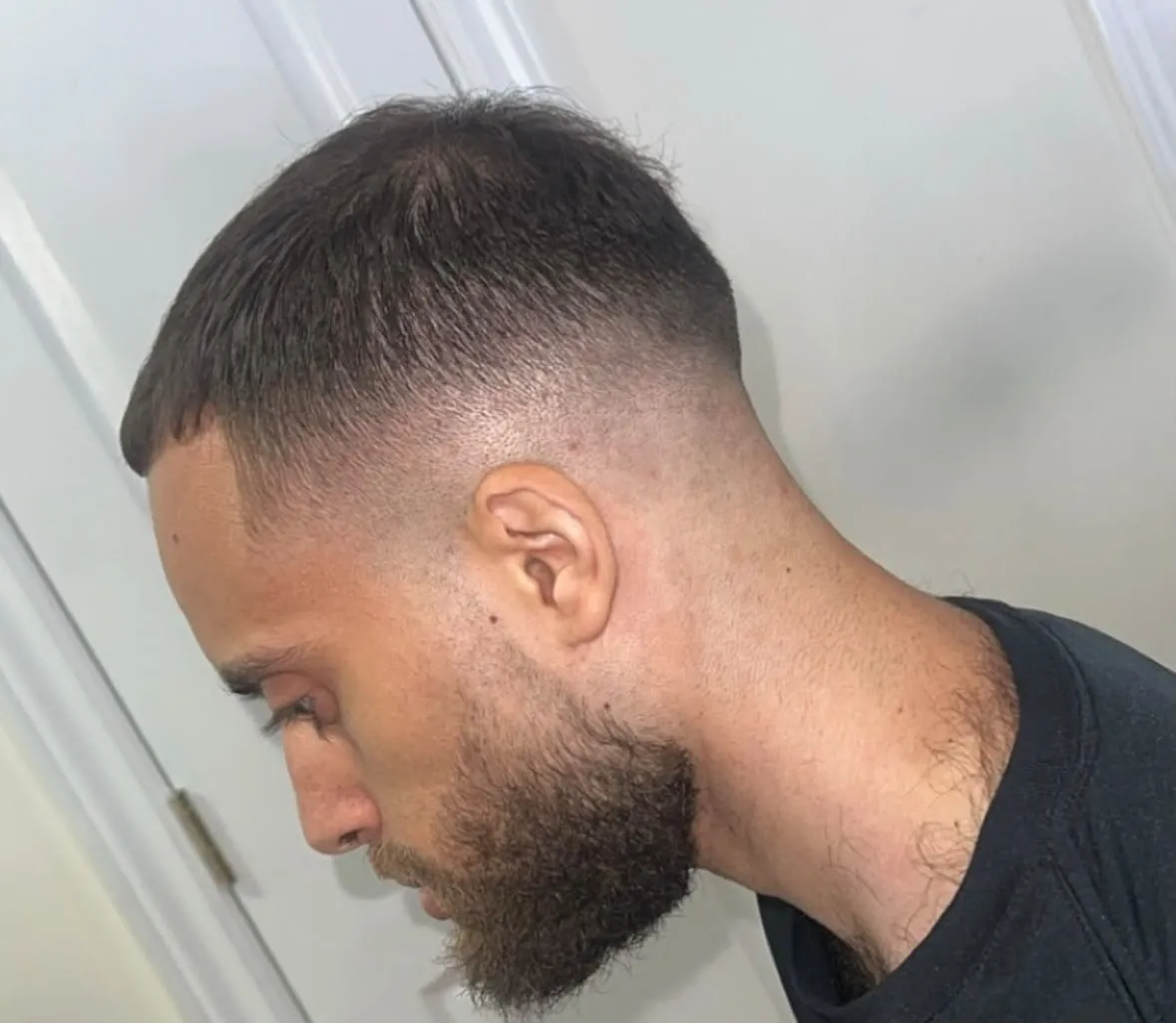
How the drop works: the arc behind the ear
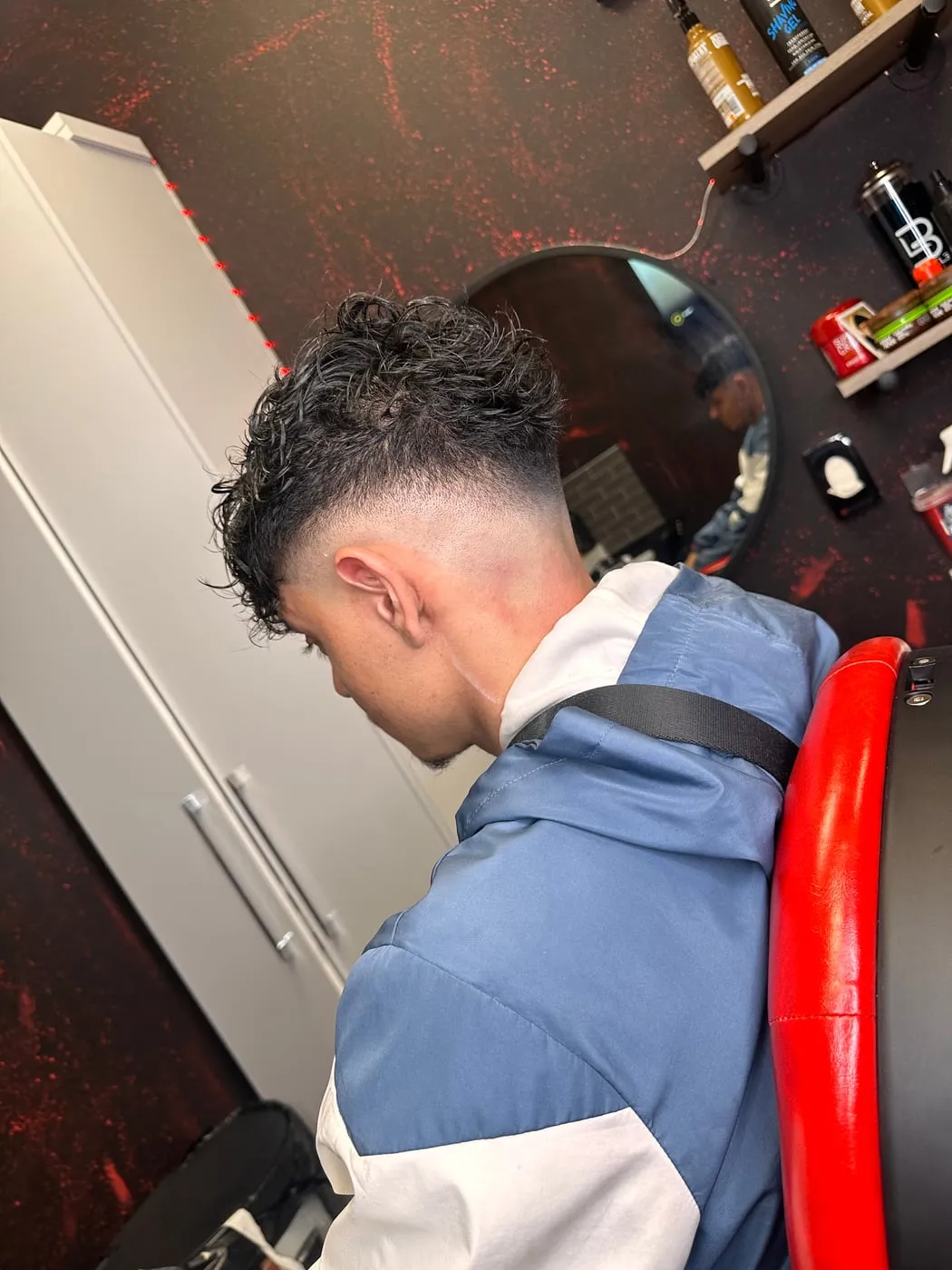
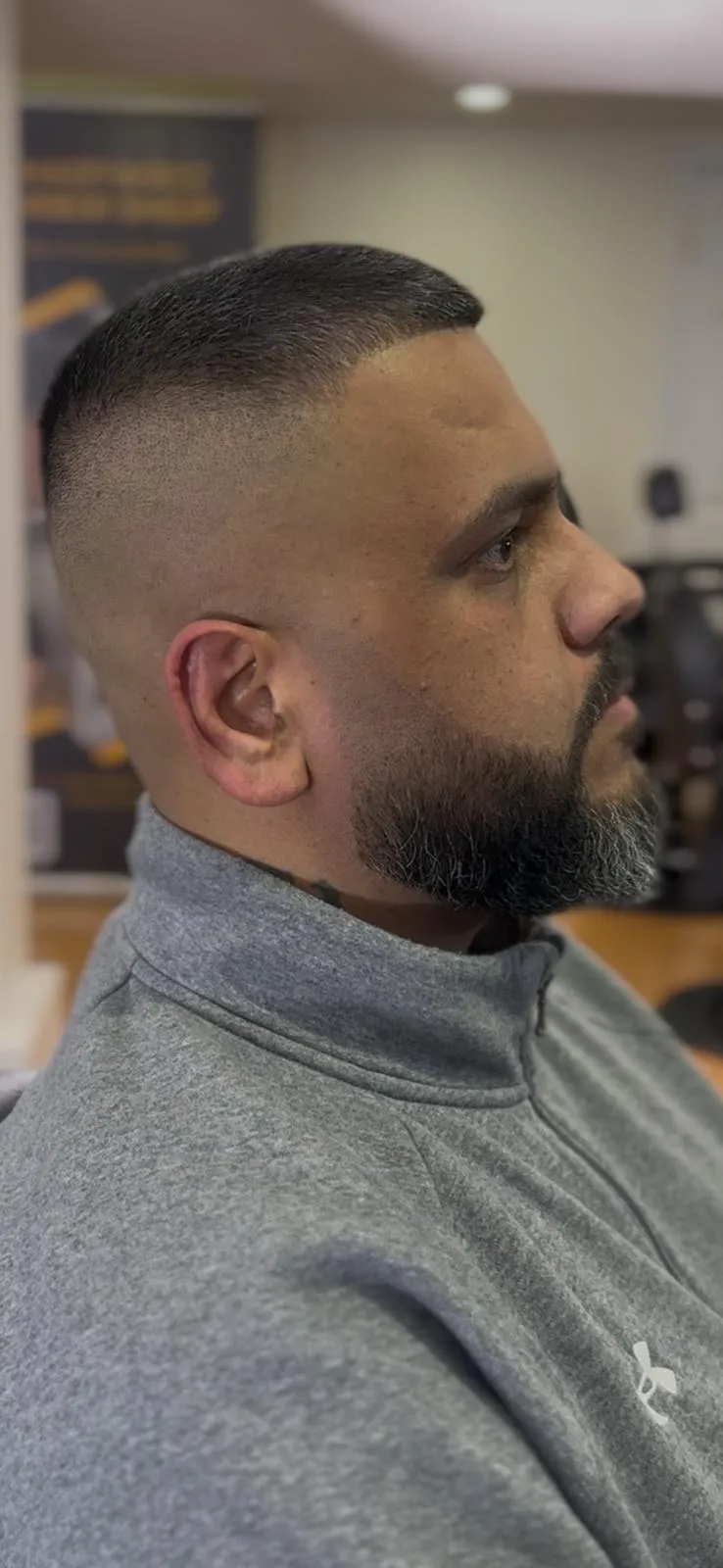
The defining feature of a drop fade is the downward curve behind the ear. From the front it looks like any low, mid or high fade, but as the line passes the ear it drops, like the bottom of a letter U, and finishes near the neckline.
That curve tracks the occipital bone, the bump at the back of the skull. Because the hair above the bone stays longer, the back keeps a rounded shape rather than being cut into a flat horizontal band, and the fade looks like it belongs to your head rather than being stamped on it.
Drop fades are one of Marcel Shabo’s specialties; the portfolio has several mid drops worth showing your barber.
Low, mid and high drop fades compared
Every drop fade has the same arc; the height only changes where the line starts at the side. The higher it starts, the steeper the drop behind the ear has to be.
| Version | Starts at the side | Look behind the ear | Good for |
|---|---|---|---|
| Low drop | Just above the ear | Gentle dip, subtle | Offices, first-timers, long tops |
| Mid drop | Temple line | Clear U-shaped curve | Most requested; curly and wavy tops |
| High drop | Near the parietal ridge | Steep, dramatic sweep | High contrast, short curly tops, waves |
Why curls and waves look better with a drop
Curly and wavy hair sits up off the scalp, so a straight fade line around the back can leave a boxy ledge of hair at the crown. The drop fade solves this by keeping length above the occipital bone, which lets curls fall into a natural rounded shape.
It also helps 360 waves and short coily cuts, where the back pattern is part of the look. Leaving the upper back fuller lets the wave pattern continue down toward the nape before the fade takes over.
Straight hair works too. The arc simply adds a bit of shape to what would otherwise be a flat back, which is useful if your crown sits low.
Head shapes that benefit most
A drop fade is a quiet fix for a flat back of the head, because it keeps weight exactly where the flat spot would otherwise show. It is also useful for people with a prominent occipital bump, since the curve goes around it rather than exposing it.
If your ears sit at noticeably different heights, the drop gives your barber room to adjust each side without the difference showing, since the eye follows the curve more than the level of the line.
Growing out a drop fade
A drop fade grows out gracefully because the longest hair at the back is already sitting over the bone. The curve stays visible for two to three weeks, then softens into a rounded short back.
If you are growing it out completely, ask for the next few visits to be just a neckline clean-up and a trim of the drop area. By about six to eight weeks the fade will have blended into the sides. The guide to growing out a fade covers the awkward middle weeks.
- Weeks 1 to 2: the curve is sharp and the skin at the nape is clean.
- Week 3: the arc softens; a quick lineup keeps it tidy.
- Weeks 4 to 6: sides and back read as a rounded short cut.
- Weeks 6 to 8: fade fully grown in; time to reshape or re-fade.
Drop fade or burst fade?
Both curve around the ear, but a drop fade continues behind the ear and down across the nape, while a burst fade circles only the ear and leaves the back long. If you want the back short, you want a drop. The full breakdown is on drop fade vs burst fade.
Book either as a Haircut Only through our skin fades service; the consultation, lineup, hot towel, wash and head massage come with it.
Drop fade: common questions
Is a drop fade the same as a low fade?
No. A low fade runs level around the back; a drop fade curves down behind the ear. You can have a low drop fade that combines both.
Does a drop fade work with a beard?
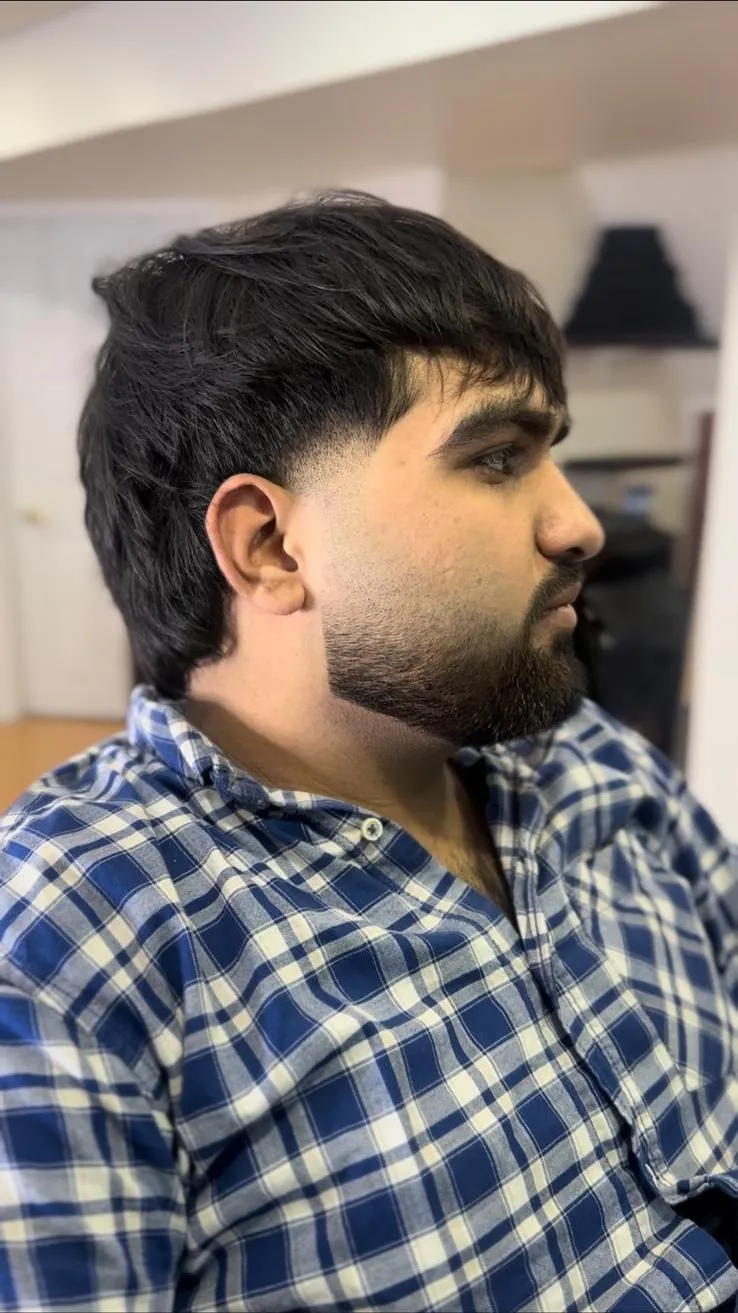
Yes. The front of the fade blends into the sideburn and beard the same way any fade does; only the back behaves differently.
Can I get a drop fade with straight hair?
Yes. It adds shape to a flat back and pairs well with a textured crop or quiff on straight hair.
What guard is used in a drop fade?
The bottom is usually skin or a half guard, blending up through a 1 and 2 to whatever length the upper sides are, often a 3 or 4.