
Style Comparisons
Drop Fade vs Burst Fade: The Shape Behind the Ear, Explained
Short answer: A drop fade curves down behind the ear and keeps going around the back, so the whole nape is faded low. A burst fade makes a semicircle around the ear only and stops, leaving the hair at the back of the head long. Choose a drop fade for a full, clean perimeter under most tops, and a burst fade when you want length at the back, like a mullet, mohawk or curly top.
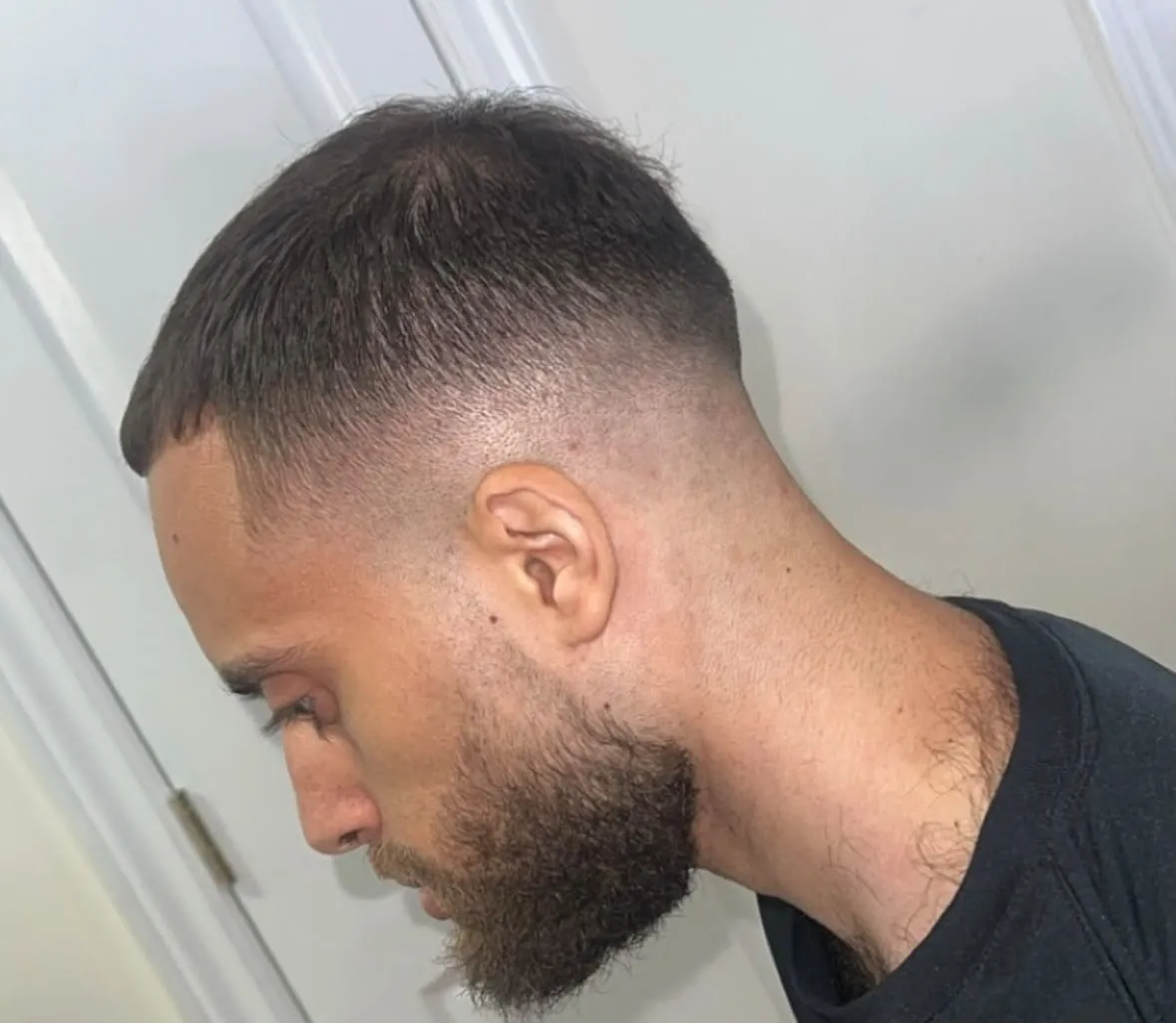
The key difference is what happens at the back
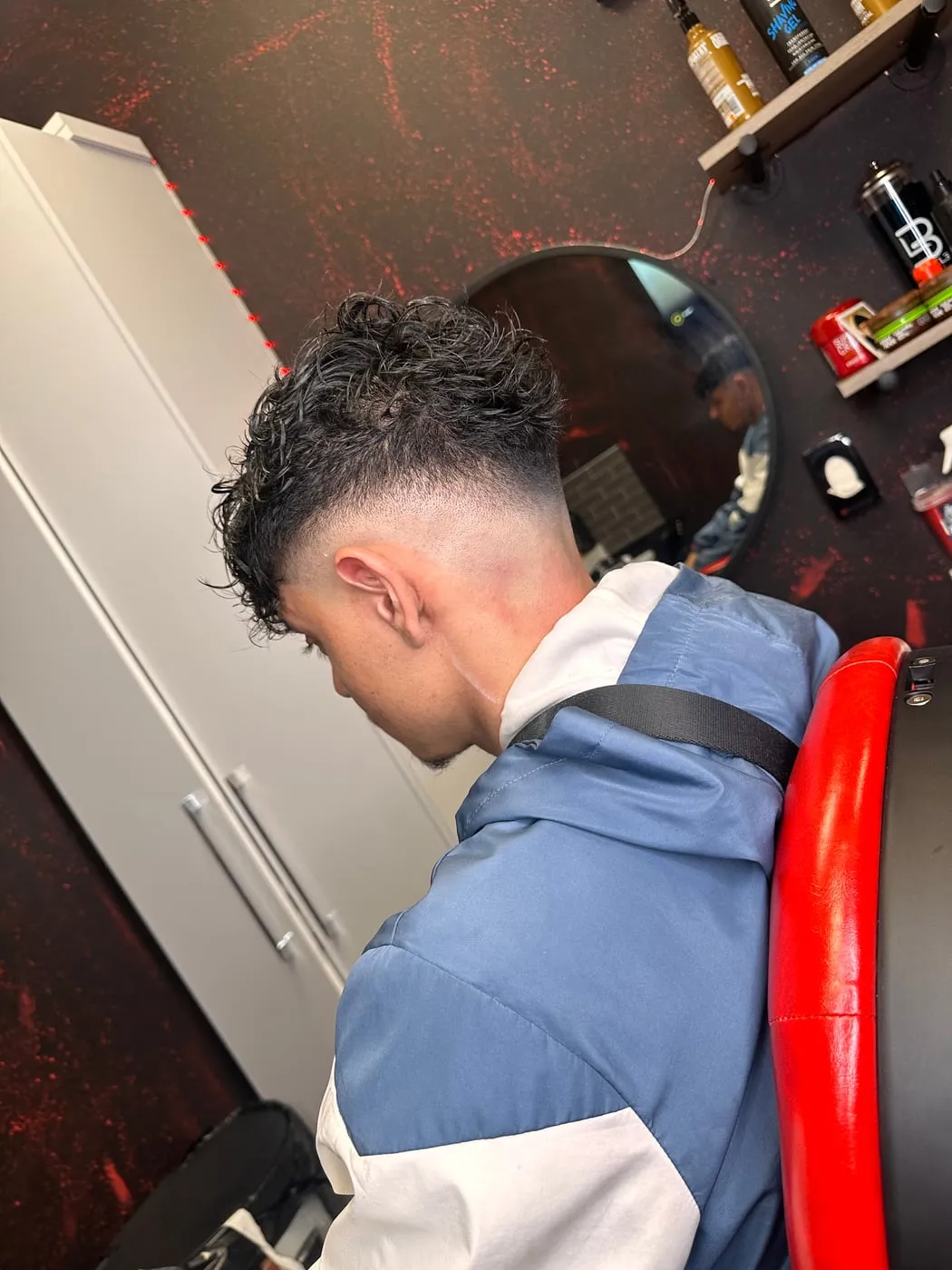
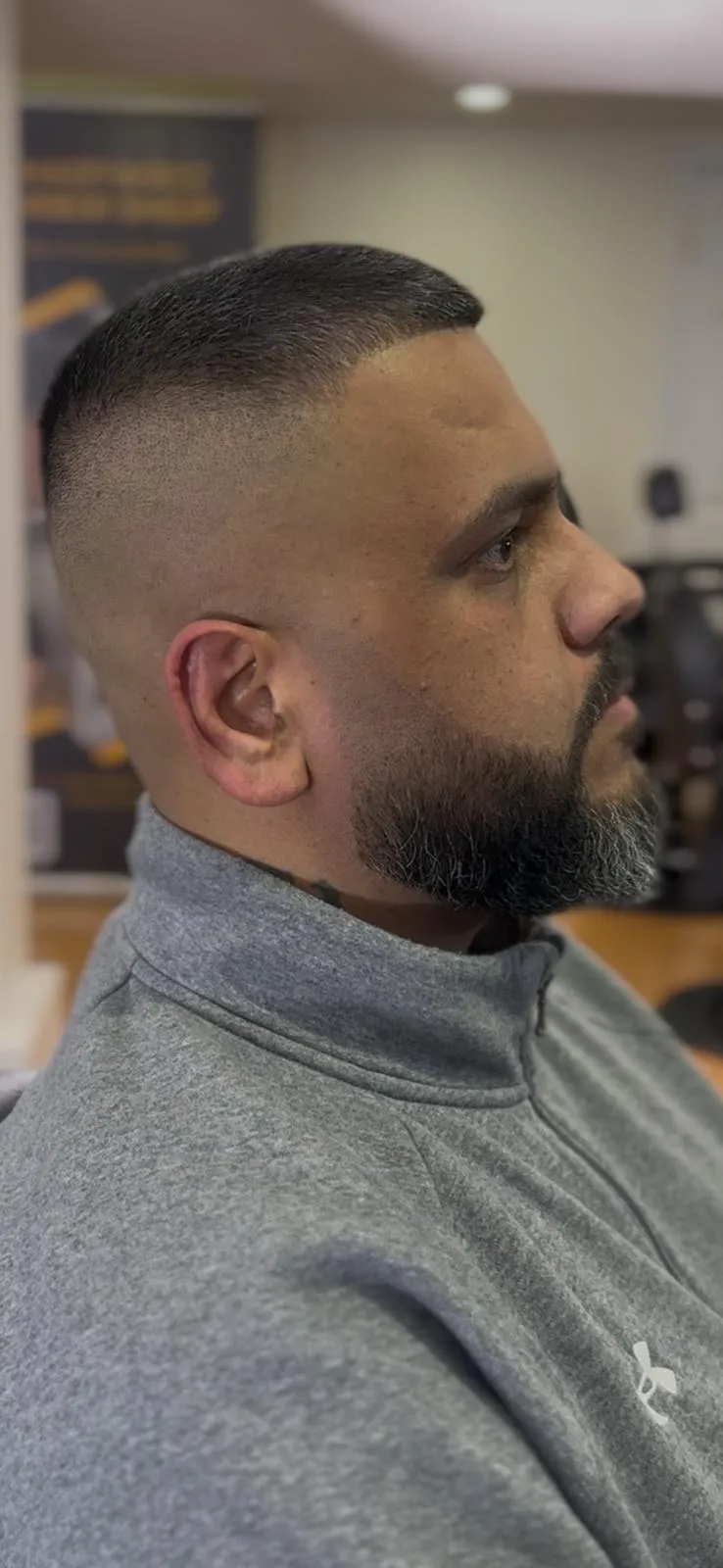
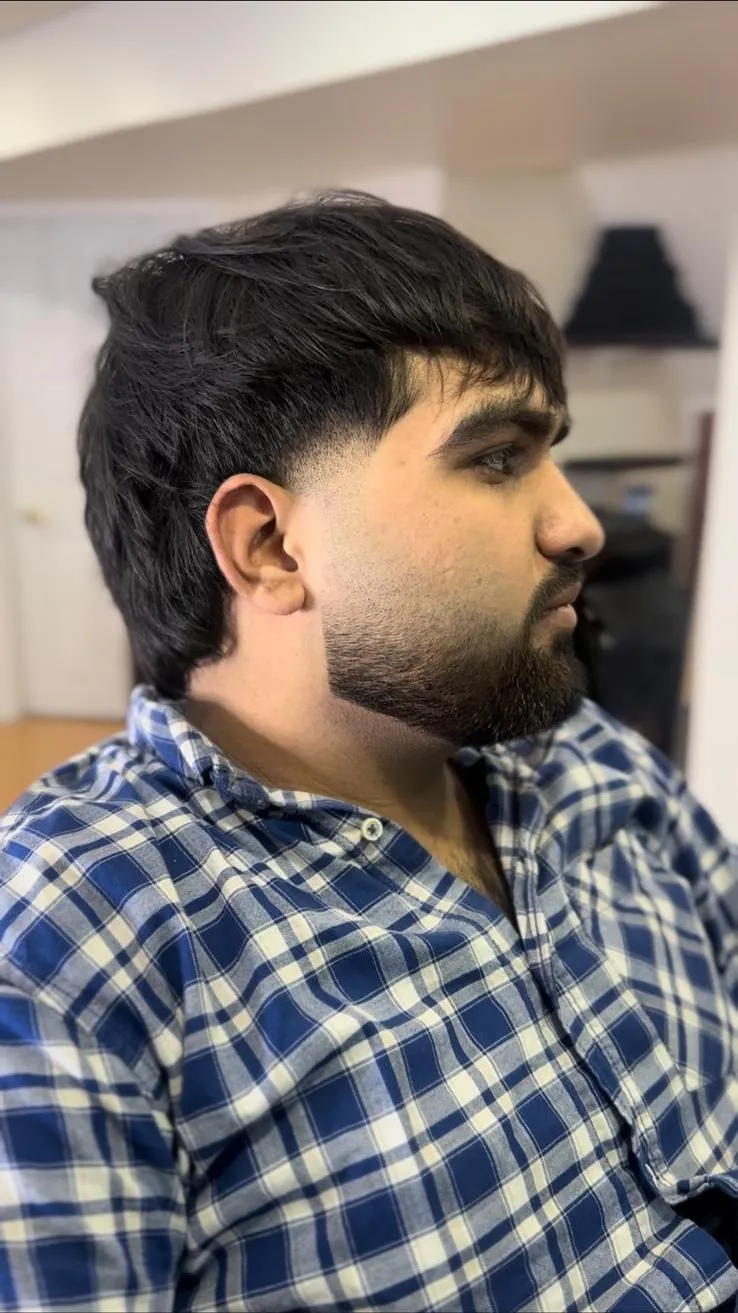
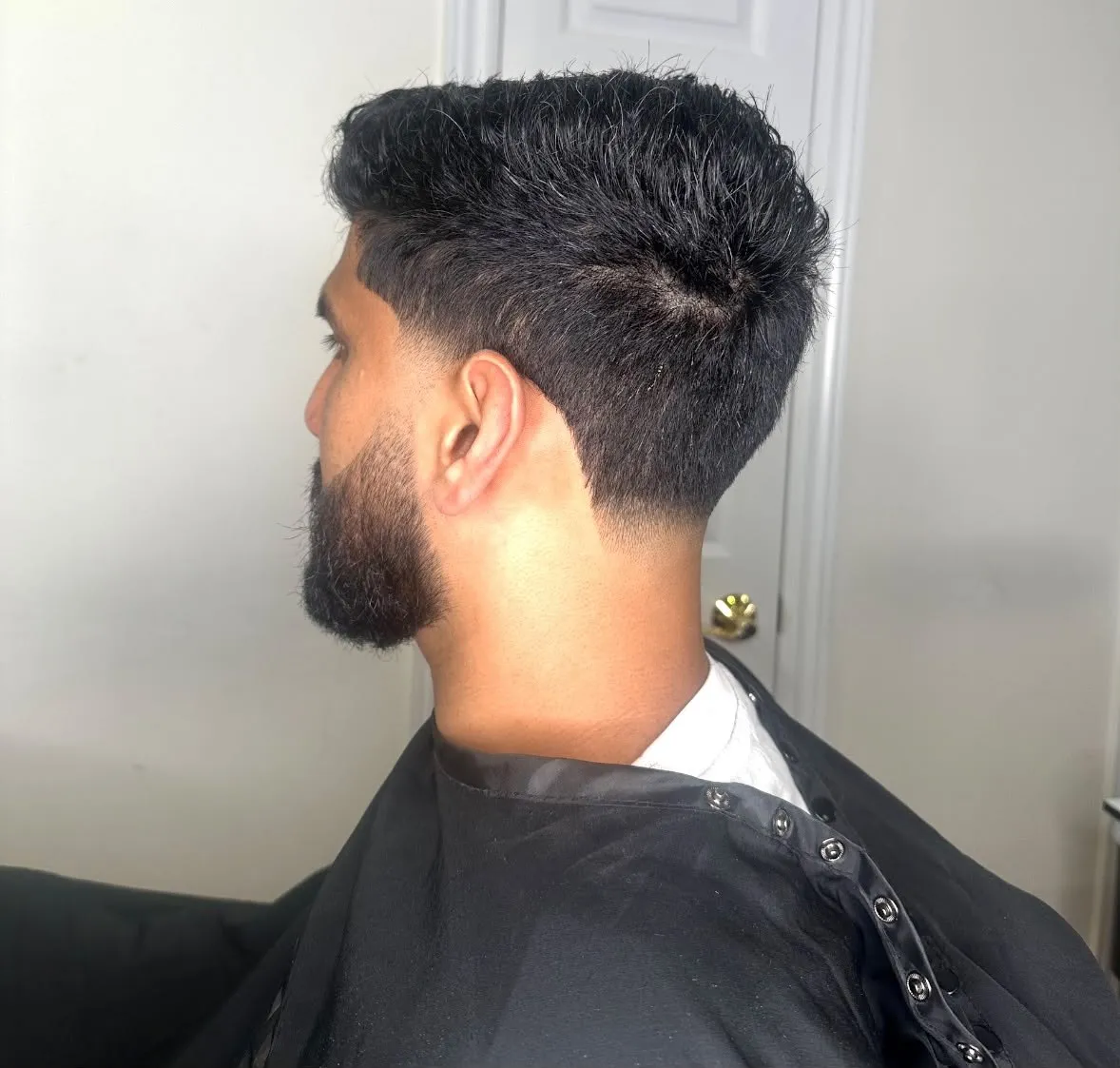
Look at the back of the head and you can tell these two apart instantly. A drop fade continues from ear to ear across the nape, dipping low behind each ear and wrapping around, so the neckline is faded. A burst fade stops just behind the ear, and the hair from the occipital bone down to the neck keeps its length.
From the front, they can look similar because both curve around the ear rather than running straight. That is why people send us a side-on photo of a burst fade and ask for a drop, or the reverse. Always check the back view before you decide.
Drop fade and burst fade compared
This table covers the practical differences we explain in the chair.
| Drop fade | Burst fade | |
|---|---|---|
| Shape | Arc that drops behind the ear and runs around the nape | Semicircle radiating around the ear |
| Back of the head | Faded low across the neckline | Left long, often 2.5 cm or more |
| Temple | Faded, following the arc | Faded in a curve in front of the ear |
| Natural partners | Crops, quiffs, side parts, waves, curly tops | Mohawks, faux hawks, mullets, longer curls |
| Grow-out | Even; the whole band softens at once | Uneven; the curve disappears first |
| Overall feel | Clean and all-round | Bolder, with a statement back |
Which top suits a drop fade and which suits a burst?
The top you plan to wear decides this more than anything else. A drop fade is the more versatile of the two because it frames nearly any top without asking for a specific shape at the back.
A burst fade exists to set off length at the back. Without that length, a burst looks like an unfinished fade.
- Textured crop, French crop, quiff or side part: drop fade. The low nape keeps the outline tidy from every angle.
- Faux hawk or mohawk strip: burst fade. The curve around the ear pushes the eye to the centre ridge.
- Modern mullet: burst fade, almost always. See our modern mullet page for how the back is shaped.
- Tight curls, twists or 360 waves: drop fade for a crisp perimeter, or burst if the curls are grown longer at the back.
- Straight hair worn slicked back: drop fade, because a long back can look unkempt against a slick top.
Head shape, ears and hair type
A drop fade is the kinder choice if the back of your head is flat or you have a prominent occipital bone, because following the curve behind the ear shapes the silhouette. The arc hides a flat crown better than a straight-line fade does.
A burst fade exposes the ear in a clear frame. If you want ears to look smaller, keep the burst low and the curve tight, or pick a drop with a shadow finish. For more on how fades and ears interact, read haircuts for big ears.
Curly and coily hair suits both shapes, since dense hair holds a sharp curve. Very fine straight hair can make a burst look patchy at the back, where the length sits flat against the neck.
So which should you choose?
Choose a drop fade if you want one fade that works with whatever top you wear next month, if you need the back to look clean in a collared shirt, or if you want the grow-out to stay even.
Choose a burst fade if you are committed to length at the back, want something that reads as a deliberate style rather than a standard fade, and are happy to book every two to three weeks to keep the curve crisp. Rebooking matters more for a burst, since the curve is the whole point.
Still split? Ask for a drop fade now. It is easier to leave the back long next time and turn it into a burst than to rescue a burst after the back has been cut short.
How to ask for each at Markcutit
For a drop fade, say where it starts and where the back finishes: 'Mid drop fade, starting at the temple, dropping behind the ear and running low across the neckline to skin.' For a burst, say: 'Burst fade around the ear to skin, leave the back long and connect it to the top.'
Marcel Shabo cuts a lot of our drop fades, and you can see finished examples in the portfolio. Both shapes are booked as Haircut Only; read the dedicated drop fade and burst fade pages for everything about each style on its own.
Drop fade vs burst fade: common questions
Is a burst fade the same as a mohawk?
No. A burst fade is the curved shape around the ear; a mohawk is the strip on top. They are often worn together, which is where the confusion comes from.
Can a drop fade be a skin fade?
Yes. Any drop fade can finish at skin, a 0 or a half guard. The drop describes the shape, and the finish is a separate choice.
Which one is better for school or work dress codes?
A low drop fade is the safer choice, because the back looks tidy with a collar. A burst with a long back can read as a statement style in stricter workplaces.