
Face Shape & Hair Type Guides
Haircuts for Curly Hair: Cuts by Curl Type, Cut Dry
Short answer: The best haircuts for curly hair are cut dry, allow for shrinkage, and leave enough length on top for the curl to form. A curly fade or taper with 5 to 10 centimetres on top suits most 3A to 3C curls, looser 2C curls can go longer with a fringe, and tighter 4A to 4C coils suit fades, afros and twists. Cutting curls too short or too thin is the most common mistake.
Curl patterns 2C to 4C at a glance
Curl pattern describes how tightly each strand coils, and it changes how short you can go, how much the hair shrinks and which cuts hold their shape. Many heads have two or three patterns, often looser at the front and tighter at the crown or nape.
The numbers come from a common typing system: 2 is wavy, 3 is curly and 4 is coily, with A to C running from loosest to tightest. Use it as shorthand to describe your hair, not as a strict label.
| Pattern | What it looks like | Shrinkage | Cuts that usually suit |
|---|---|---|---|
| 2C | Deep S-waves, some loose ringlets | Low to moderate | Curly fringe, medium length, textured quiff |
| 3A | Loose, springy loops about the width of a marker | Moderate | Curly top with taper, curly crop |
| 3B | Tighter ringlets about the width of a finger | Moderate to high | Curly fade, medium curly top |
| 3C | Dense corkscrews about the width of a pencil | High | Curly fade, short curly crop, twists |
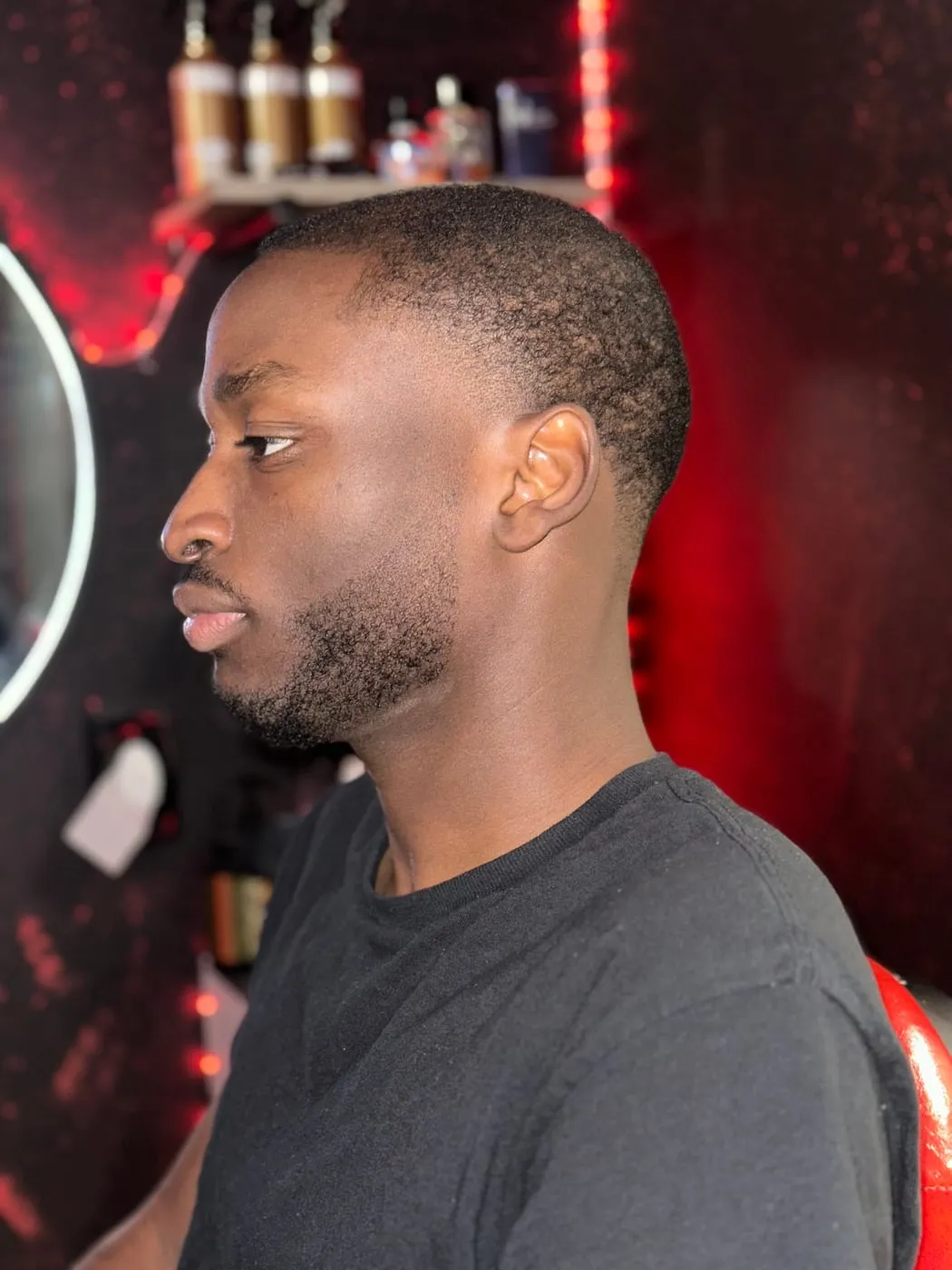
| 4A to 4C | Tight coils to zigzag patterns | Very high | Taper, afro fade, sponge twists, high top |
Why we cut curly hair dry
Curly hair is cut dry, or at least in its natural shape, because wet curls stretch out and hide how much they will spring up once dry. A curl cut to the right length wet can shrink by several centimetres, which leaves the cut shorter and more uneven than planned.
Cutting dry lets us see each curl clump and shape the outline curl by curl. It also shows where the pattern changes across your head, so we can leave more length where curls are tighter and shrink more.
Come to the appointment with your hair in its usual state, washed a day or two before and without heavy product. If you normally wear it defined with a cream, that is fine, since it shows how you actually wear it.
Shrinkage decides how much length to leave
Shrinkage is the difference between how long a curl is stretched and how long it looks at rest, and tighter patterns shrink more. A 3C curl can look half its stretched length, while a 2C wave might lose only a little.
In practice that means leaving more length than a straight-haired cut in the same style would use. If you want curls that look 5 centimetres long on top, the stretched length may need to be 7 or 8. We would rather leave a little extra and take it off at the next visit than cut a curl too short to form.
Leave length where the curls need it
Curls need enough length to complete at least one full turn, or they turn into frizz and odd kinks. That minimum is longer for looser patterns and shorter for tight ones.
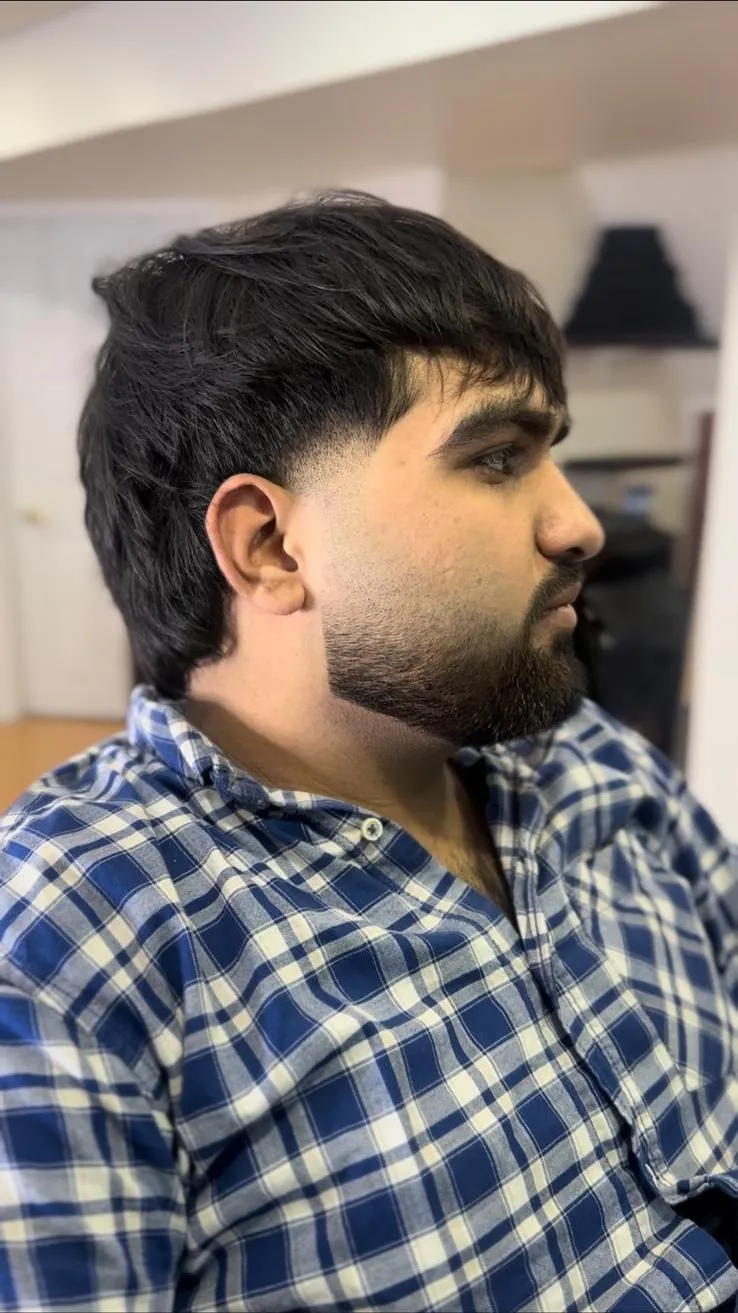
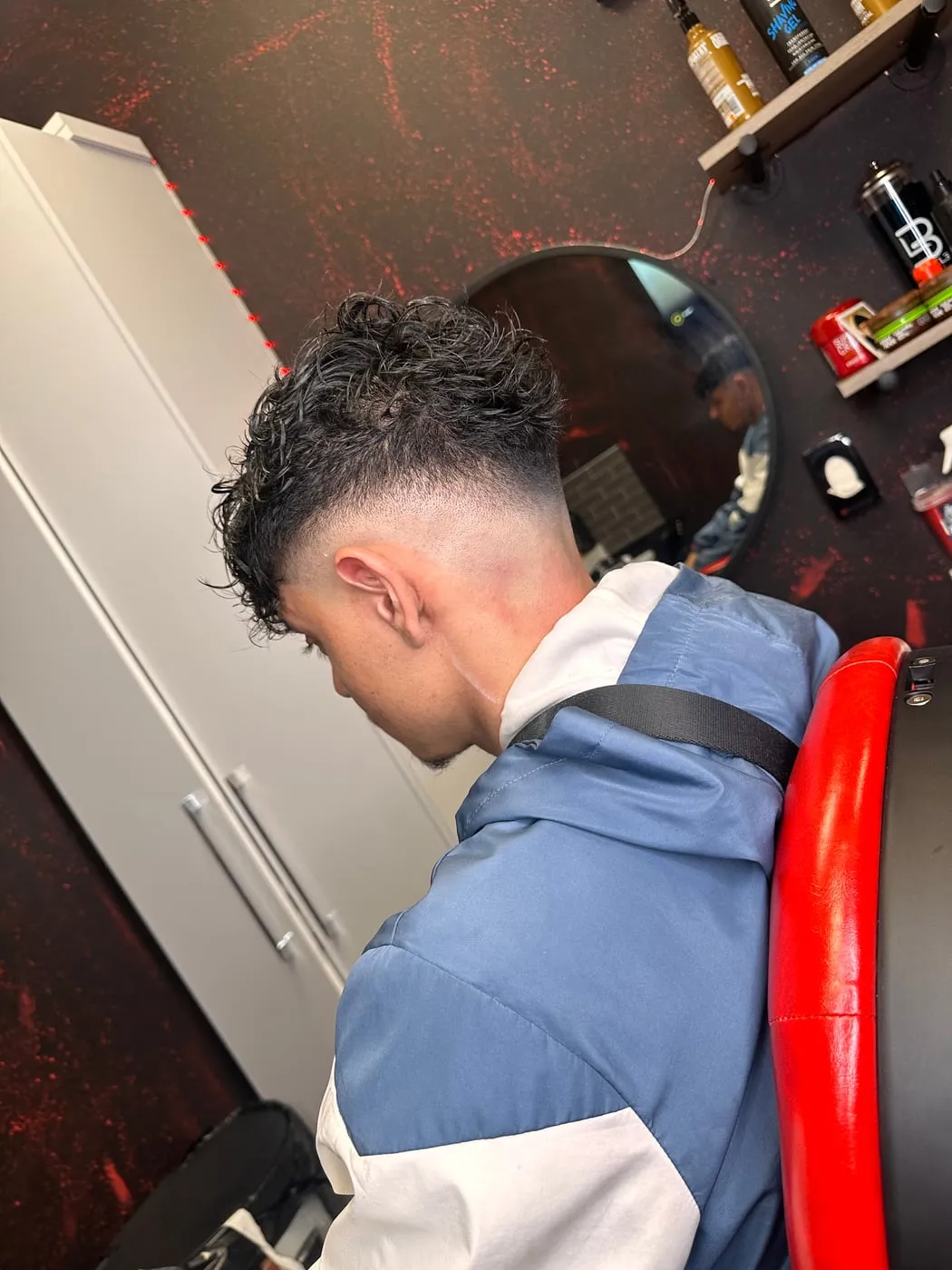
The usual approach is short sides and generous length on top, so the curls form a defined shape without spreading into a wide triangle. A curly fade is the most popular version: a mid fade or taper, with the top shaped rounded or slightly taller at the front.
- 2C and 3A: keep at least 7 to 10 centimetres on top; a curly fringe or medium-length cut works well.
- 3B and 3C: 5 to 8 centimetres on top with a mid fade or taper gives a compact, defined shape.
- 4A to 4C: can be cut very short and even, grown into an afro fade, or twisted; see our page on haircuts for coily hair.
- Mixed patterns: leave the tighter areas slightly longer so the whole top looks even once dry.
What to avoid with curly hair
Thinning shears and razor cutting on the top are the usual source of frizz in curly hair, because they shorten some strands within a curl clump and break up the pattern. We remove weight on curls by shaping individual curls or cutting channels, not by thinning.
The other risk is a fade climbing too high under a curly top. If the sides go to skin right up to the parietal ridge, the curls sit like a cap. A mid fade or a taper keeps the transition smoother, and most curly clients book a skin fade or taper with scissor work on top.
Keeping curls defined between cuts
Curly hair is usually drier than straight hair because natural oils travel down a coiled strand more slowly, so moisture matters more than product. Wash less often, condition every time, and apply a leave-in or curl cream to wet hair before scrunching.
Let it air-dry or use a diffuser on low heat, and avoid towelling it roughly, which breaks the clumps apart. Our curly hair styling guide walks through a full routine. Book a shape-up every four to six weeks; the fade needs attention sooner than the curls do.
Haircuts for curly hair: common questions
Should curly hair be cut wet or dry?
Dry, in almost all cases. Wet curls hang straighter than they will dry, so a wet cut often ends up shorter and uneven.
Can you straighten curly hair out of a cut?
Chemical straightening is not on our menu. A cut can make curls lie flatter or look more controlled, but it will not change the pattern.
How short can I go on top with curly hair?
Tighter curls can go very short and still look even. Looser curls cut to a couple of centimetres tend to lose the curl and look fuzzy, so keep more length or go fully short with clippers.
Why is my curly hair a triangle shape?
Curls stack outward at the sides as they grow. Shorter sides, a taper or fade, and regular shaping keep the volume on top.