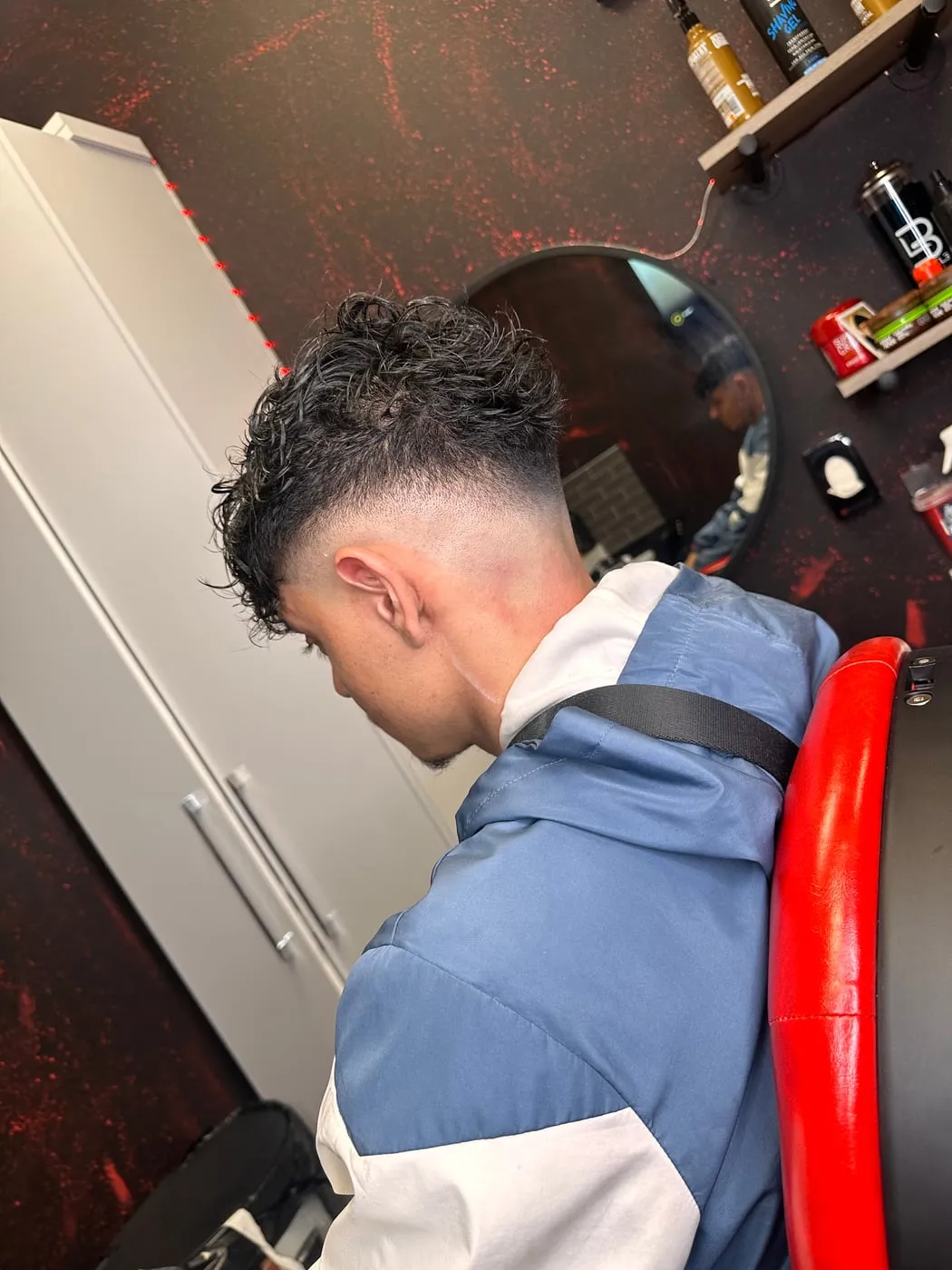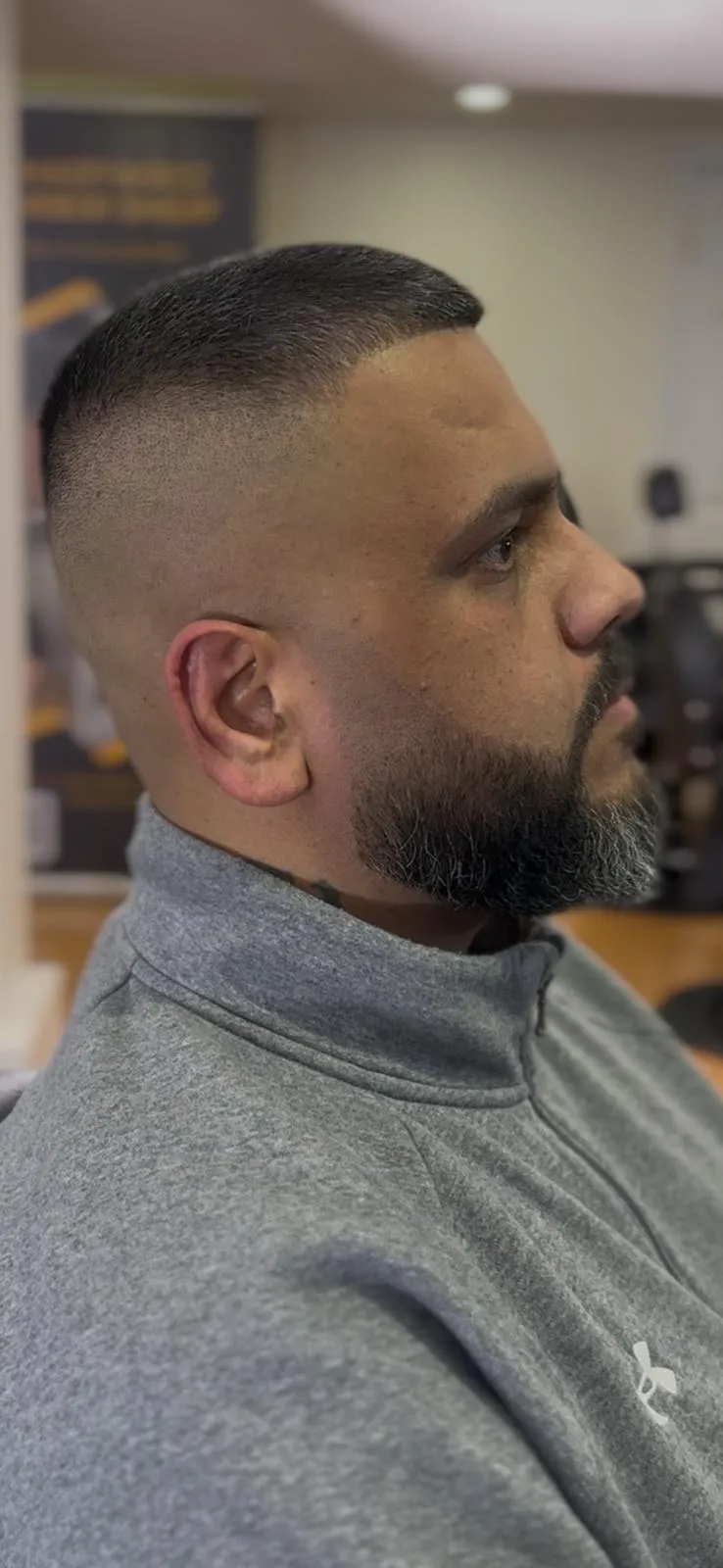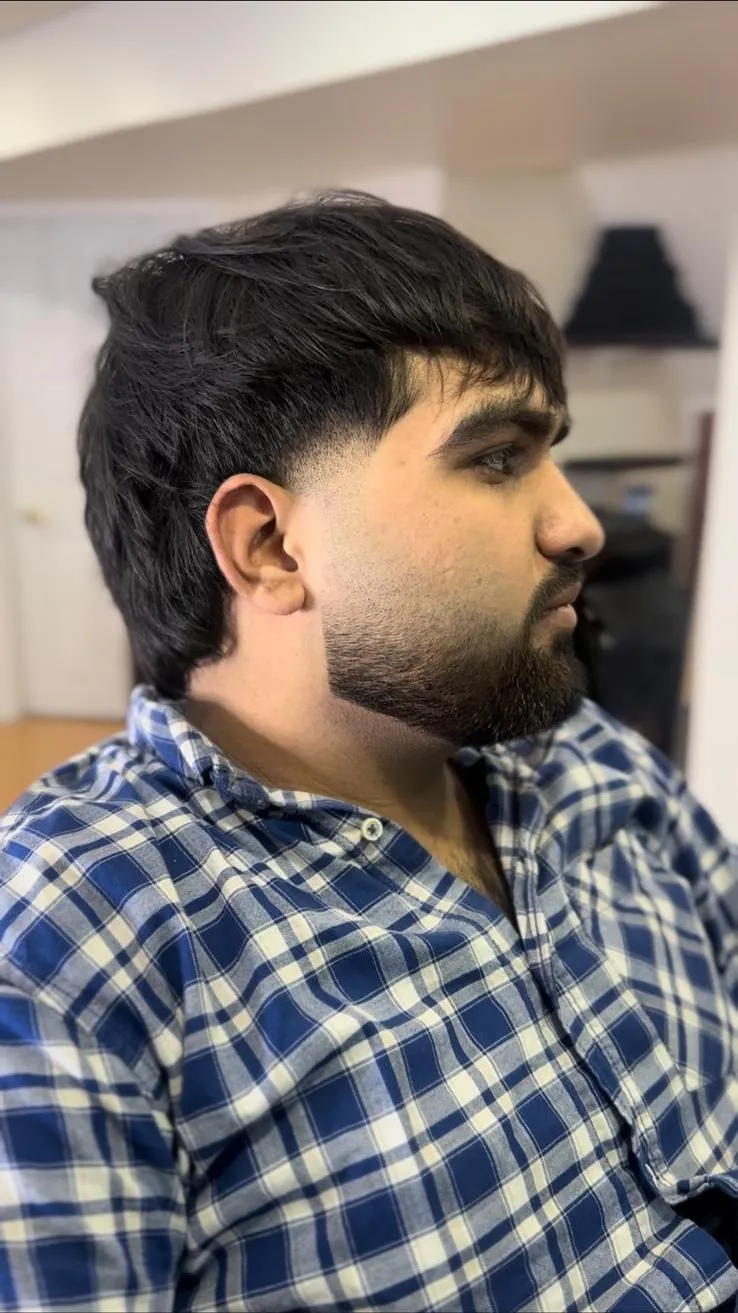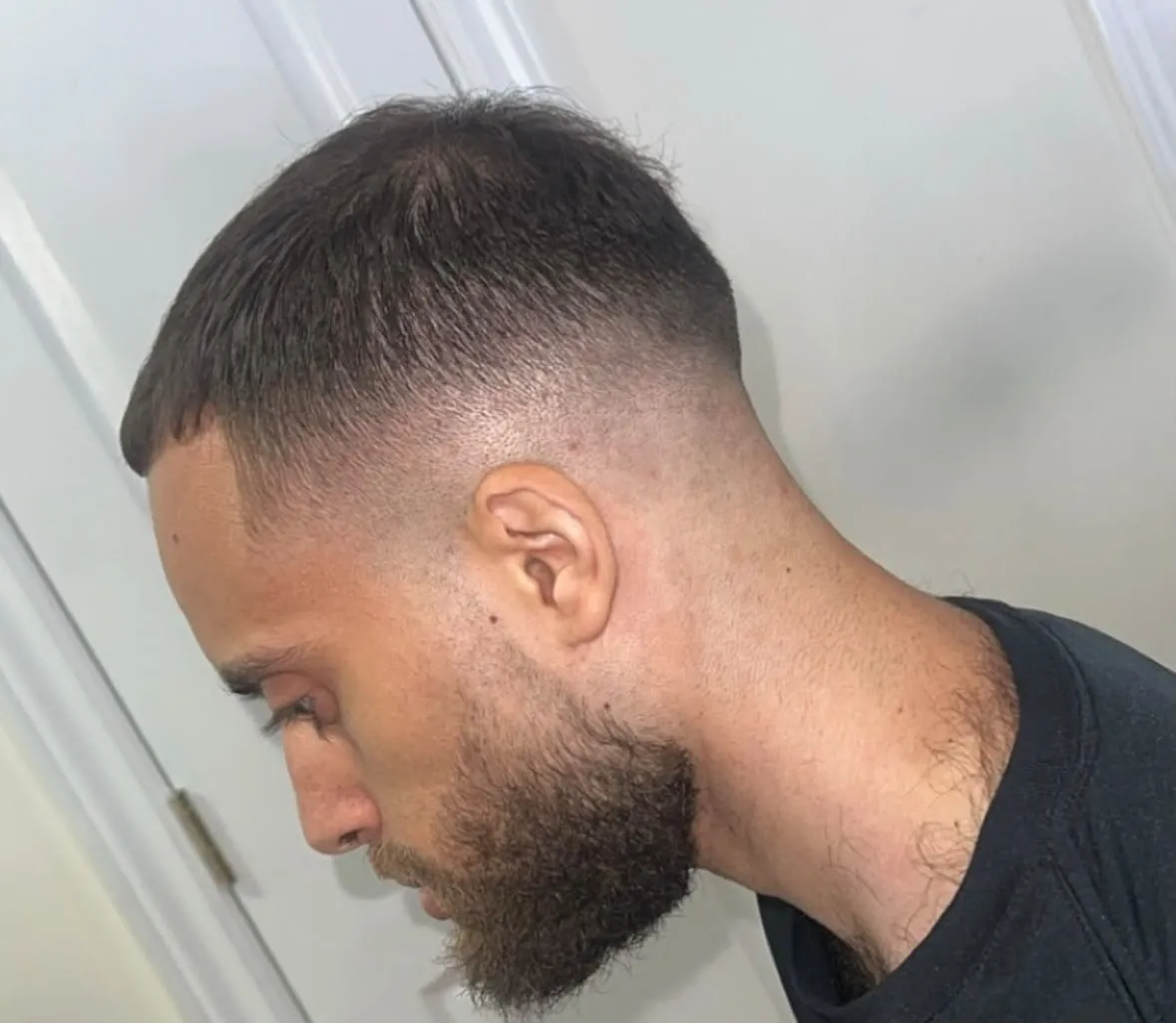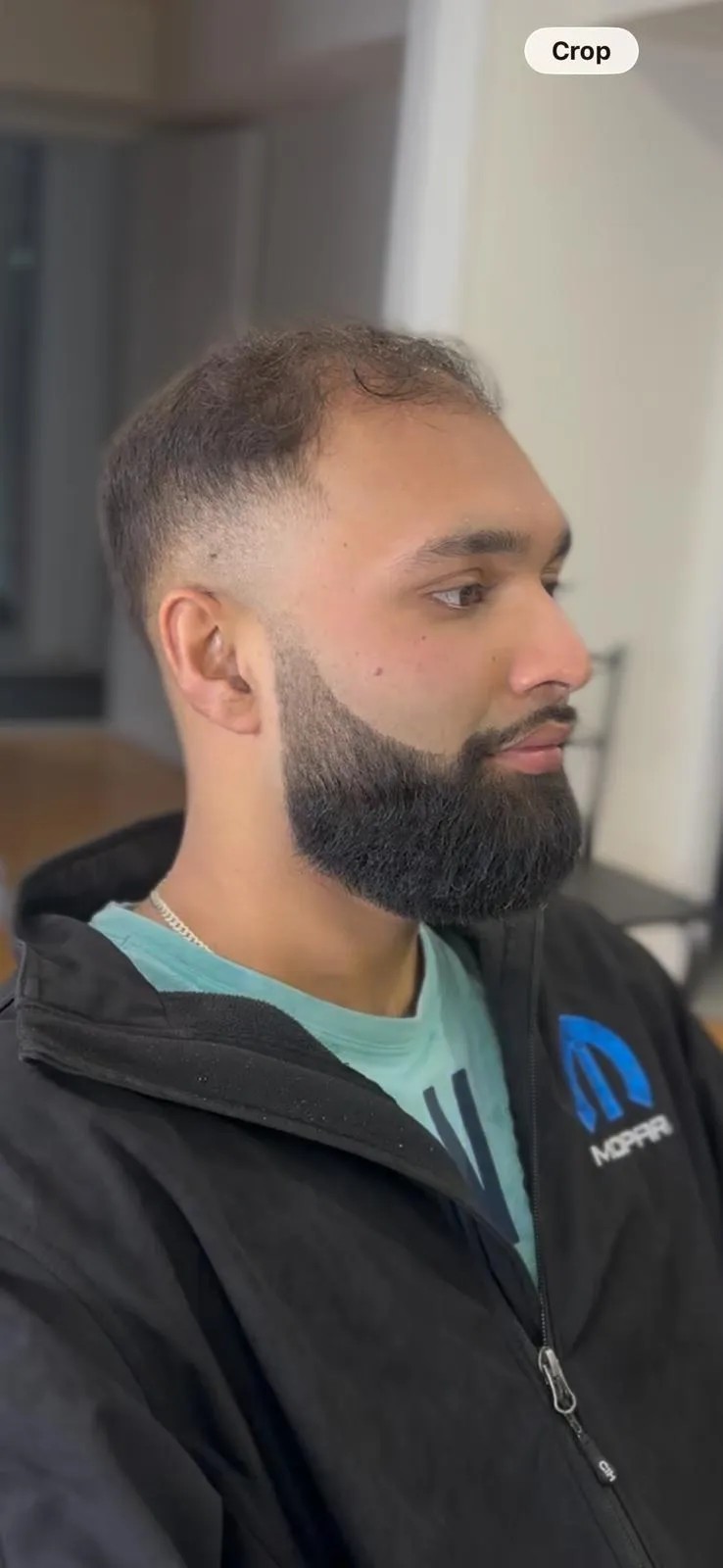

Haircut Styles
High Fade: Maximum Contrast, What It Reveals and How to Wear It
Short answer: A high fade starts at the parietal ridge, the point where the side of the head turns into the top, and takes nearly all of the sides and back short or down to skin. It gives the strongest contrast of any fade height, which also means bumps, scars and flat spots show more and regrowth is visible within about two weeks.
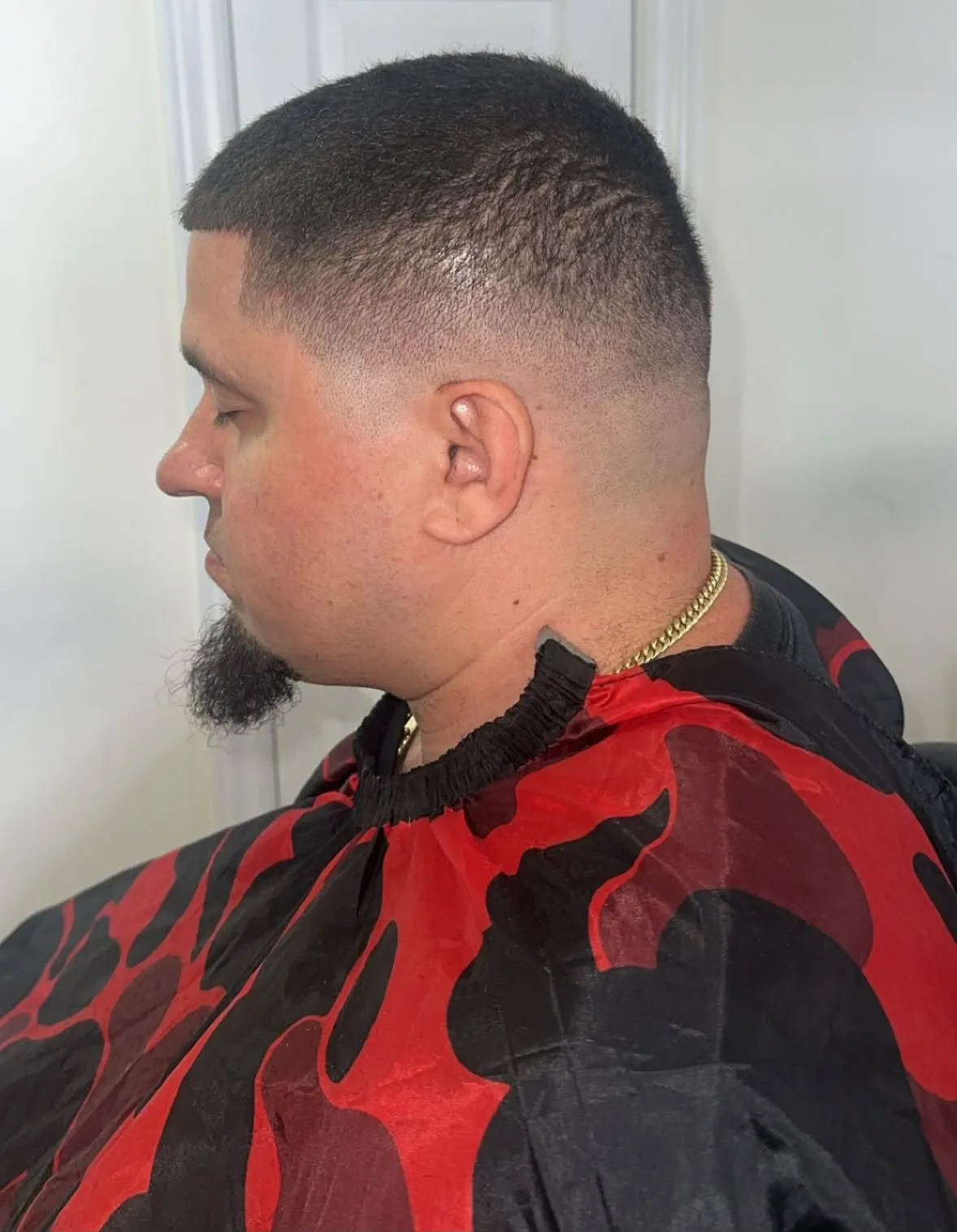
A high fade puts the blend right where the head turns
A high fade is defined by its start point: the parietal ridge, the widest part of the skull where the vertical side becomes the rounded top. Place your palm flat against the side of your head and slide it up; where it starts to tilt inward is roughly where the fade begins.
Below that line, the sides and back are taken to skin, a zero or a half guard, and the whole blend happens in a narrow band of just a few centimetres. That short run is what makes the high fade technically demanding: there is little room to hide a shadow line, so every guard change has to be feathered out cleanly.
Where the high fade came from
The look comes from military grooming, where sides taken up very short kept hair off the collar and out from under helmets and made regulation easy to check. Barbershops picked it up, and through the 1980s and 1990s high fades under flat tops and high tops became a signature of Black barbering in North America.
Today the same height shows up under everything from curly tops to slick backs. If you want the stricter military version with a short strip on top, that is the high and tight, and the tall sculpted top is the high top fade.
What a high fade reveals on your scalp
A high fade exposes nearly the whole side of the head, so anything on the scalp becomes part of the haircut. We always check before we commit, and sometimes we recommend dropping the line a few centimetres.
- Scars: old stitches or a childhood fall show as pale lines on skin-short sides. A 1 guard usually covers them better than skin.
- Bumps and ridges: a prominent occipital bone or an uneven parietal area reads clearly once the hair is gone.
- Flat spots: a flat back of the head looks flatter with nothing to soften it; a drop fade often hides this better.
- Skin sensitivity: more exposed skin means more sunburn risk in an Ontario summer and more chance of clipper irritation.
Balancing the top against the sides
A high fade needs enough length on top to look intentional, or the head starts to look small and pointed. As a rule, the less hair on the sides, the more the top has to carry the shape.
Very short tops of 1 to 2 cm work only if you want a near-military finish. For most people we recommend 4 cm or more of textured length, a curly top left round, or a slick back that sits flat and wide to offset the narrow sides. A tall top on a long face can overdo the height, so we often push the texture forward instead.
| Top length | Effect with a high fade | Suits |
|---|---|---|
| 1 to 2 cm | Uniform, almost buzzed | Athletes, military look, zero styling |
| 3 to 6 cm textured | Strong contrast, modern | Most face shapes; straight or wavy hair |
| Curly, 5 cm or more | Round top framed by clean sides | Curly and coily hair |
| 8 cm or more, slicked | Sharp, dramatic outline | Oval and square faces |
Plan on a two-week cycle
A high fade looks its sharpest for about ten days and needs a cut roughly every two weeks. With so much skin exposed, even a few millimetres of regrowth changes the gradient, and the tight blend band leaves nowhere for that growth to hide.
If two weeks is not realistic, ask for the bottom at a half or 1 guard instead of skin; the fade will look softer on day one but hold up into week three. Our guide on how long a fade lasts explains the timeline in more detail.
How we cut a high fade at Markcutit
We start by checking the scalp and head shape in the consultation, then set the guideline at the ridge with the lever open and work down to the skin section. The narrow blend band is refined with several passes and detailers, and the job finishes with a razor lineup, hot towel, wash and head massage.
Book a Haircut Only through our skin fades service. Mark Yousif cuts a lot of high skin fades; you can see his work on his barber page.
High fade: common questions
Does a high fade make my head look bigger or smaller?
It makes the sides look narrower, which usually makes the top look bigger by comparison. With a very short top, the whole head can look smaller.
Is a high fade the same as a skin fade?
No. High describes where the fade starts; skin describes how short the bottom is. You can have a high skin fade or a high shadow fade.
Can I get a high fade with thin hair on top?
Often not ideal, because the contrast draws attention to thin density. A lower fade with a textured top usually looks fuller; see haircuts for thin hair.