
Style Comparisons
Quiff vs Slick Back: Up or Back, Matte or Shine
Short answer: A quiff lifts the front of the hair upward so the height sits over the forehead, usually with a matte, textured finish from clay or paste. A slick back lays the hair flat and combs it straight back to the crown, traditionally with a shiny pomade. The quiff needs about 6 cm at the front and hides small hairline flaws; the slick back needs 8 cm or more and shows the whole hairline.
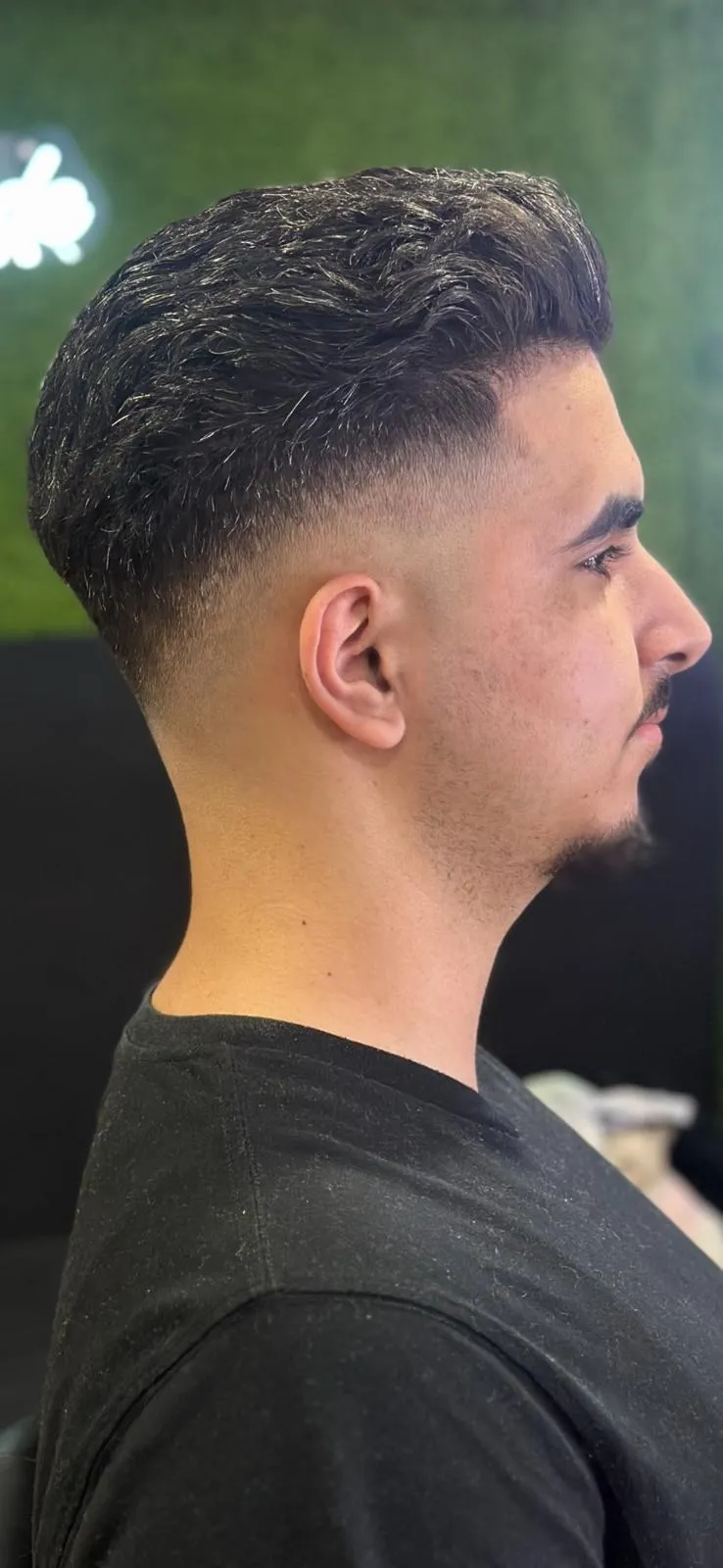
Seen from the side: a peak versus a flat line
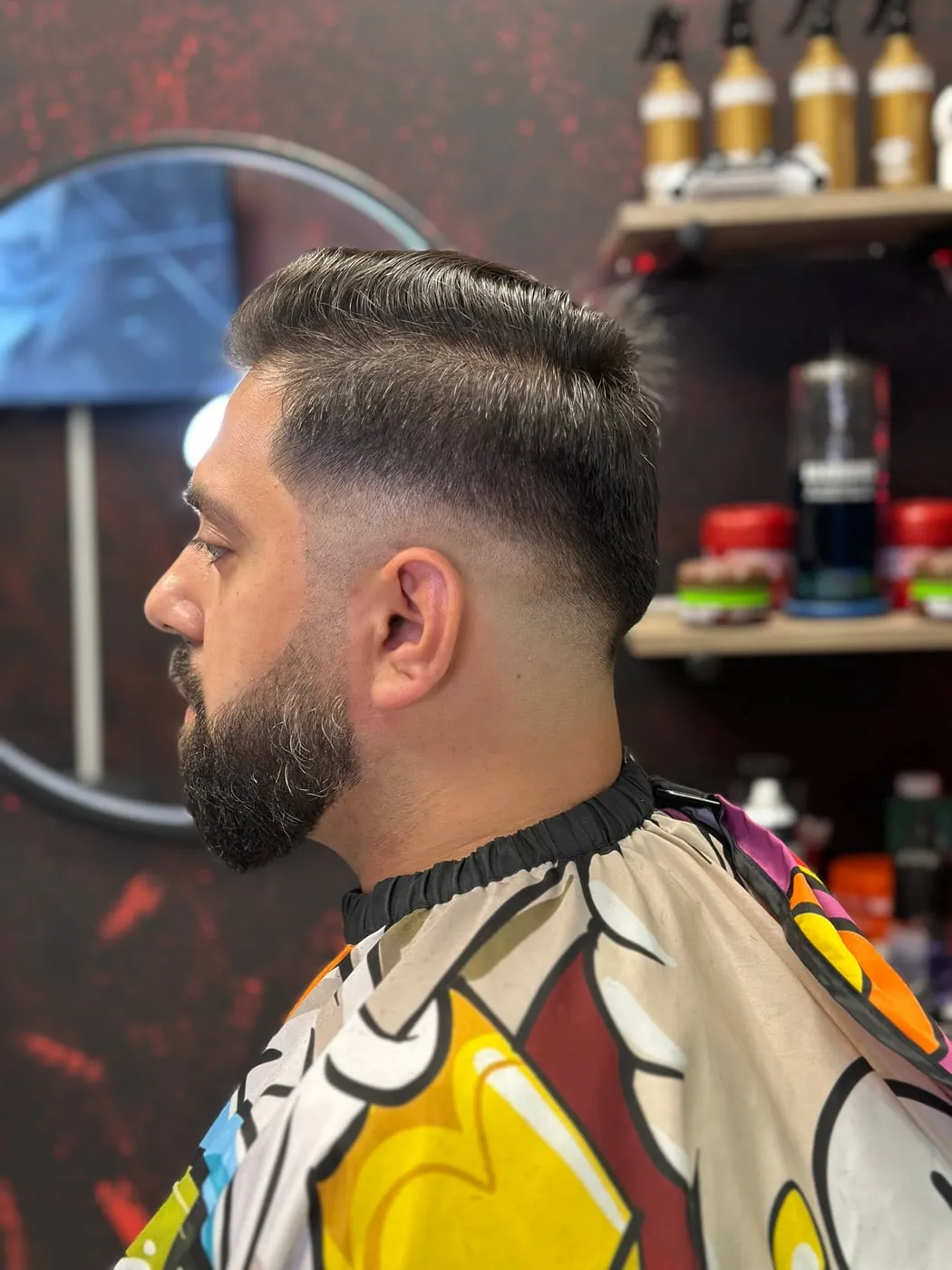
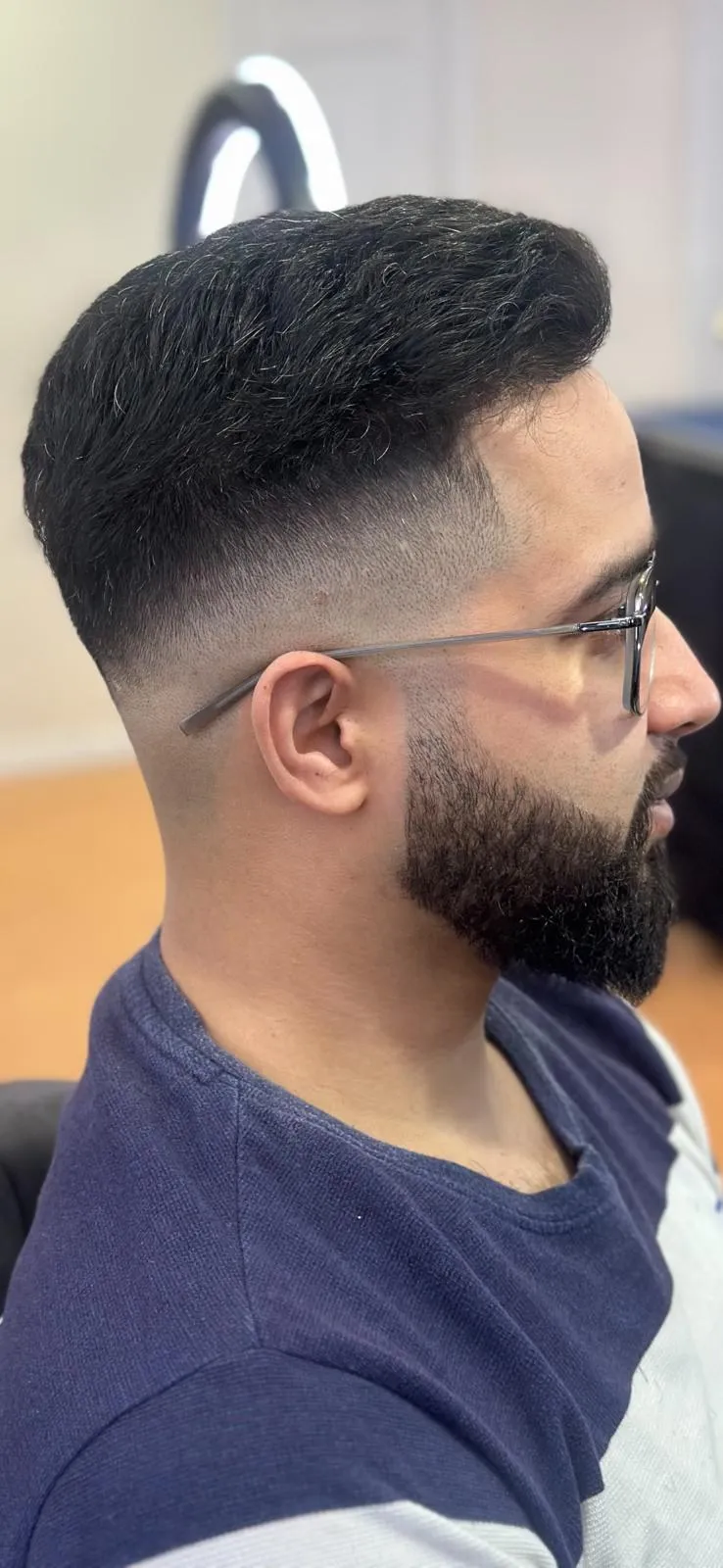
Stand side-on to a mirror and the difference is obvious. A quiff makes a peak just behind the hairline: the front stands up, rolls slightly back and then drops away toward a shorter crown. A slick back makes a smooth line that runs from the forehead to the back of the head with little or no rise.
Direction follows from that. On a quiff the roots at the front are dried pointing up, and the ends can fall wherever they like. On a slick back every root is trained to point backward, so the style depends on combing, not lifting.
Matte or shine is a choice, not a rule
The usual pairing is a matte quiff and a shiny slick back, but both can cross over. A polished quiff finished with a medium-shine paste looks smarter and suits a wedding. A matte slick back, set with a cream or clay, looks relaxed and hides an oily scalp better than high gloss.
What does not cross over well is the tool. A quiff is finished with fingers so the front keeps some separation. A slick back needs a comb, because fingers leave channels that break up the flat surface. If you only own clay and never pick up a comb, you are a quiff person by default.
Quiff and slick back compared
Use this to spot the row that matters most to your routine.
| Quiff | Slick back | |
|---|---|---|
| Direction | Up at the front, then back | Straight back, flat to the head |
| Front length | About 6 to 10 cm | About 8 to 13 cm |
| Typical finish | Matte or low shine | Medium to high shine |
| Usual product | Clay or paste | Pomade, sometimes gel |
| Finished with | Fingers and a blow-dryer | Comb, damp hair |
| Hairline on show | Partly, behind the lift | All of it |
| After a toque | Re-lift with fingers | Re-comb with a little water |
| Morning time | About 5 minutes | About 3 to 5 minutes |
Growing from one into the other
A quiff is often the waypoint on the way to a slick back. Once the front reaches 6 cm you can lift it; keep growing it for another two or three months and it will be long enough to lay back without springing up. Hair grows roughly a centimetre a month, so the jump from a short quiff to a full slick back is a season, not a week.
During that stretch we cut the crown differently. For a quiff the crown is kept short so the front stands alone. For a slick back the crown is left a little longer so the hair travelling back from the forehead has something to lie over. Tell us which one you are aiming for, even if you are not there yet.
Forehead, hairline and weather
A slick back puts the entire hairline in view, so it looks best with full temples or a mature hairline you are happy to show. A quiff covers the top edge of the forehead with lift, which is kinder to slightly thinning temples; very deep recession is a problem for both, as the slick back page explains.
Weather treats them differently too. Wind off Lake Ontario flattens a quiff but barely moves a well-set slick back. Summer humidity is the opposite: a matte quiff tolerates some frizz because texture is the point, while a glossy slick back shows every puffed strand. In the heat, plenty of men switch from shine to a matte product rather than changing the cut.
So which should you wear?
Choose by what you want people to notice and how you like to style.
- You want height and a younger, casual look: quiff.
- You want a clean, formal outline that holds shape in the wind: slick back.
- Your hair is fine: quiff with clay, since a flat slick back shows scalp through fine hair.
- Your hair is thick and straight: either; the slick back will sit flattest.
- Your hair is wavy: a textured quiff, or a loose matte slick back if you accept some movement.
- You wear a helmet or toque most days: slick back, because a comb and water reset it in seconds.
Getting either cut right at Markcutit
Both styles are built with scissors on top and booked as Haircut Only; see the scissor cuts service. The sides are your call: a mid fade suits a quiff, while an undercut or a low taper suits a slick back. Mark Yousif cuts a lot of our slick backs, and the quiff page covers how the front is shaped for lift.
At the end of the cut we style it the way you plan to wear it and show you the amount of product we used, so you can repeat it the next morning.
Quiff vs slick back: common questions
Can the same haircut be worn as a quiff and a slick back?
Yes, if the front is at least 8 cm and the crown is not cut too short. Lift it with clay on weekdays and comb it back with pomade for an evening out.
Which is more professional?
A neat slick back reads as the more formal of the two, but a tidy, low quiff with tapered sides is fine in almost any office.
Which is easier for curly hair?
Neither is easy on tight curls. Loose curls can form a textured quiff with a diffuser; a slick back on curls needs strong gel or pomade and usually looks wavy by afternoon.