
Style Comparisons
French Crop vs Caesar: Fringe Length, Shape and Hair Type
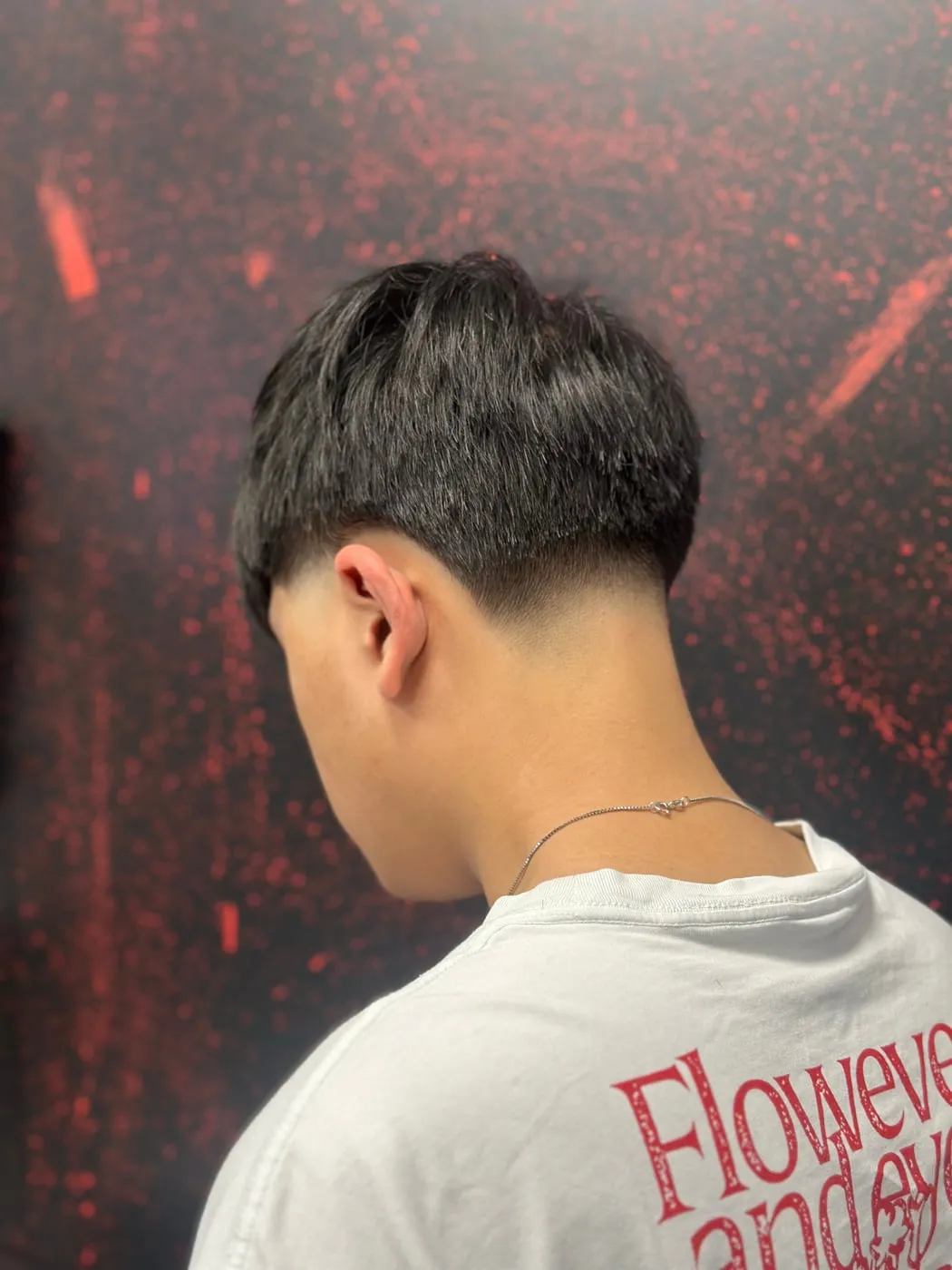
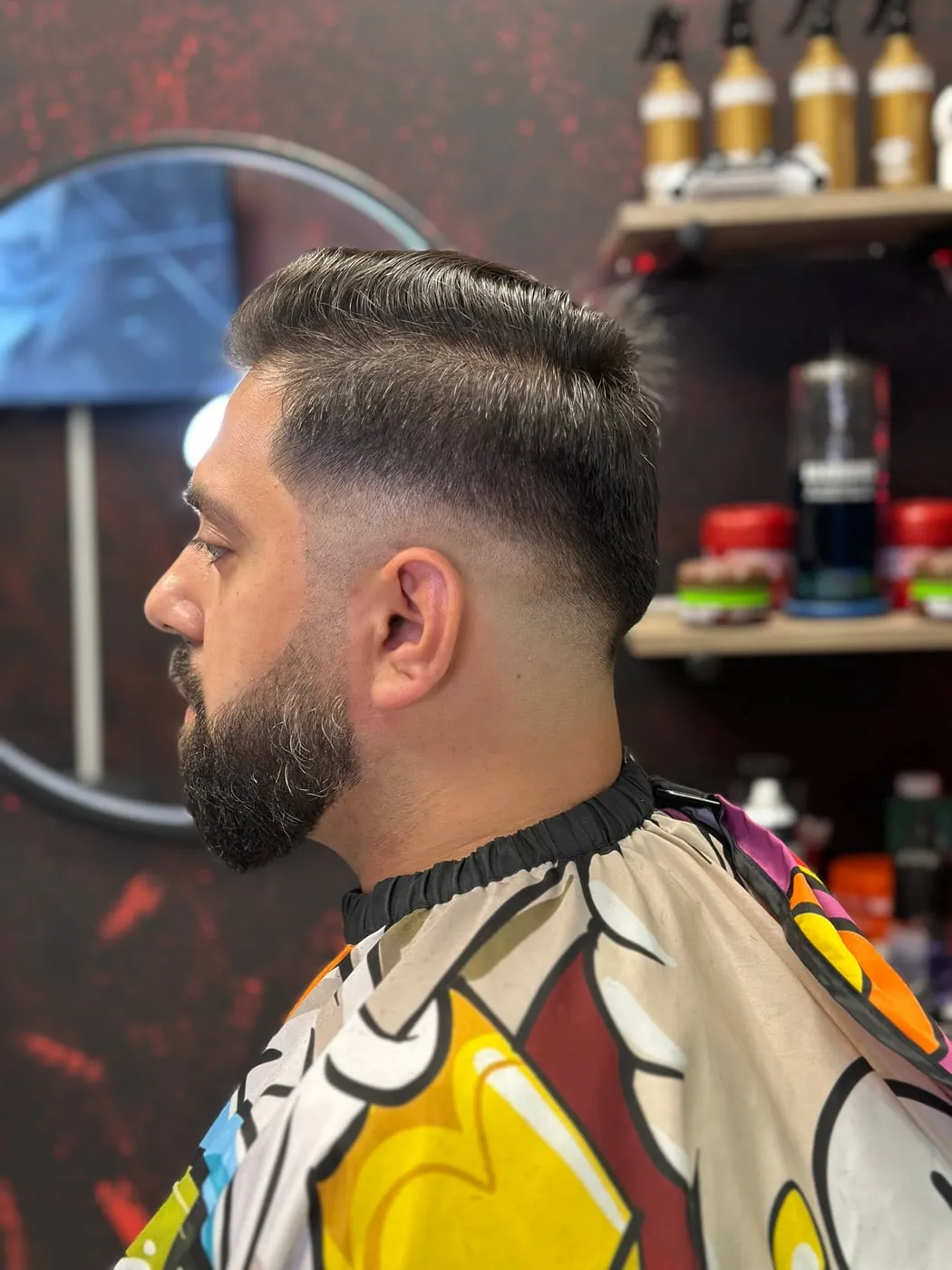
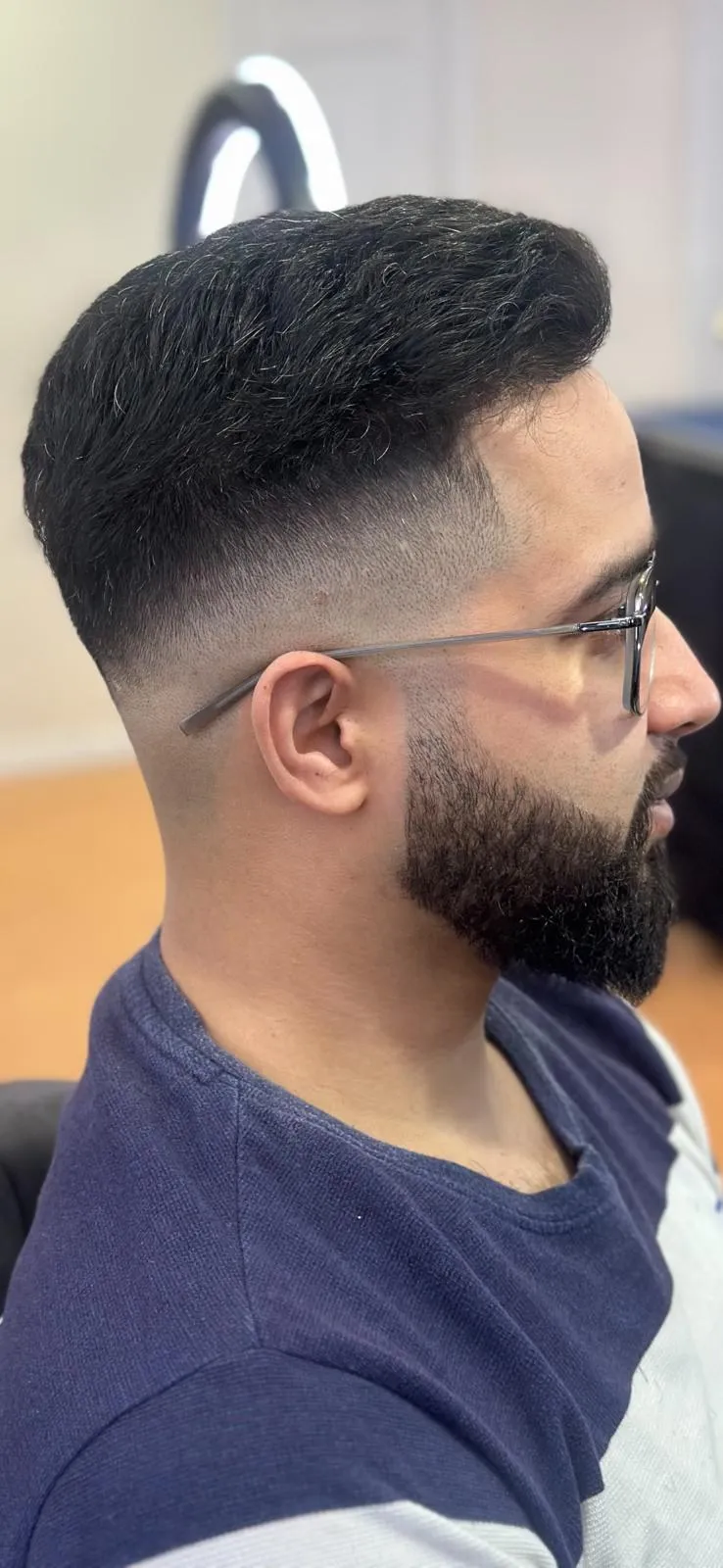
Short answer: A Caesar keeps the whole top at one short length, around 1.5 to 3 cm, so the fringe is a tight edge sitting well up on the forehead. A French crop leaves the front heavier, often 4 to 8 cm, so the fringe drops to within a finger or two of the eyebrows while the crown stays shorter. Straight and loosely wavy hair can wear either; tight curls and coils suit the Caesar far better.
Where the fringe lands is the real dividing line
The fringe position separates these two cuts more reliably than anything else. Put a finger flat across your forehead just above the eyebrows: a French crop fringe usually touches or nearly touches that finger, while a Caesar fringe finishes two or three finger-widths higher, closer to the natural hairline.
That difference comes from how the length is distributed. On a Caesar every hair on top is cut to roughly the same measurement, so the front is no longer than the crown. On a French crop we graduate the top, keeping the crown short and letting the length build toward the forehead, which is what gives the fringe its visible weight.
The two crops measured side by side
These are the figures we work from in the chair. Your own numbers will shift with density and growth pattern, but the gap between the two stays roughly the same.
| French crop | Caesar | |
|---|---|---|
| Front length | 4 to 8 cm | 1.5 to 3 cm |
| Crown length | Shorter than the front | Same as the front |
| Fringe lands | 1 to 3 cm above the brows | High on the forehead, near the hairline |
| Main tool on top | Scissors | Scissors on straight hair, clippers on coily hair |
| Hair types | Straight, loose waves | Straight, wavy, curly, coily |
| Minimum growth from a buzz | About 2 months | About 3 to 4 weeks |
| Styling | Push forward, optional light product | Brush forward, usually nothing |
Your hair type often makes the decision for you
Hair texture narrows the choice before face shape or taste come into it, because a French crop fringe has to hang and a Caesar fringe only has to lie flat.
- Fine, straight hair: either works. A Caesar looks denser because short hair shows less scalp; a French crop needs a little point cutting so the fringe does not split into strands.
- Thick, straight hair: the French crop is at its best here, since the fringe falls as one heavy piece. A Caesar on very thick hair can stand up at the crown unless it is thinned slightly.
- Wavy hair: a French crop with a textured fringe lets the wave show. A Caesar flattens the wave almost completely.
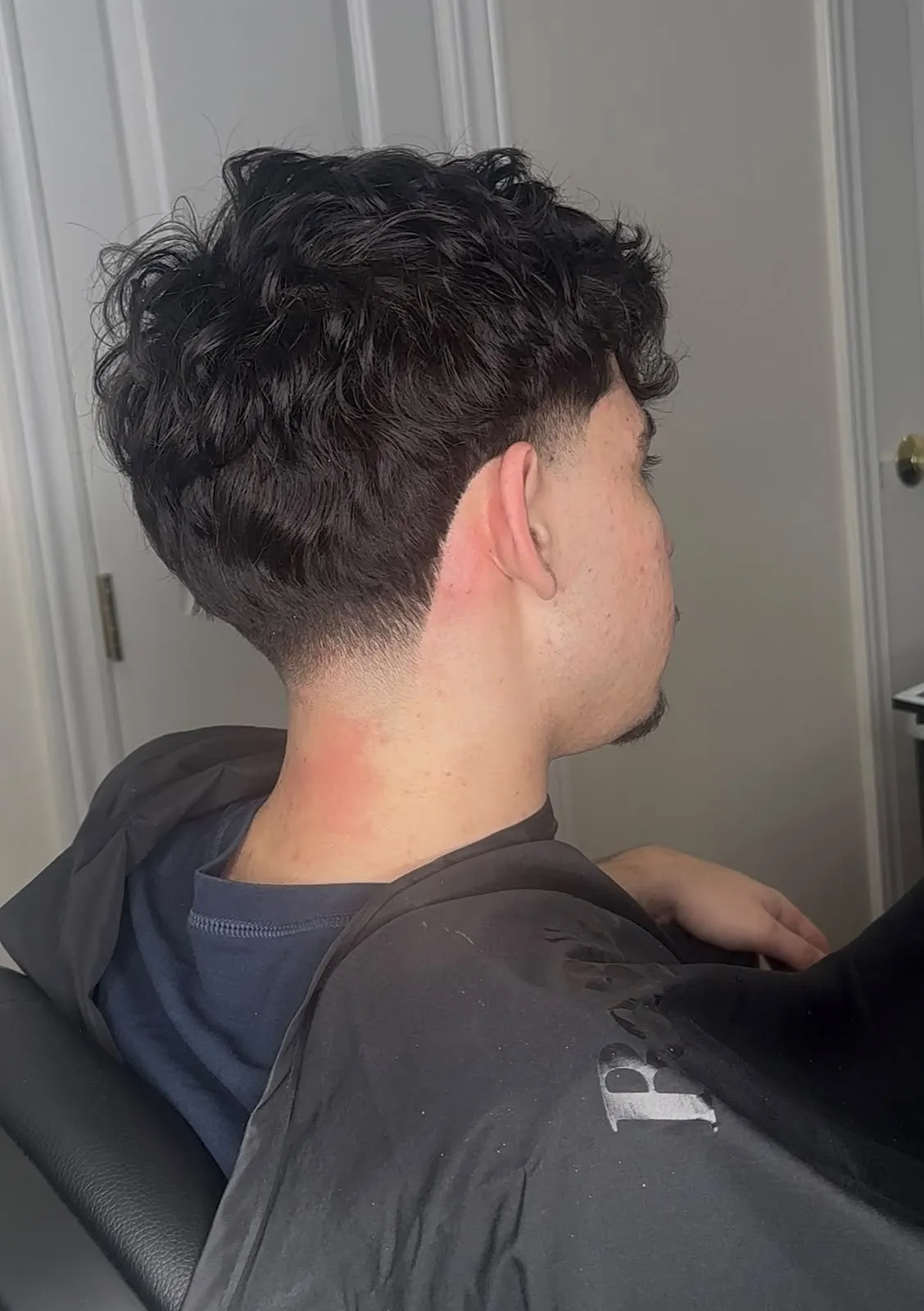
- Tight curls and coils: the Caesar, usually cut with a No. 1 or No. 2 guard on top and lined up at the front. Curls shrink too much to form a hanging French crop fringe.
- Strong cowlick at the front: a Caesar is easier, because the short length gives the cowlick less leverage to lift the fringe.
Forehead, hairline and face shape
Forehead height is where the extra length of a French crop pays off. The heavy fringe covers most of a tall forehead, while a Caesar covers only the top edge of it. If you have a high or maturing hairline and want it hidden, the French crop does more of the work; our guide to haircuts for a receding hairline goes through the alternatives.
Face shape pulls in the other direction. The flat, low profile of a Caesar can make a round face look rounder unless the sides are faded fairly high. A French crop adds some visual weight at the brow, which balances a long face but can crowd small features. On an oval or square face both look right, so the choice comes back to hair type and effort.
Which to choose: four quick questions
Run through these in order and stop at the first clear answer.
- Is your hair tightly curled or coily? Choose the Caesar.
- Do you want your forehead mostly covered? Choose the French crop.
- Do you want zero styling and a visit every two or three weeks? The Caesar fits that rhythm.
- Do you want something with a bit more presence that tolerates four or five weeks between cuts? The French crop grows more gracefully, because a longer fringe still looks intentional as it gains length.
Moving from one to the other
Going from a French crop to a Caesar takes one visit: we take the front down to match the crown and square off the fringe. Going the other way takes patience. Keep the sides maintained, leave the top alone for four to six weeks, then ask us to cut the crown shorter than the front so the fringe starts to build weight.
Plenty of men do this seasonally, wearing a short Caesar through humid July and August and letting it become a French crop under a toque in winter. The sides can stay the same throughout, whether that is a low fade, a taper or scissor work.
Both cuts are booked as Haircut Only. Scissor-led French crops fall under our scissor cuts service, and a Caesar over a skin fade under skin fades. For each style on its own, see the French crop and Caesar cut pages.
French crop vs Caesar: common questions
Which is better for thinning hair on top?
Usually the Caesar. Keeping the top short and even reduces the contrast between denser and sparser areas, whereas a longer French crop fringe can separate and show scalp behind it.
Can either one be worn with a beard?
Both pair well with a short, shaped beard. A Caesar with a skin fade blended into a beard is a very common combination; book it as Haircut + Beard so the sideburn transition is done in one sitting.
Does a Caesar need a lineup at the front?
On coily hair the front is usually lined up to make the fringe edge crisp. On straight hair the edge is cut with scissors instead, and any lineup should follow your natural hairline rather than move it.
Which holds up better under a hockey helmet or toque?
Both recover well because hats push hair forward, which is the direction both are cut to sit. The Caesar recovers instantly; the French crop may need a quick finger-comb to re-separate the fringe.