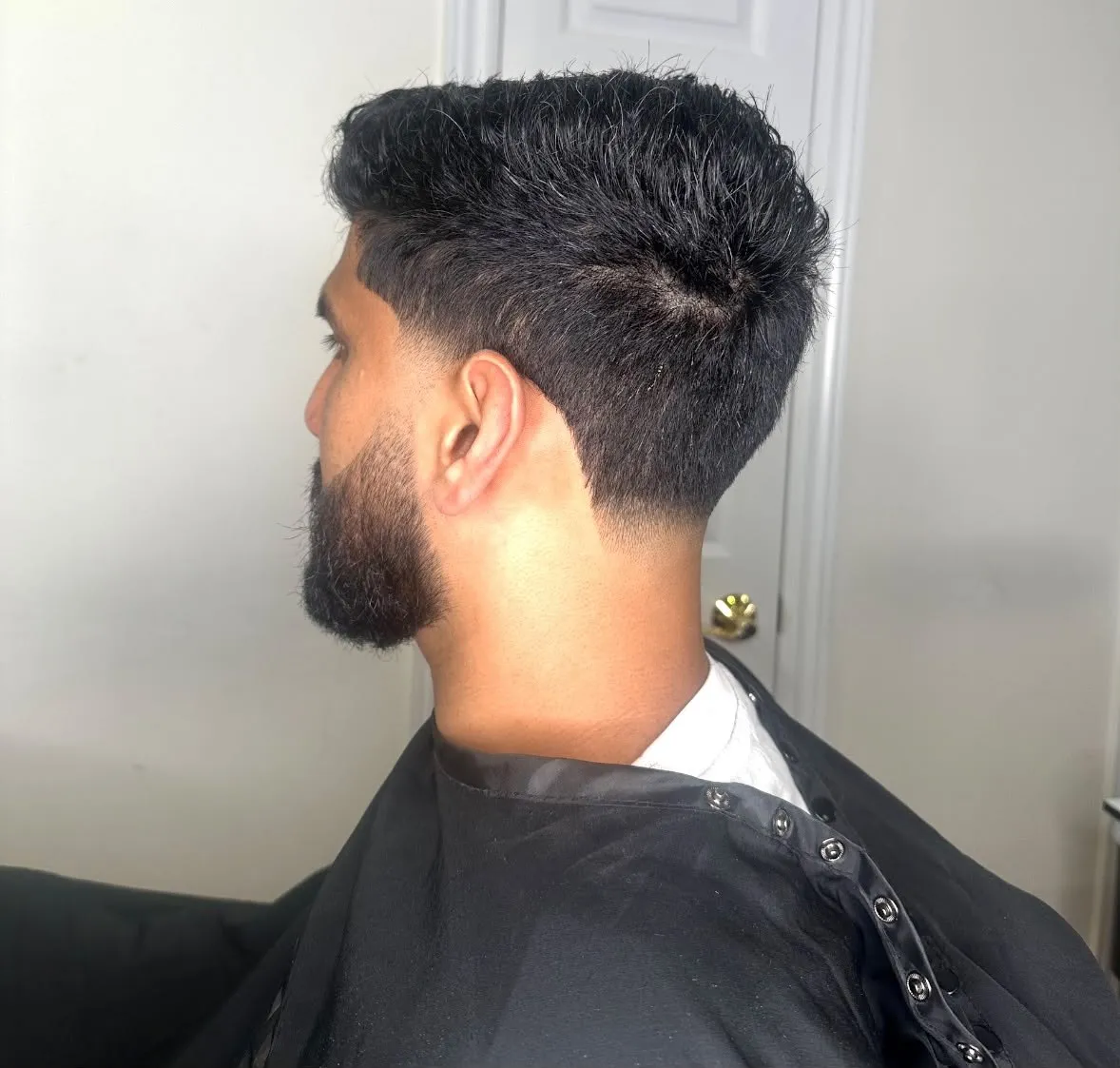

Style Comparisons
Drop Fade vs Taper: An Arc Behind the Ear or Just the Edges
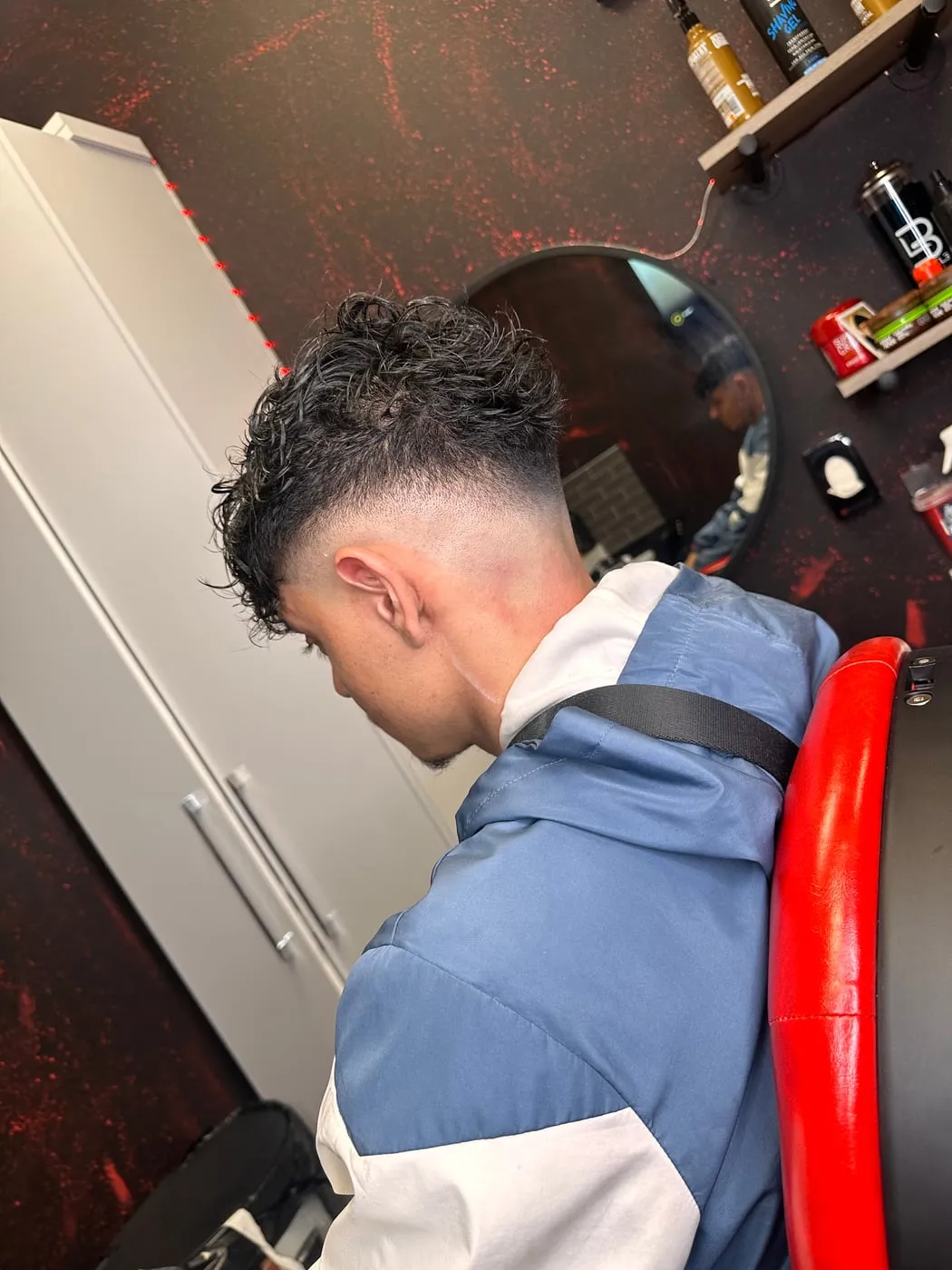
Short answer: A drop fade takes a full band of the sides and back short, and the line curves downward behind each ear so it finishes low at the nape. A taper leaves the sides and back at their normal length and blends only the edges: the sideburns and the neckline. Pick a drop fade for contrast and a rounded back; pick a taper for a quiet, fuller cut that stays tidy for longer.
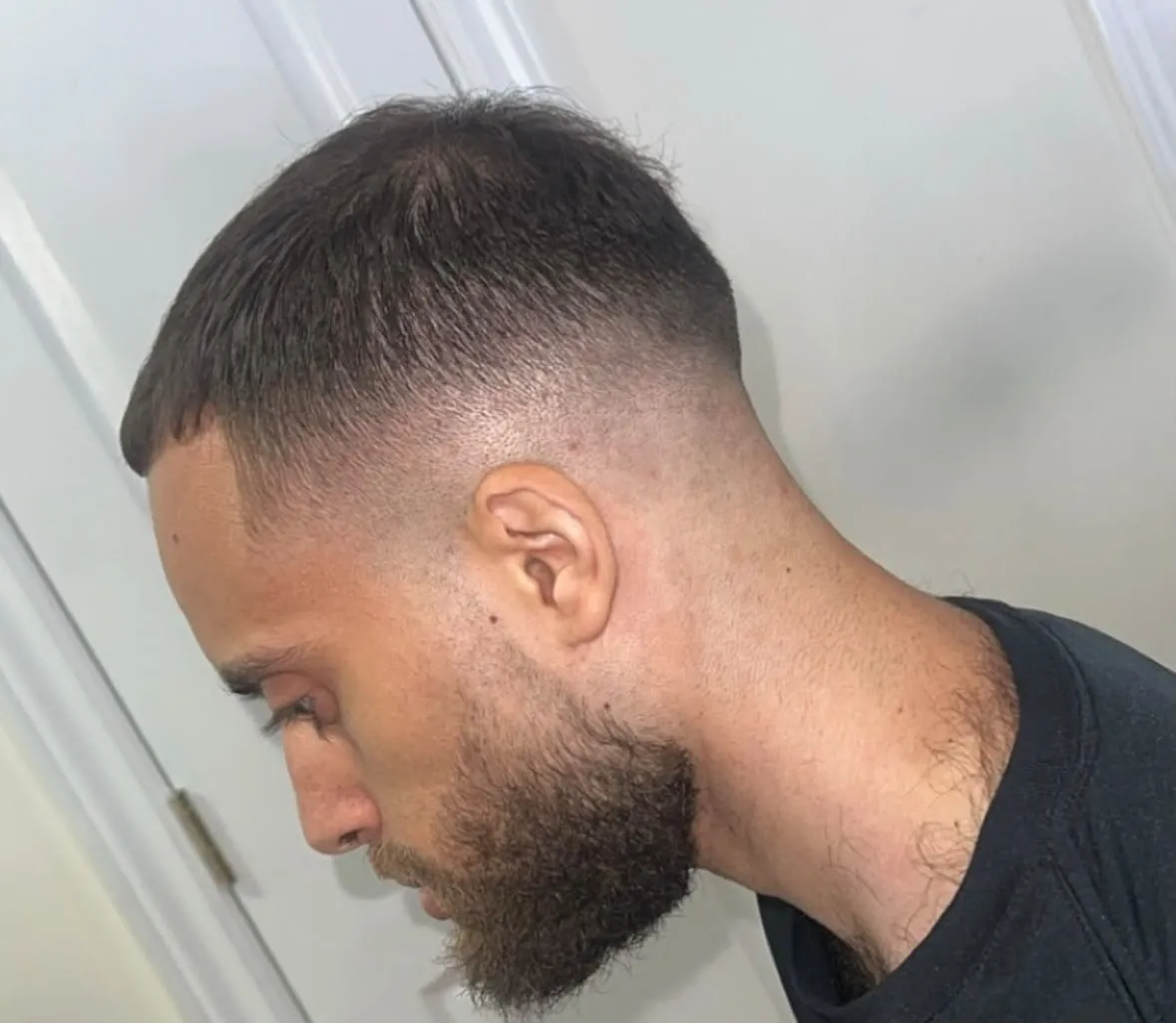
Check the patch of hair behind your ear
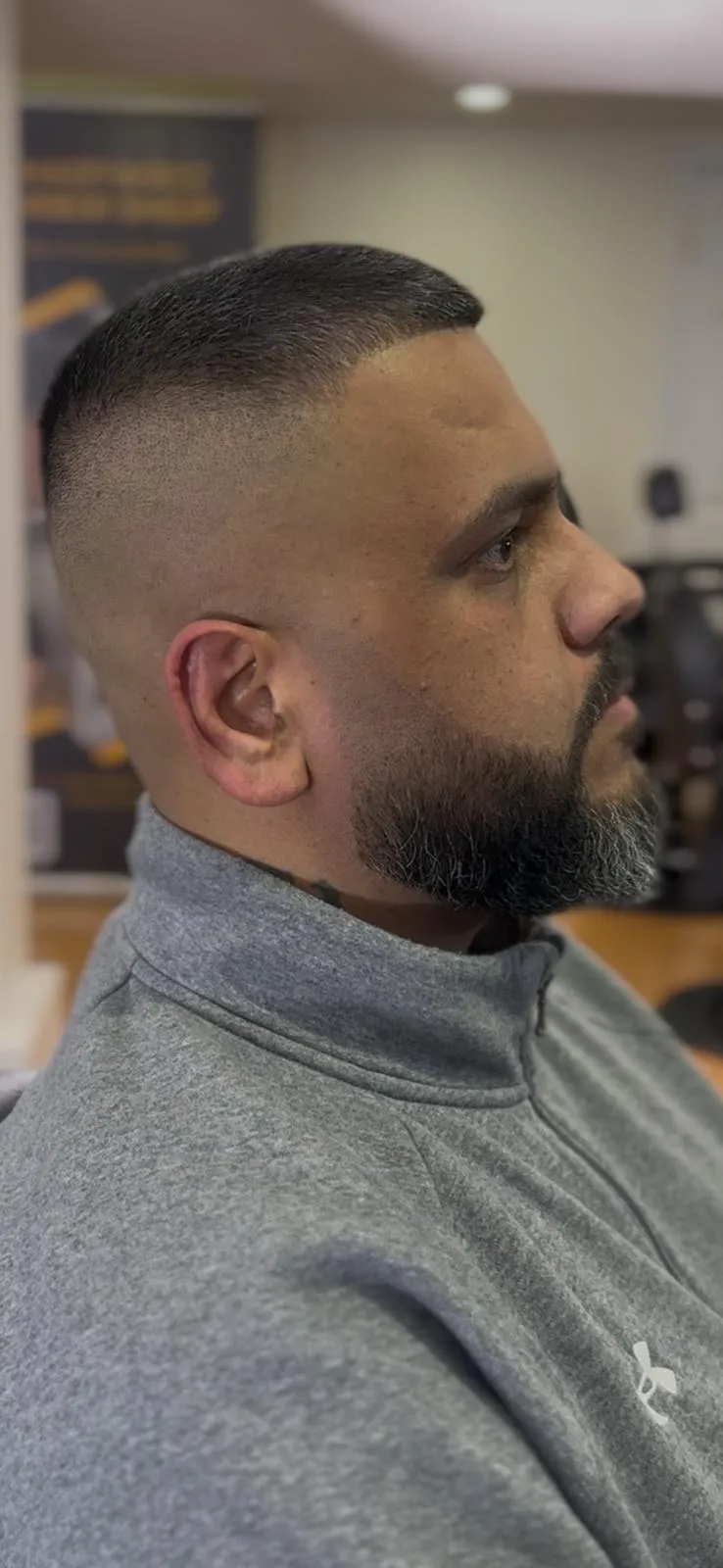
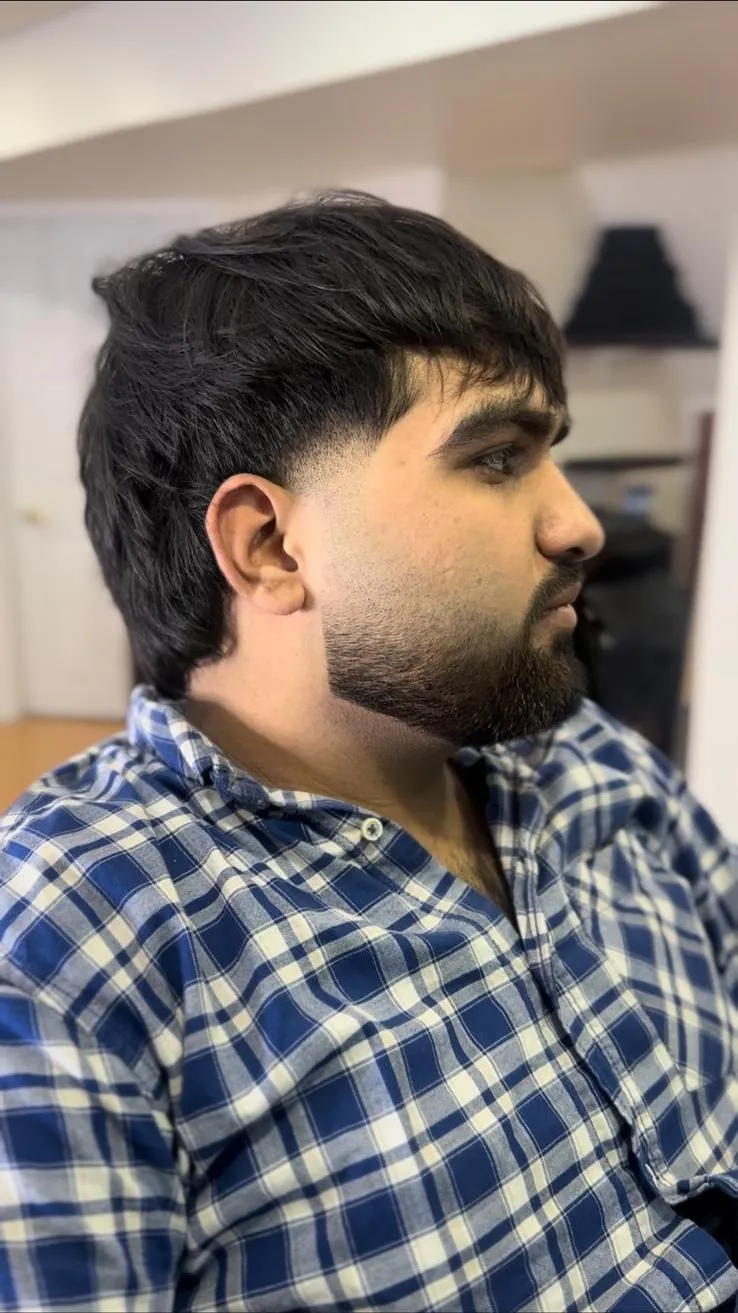
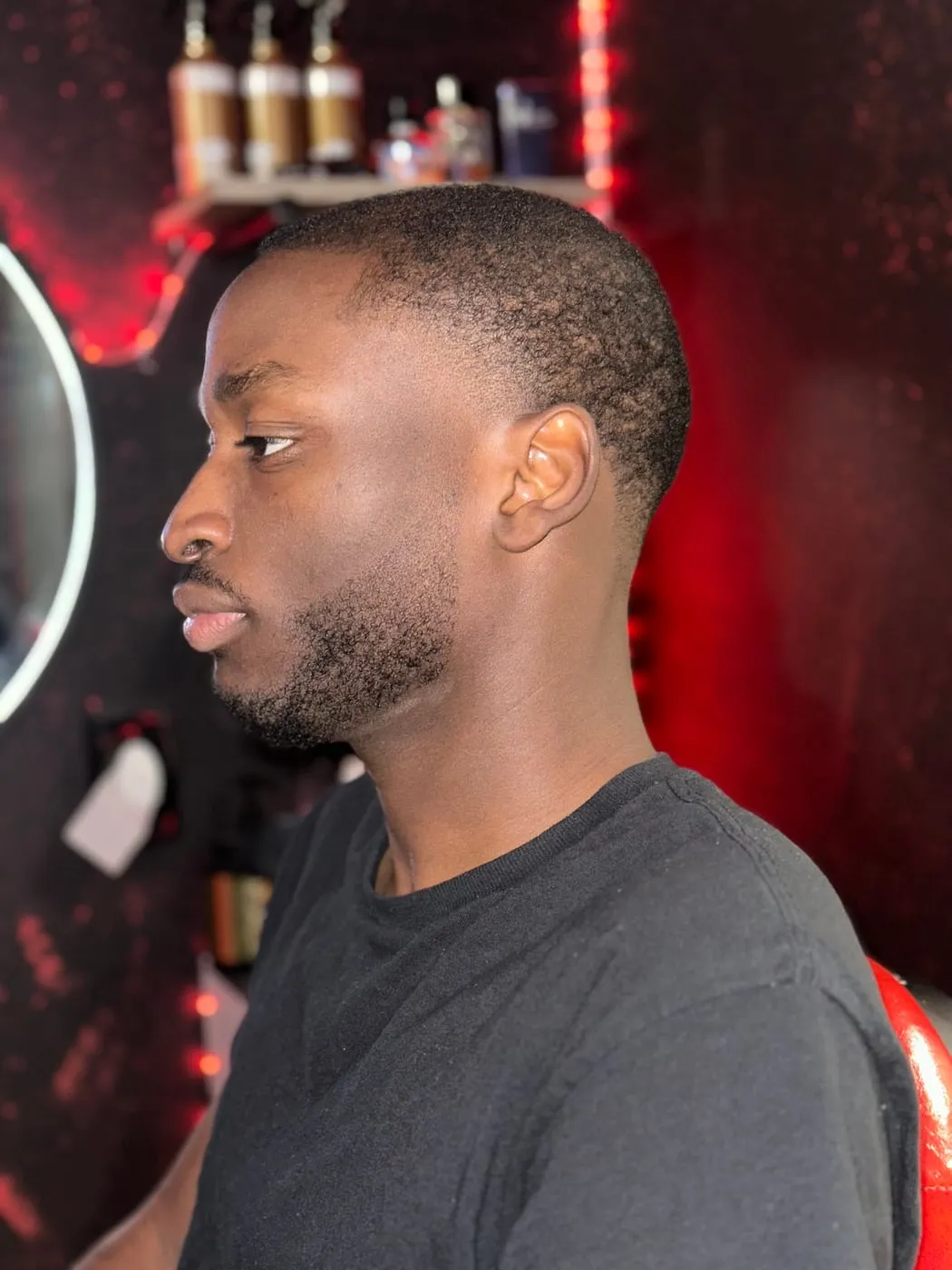
The area just behind and above the ear tells you which cut you have. On a drop fade that patch is short, often down to skin or a No. 0.5, because the fade line runs along the side and then dips downward right there. On a taper that same patch is untouched and sits at the length of the rest of the side, commonly a No. 3 or No. 4 or scissor length.
From straight on, the two can look close, since both shorten the sideburn. Turn your head and the drop fade shows a clear curved line of contrast, while the taper just looks like a neat regular cut with a soft edge at the bottom.
What each one takes off, zone by zone
Break the head into zones and the gap between the two cuts is easy to see.
| Zone | Drop fade | Taper |
|---|---|---|
| Sideburn | Faded short | Faded short |
| Above the ear | Faded short | Left at side length |
| Behind the ear | Curves down, faded | Left at side length |
| Occipital area | Kept longer above the curve | Left at side length |
| Nape | Faded to skin or near skin | Blended short at the edge only |
| Scalp visible | Across the whole lower band | Only at the very edges |
| Typical rebook | Every 2 to 3 weeks | Every 4 to 5 weeks |
Why the drop exists in the first place
The drop curve was designed around the occipital bone, the ridge at the back of the skull. A straight fade line wrapped around the back can cut across that ridge and make the back of the head look flat or boxy. Dropping the line behind the ear lets the hair above the bone stay fuller, so the silhouette stays rounded even though the lower back is short.
A taper never had that problem to solve. Because it only touches the nape and sideburns, the occipital area keeps all its hair, and the natural shape of the back is preserved without any curve at all. Put simply, the drop fade is a way to get fade contrast without losing the rounded back that a taper keeps by default.
Head shape, hair type and dress code
A few practical situations point firmly one way or the other.
- Flat back of the head: both help, but a taper keeps the most bulk there; a drop fade is the choice if you still want contrast.
- Curly or coily hair with a full top: a drop fade stops the back from looking like a box under the curls; a taper keeps the curls wide on the sides, which some people prefer.
- Straight hair you plan to grow longer: taper, since there is no band of short hair to grow through.
- Strict workplace or uniform job: taper, or a low drop fade with a shadow finish instead of skin.
- Sensitive skin on the neck: taper finished with a guard, which avoids long bare-skin passes around the ears.
How each grows out over a month
A drop fade changes character quickly. By the end of the first week the skin at the bottom has shadowed over; by week three the curved line has softened and the back reads as a short rounded cut rather than a fade. That is why regulars come back every two to three weeks.
A taper barely changes in the same period. The edges thicken slowly and the sides simply get a bit longer, so four or five weeks is normal. If your schedule only allows a cut once a month, that alone can decide it. Our page on how long a fade lasts has the week-by-week detail for fades.
Choosing and asking for the right one
Ask yourself whether you want visible scalp above and behind the ears. If yes, it is a drop fade, and you then pick the height: a low drop starts just above the ear, a mid drop at the temple. If no, it is a taper, and you pick how short the edges go, from skin to a No. 2.
When booking, describe the back as well as the sides: 'mid drop fade, curving behind the ear, skin at the nape' or 'taper the sideburns and neckline only, leave the sides at a 3'. Drop fades and tapers are among Marcel Shabo’s specialties; see the drop fade page and our taper fades service, both booked as Haircut Only.
Drop fade vs taper: common questions
Is there such a thing as a drop taper?
Some barbers use the term for a taper whose nape section curves down slightly behind the ear. It has less contrast than a drop fade because the sides above stay long, so describe the shape you want rather than relying on the name.
Can I turn a drop fade into a taper?
Yes. Let the sides grow for about three weeks, then ask for only the edges to be cleaned. By the second visit the band above the ear has filled in enough to read as a taper.
Which one looks better with a beard?
Both connect to a beard at the sideburn. A drop fade gives a sharper fade-into-beard transition; a taper keeps more hair at the sideburn, which suits a fuller beard.