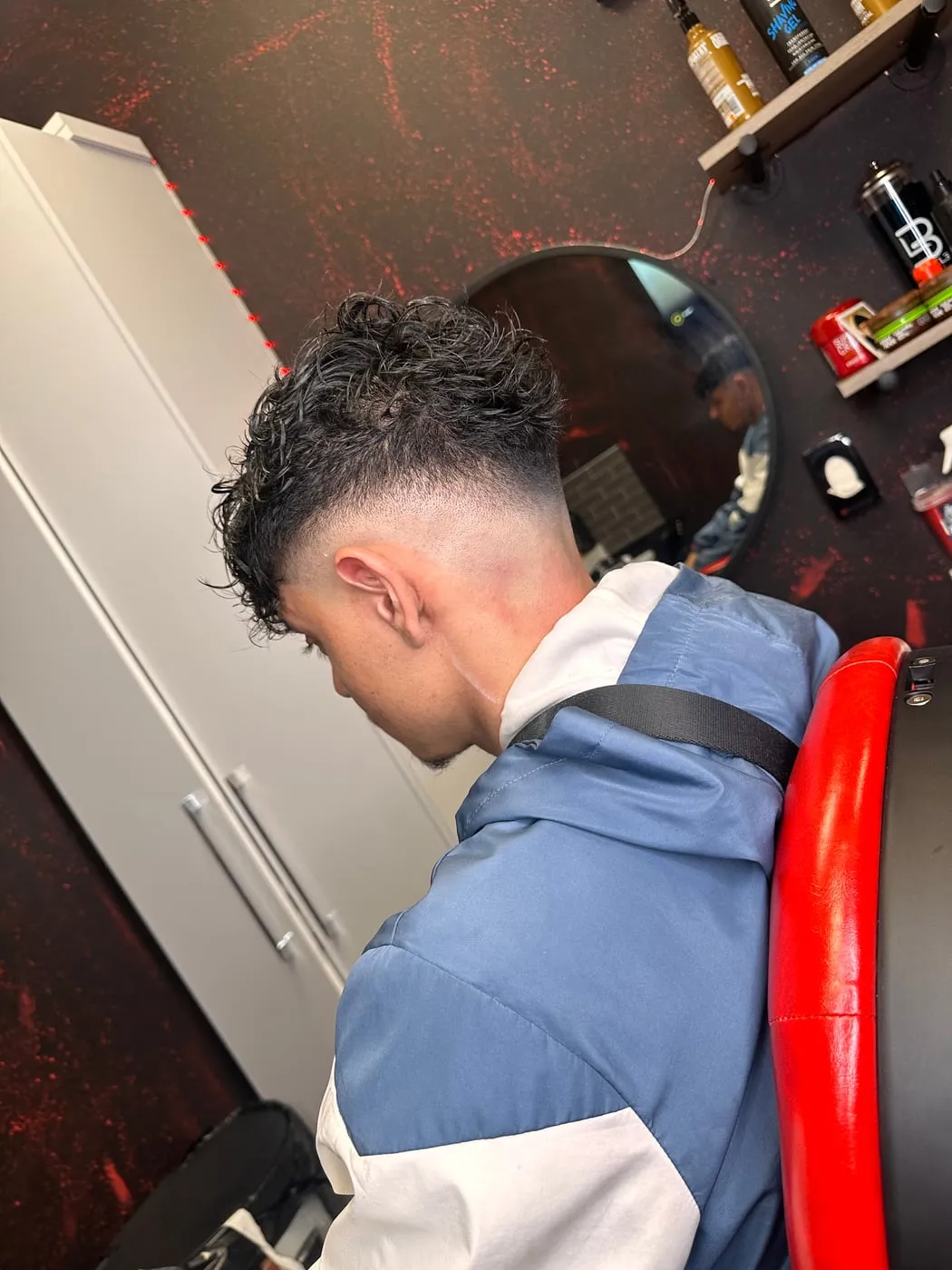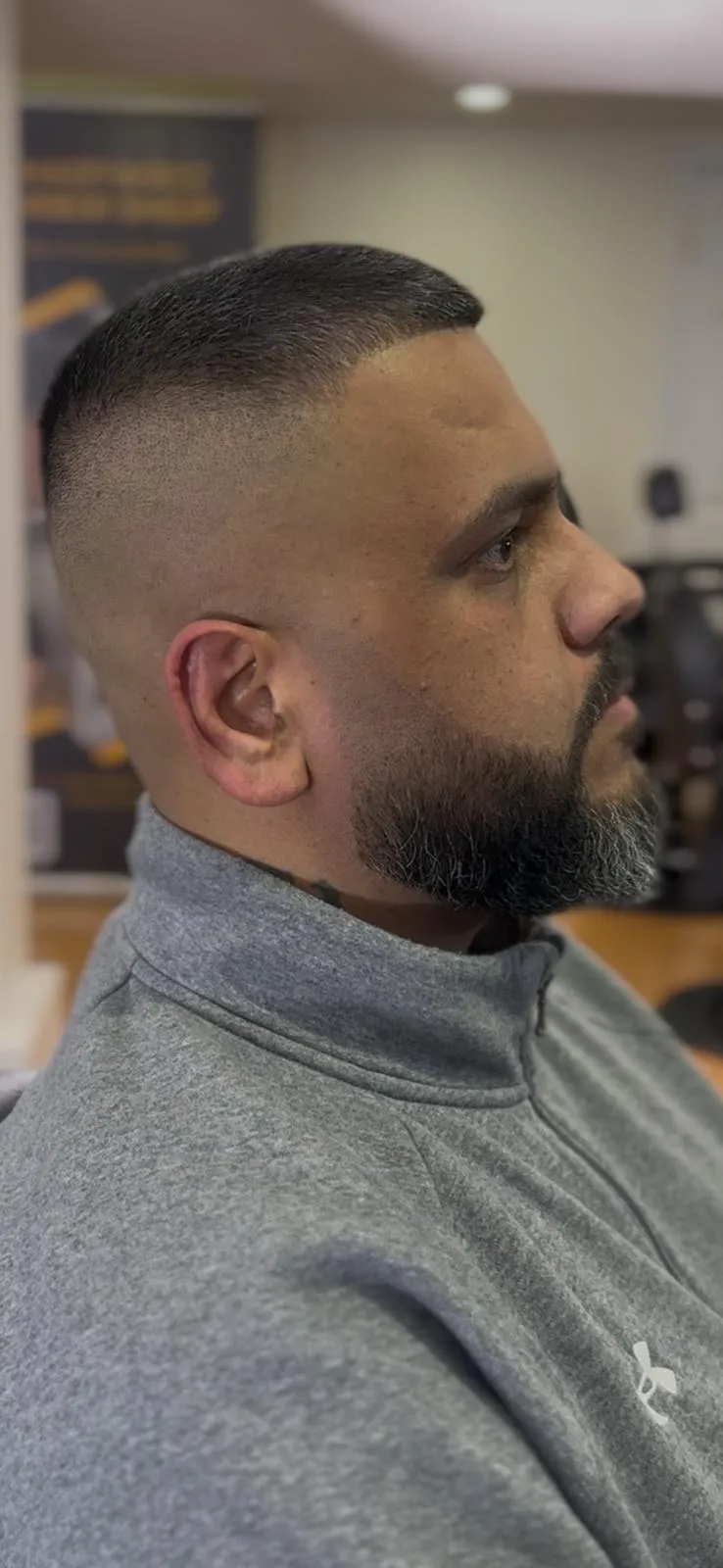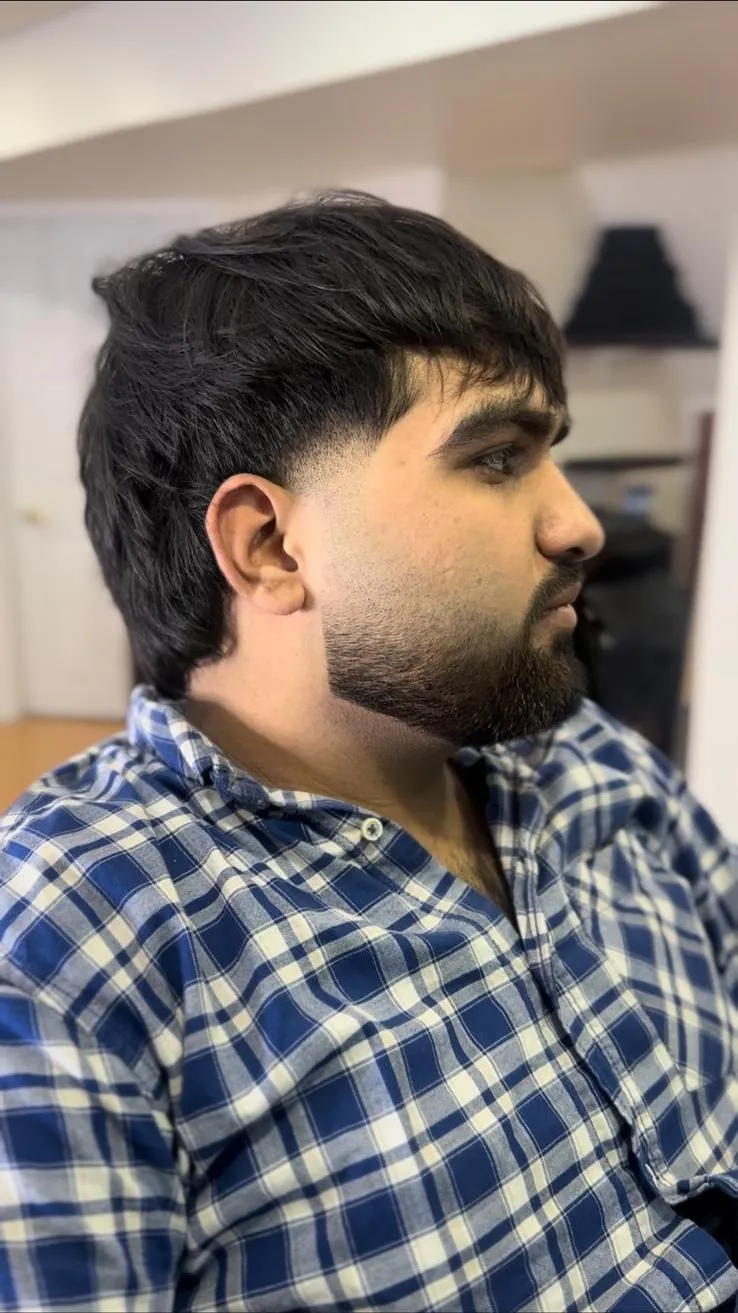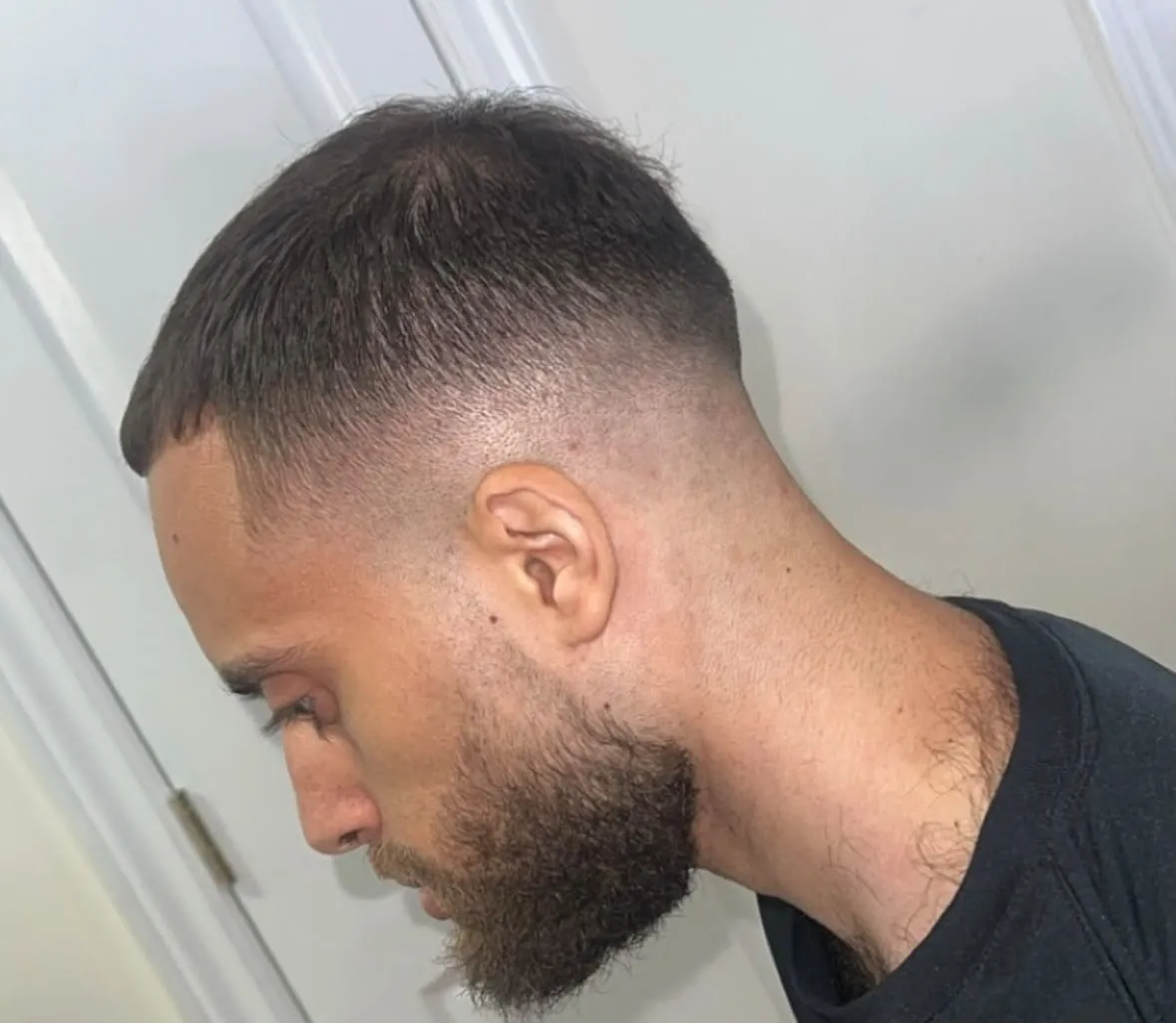

Style Comparisons
Barber vs Home Haircut: What Clippers at Home Can and Cannot Do
Short answer: Home clippers handle one-length cuts well: a buzz cut with a single guard, a trim to keep a crew cut short, and tidying fuzz on the neck. They struggle with anything that needs a blend or a line, such as fades, tapers, the back of the head and the front hairline, because you cannot see or reach those areas properly. Most people get the best result from a hybrid: barber cuts on a schedule, light tidying at home in between.
Home cut or barber, job by job
Split a haircut into its parts and the answer becomes clearer, because some parts are easy to do yourself and some are not.
| Job | At home | At the barber |
|---|---|---|
| Buzz cut, one guard all over | Works well | Adds a clean neckline and lineup |
| Keeping the top short on a crew cut | Possible with patience | More even, especially at the crown |
| Neck fuzz below the hairline | Works well | Part of every cut |
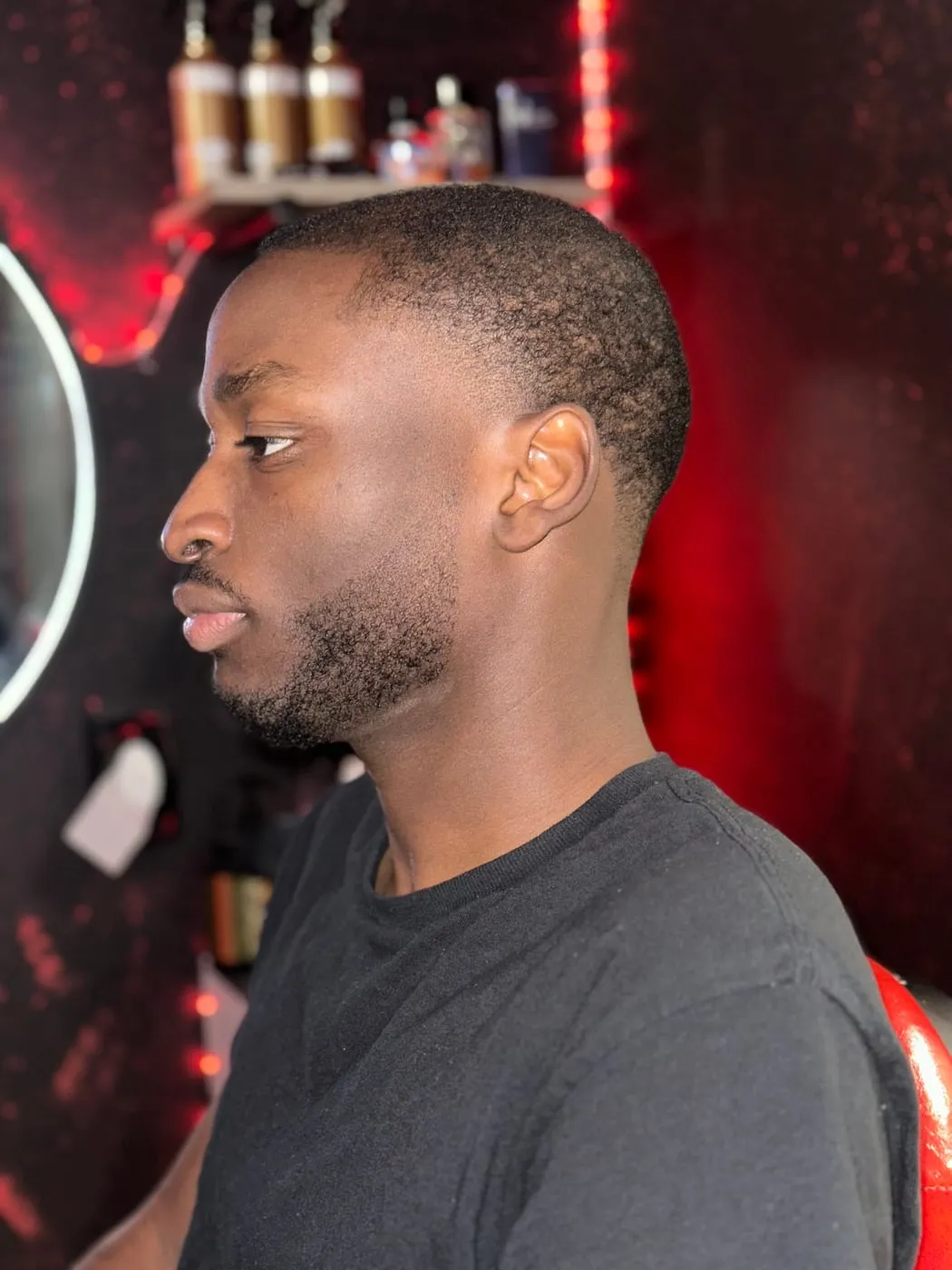
| Fade or taper blend | Rarely works | Core barber skill |
| Front hairline and temples | High risk | Follows your natural line |
| Scissor work on top | Hard to keep even | Shaped to how your hair falls |
| Beard neckline | Only stray hairs | Set and balanced to your jaw |
What home clippers genuinely do well
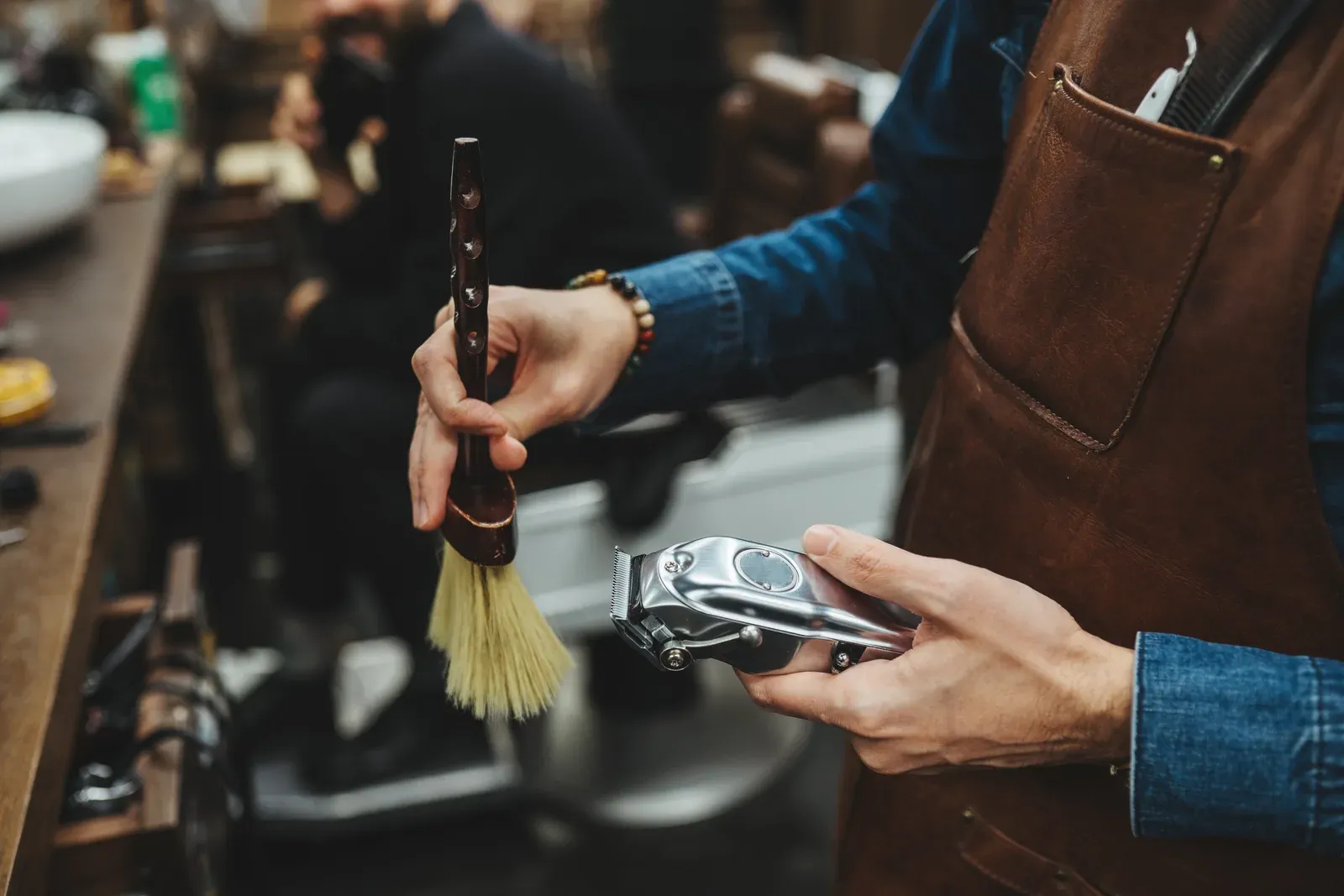
Clippers are designed to repeat one length, and that is where they shine at home. A No. 2 guard leaves roughly 6 mm wherever it touches, so a buzz cut run carefully in several directions will come out even without much skill.
They are also good at maintenance. If you like a very short crew cut, running the same guard over the top every week or two between barber visits keeps it from growing into a shapeless length. Our page on what clipper guard numbers mean helps you match what your barber used.
Finally, a small trimmer is ideal for the stray hairs that grow below the neckline and over the ears, which are the first things to make a cut look overdue.
Where home cuts go wrong
Most home-cut repairs we see come from the same few places.
- Fades: a blend needs several guard lengths and lever positions, worked upward in small overlapping passes. Doing that in a mirror, reversed, usually leaves a hard line or a hole.
- The back of the head: even with two mirrors you are guessing at angle and pressure, and the crown swirl is easy to gouge.
- Lines: hairlines, temple corners and sideburns cut with a trimmer tend to creep higher with each attempt, and a pushed-back line takes weeks to grow in.
- Symmetry: most people cut their dominant-hand side shorter without noticing.
- Scissor tops: without a clear view of how the hair falls, the top ends up choppy in one area and heavy in another.
A hybrid routine that stretches your cut
The routine below keeps a short cut looking cared for with fewer full appointments. It works best with tapers and one-length cuts; skin fades still need a barber every two to three weeks to look like fades.
- Get a full cut at the barber and ask which guard numbers were used on the sides and top.
- Week 2: trim only the fuzz on the neck below your natural neckline, staying well clear of the blend.
- Week 3: snip single hairs over the ears with small scissors.
- Week 4 or 5: book the barber again before the blend loses its shape, rather than trying to rescue it yourself.
- Between visits, if you wear a buzz cut, re-run the same single guard all over; leave the edges for the barber.
Tools worth owning, and the ones to skip
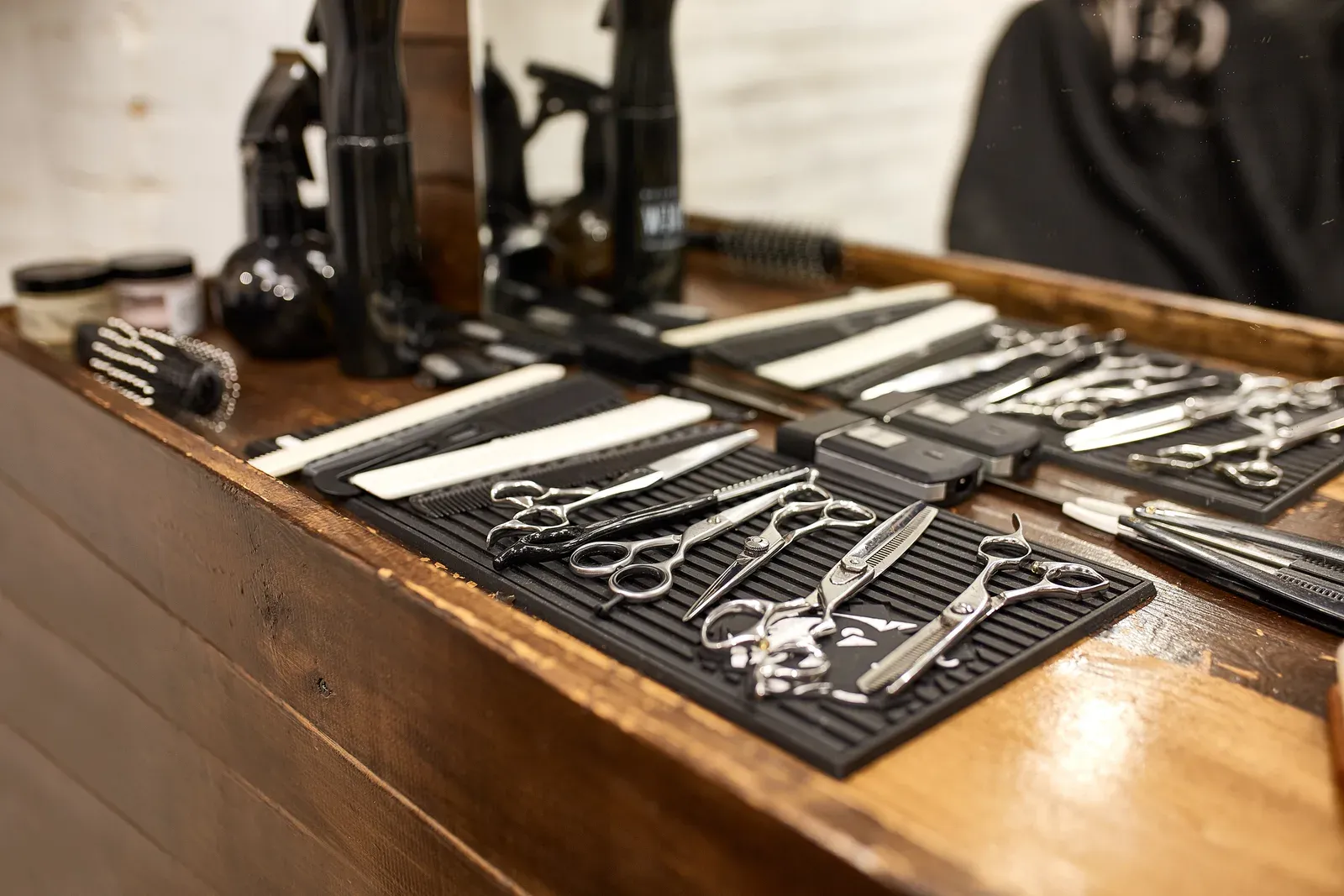
A small cordless trimmer with a guard is the most useful home tool; it handles necks, ears and stray beard hairs safely. A full-size clipper with a set of guards is only worth it if you wear a buzz or very short crew cut. Clean and disinfect blades after each use, and do not share clippers between people.
Skip the straight razor and foil shaver for your neckline. Skin-close passes at odd angles are easy to overdo and more likely to leave bumps. Our answer on touching up a fade at home goes into what to leave alone.
Which to choose
Cut at home if you wear one length all over and are happy with a simple, even buzz. Go to a barber for anything with a fade, a taper, scissor length on top, a defined hairline or a beard connection, because those are exactly the parts home clippers cannot reach or see.
Most people end up in between: barber for the shape, home for the tidy. If a home cut has already gone wrong, book sooner rather than later so there is less to rebuild. Same-day openings often exist on Booksy, or you can call or text; see booking at Markcutit and our skin fades service.
Barber vs home haircut: common questions
Can a barber fix a home haircut?
Usually, though it may mean going shorter or taking a fade higher to erase a line or hole. The earlier you come in, the more options remain.
Is a buzz cut at home as good as one at a barber?
The length can be just as even. What a barber adds is a shaped neckline, clean edges around the ears and a lineup, which is what makes a buzz look deliberate.
How do I tell my barber I have been cutting at home?
Just say so and mention the guard you used. It helps us understand why some areas are shorter and plan the blend around them.