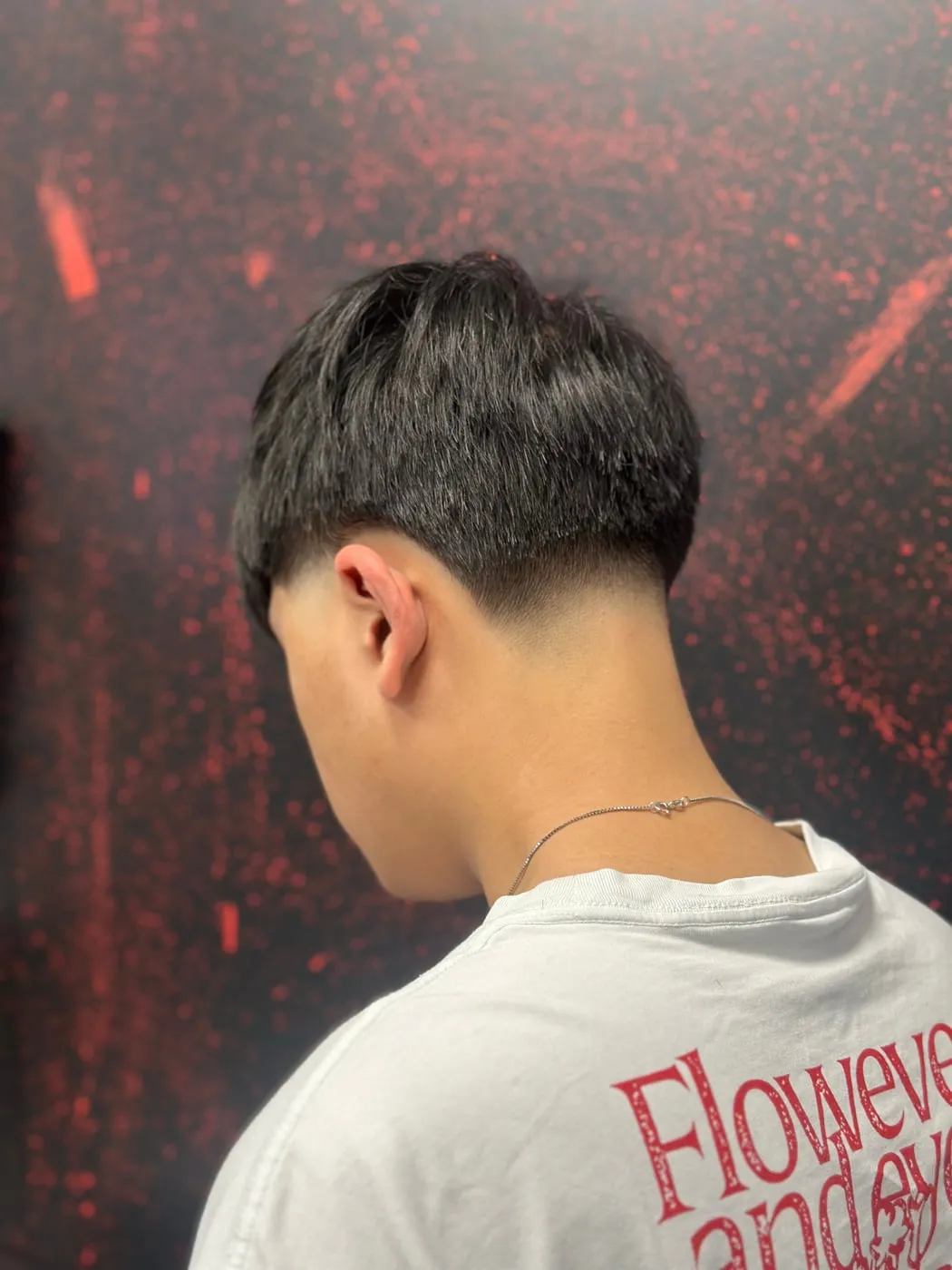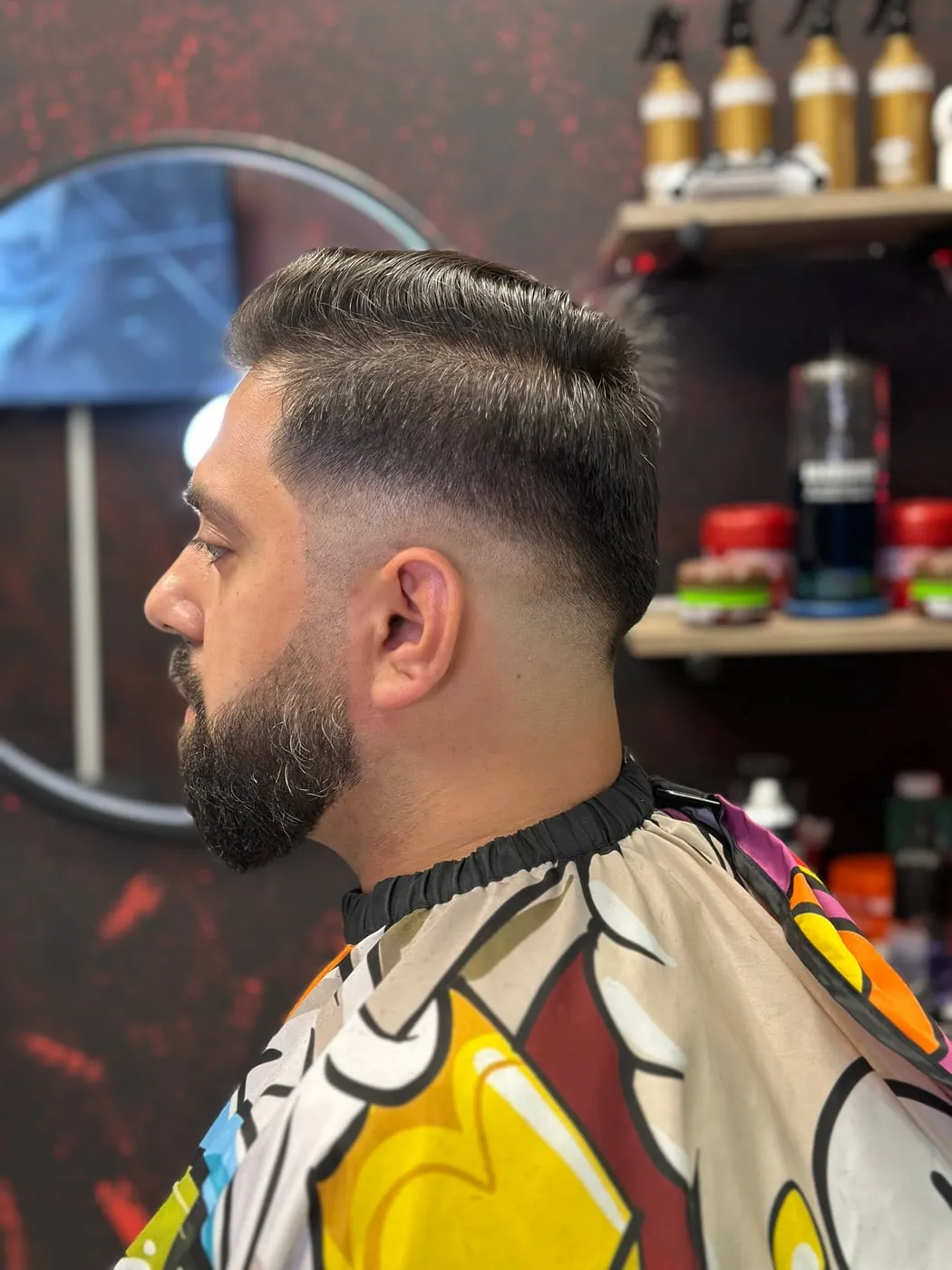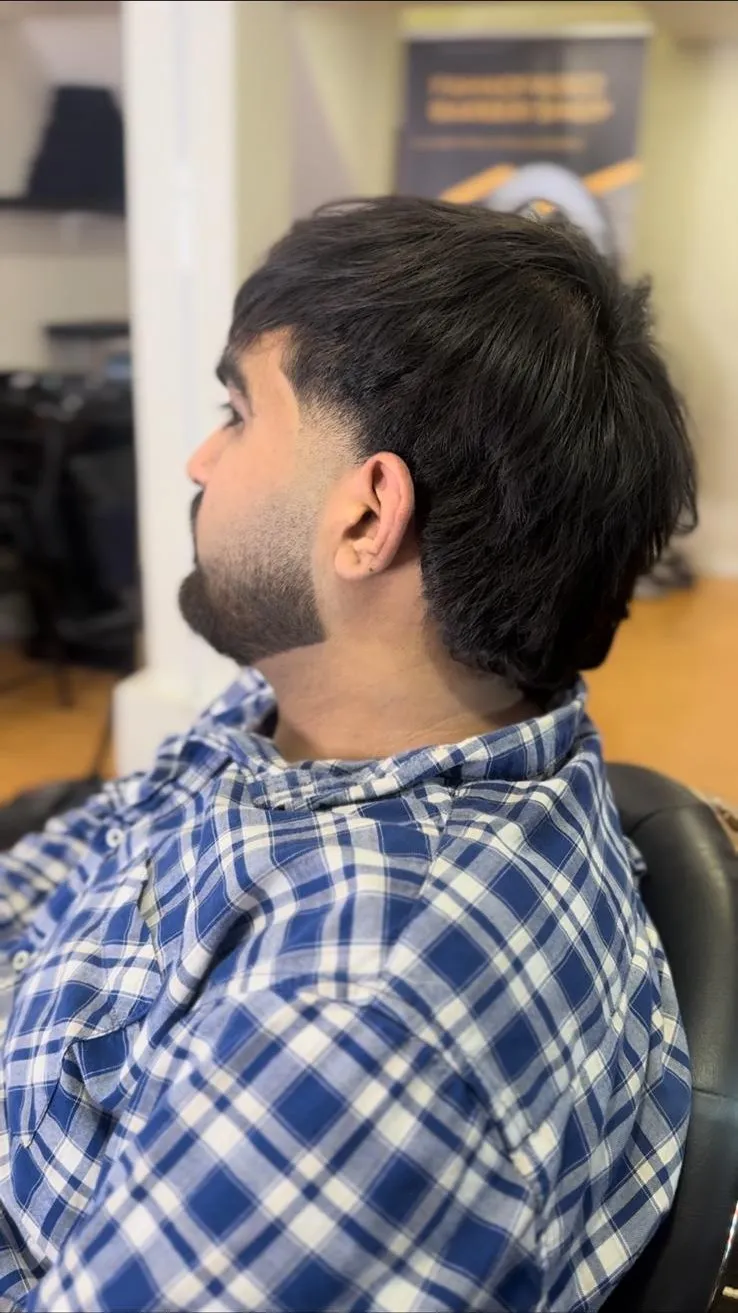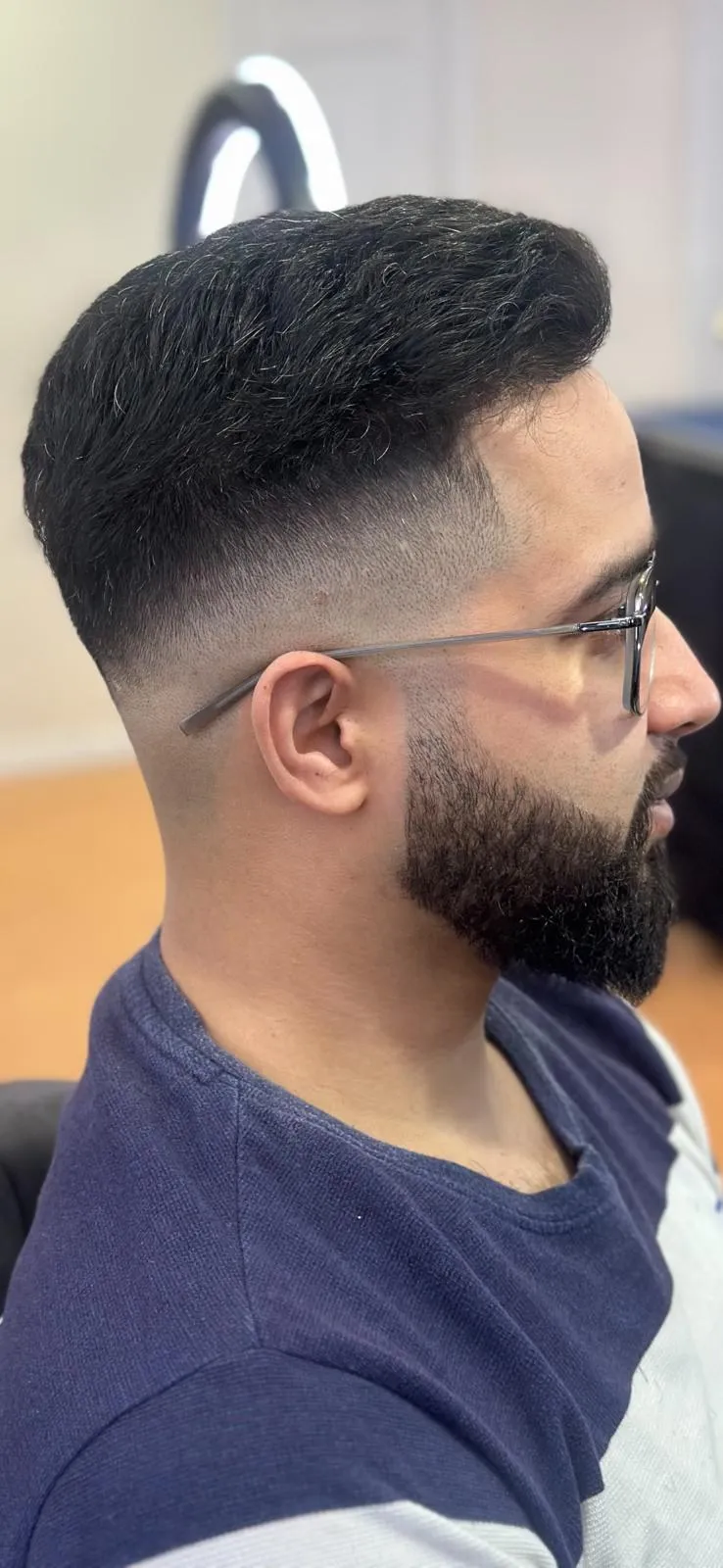

Style Comparisons
Pompadour vs Quiff: Volume, Direction and Daily Effort
Short answer: A pompadour and a quiff both put height at the front, but the direction differs. A pompadour lifts the hair up and then sweeps it smoothly back over the head in one rolled shape, usually with a shiny finish. A quiff lifts the front up and slightly forward or to the side, with a looser, more textured finish. The pompadour needs more length and effort; the quiff is quicker and more forgiving.
Where the volume goes on each style
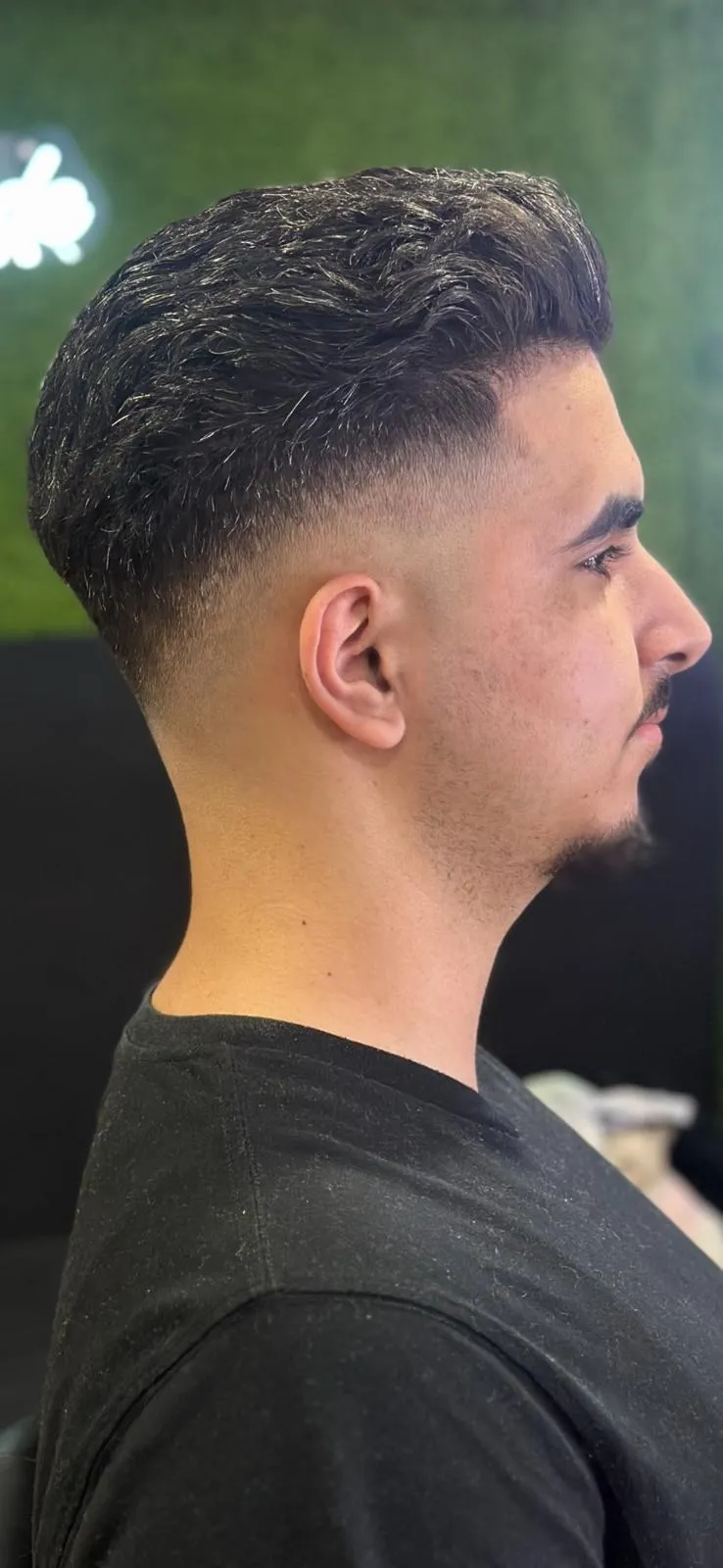
On a pompadour the volume travels backward. The front is lifted into a rounded wave and the rest of the top is combed back behind it, so from the side you see a smooth curve that runs from the forehead toward the crown. The style is named after Madame de Pompadour, and the 1950s rockabilly version is what most people picture.
On a quiff the volume stays at the front. The hair is pushed up and allowed to fall slightly forward or across, and the back half of the top can be shorter and less styled. The result is height without the rolled structure, and it looks a bit more casual.
How much length you need for each
A proper pompadour needs at least 10 to 15 cm at the front hairline, graduating shorter toward the crown, because the hair has to be long enough to roll back on itself. With less length, you get a quiff whether you want one or not.
A quiff works from around 7 to 10 cm at the front. That makes it the natural waypoint if you are growing out a crop and want a pompadour eventually: you can wear a quiff for the two or three months it takes to gain the extra length. Hair grows roughly 1 to 1.5 cm a month, so plan accordingly.
Pompadour vs quiff in one table
These are the comparisons we make most often when someone brings in a photo.
| Pompadour | Quiff | |
|---|---|---|
| Volume direction | Up and back | Up and slightly forward or across |
| Front length | 10 to 15 cm or more | 7 to 10 cm |
| Finish | Smooth, rolled, often shiny | Textured, piecey, usually matte |
| Main product | Pomade (water-based or oil-based) | Clay, paste or light wax |
| Tools | Blow-dryer, round brush, comb | Blow-dryer and fingers |
| Daily styling time | About 10 to 15 minutes | About 5 minutes |
| Humidity tolerance | Low; can collapse in July | Better; texture hides movement |
Products and daily routine for each
For a pompadour, blow-dry the front up and back with a round brush while the hair is damp, then work pomade through and comb it into shape. A strong water-based pomade gives hold and shine and washes out easily; our page on using pomade covers the technique.
For a quiff, rough-dry the front upward with your fingers, then press a pea-sized amount of clay or paste in from the roots and lift. A little sea salt spray before drying helps fine hair hold height. If you are unsure which product family suits you, the pomade vs wax vs clay comparison sets them side by side.
Which one to choose, depending on your life
Your morning and your hair type decide this more than taste.
- Ten spare minutes, a hair-dryer habit and thick straight hair: pompadour. It rewards effort.
- Five minutes or less, or you train in the morning: quiff. It recovers from a hat or a helmet with a quick rework.
- Wavy hair: quiff. Waves make the smooth roll of a pompadour hard to keep, but they add natural texture to a quiff.
- Fine or thinning hair: quiff with clay. A pompadour exposes the scalp at the roll when hair is sparse.
- Formal events and a love of vintage style: pompadour, often with a low fade or scissor-cut sides and a side part line.
- Summer in Ontario humidity: quiff, or a pompadour with a stronger, oil-based pomade.
Getting the cut right at Markcutit
Both styles are mostly built with scissors on top, so the cut is booked as Haircut Only and handled like our scissor cuts service. Tell us how long you are willing to spend styling, because we cut the front differently for each: graduated back for a pompadour, left heavier at the front for a quiff.
If you are not sure you have the length yet, ask for a quiff now and we will keep building the front each visit. See the separate pompadour and quiff pages for side options and photos.
Pompadour vs quiff: common questions
Is a quiff just a short pompadour?
Not quite. The direction differs too: a pompadour is combed back behind the lift, while a quiff lets the front fall forward or across. A short pompadour is really a quiff.
Do I need a fade for either style?
No. Both look good with scissor-cut sides, a taper or a fade. A fade adds contrast, while longer sides feel more classic.
Can curly hair hold a pompadour?
Loose curls can, with blow-drying and a strong pomade, but it takes work. Tighter curls usually suit a curly quiff-style top better.