
Haircut Styles
Quiff: The Loose, Lifted Front and How to Get It
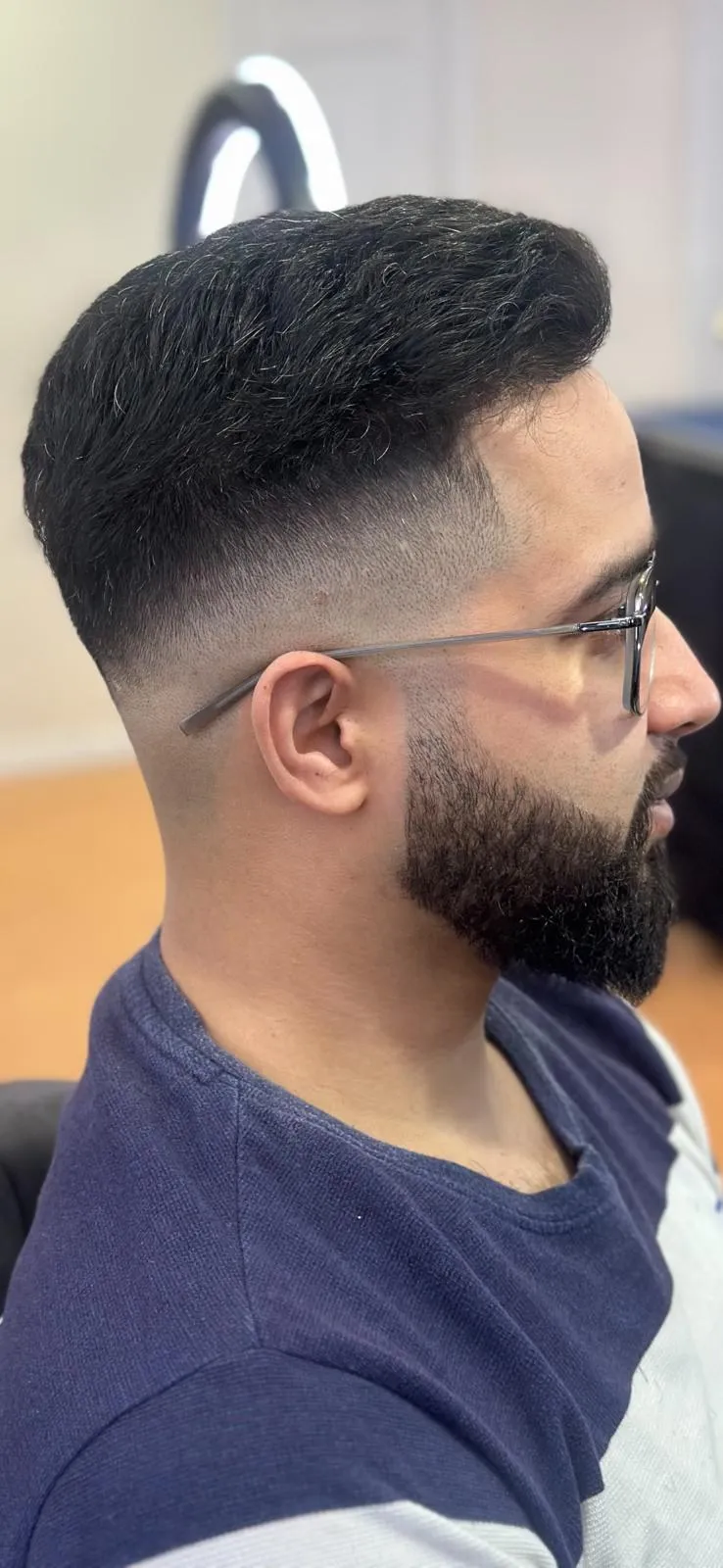
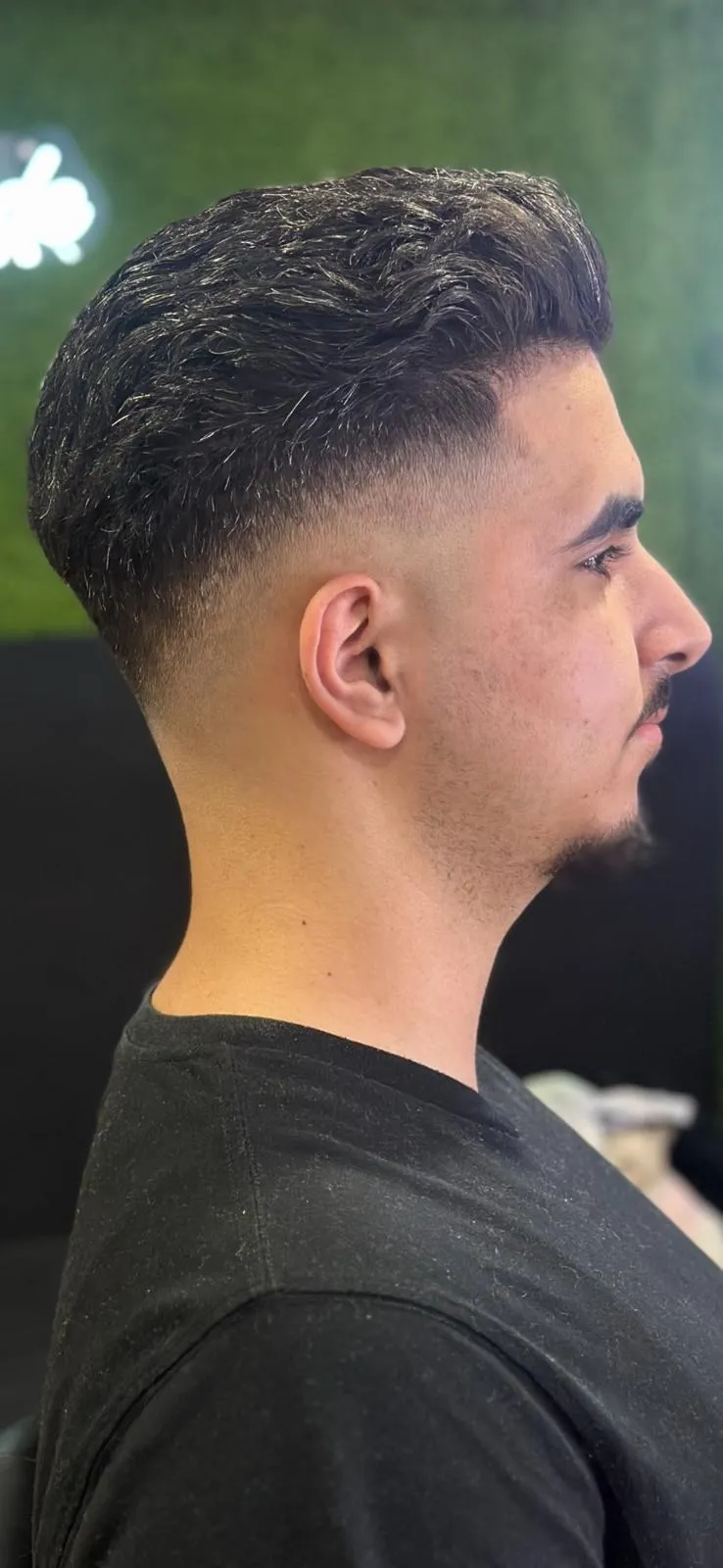
Short answer: A quiff is a haircut with the front 6 to 10 cm long, brushed up and back with lift and movement, over shorter sides that are often faded. It is looser and less structured than a pompadour: the hair can separate and move. A textured quiff uses matte clay for a messy finish, while a polished quiff uses paste for a smoother, tidier shape.
How much length the quiff needs on top
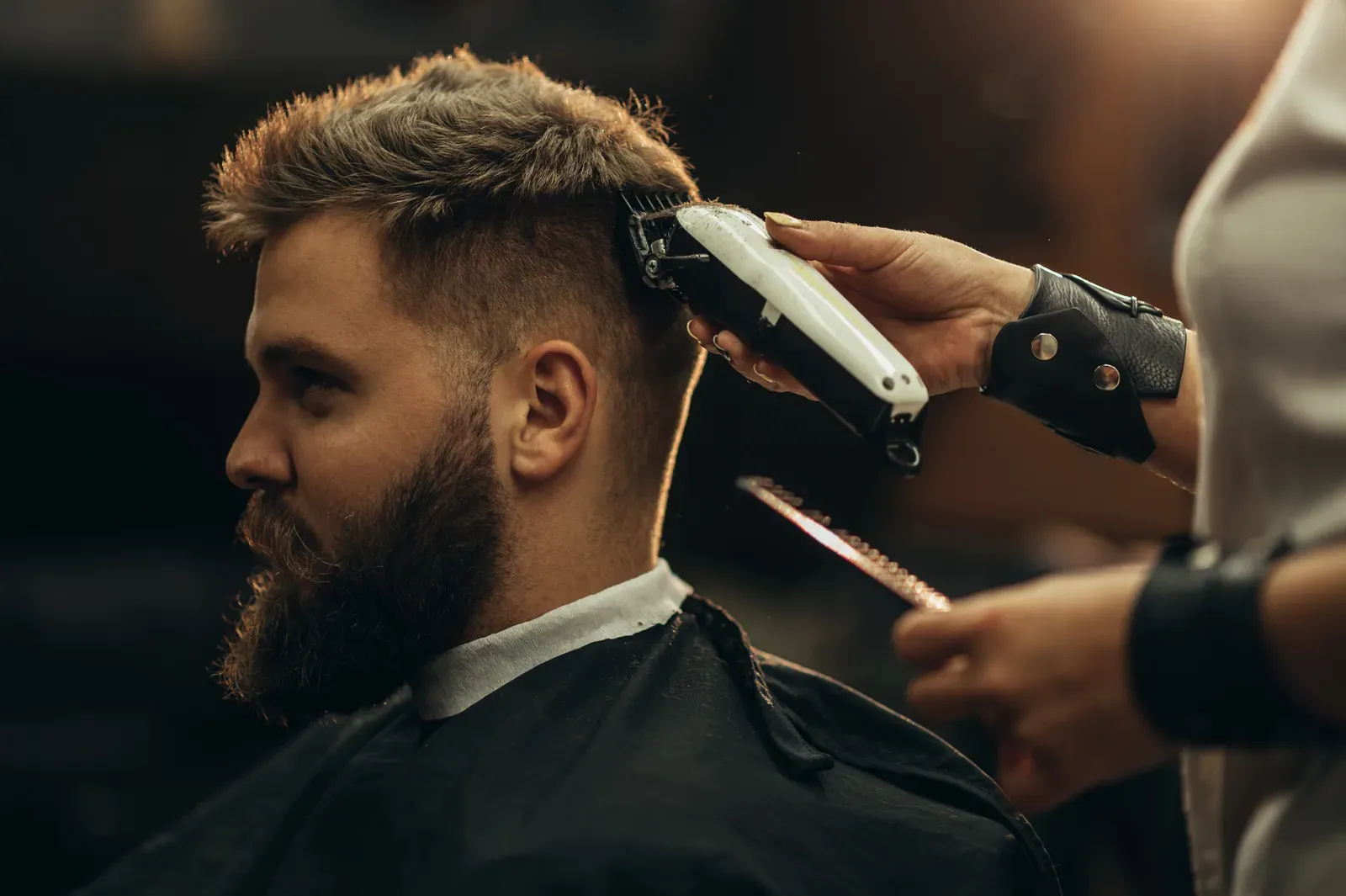
A quiff needs at least 6 cm at the front to lift and fold back. Most quiffs sit between 6 and 10 cm, getting shorter as they move back to the crown, where 3 to 4 cm is typical. That shorter crown stops the back from sticking up and lets the front do all the work.
If you are growing into a quiff from a short cut, it takes about three to five months, depending on your starting point. While the front grows, keep the sides and crown maintained. Our guide to growing out a fade explains how to avoid the awkward middle stage.
Textured quiff versus polished quiff
The same cut can be styled two very different ways. Choose the one that suits your hair and how you want to come across.
- Textured quiff: messy, piecey and relaxed. Best on thick or wavy hair. The top is point cut so the ends separate, and you style it with matte clay and fingers. Looks deliberate without looking fussy.
- Polished quiff: smooth, rounded and tidier. Closer to a pompadour but less tall. Uses a paste with a little shine, styled with a brush or comb. Better for formal settings.
- Short quiff: only 5 to 6 cm at the front, with a tight fade. Low effort and easy to keep neat; a good first quiff.
Clay or paste: which product holds a quiff best?
Clay is the go-to for a textured quiff. It has a firm, matte hold and adds grip, so the front stays up without looking wet. It works particularly well on fine hair, where it adds apparent thickness. Our guide on using hair clay covers amounts.
Paste sits between clay and pomade: a medium hold, a low to medium shine and more flexibility. It is the better choice for a polished quiff or thick hair that clay makes stiff. Whatever you use, start with a small amount; you can always add more, but too much weighs the front down.
Styling a quiff in five minutes
A blow dryer makes the quiff much easier, even if it is only for a minute. Air-dried hair tends to fall forward instead of standing up.
- Towel dry to damp. For fine hair, a spritz of sea salt spray at the roots adds grip.
- Blow dry the front up and slightly back, using your fingers or a vent brush to lift the roots.
- Dry the rest of the top back toward the crown.
- Warm a pea-sized amount of clay or paste in your palms until it is invisible.
- Rake it through from the back of the top to the front, then lift the front with your fingertips.
- For a textured quiff, twist a few pieces at the front; for a polished one, smooth the surface with a comb.
Which fade suits a quiff
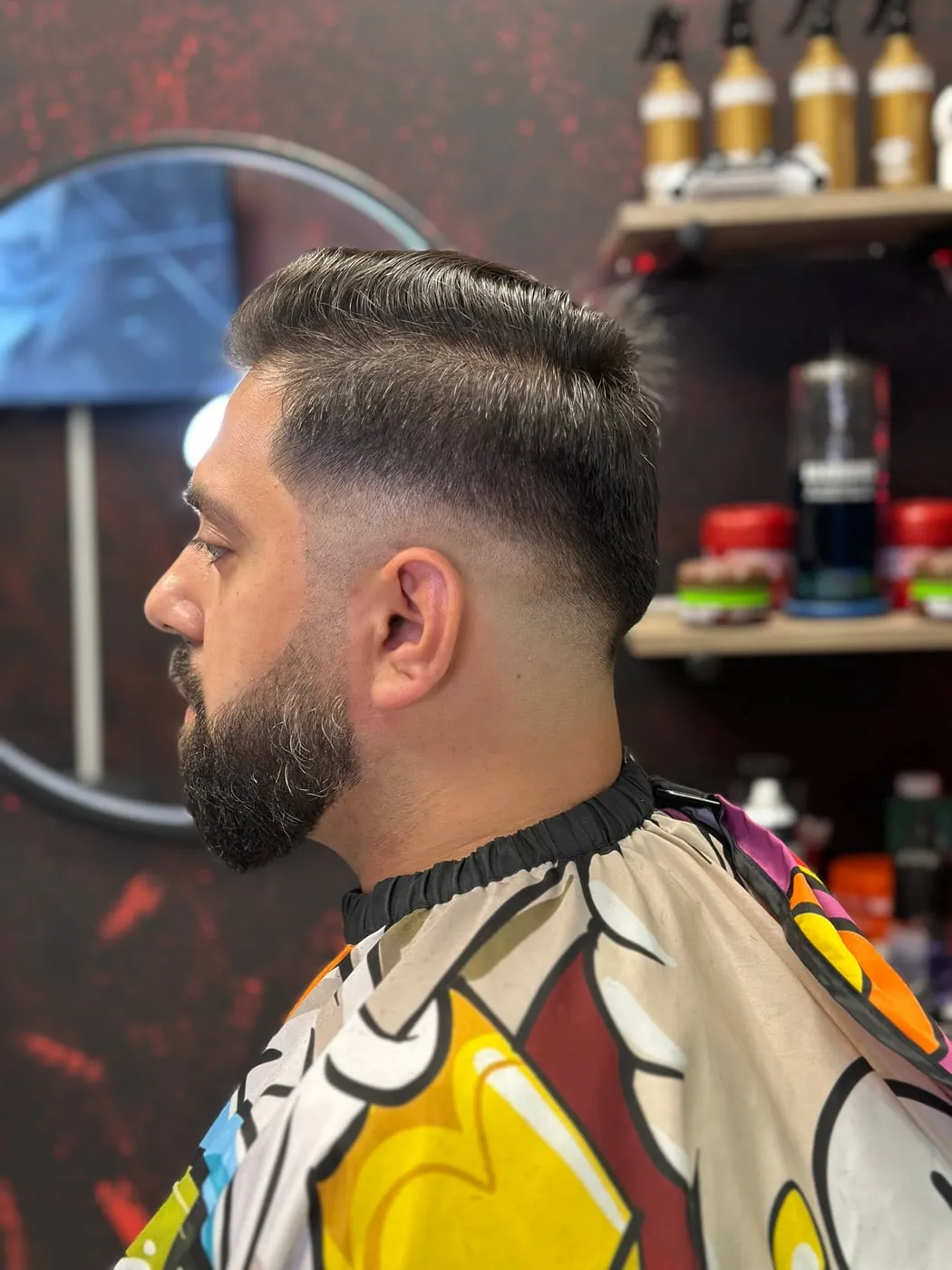
A mid fade is the default pairing, because it makes the front stand out without making the sides severe. A high skin fade suits a round face by slimming the sides, while a low taper keeps it conservative for the office.
The blend between the top and the sides is important. If the transition is too abrupt, the quiff looks like it is sitting on top of the head. We blend the top down into the fade at the parietal ridge so the silhouette flows from front to back. You can book this as a Haircut Only; the skin fade service page explains what is included.
Who should consider a different cut
A quiff exposes the front hairline, so if your temples have receded significantly, the lift draws attention to the corners. In that case, a forward-styled textured crop works better.
Very tight curls will not lift into a quiff without a lot of heat. A curly top with a fade gives a similar amount of height with the curl working for you instead of against you.
Quiff: common questions
What is the difference between a quiff and a pompadour?
A pompadour is taller, smoother and more structured; a quiff is looser and more textured. Our pompadour vs quiff comparison explains both in detail.
Can I have a quiff with wavy hair?
Yes. Wavy hair makes an excellent textured quiff because the wave adds movement without much styling.
How often should I trim a quiff?
The sides every two to four weeks, depending on the fade, and the top every five to six weeks so the front keeps its length.
Why does my quiff fall flat by the afternoon?
Usually because it was not blow dried or there is too much product. Try drying the roots upward and using less, firmer product.