
Style Comparisons
Pomade vs Wax vs Clay: Hold, Shine and Which Suits Your Cut
Short answer: Pomade, wax and clay differ mainly in shine and texture. Pomade gives a glossy, combed finish and suits slick backs, side parts and pompadours. Wax gives a flexible medium hold with a low-to-natural shine for piecey styles you can rework through the day. Clay gives a matte finish with strong hold and adds body, which suits textured crops, quiffs and fine hair. Water-based products wash out easily; oil-based pomade and heavy wax need a thorough shampoo.
What each product actually is
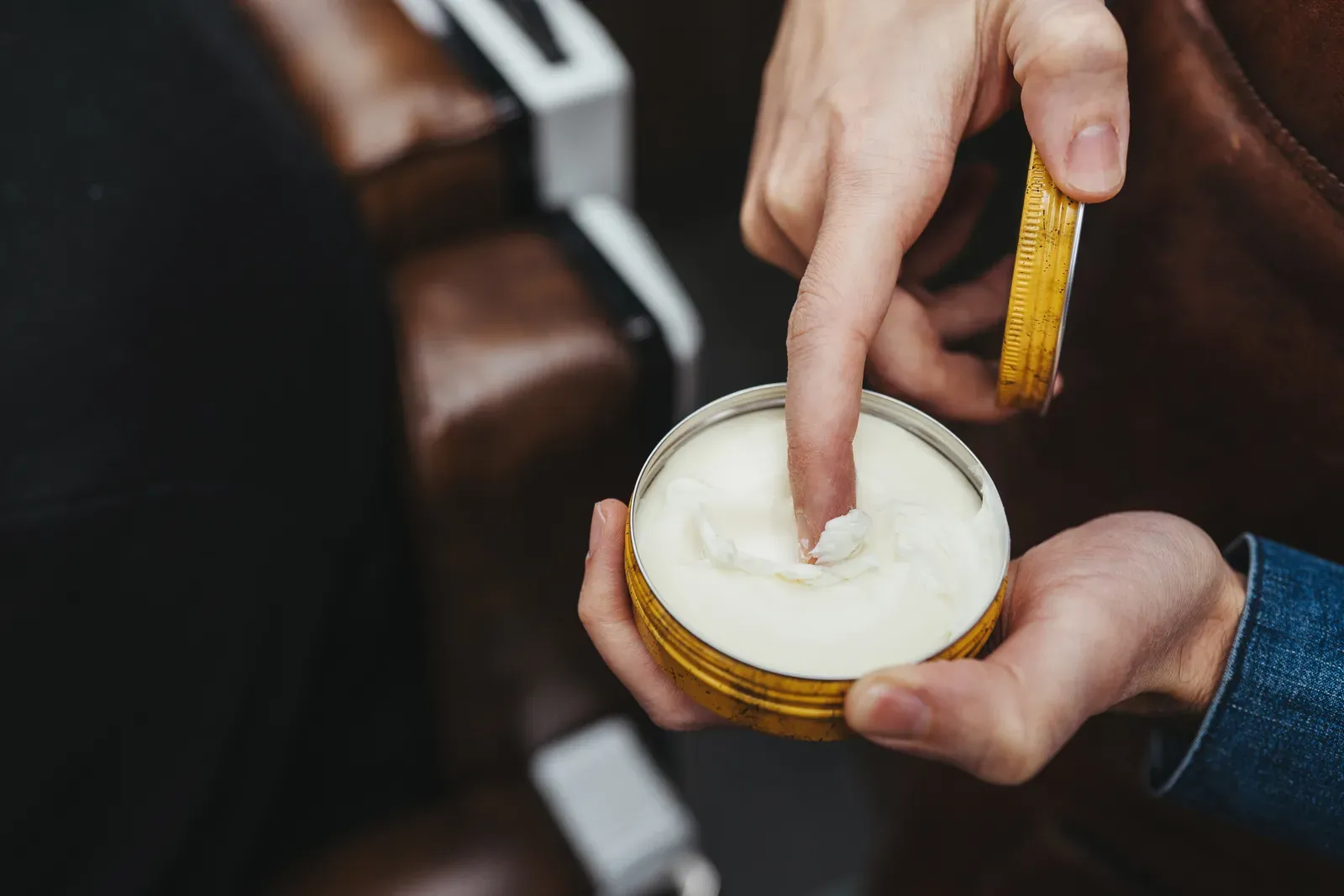
The base ingredients explain almost all the differences. Pomade comes in two families: oil-based pomades built on petrolatum, mineral oil or waxes, and water-based pomades that behave more like a gel-cream and rinse out with water.
Wax is usually built around beeswax or a plant wax, giving a tacky, pliable hold that does not set hard. Clay contains mineral clays such as bentonite or kaolin, which absorb oil and swell the hair shaft slightly, and that is why clay makes hair look thicker and matte.
Hold, shine, texture and washability compared
Brands vary a lot, so treat this as the typical behaviour of each category rather than a rule for every jar.
| Pomade | Wax | Clay | |
|---|---|---|---|
| Hold | Medium to strong (water-based); light to medium, reworkable (oil-based) | Light to medium, flexible | Medium to strong |
| Shine | Medium to high | Low to natural | Matte |
| Texture it gives | Smooth, combed lines | Piecey separation | Volume, grit, thickness |
| Restyle during the day | Oil-based yes; water-based sets | Yes, easily | Somewhat |
| Washes out | Water-based easily; oil-based needs 2 shampoos | Moderate, can build up | Easily with one shampoo |
| Best hair length | 7 cm and up | 3 to 10 cm | 2 to 10 cm |
Which product suits which cut
Match the product to the finish your haircut was designed for. A textured cut styled with a shiny pomade looks greasy; a slick back styled with clay looks dusty and dry.
- Slick back, side part, pompadour: pomade. A water-based one if you want it to set, oil-based if you like to re-comb through the day.
- Quiff, textured crop, messy fringe: clay, applied to dry hair for lift and a natural matte look.
- Short, messy styles or a spiky finish on a fade: wax, worked in with fingertips so the ends separate.
- Curly or coily hair: usually a curl cream rather than any of the three, though a small amount of light pomade can define waves; see styling curly hair.
- Very short cuts like a buzz or Caesar: often nothing at all, or a tiny amount of matte product for control.
Choosing by hair type
Fine or thinning hair: clay first. It adds grip and bulk, while pomade weighs fine hair down and shows the scalp through the shine. Our page on making hair look thicker pairs clay with blow-drying.
Thick, coarse or straight hair that will not stay put: a strong water-based pomade or a firm clay, applied to slightly damp hair for pomade and dry hair for clay.
Wavy hair: wax or a light clay, which defines the waves without flattening them. In our humid Ontario summers, wavy hair frizzes quickly; a little pomade on the surface helps smooth it.
How much to use and how to wash it out
Start with a portion roughly the size of a fingertip or a pea, warm it between your palms until it looks almost invisible, and work it in from the back to the front. You can always add more; too much of any product makes hair look flat and wet.
For washing, water-based pomade and clay rinse out with a normal shampoo. Oil-based pomade and heavy wax may need two washes, and some people rub shampoo in before wetting the hair to break down the oil. If your scalp gets flaky or itchy with a product, switch to a water-based one and see a doctor or dermatologist if it persists.
What we use in the chair
We choose the finishing product after the cut, based on how the style was built, and we will show you how much we used so you can repeat it. If your routine is not working, bring your product in and we will tell you whether the problem is the product or the amount.
Every cut is booked as Haircut Only; for scissor-led styles that rely on product, see our scissor cuts service. For step-by-step application, read how to use hair clay and how to apply hair product.
Pomade vs wax vs clay: common questions
Is paste the same as wax or clay?
Paste sits between wax and clay: it usually has a light, pliable hold and a low shine. If a label says paste, expect something softer than clay.
Can I mix pomade and clay?
Yes. A little clay for volume at the roots with a touch of pomade on the surface is a common way to get lift with a slight sheen.
Which is best for the gym or sports?
Clay or a water-based product, because sweat and a shower will rinse them out, and they can be reworked afterwards. Heavy wax tends to smear under a helmet.
Does hair product cause hair loss?
Styling products do not cause hair loss on their own. Heavy buildup can irritate some scalps, so wash it out regularly and see a dermatologist about any unusual shedding.