
Hair & Beard Care
How to Use Hair Pomade for a Slick Back or Side Part
Short answer: To use hair pomade, towel dry your hair until it is damp, scoop an amount the size of a fingernail, and rub it between your palms until it is warm and glossy. Work it through from the back of the head forward, then comb it into place: straight back for a slick back, or away from a clean parting for a side part. Water-based pomade rinses out with shampoo; oil-based pomade needs a degreasing wash.
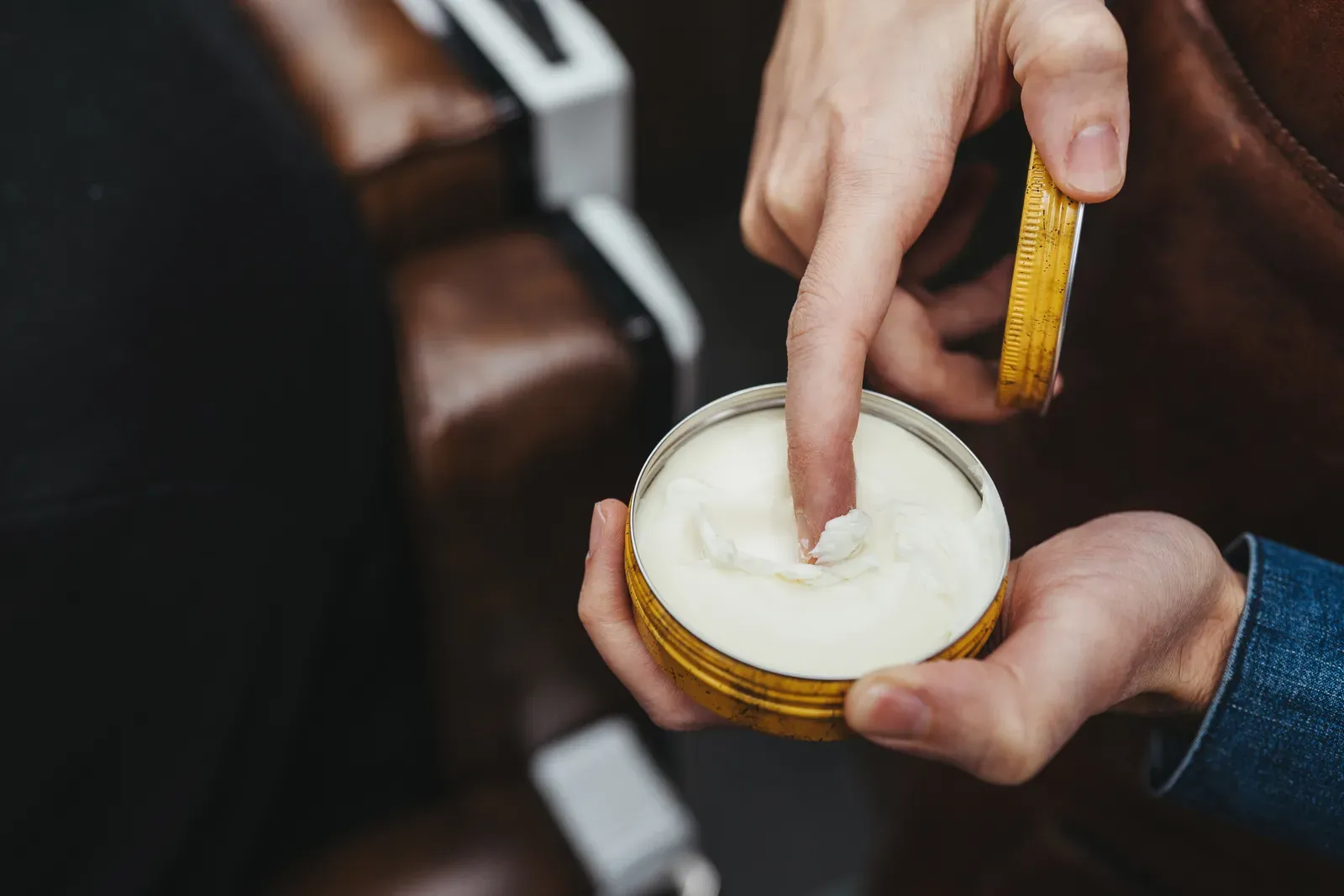
Water-based and oil-based pomade behave very differently
Water-based pomade washes out with ordinary shampoo, while oil-based pomade is built on petrolatum, lanolin or waxes and clings to the hair until you strip it out. That single difference decides how you apply it, how long it lasts and how your pillowcase looks the next morning.
Water-based formulas set as they dry, so the hold firms up over the first few minutes and can go slightly stiff. Oil-based formulas never fully set: you can run a comb through at 4 PM and the shape comes straight back, which is why traditional slick backs were built on them. The trade-off is residue, a heavier feel and more build-up on the scalp.
If you are new to pomade, start with a water-based one. It forgives mistakes, rinses clean the same night and suits the shorter, tidier versions of combed styles we cut most often.
| Water-based pomade | Oil-based pomade | |
|---|---|---|
| Apply to | Damp, towel-dried hair | Fully dry hair |
| Hold over the day | Sets, then stays put | Stays soft, re-combable |
| Washing out | One normal shampoo | Degreasing wash, often twice |
| Humid Ontario summer | Can soften in sweat | Resists moisture well |
How to apply pomade, step by step
Apply pomade in thin, even layers from the back of the top toward the hairline, then comb. Putting a lump on the fringe first is the most common reason a slick back looks greasy at the front and flat at the crown.
- Wash or rinse, then towel dry until the hair is damp but not dripping. For oil-based pomade, dry it completely with a blow dryer.
- Take a fingernail-sized scoop. For hair over 10 cm (4 in) on top you may need a second, smaller scoop later.
- Rub your palms together until the pomade turns clear and there are no visible clumps.
- Rake your fingers through from the crown forward so the roots are coated, then pass over the surface to cover the lengths.
- Comb into shape with a fine-tooth comb for a sharp, lined finish, or a wide-tooth comb for visible comb lines and softer texture.
- Finish with your palm flat over the sides to smooth any flyaways, and leave a water-based pomade alone for two minutes while it sets.
Combing a slick back versus a side part
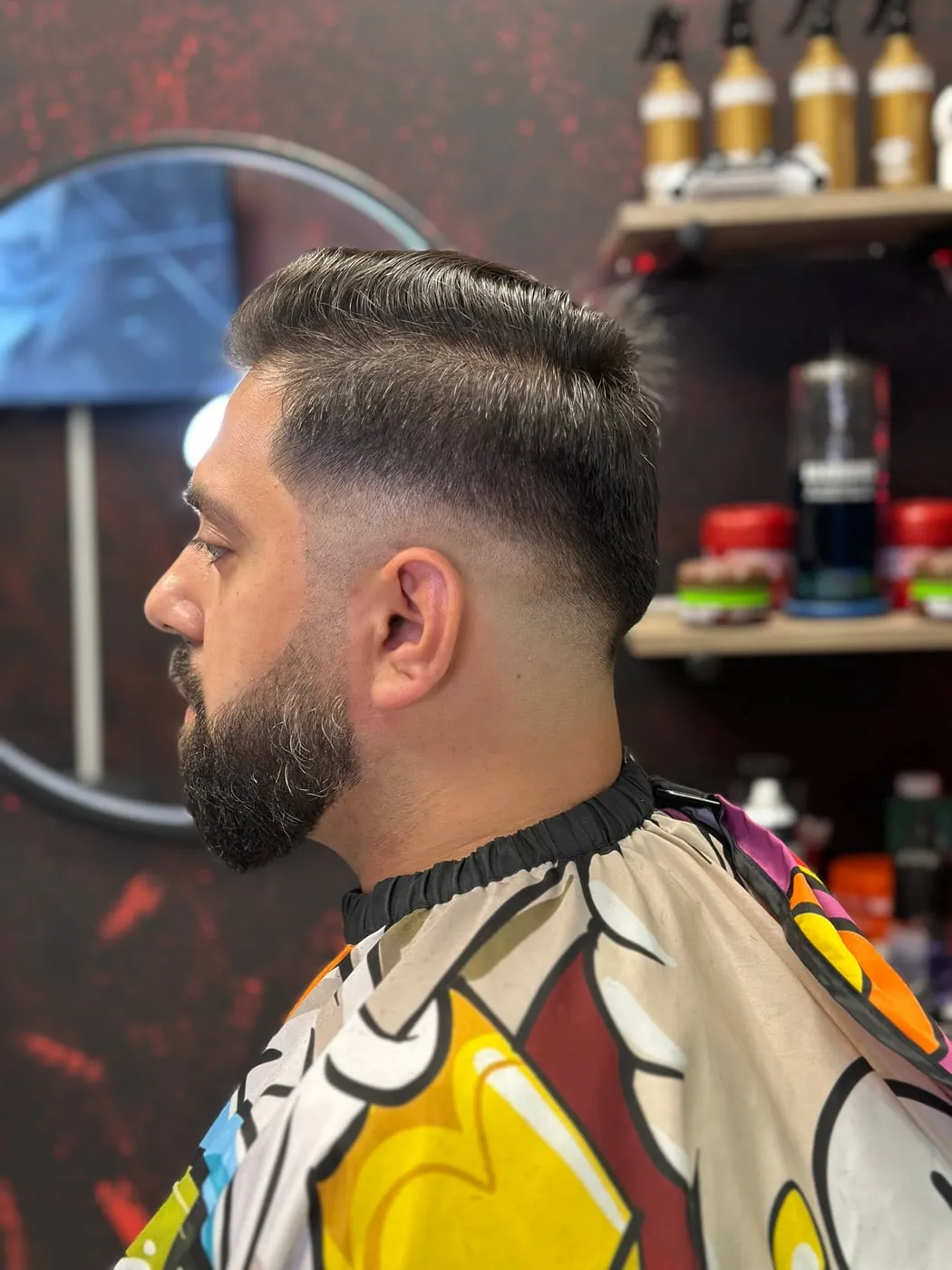
For a slick back, comb every section straight back from the hairline to the crown, keeping the teeth close to the scalp so the hair lies tight. A light blow dry backward before the pomade goes in gives the front a little lift, so the style looks full rather than painted on. Our page on the slick back covers the cut underneath, which matters as much as the product.
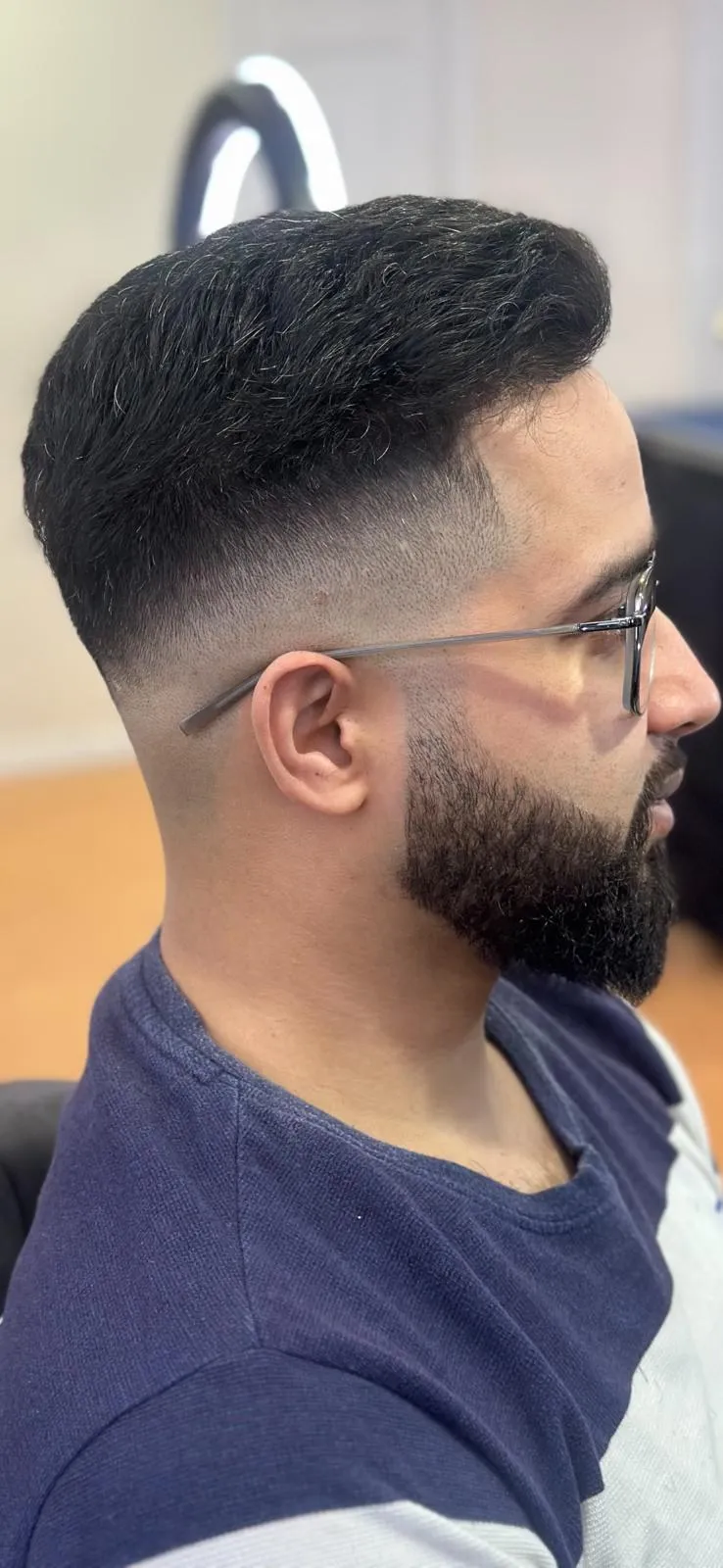
For a side part, find your natural parting first by combing the hair straight back and pushing it forward with your palm: it splits where the growth wants to part. Set the line with the tail of the comb, then comb the larger side up and over and the smaller side down. The side part haircut is designed around that line, and a barber can shave a hard part if you want it permanent.
Mistakes that make pomade look greasy or flat
Nearly every bad pomade day comes from too much product or applying it to the wrong state of hair. The fixes are simple once you know which one caused it.
- Too much: the hair separates into shiny strands and the scalp shows through. Blot with a dry towel, then comb again.
- Oil-based on wet hair: water and oil do not mix, so the pomade sits on top in streaks. Dry the hair first.
- Skipping the crown: the back stays fluffy while the front is slick. Always start behind the top of the head.
- Cold product: stiff pomade straight from a cold car or a January bathroom spreads unevenly. Warm the tin in your hands for a few seconds.
- Too short on top: pomade needs about 5 cm (2 in) to comb. On a buzz or a short crop it just looks wet.
How to wash pomade out without drying your scalp
Water-based pomade comes out with a single shampoo and warm water. Oil-based pomade is harder, and the trick is to put the product on dry hair before any water touches it.
Work a little conditioner or a few drops of a light oil through the dry, pomaded hair first: oil dissolves oil. Then shampoo twice, massaging the scalp on the second wash, and finish with conditioner on the lengths. Dish soap is sometimes suggested; it works but strips the scalp, so keep it for rare emergencies. If regular pomade use leaves your scalp flaky or itchy, see our dandruff guide and talk to a doctor or dermatologist if it persists.
How to use hair pomade: common questions
Can I use pomade on short hair?
It works from about 5 cm on top, which is enough for a short side part or a neat comb over. Below that, a matte clay or texture powder looks more natural than shine.
Is pomade the same as wax or clay?
No. Pomade is glossier and more pliable, wax is firmer, and clay is matte. We lay out the differences in our pomade vs wax vs clay comparison.
Should I sleep with oil-based pomade in?
You can, and some people restyle it the next morning with a comb and a drop of water. Wash it out at least every couple of days so it does not build up on the scalp or pillow.
Why does my pomade go flaky?
Flaking is usually a water-based pomade applied too thick, or one that was touched after it set. Use less, spread it thinner and keep your hands off once it dries.