
Style Comparisons
Hair Gel vs Pomade: Hard Set or Reworkable Shine
Short answer: Gel dries into a firm, clear film that locks hair where you put it, which makes it the strongest hold and the best choice for defined curls, spikes and a wet look that must not move. Pomade stays soft enough to re-comb, giving a smoother shine you can fix during the day. Oil-based pomade never sets; water-based pomade firms slightly but still reworks with a damp comb. Pick gel for lock-in, pomade for control you can adjust.
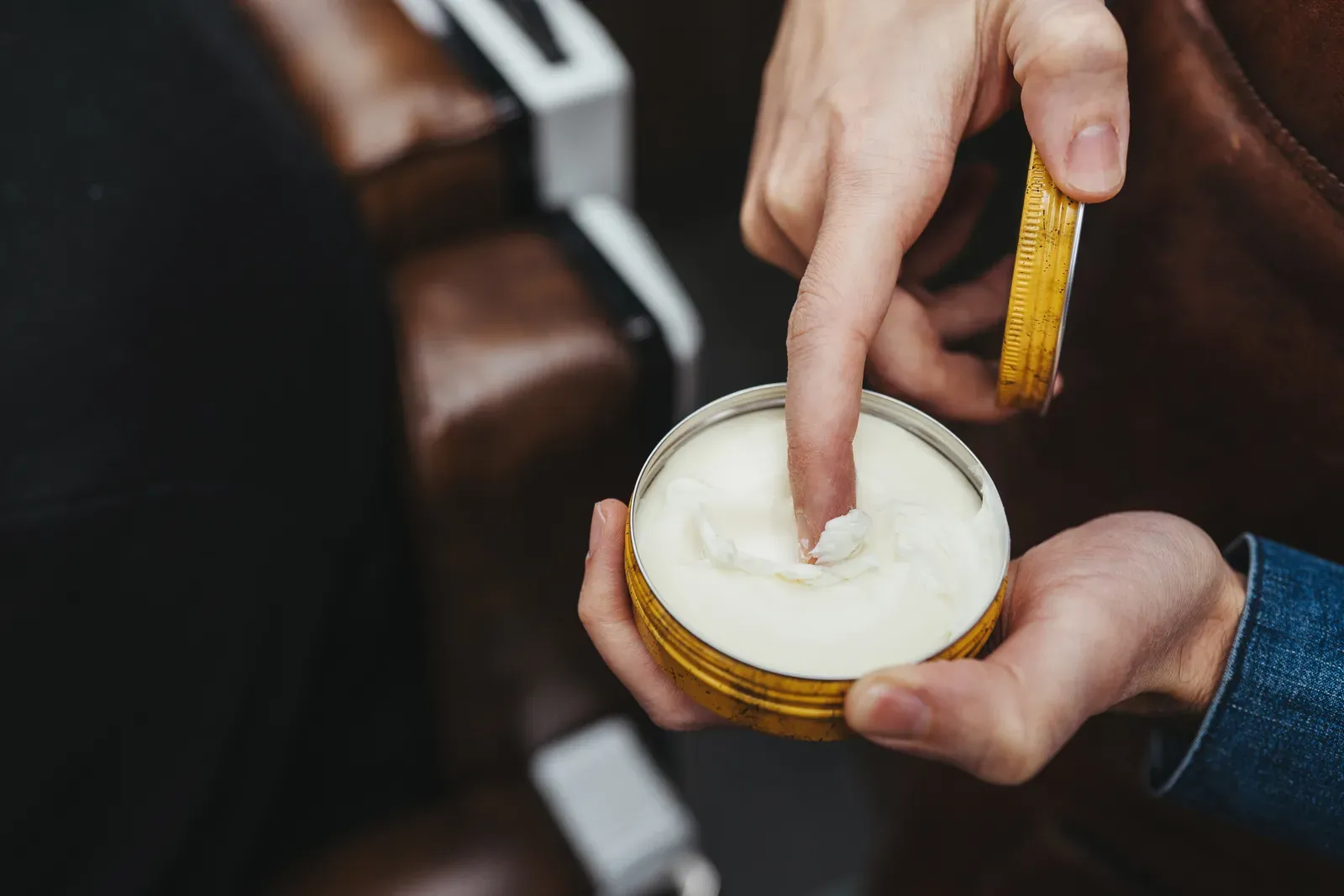
Set versus stay soft
The core difference is what happens after the product dries. Gel is mostly water and a film-forming polymer; as the water evaporates the film hardens, and each strand is glued to its neighbours in the shape you left it. Touch it once it has set and you crack the film, which is where flakes come from.
Pomade does not form a film in the same way. Oil-based versions coat the hair in a greasy, waxy layer that stays mobile all day. Water-based versions sit in between: they firm up as they dry but soften again with a little water or a pass of the comb. That pliability is the whole reason people choose pomade for combed styles.
You can feel this with a simple test: style a small section with each, wait ten minutes, then run a finger through. The gel section crackles and resists; the pomade section bends and falls back into line.
Gel and pomade compared
This table covers the points people ask us about most.
| Hair gel | Pomade | |
|---|---|---|
| Hold | Strongest, locked | Medium to strong, flexible |
| After it dries | Hard cast | Stays combable |
| Shine | Wet look, or natural once scrunched | Smooth, medium to high |
| Apply to | Wet hair | Damp (water-based) or dry (oil-based) |
| Restyle during the day | No, it flakes | Yes, with a comb |
| Washing out | Easy with one shampoo | Easy (water-based), stubborn (oil-based) |
| Main risk | Crunch and flakes | Greasy look and buildup |
Where gel is the better tool
Gel wins whenever hold matters more than flexibility.
- Curly and coily hair: gel keeps curl clumps together while they dry, so they stay defined instead of frizzing. Scrunch the cast out once dry for soft, defined curls.
- Spiked or very short textured styles on thick hair that will not stay up.
- A hard wet-look slick back that has to survive wind, a dance floor or a long wedding day.
- Hot, humid days, when a sealed film resists moisture better than a soft pomade on some hair types.
- Athletes who want hair out of the face under a helmet and do not care about restyling.
Where pomade is the better tool
Pomade wins whenever you want to adjust your hair after it is styled, or want a smoother, more classic shine rather than a wet look.
Side parts, slick backs, pompadours and comb overs are pomade territory, because a comb pass at lunch fixes anything the morning undid. It also suits straight or wavy hair that needs smoothing more than locking, and anyone who touches their hair constantly, since pomade does not punish fidgeting the way set gel does.
The trade-off is residue. Oil-based pomade leaves a heavier feel and marks pillowcases and hat bands, and it needs a thorough wash to remove.
Scalp, washing and flakes
White specks after using gel are usually dried gel, not dandruff. They come from using too much, applying it to hair that was already half dry, or touching it while it set. Using less on wetter hair usually fixes it.
Pomade problems tend to be buildup. Oil-based formulas left in for days can make the scalp feel coated, and heavy products along the hairline can contribute to small breakouts on the forehead in some people. Wash styling products out regularly, and see a doctor or dermatologist if flaking, itching or bumps continue after you change products. Our pages on using hair gel and using pomade cover the application details.
Which to choose
Choose gel if you want the style to stay exactly as you left it, your hair is curly, or you need maximum hold for a long day. Choose pomade if you wear a combed style, want a polished shine, and like the option of fixing your hair after a toque or a meeting. Some people keep both: gel for curls on wash days and a light pomade for special occasions.
When we finish a scissor cut, we use whichever product suits how the cut was built, and we can compare the two on your hair so you see the difference before you buy.
Hair gel vs pomade: common questions
Is gel worse for your hair than pomade?
Neither damages hair when washed out regularly. Some gels contain drying alcohols, so look for alcohol-free formulas if your hair is dry or curly.
Can I mix gel and pomade?
Yes. A little gel for a firm base with a thin layer of pomade over the surface gives hold with a smoother, more flexible shine.
Which is better for a pompadour?
Pomade, in most cases. A pompadour is combed and shaped, and pomade lets you refine the roll; gel is only worth it if the shape keeps collapsing.