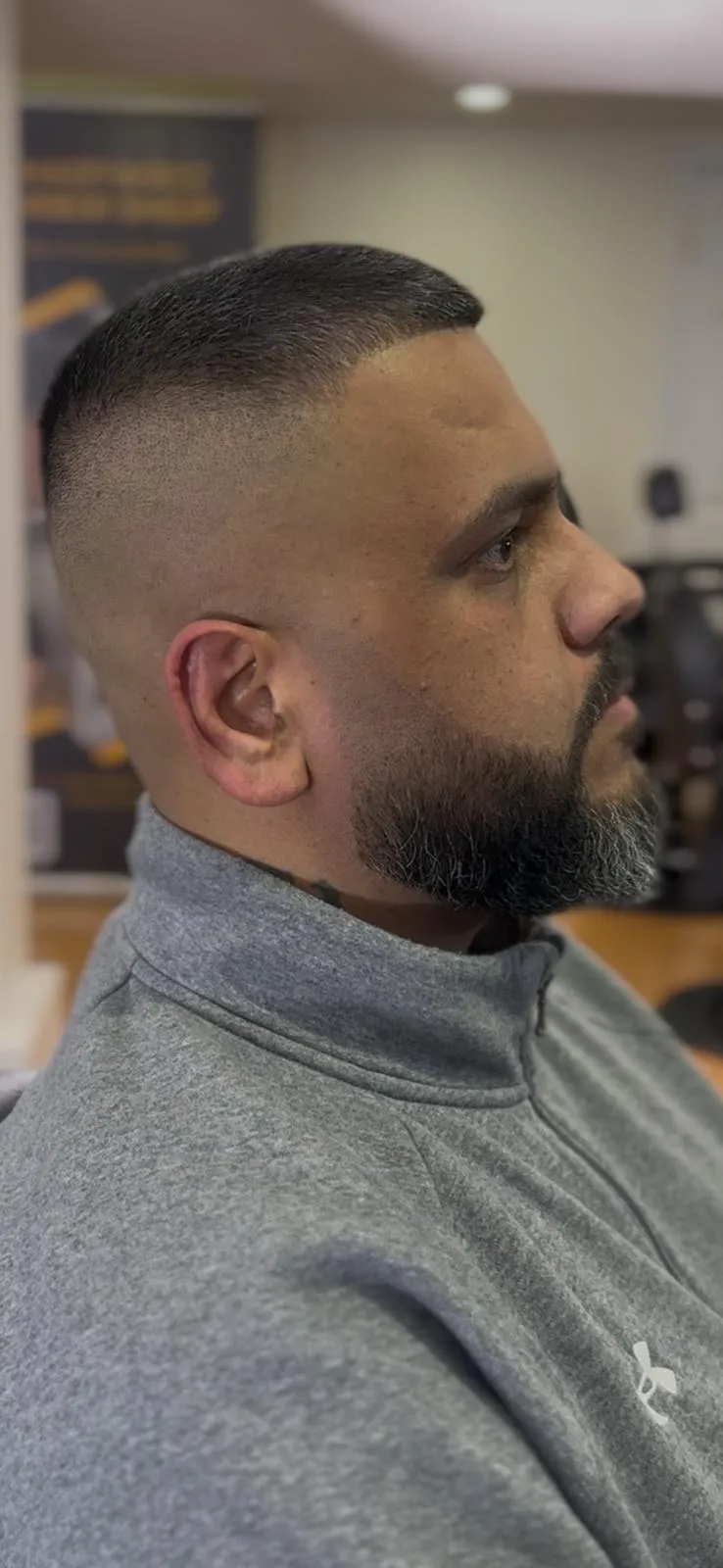

Beard Styles
Beard Fade: How a Barber Blends Your Haircut Into Your Beard
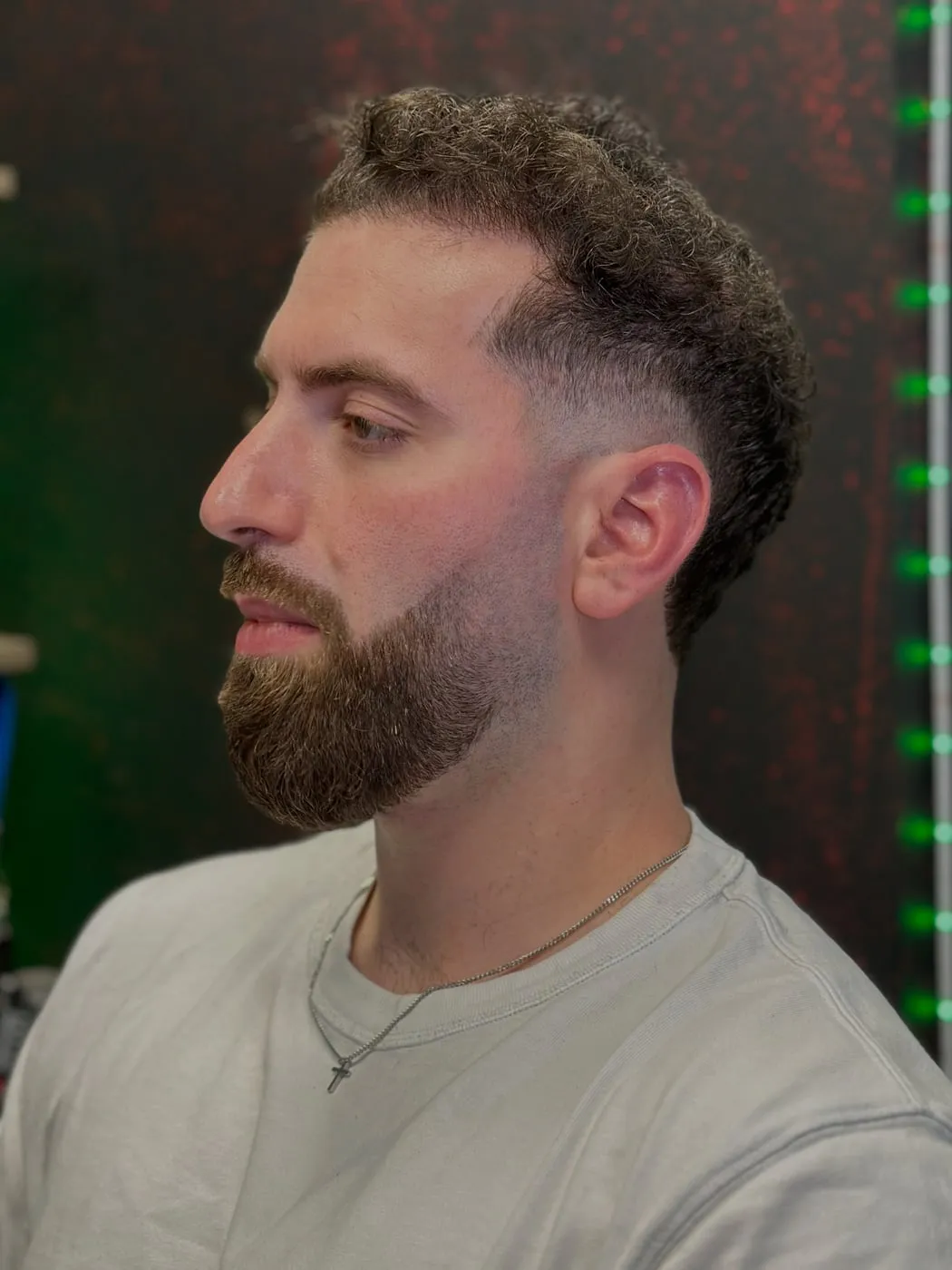
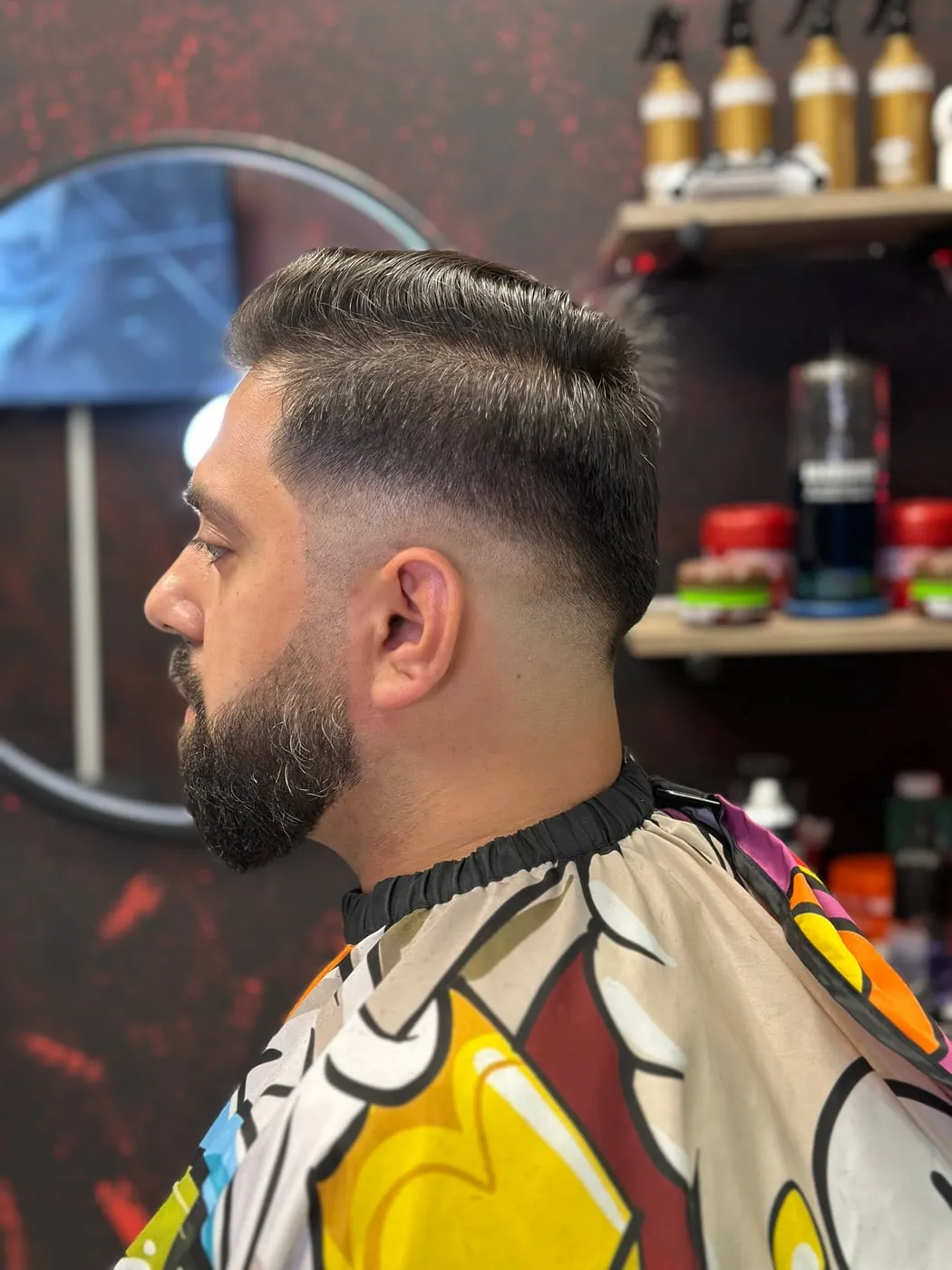
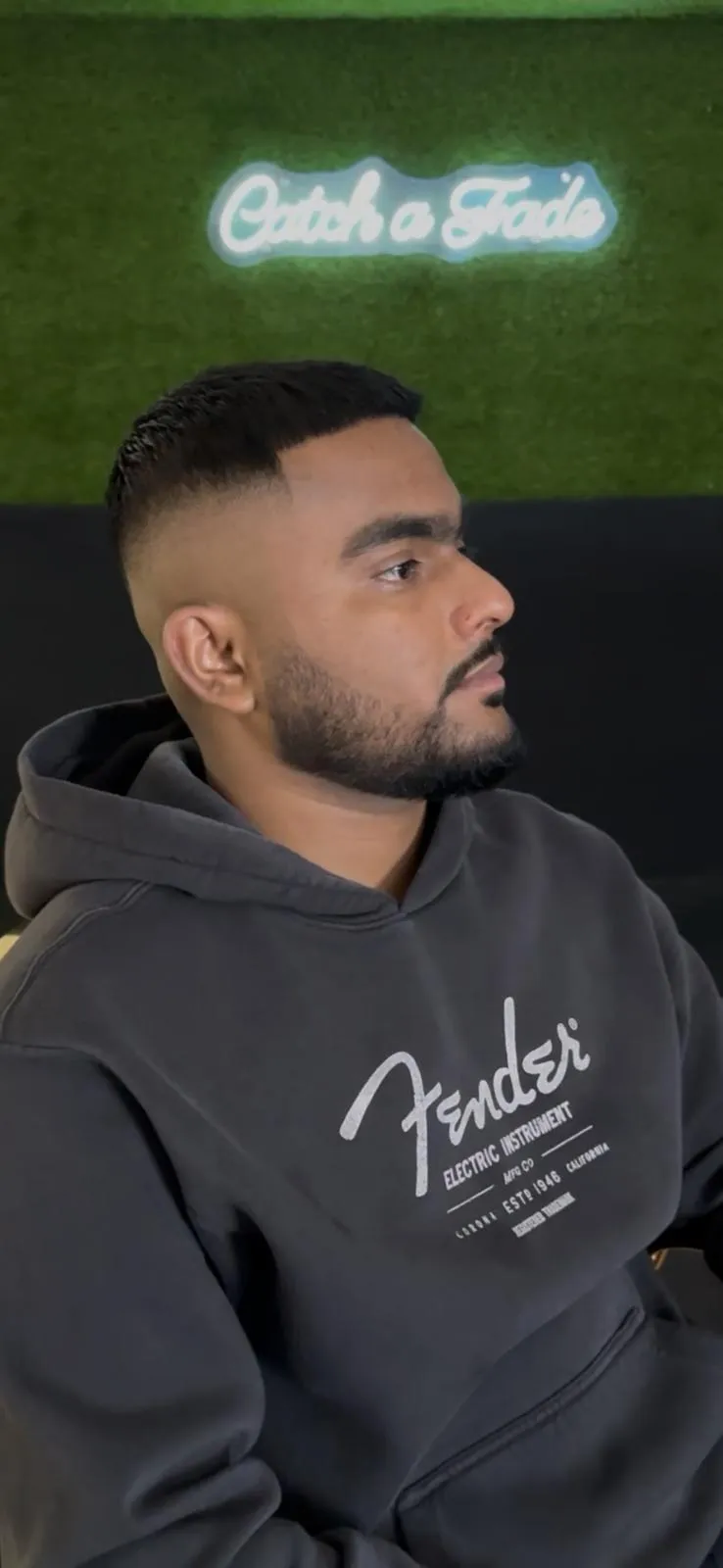
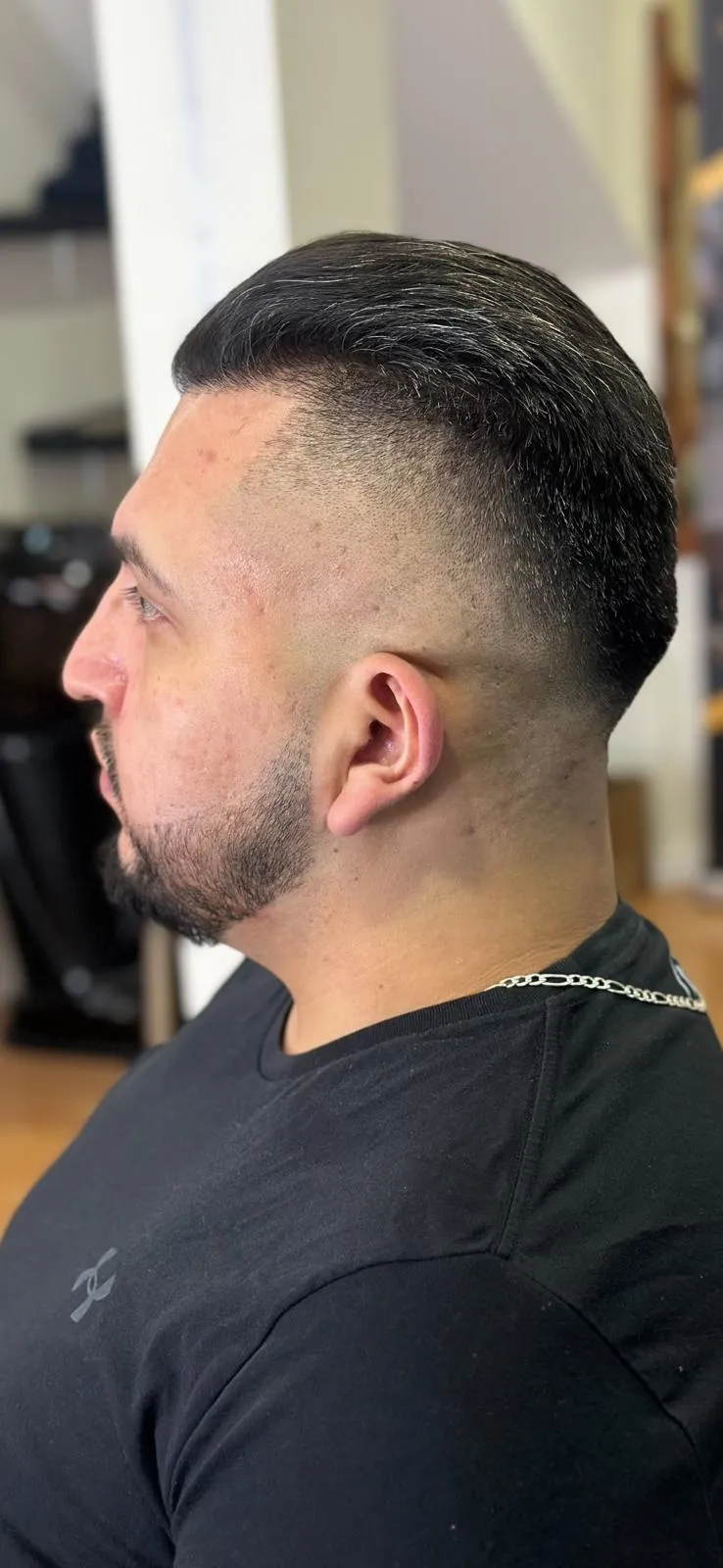
Short answer: A beard fade is a gradual blend from the short hair on the side of your head, through the sideburn, into the full length of your beard, so the haircut and beard read as one continuous shape. The barber works in stages, matching clipper guards from the fade down to the cheek. It is the signature of a Haircut + Beard appointment because both halves need to be planned and cut together.
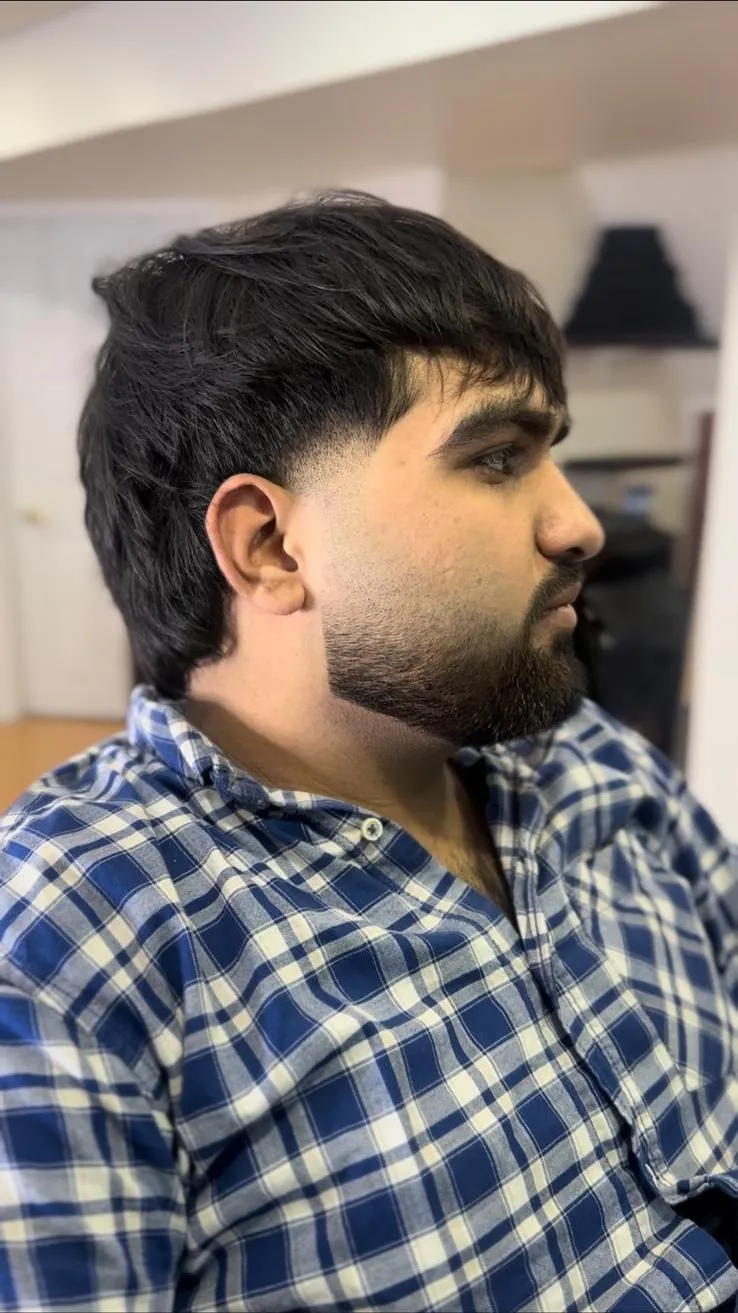
Why the sideburn is where it all happens
The sideburn is the only place where the haircut and the beard physically meet, so it decides whether they look like one design or two. If the fade is taken to skin at the temple and the beard starts at full length an inch lower, you see a hard step right in front of the ear.
A beard fade removes that step. The sideburn becomes a transition zone that climbs in length gradually, the same way the fade does on the back of the head, until it meets the beard at the cheekbone.
How we cut it, stage by stage
We cut the haircut first and the beard second, but we plan them together at the consultation. The fade height is chosen with the beard length in mind, because a very short skin fade into a very long beard needs more room to blend.
- Finish the haircut fade so the side has its lowest length set, often skin or a No. 0.5 at the bottom of the sideburn.
- Take the beard to its working length with a guard, for example 10 to 13 mm on the cheeks and jaw.
- Build the bridge: run intermediate guards up the sideburn from the beard length downward, with each guard stopping a little higher than the last.
- Flick out each line with the clipper, rocking out of the hair at the end of each pass, and use half guards or the lever to soften any band.
- Clipper-over-comb or scissor-over-comb the area where the sideburn meets the cheek so nothing looks striped.
- Set the cheek line and neckline, then hot towel and razor every edge.
Which fades work into which beards
Almost any fade can blend into a beard, but the distance between the shortest and longest lengths decides how tall the transition needs to be. The bigger the jump, the more of the sideburn becomes blend.
| Haircut | Beard | How the blend behaves |
|---|---|---|
| Skin fade | Short boxed, 6 to 10 mm | Quick, tight blend; the classic sharp look |
| Skin fade | Full beard, 2 cm plus | Long blend needed through the whole sideburn |
| Low taper | Any length | Soft transition; the sideburn keeps more weight |
| Mid drop fade | Medium beard | Blend follows the curve behind the ear down to the jaw |
Why one barber should do both halves
A beard fade is really one fade that happens to cross two areas. If one barber does the haircut and someone else does the beard, or you trim the beard at home and get only a haircut at the shop, the two lengths are chosen separately and the step comes back.
That is why this is the centre of our Haircut + Beard appointment. Mark Yousif in particular is known for fade-into-beard blends; you can see examples on his barber page and in the portfolio.
How long a beard fade stays clean
The sideburn blend softens first because the short hair at the top of it doubles in length quickly, while the beard length barely changes in proportion. After about two weeks the step starts creeping back.
Two to three weeks is the usual rhythm for keeping it seamless. Between full appointments, a lineup keeps the edges sharp but does not rebuild the blend itself. For home care that avoids damaging the transition, see our guide to keeping your beard sharp between visits.
Beard fade: common questions
Can I get a beard fade with a patchy sideburn?
Yes. A tighter blend that keeps the sideburn shorter often hides thin sideburn growth better than leaving it at full beard length.
Does the beard itself get faded too?
Sometimes. Some people like the beard to taper shorter toward the ears and longer at the chin, which exaggerates the jaw. Ask for it at the consultation.
Can I do a beard fade at home?
It is one of the harder blends to do on yourself because you cannot see the side of your own head properly. Most home attempts end with a line at the sideburn. See how barbers blend a fade for why.