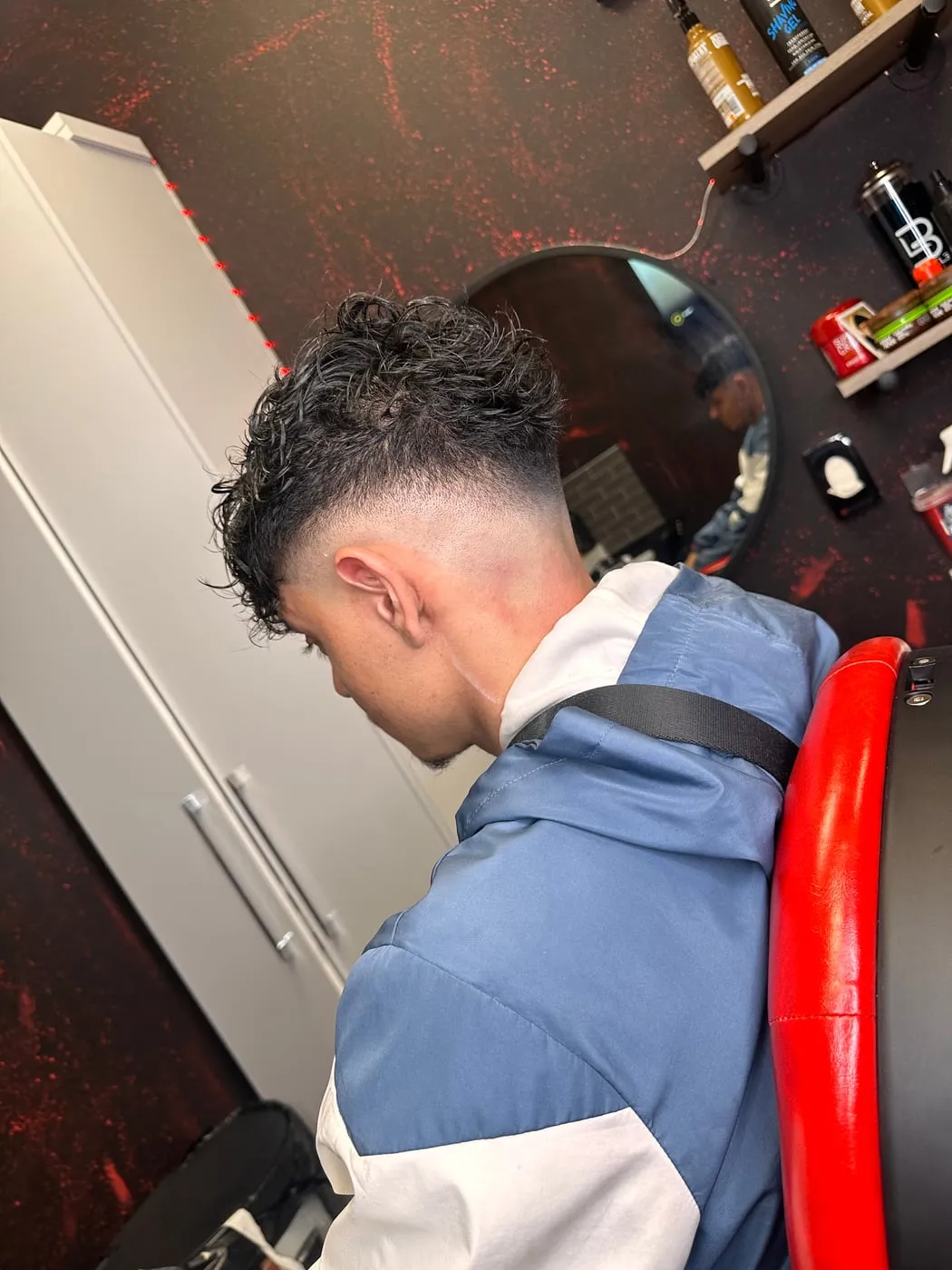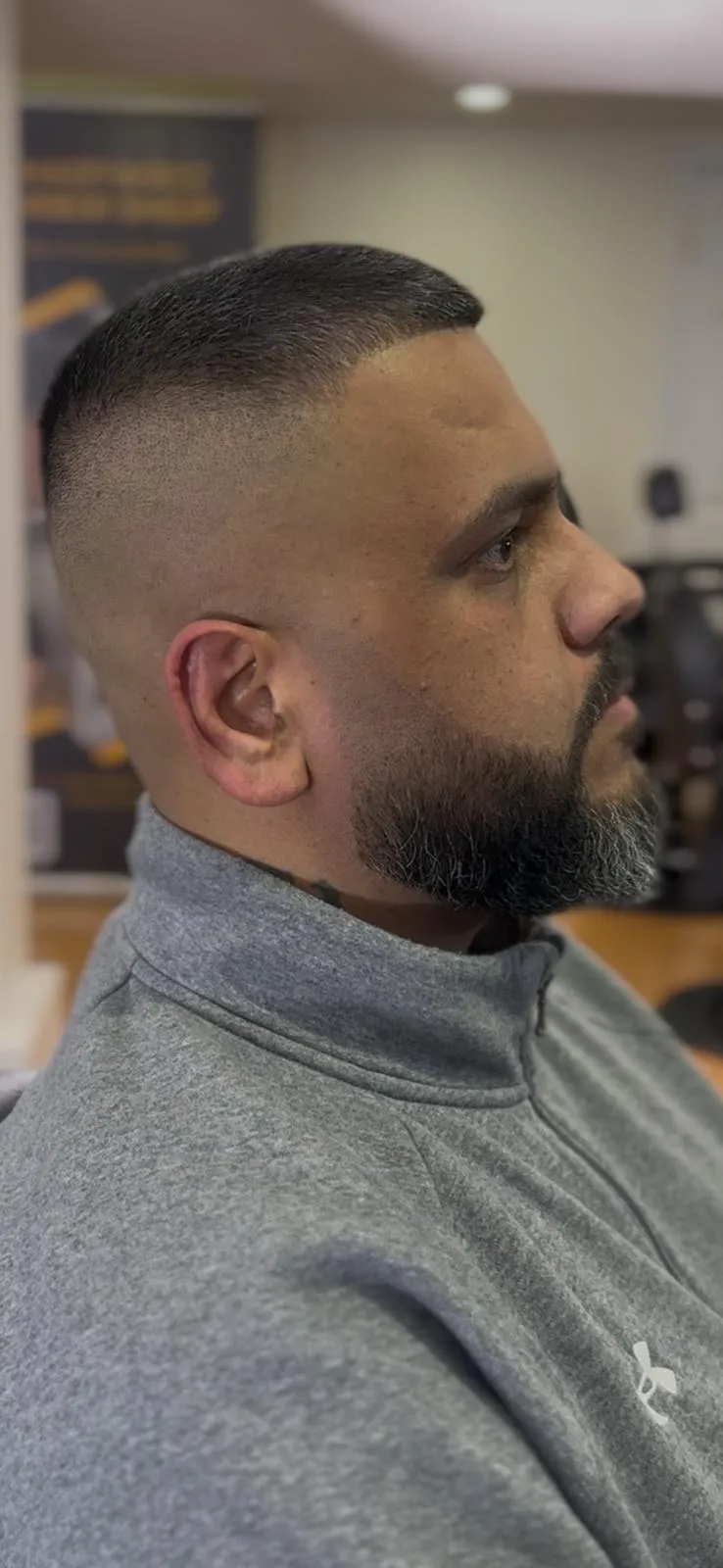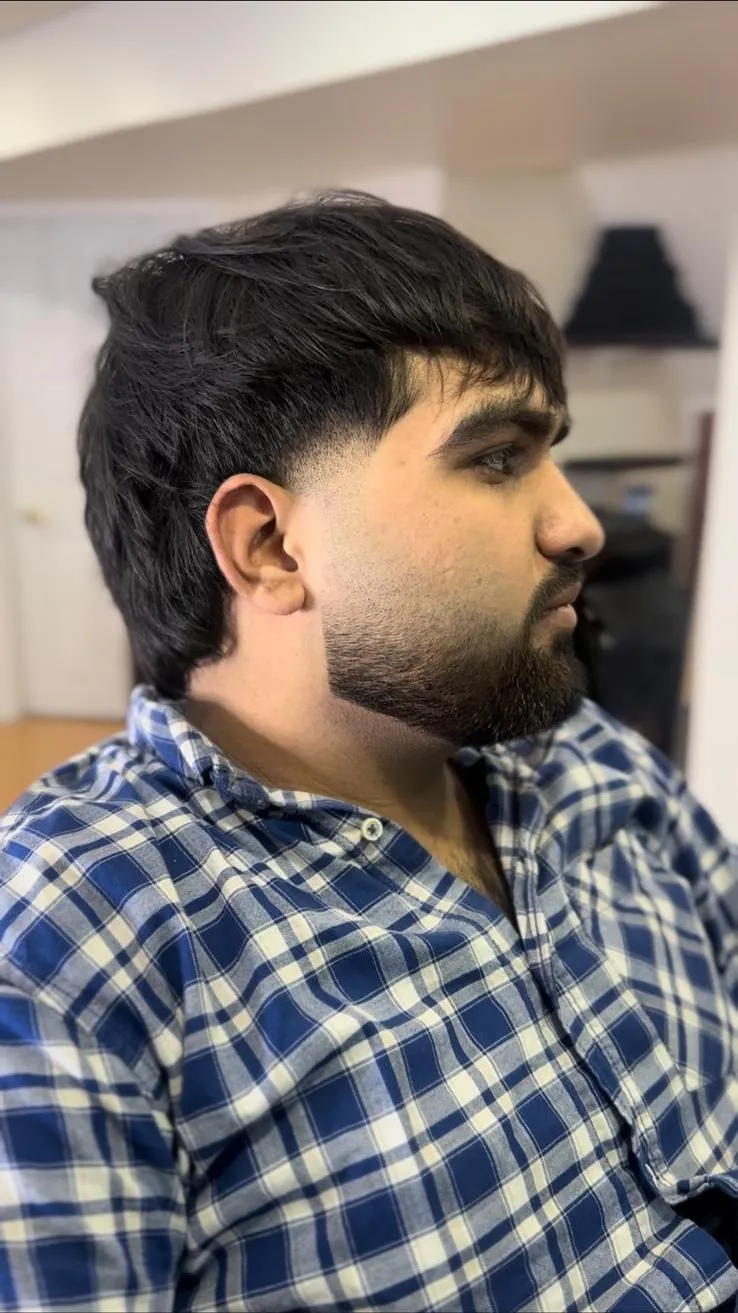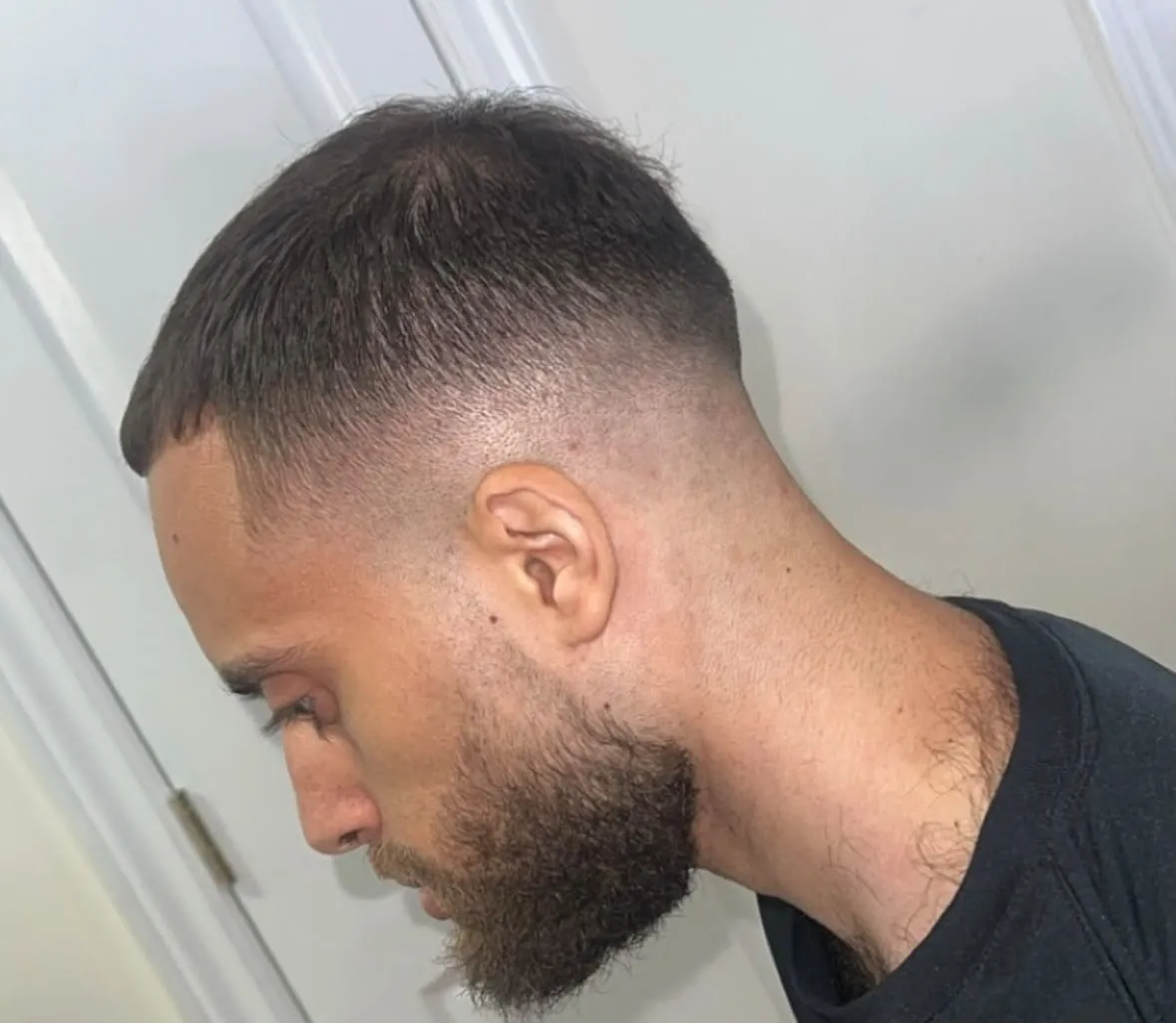

Barber Answers
How Barbers Blend a Fade, Step by Step From Guideline to Mirror
Short answer: Barbers blend a fade by cutting a guideline where the shortest hair will end, then working upward through progressively longer guards, each pass stopping a little lower than the last. Lever adjustments and a flicking wrist motion soften the ridge between each length, trimmers and foil shavers refine the bottom, and a final check in different light and angles catches any remaining lines.
Step one is the guideline, and it decides everything
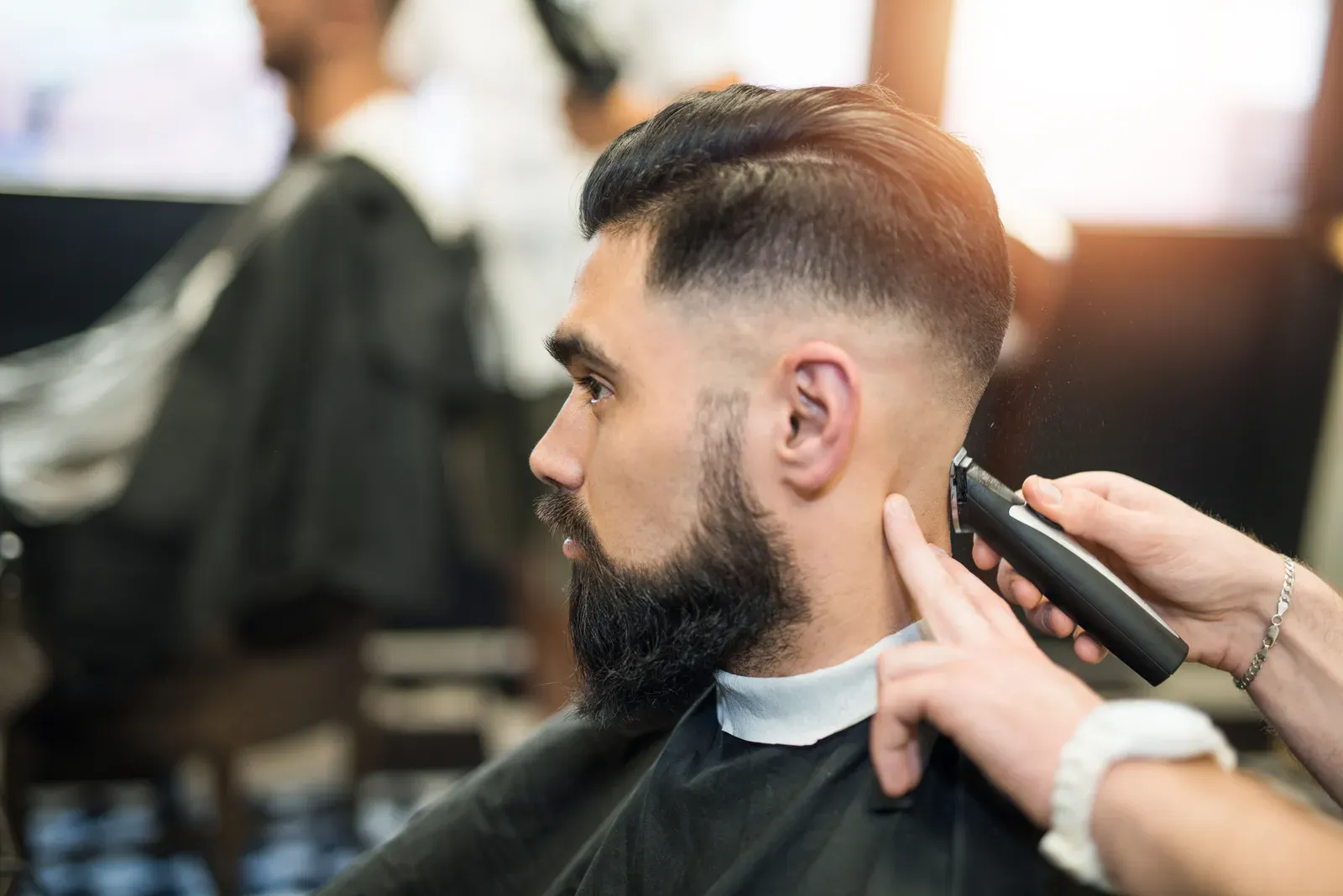
The guideline is the first cut, a line of very short hair that marks the bottom of the fade and sets its height. On a mid skin fade it might be a band cut with the clipper open and no guard, running from the temple, over the ear, around the occipital bone and back to the other side.
Placement is judged against your head, not a ruler. A barber looks at where the skull curves behind the ear, whether one ear sits higher, and where cowlicks change the direction of growth at the back. If the guideline is wrong, no amount of blending will fix the shape, which is why at Markcutit it comes straight after the consultation.
The working sequence, from bulk to blend
Once the guideline is in, the fade is built in overlapping bands. A common sequence for a mid skin fade looks like this, though every barber adjusts it to the hair.
- Remove bulk: take the upper sides and back down to the longest length of the fade, often a 3 or 4, so everything starts even.
- Set the guideline with the open clipper or a 0.5, at the chosen height.
- Bridge the gap: run a 1 from the guideline up to about a centimetre above it, then a 1.5 a little higher, then a 2.
- Soften each ridge by going over the transition with the guard in between, or the same guard with the lever half open.
- Take the bottom to skin with a zero-gapped trimmer or foil shaver, only below the guideline.
- Blend the skin up into the 0.5 zone with the lever and flicking passes until no band is visible.
- Connect the top of the fade to the scissor or clipper length on top.
Lever work: the half steps between guards
The clipper lever is the barber's fine-tune control. Closed, the blade cuts at its shortest; opened, it leaves roughly half a guard more. By cutting the lower part of a band with the lever closed and the upper part with it open, a barber creates an in-between length without switching guards.
This is how most weight lines are erased. A faint dark ridge between a 1 and a 2 is often invisible after a pass with the 1 guard and the lever fully open, which leaves something close to a 1.5 right on the line. Some barbers work nearly the whole fade with one or two guards and the lever alone. For the sizes themselves, see our clipper guard numbers chart.
Flicking out and the C-stroke
Flicking is the wrist movement that stops a clipper pass from ending in a hard edge. Instead of lifting the clipper straight off the head, the barber rocks the blade away from the scalp as it reaches the top of the band, so the cut gradually leaves more hair rather than stopping abruptly.
The C-stroke, or scoop, is a curved version of the same idea, used over the rounded parts of the head behind the ears and at the occipital bone. Both techniques trade force for control: shorter, lighter passes blend better than long ones. You will often see a barber working in small arcs and going over the same spot several times at different angles.
Detailing: trimmers, foil shavers and the razor
Detailing is everything after the main blend, and it is where fades go from good to clean. A T-blade trimmer shapes the sideburns, the edges around the ear and the neckline, and it can also rescue small dark spots in the lower fade by cutting just the hairs that are too long.
A foil shaver takes the very bottom to smooth skin without the drag of a razor, which suits bump-prone clients. The straight razor finishes the lineup at the front and around the ears. Mark Yousif and Marcel Shabo both spend much of a cut in this stage; Marcel's detail and taper work is on Marcel's barber profile.
The mirror check: light, angles and hand mirror
A fade that looks perfect under one light can show lines under another. Before calling it done, a careful barber checks the blend from several angles, often dropping lower to see the back against the light and turning the chair toward a window or a brighter lamp.
They will also run a hand over the fade to feel for ridges, check both sides match at the same height, and brush off loose hair that can hide shadows. Then they show you the back with a hand mirror. If anything catches your eye at that stage, say so; it takes seconds to fix while the tools are still out. See the finished results in our portfolio.
- Front view: sideburns level, temples matched.
- Side views: fade height even, no dark bands.
- Back view: guideline follows the head shape, no holes at the crown.
- Overhead: top connects smoothly into the fade.
How barbers blend a fade: common questions
Why do some barbers use so many guards and others only two?
It is technique preference. More guards means smaller jumps to hide; fewer guards with heavy lever work relies more on wrist control. Both give a clean blend in skilled hands.
What causes a line in my fade after a few days?
Usually a transition that looked blended on day one but had slightly different lengths, which show more as hair grows. A quick touch-up with a middle guard or open lever at the next visit smooths it.
Can I learn to blend my own fade?
You can learn the basics, but blending the back of your own head without seeing it is genuinely hard. See touching up your fade at home before you try.