
Barber Answers
How to Tell If a Fade Is Good: an Eight-Point Checklist
Short answer: A good fade has no visible bands or lines anywhere in the gradient, the fade starts at the same height on both sides, the neckline and edges are crisp and follow your natural hairline, and the short sides connect smoothly into the length on top. It should look even from the front, sides and back, in daylight as well as under shop lights, and still look intentional a week later as it grows.
Check the gradient first: no stripes, no shelves
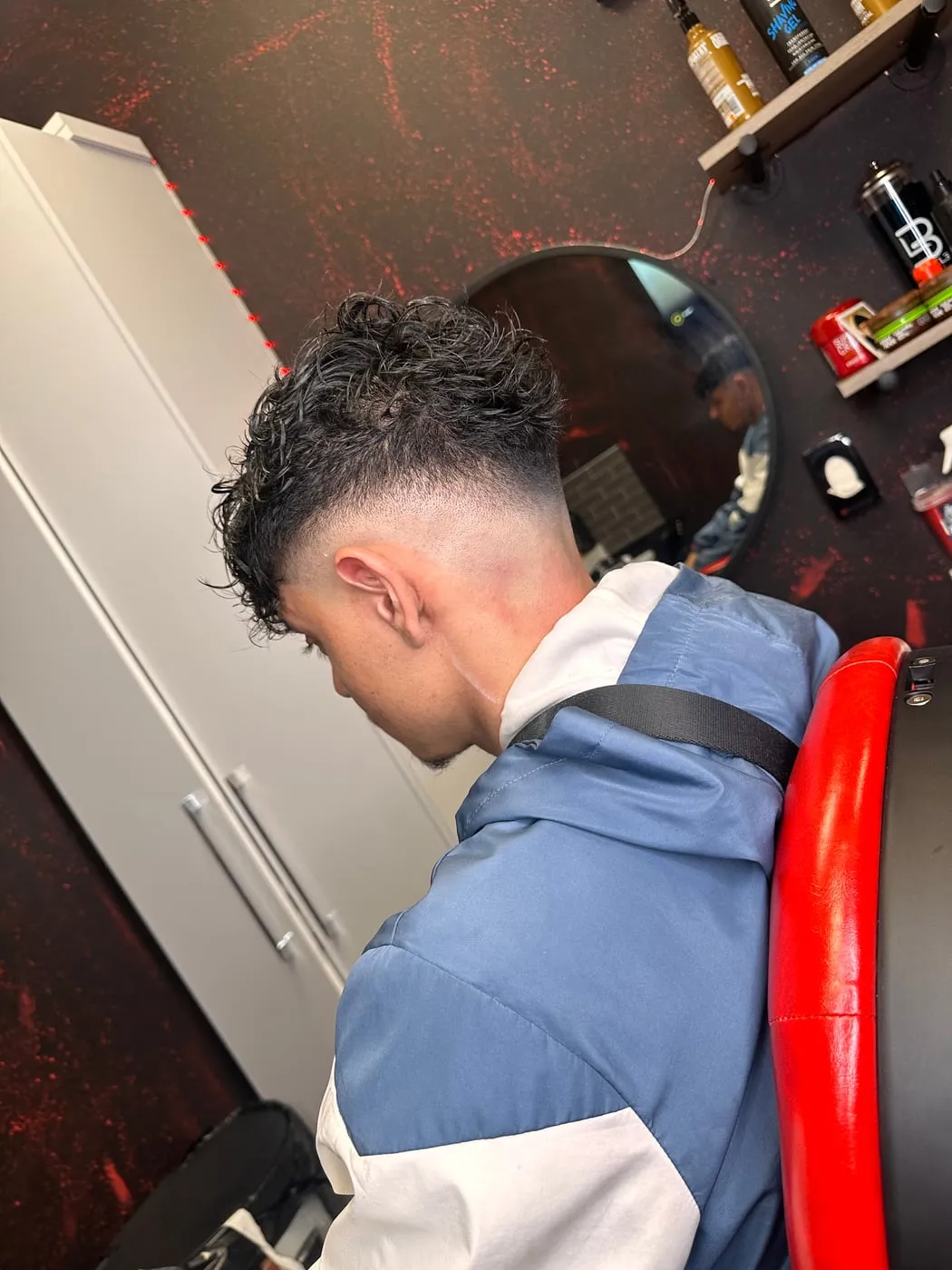
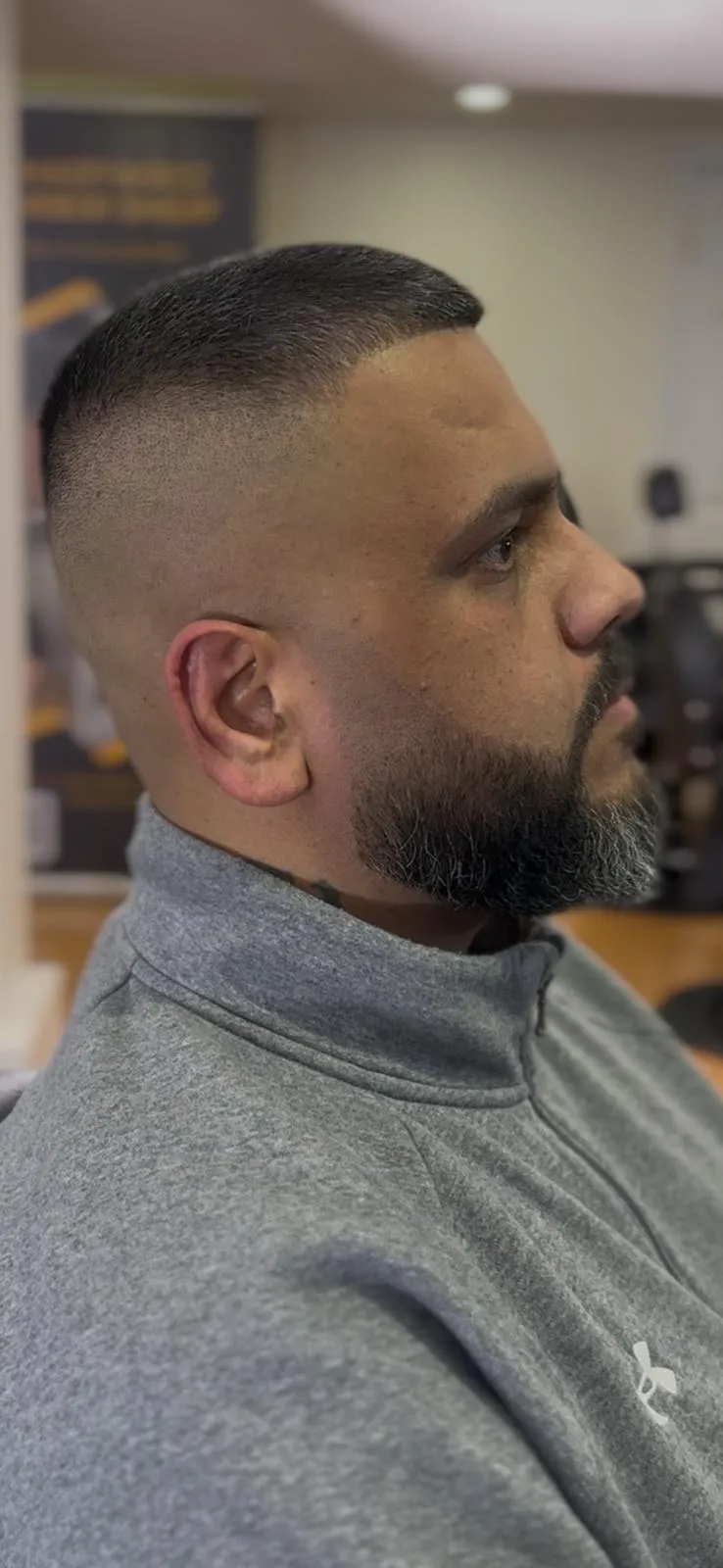
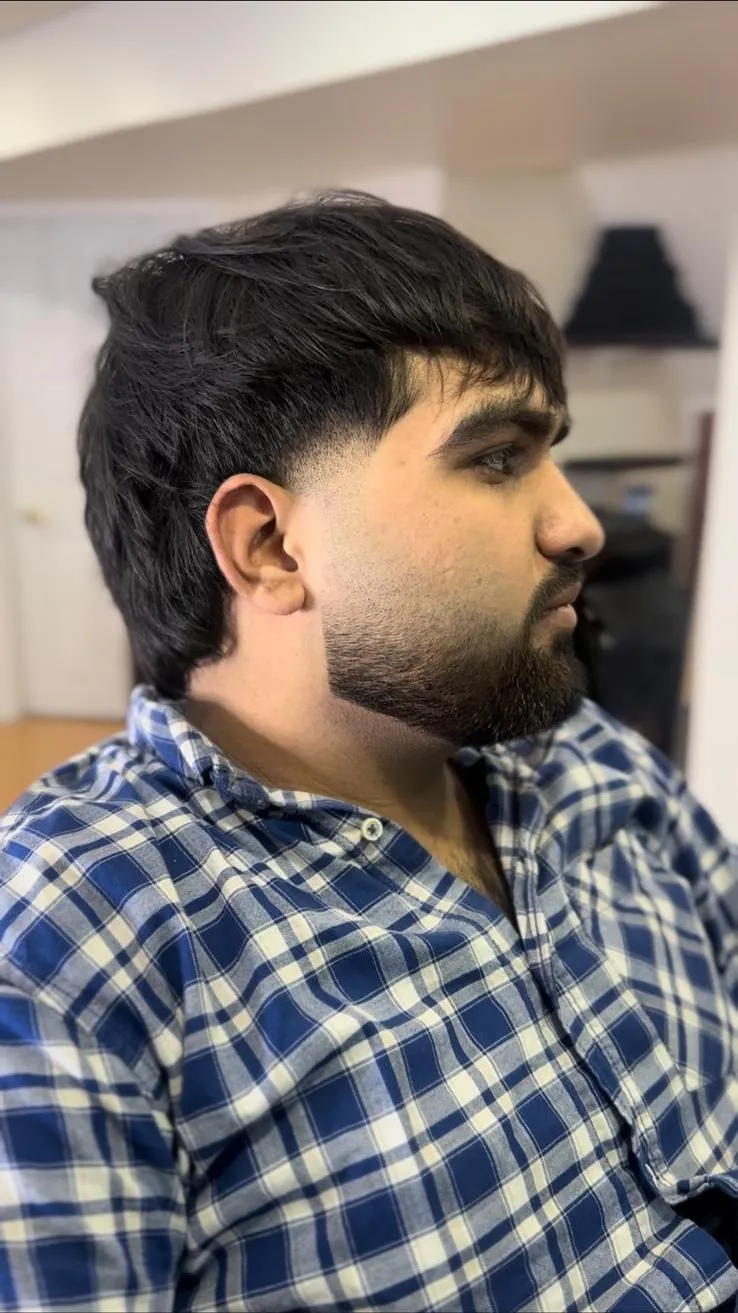
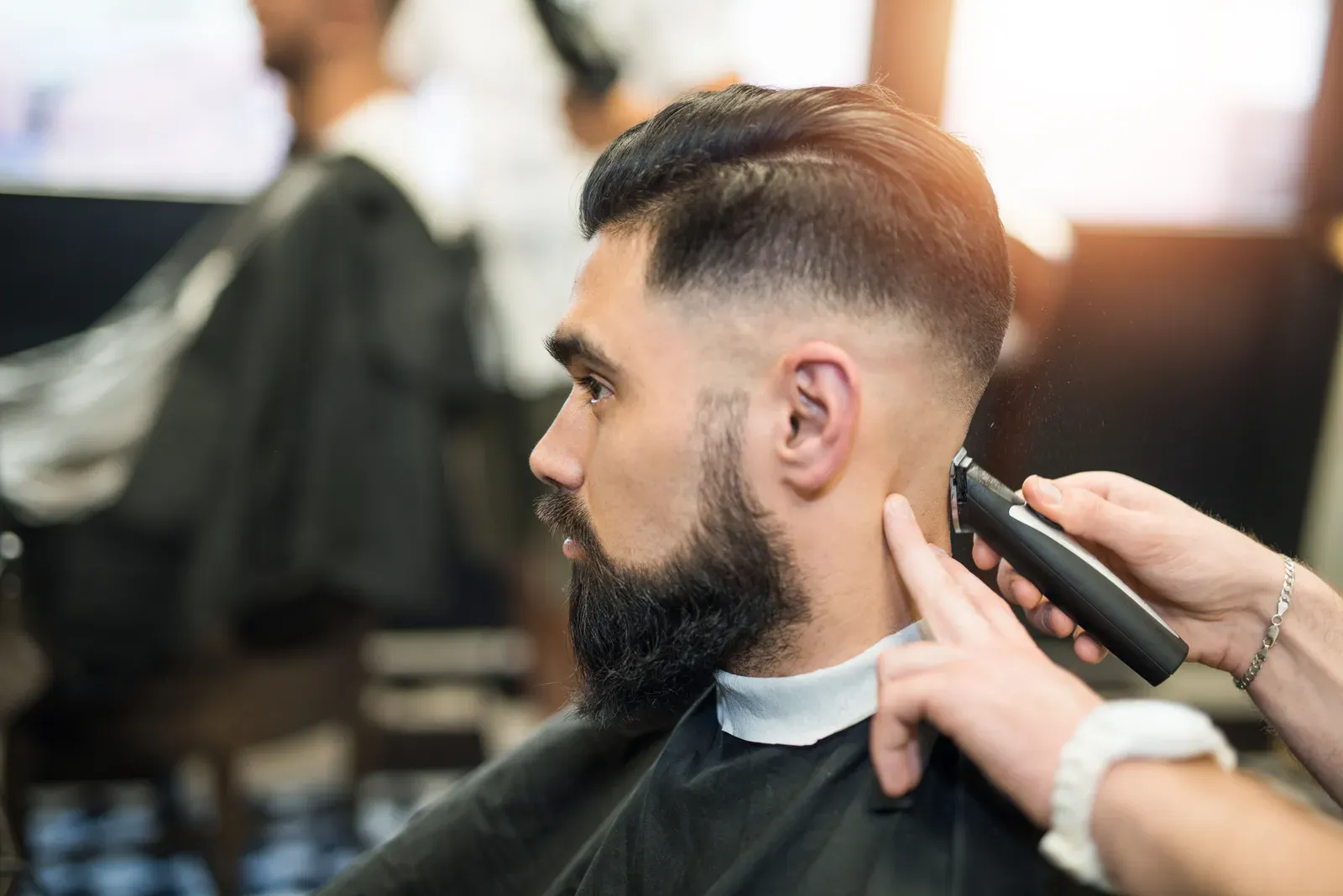
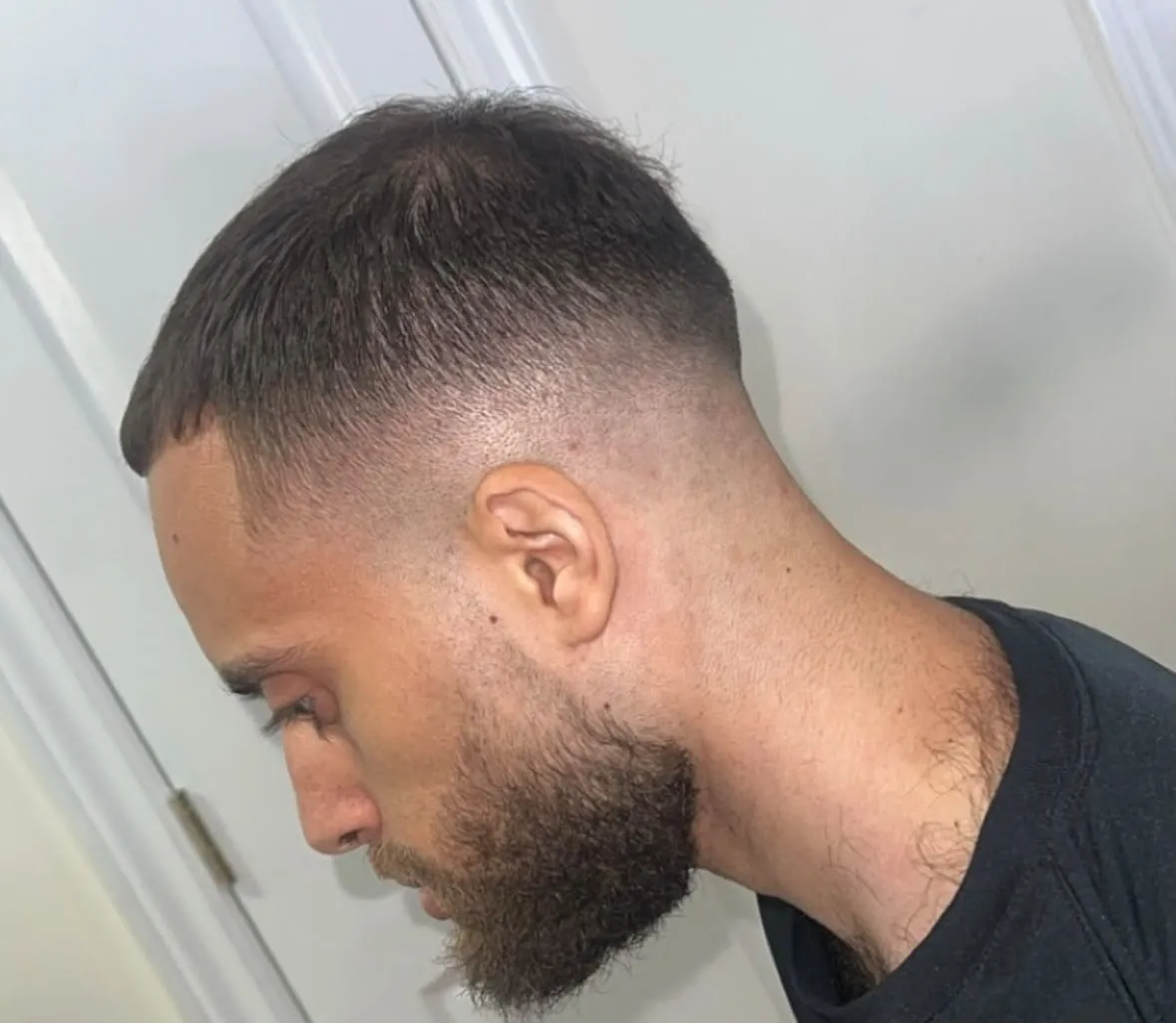
The single biggest sign of a good fade is a gradient you cannot read. Look at the side of your head from about arm's length: you should see hair getting shorter as it goes down, with no dark stripe where one guard ended and the next began, and no pale band where the barber pressed too hard.
Then run your fingertips upward from the ear. A well-blended fade feels like smooth velvet that gradually gets longer; a poor one has ridges you can feel before you see them. If there is a line, it is usually around the zone where a No. 1 meets a No. 2, the step barbers blend with lever work and flicking.
The eight checks, one by one
Use a hand mirror and a phone camera, and look at each point on its own rather than judging the whole head at once.
- Gradient: no visible bands, dark patches or holes from ear to crown.
- Height match: the start of the fade sits at the same level above each ear.
- Temples: both temple corners are the same shape and depth.
- Neckline: straight or tapered as agreed, centred, and not lopsided behind one ear.
- Around the ears: the arch over each ear is clean and the same size.
- Lineup: the front edge follows your natural hairline rather than a new, pushed-back line.
- Top connection: no step or overhang where the fade meets the length on top.
- Back curve: the fade follows the shape of your skull and flatters the crown and occipital bone.
Symmetry is judged by landmarks, not by eye alone
Most heads are not perfectly symmetrical, so a good barber matches the fade to fixed points rather than simply cutting the same distance on both sides. Look at where the fade starts relative to the top of each ear and the outer corner of each eye; those should correspond.
If one ear sits higher, the fade often looks better slightly adjusted to disguise it rather than slavishly level. What should never happen is an obvious difference you notice the moment you look in the mirror straight on. Take a front-facing photo with your phone held at eye level and compare the two sides.
Look again in daylight and after a wash
Barbershop lighting is bright and directional, which is great for cutting but can flatter a blend. Step outside or stand near a window and look at the sides again: natural light from one angle shows shadows and lines that overhead lights wash out.
Also look after your first wash at home. Water and a towel dry lift the hair differently from shop styling, and a patchy spot or a stray long hair above the fade tends to appear then. For why this happens, read our page on why a haircut can look different at home.
Common flaws and whether they can be fixed
Almost every fade flaw falls into one of two categories: too much hair left somewhere, which is easy to fix, or too much taken off somewhere, which only time fixes. Knowing which you are looking at tells you whether to go back the next day or wait.
| What you notice | Likely cause | Fixable in the chair? |
|---|---|---|
| Dark line across the side | Unblended guard transition | Yes, in minutes |
| One side starts higher | Guideline placed unevenly | Usually, by raising the lower side slightly |
| Pale hole near the crown | Clipper went too short | Not really; it needs to grow |
| Lopsided neckline | Edge not centred | Yes, if there is room to take it lower or square it |
| Hairline sits further back | Lineup pushed past the natural edge | No; see our page on a pushed-back hairline |
The one-week test
The truest test of a fade is how it looks after five to seven days. A good fade grows out evenly: both sides soften at the same rate, the neckline blurs rather than turning into a shelf, and the lineup comes back as a natural shadow.
If a line suddenly appears in the middle of the gradient after a few days, the transition was close but not quite blended. Mention it at your next visit; it is useful feedback, not an insult. Our advice on telling your barber you don't like your haircut covers how to phrase it.
What a good fade looks like at Markcutit
Every fade at Markcutit starts with a consultation about height, finish and head shape, and ends with a razor-clean lineup and a hand-mirror check of the back before you stand up. That is your chance to run through the checklist above while the barber still has the tools out.
If you want a reference point, browse the fades in our portfolio, look at the height and finish you like, and bring that photo to your appointment.
How to tell if a fade is good: common questions
Should a fade look perfect straight after the cut?
It should look clean and even, but many fades look at their best two or three days later once the skin calms and the hair settles.
Is it normal to see a slight line in my fade?
A faint shadow under strong light can happen, but a line visible from normal distance is a blending issue worth pointing out while you are in the chair.
How do I check the back of my own fade?
Hold a hand mirror in front of you with your back to a larger mirror, or ask someone to take a photo of the back and both sides in good light.