
Barber Answers
Why Barbers Put Powder on Your Neck, and When to Say No Thanks
Short answer: Barbers put powder on your neck because it absorbs sweat and skin oil, so tiny clippings stop clinging and can be brushed away with a neck duster instead of working under your collar. Powder also reduces friction for the duster and helps the barber see the neckline. It is optional: if you are sensitive to fragrance, prefer to avoid loose talc or have asthma, ask for a talc-free powder, a damp towel or no powder at all.
Short hairs stick to damp skin, and powder unsticks them
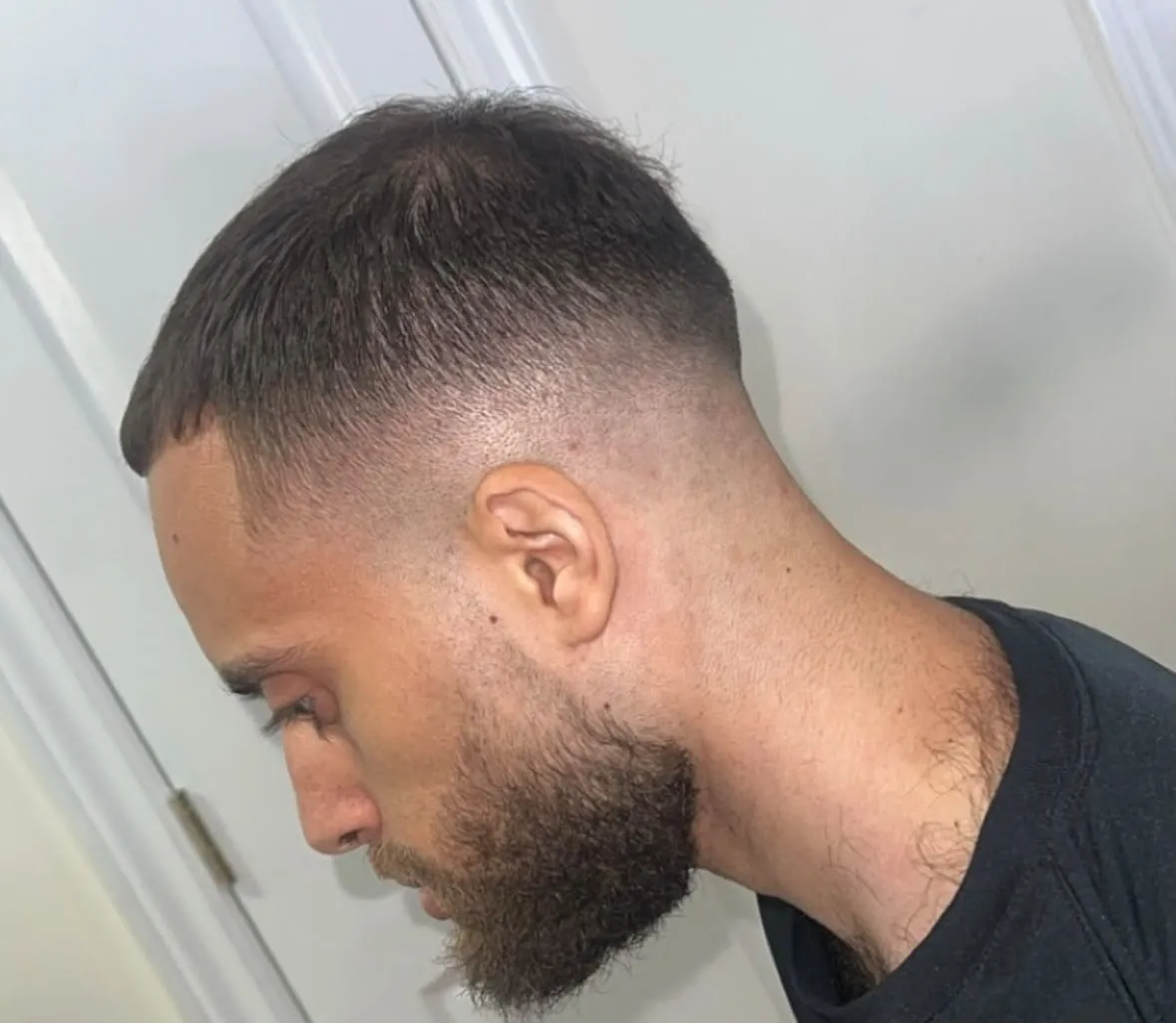
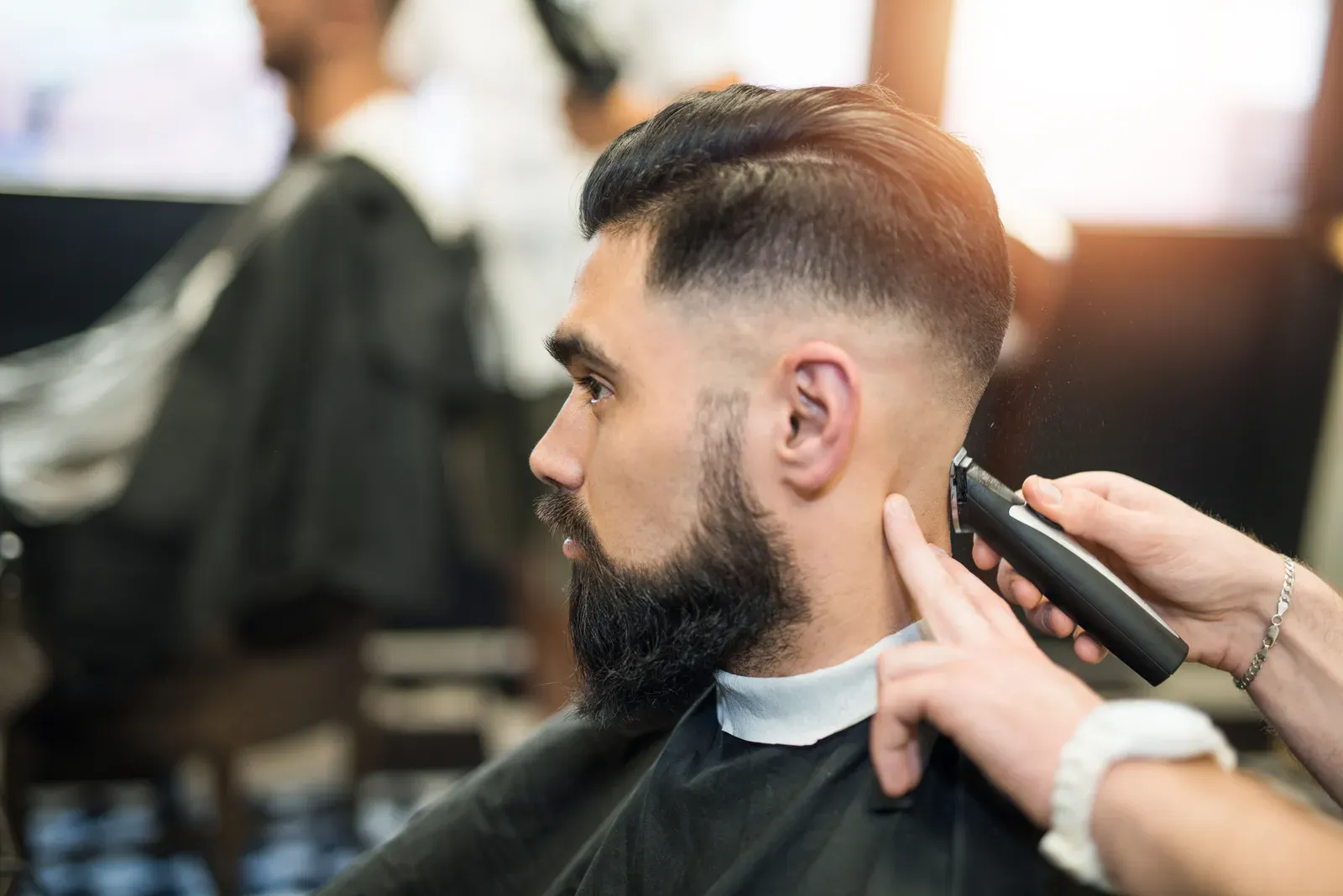
The main job of neck powder is to break the bond between clippings and skin. After a fade or neck taper, thousands of hairs only a millimetre or two long are resting on skin that is warm under the cape, and a thin film of sweat or oil holds them in place like glue.
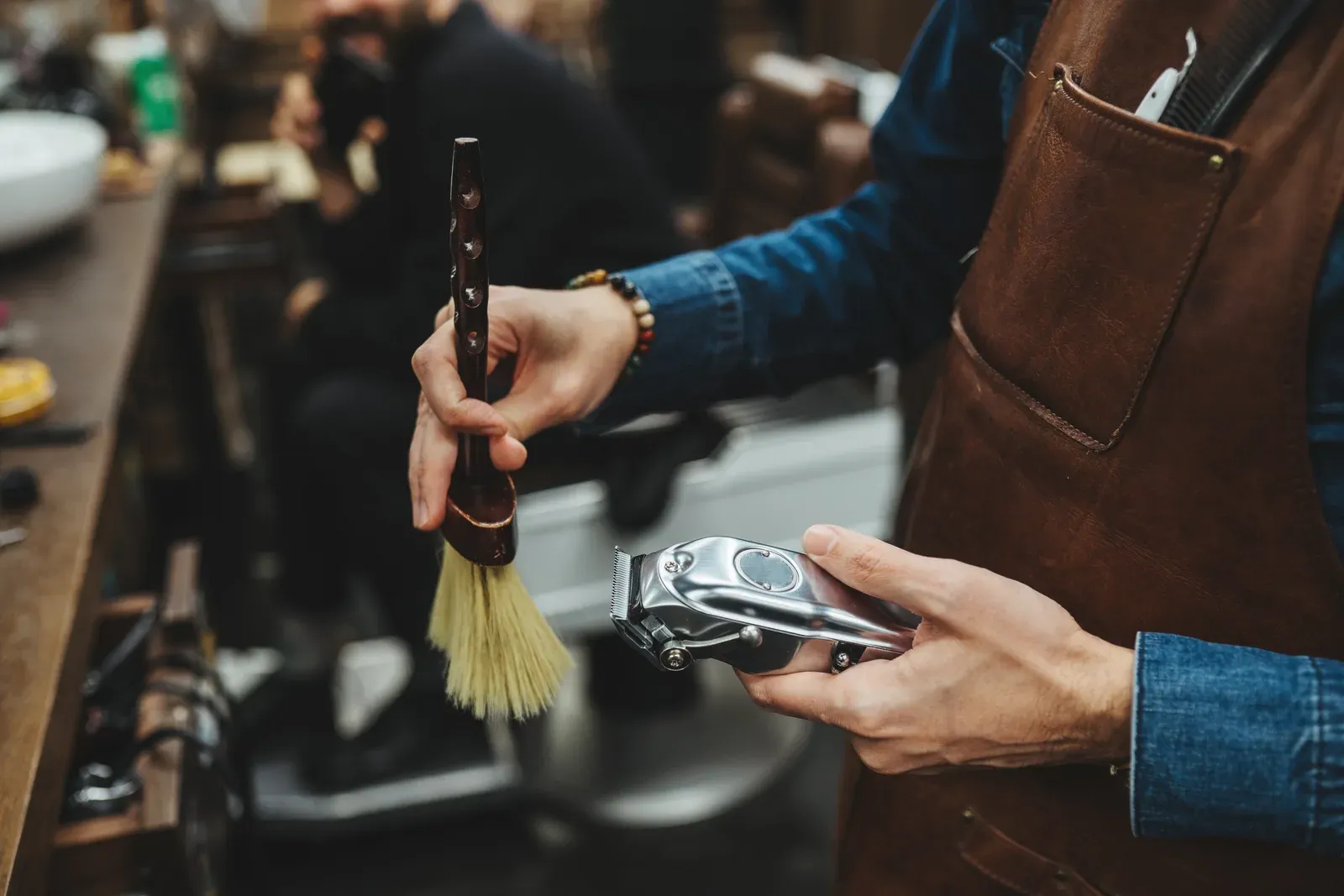
A light dusting of powder soaks up that moisture. Once the skin is dry, the hairs sit loosely on top and the soft bristles of a neck duster sweep them off in a couple of passes. Without it, the same brush tends to push hair around rather than remove it, and you find the prickly bits later inside your shirt.
The other small jobs powder does
Powder is mostly about clean-up, but barbers also rely on it for a few details during the cut. None of these are essential, which is why plenty of shops use very little.
- Friction control: a dusted neck lets the duster glide rather than drag on freshly shaved skin.
- Contrast: a pale film on the nape makes stray hairs above a blocked or tapered neckline easier to spot.
- Comfort under the neck strip: it keeps the strip and cape from sticking on a warm day.
- A clean finish: the neck feels dry when you put a collar or hoodie back on.
Talc, cornstarch and other powders compared
Traditional barber powder is talc-based, often with a light fragrance. Health Canada has concluded that breathing in loose talc powder may harm the lungs and advises consumers to avoid inhaling it and to choose talc-free alternatives where possible. For a quick puff on the nape the exposure is small, but it is a reasonable thing to ask about.
Talc-free barber powders based on cornstarch, rice starch or similar ingredients do the same drying job. What matters in the chair is how it is applied: a small amount shaken onto the duster, not a cloud squeezed from the bottle near your face.
| Option | How it works | Worth knowing |
|---|---|---|
| Talc-based powder | Very fine, absorbs oil and sweat well | Avoid breathing it in; ask for a light hand |
| Starch-based powder | Absorbs moisture, slightly coarser feel | Often unscented; good for sensitive skin |
| Damp then dry towel | Lifts hair physically without powder | Works well after a wash |
| Hair wash after the cut | Rinses clippings off neck and scalp | The most thorough clean-up |
When to ask your barber to skip it
Ask for no powder, or a talc-free one, if you have asthma or other breathing problems, if fragranced products make your skin itch, or if you are prone to clogged pores along the neck. Powder that sits in the creases of the neck all day can also mix with sweat and feel gritty in humid Mississauga summers.
If your neck is red or itchy after every visit, powder is only one possible cause; friction from clippers and short regrowing hairs are more common. Our page on skin irritation after a haircut walks through the other suspects, and it is worth seeing a doctor or dermatologist if a rash keeps returning.
How clippings are cleared at Markcutit
At Markcutit, every appointment includes a hair wash along with the hot towel and head massage, and the wash does most of what powder was invented for. Rinsing the neck and scalp after the cut removes clippings that no brush can reach, then a towel finishes the job.
That means powder is a small final touch rather than the main clean-up method, and it is easy to skip. Just say so at the start. To see how the wash and towel fit into a visit, read about the Markcutit experience or our answer on whether barbers wash your hair.
Getting stray hair off at home
If you still find itchy bits at home, the quickest fix is a rinse. Take off the shirt you wore, rinse your neck and hairline in the shower, and pat dry with a towel you can wash.
For days when a shower is not practical, a strip of wide tape pressed lightly on the collar and nape lifts short hairs, and a lint roller does the same on clothing. Wear a darker, smooth-fabric top to the appointment; knitwear and fleece catch clippings far more than cotton.
Why barbers put powder on your neck: common questions
Is barber neck powder the same as baby powder?
Some traditional barber powders are very similar to talc baby powder, often with a different scent. Many shops now offer talc-free versions made from starches.
Can neck powder cause breakouts?
It can for some people, especially if it stays on sweaty skin for hours. Rinse your neck when you get home, and see a dermatologist if bumps keep appearing after cuts.
Why does my barber brush my face with the duster too?
Clippings land on the forehead, ears and cheeks during a cut, especially after lineups and beard work. A quick sweep clears them before you look in the mirror.