
Barber Answers
What Is a Fade Haircut? Heights, Finishes and How It Differs
Short answer: A fade haircut is a cut where the hair on the sides and back gets gradually shorter from the top of the head down, ending very short or at bare skin near the ears and nape, with no visible line where one length meets the next. The two choices that define any fade are its height (where the shortest band starts) and its finish (skin, or a short guard).
A fade is a gradient, not a single length
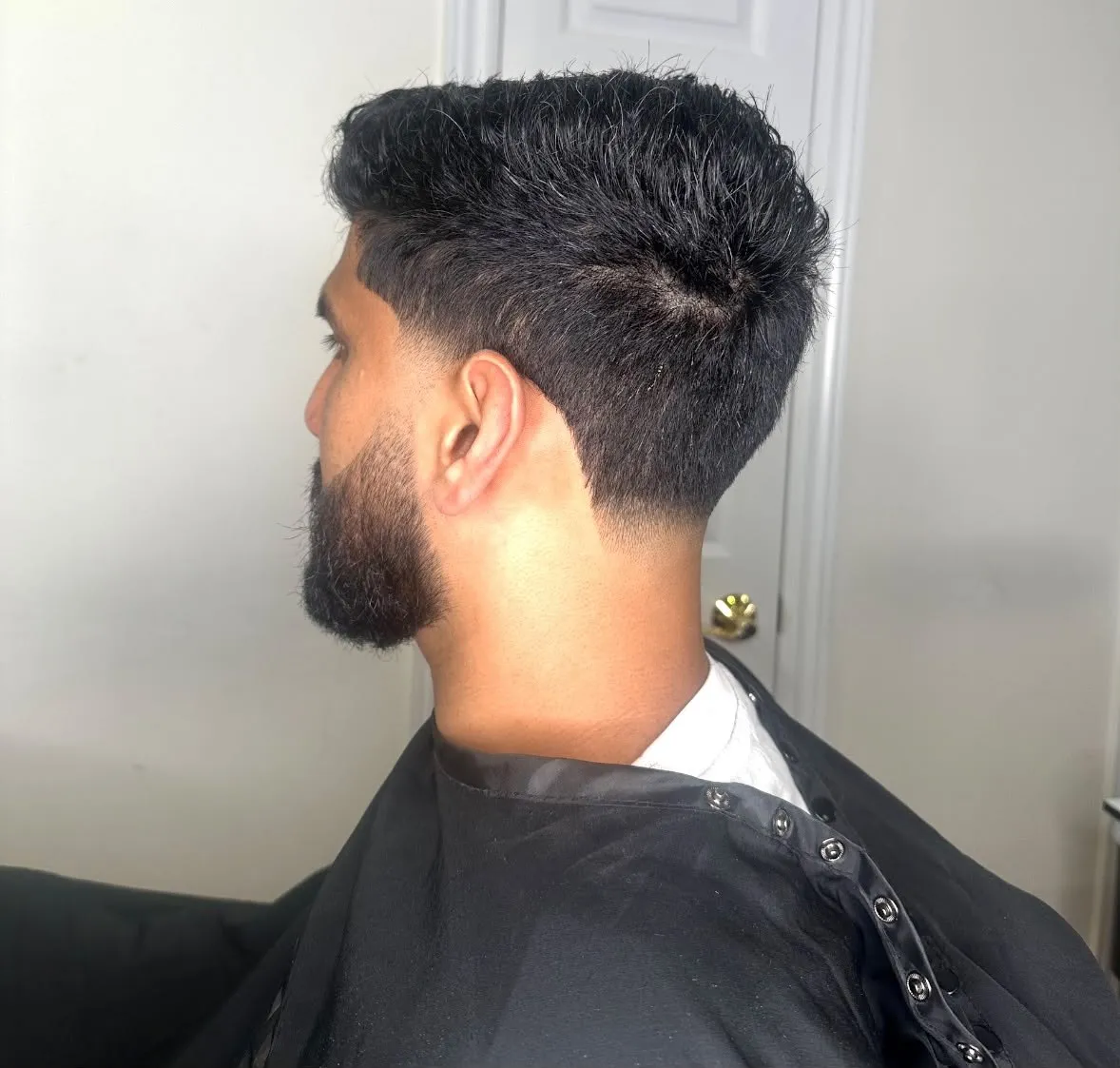
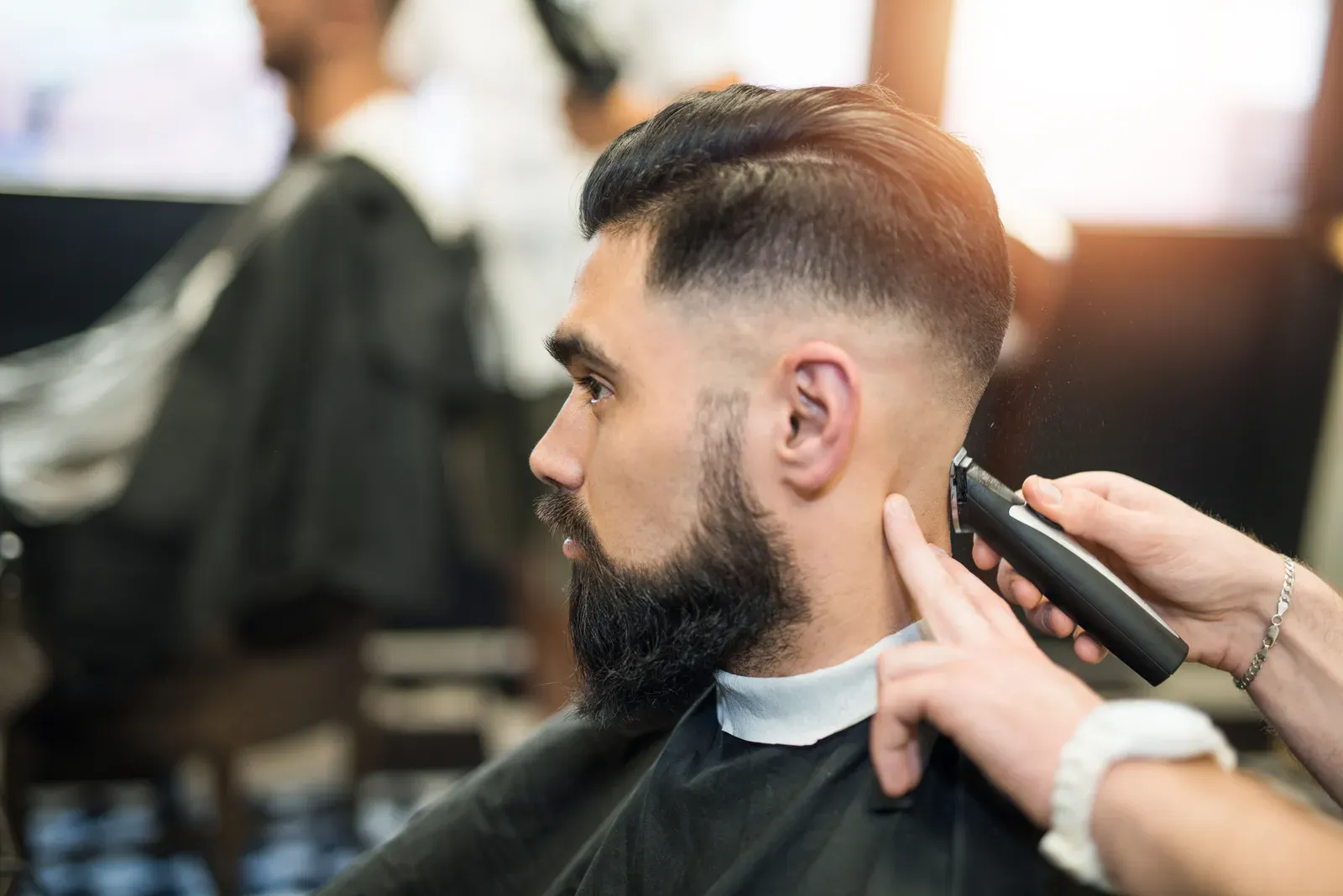
A fade is defined by the smooth change in length, not by how short it gets. If you could slice through the side of a finished fade, you would see a slope: maybe 12 mm of hair at the top of the side, 6 mm halfway down, 3 mm lower still, and nothing at the bottom.
The skill is making that slope invisible. Each step between clipper settings leaves a faint ridge of darker hair, called a weight line or shadow line, and a proper fade has every one of those ridges softened until the colour of the hair seems to melt from dark to light.
That is also why fades look different on different people. On dense black hair over light skin, the gradient is dramatic and every flaw shows. On fine blond hair the same cut looks subtle, because there is less contrast between hair and scalp.
Where a fade can start: low, mid, high and the shapes in between
Height is the first thing any barber will ask about, because it decides how much of your head shows skin. The shortest band can sit just over the ear, at the temple, or up near the parietal ridge where the side of the head turns into the top.
| Height | Where the short band starts | How it reads |
|---|---|---|
| Low | About a finger-width above the ear | Clean and conservative, mostly hair on the sides |
| Mid | Around the temple, halfway up the side | The everyday balance of sharp and wearable |
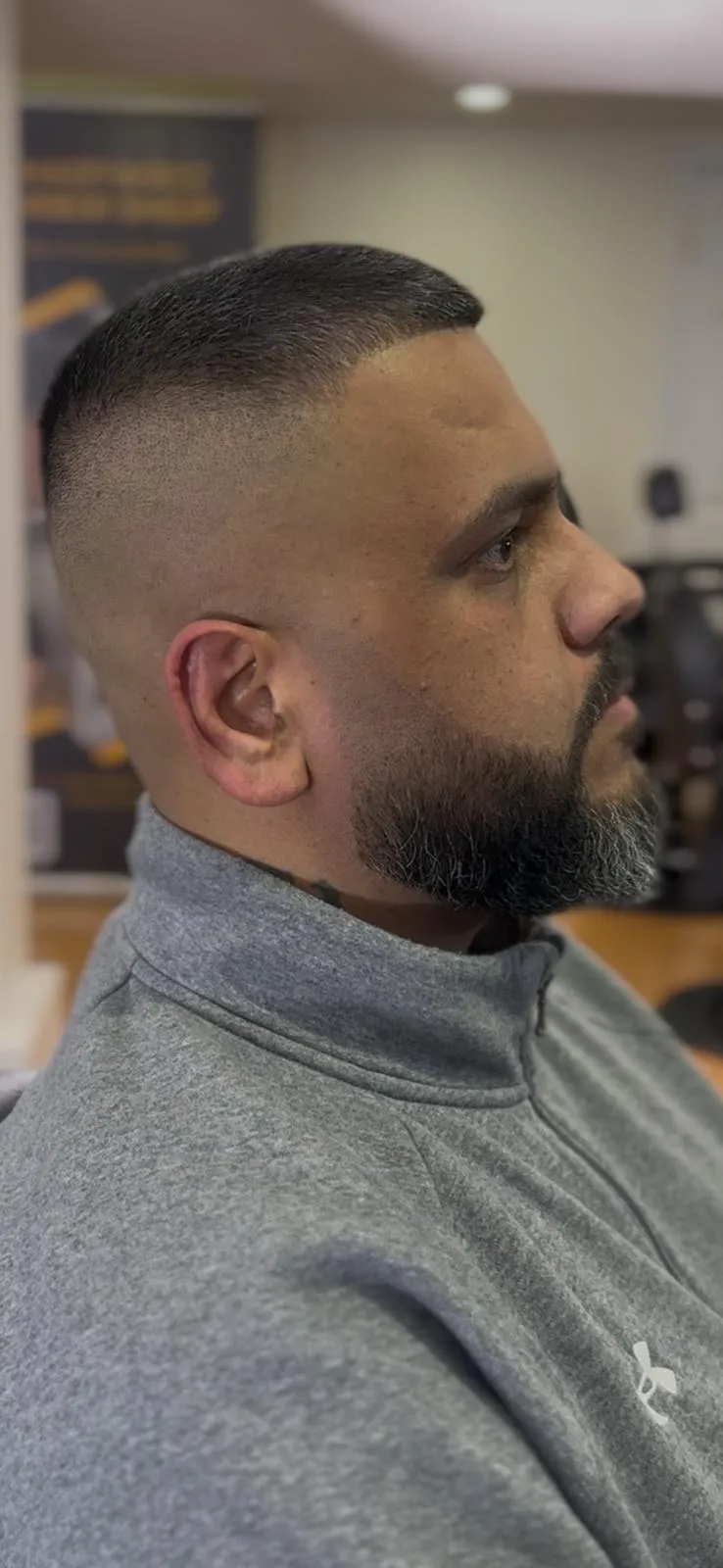
| High | Near the parietal ridge | Strong contrast, lots of skin, bold top |
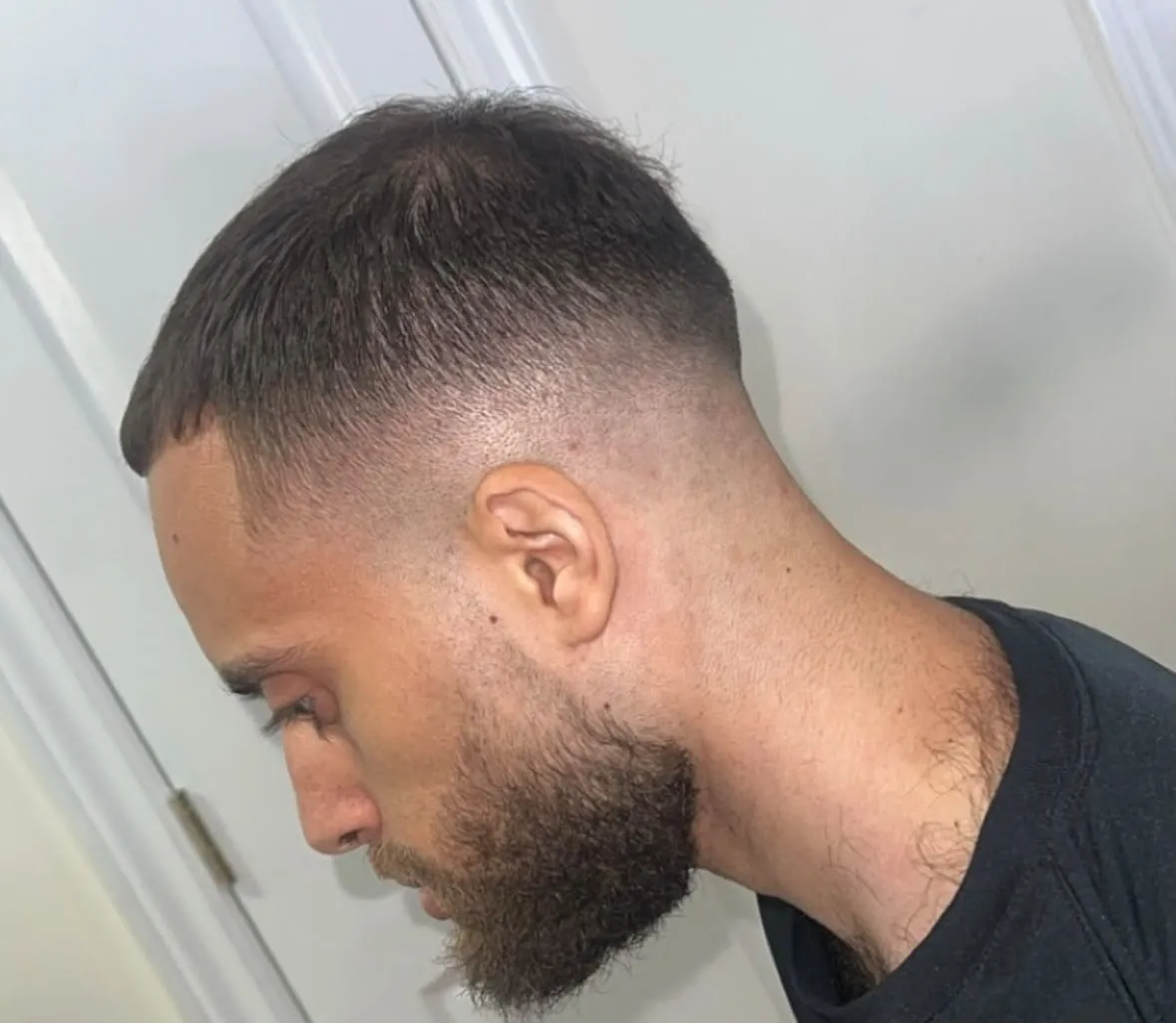
| Drop | Low at the front, curving down behind the ear | Follows the curve of the skull at the back |
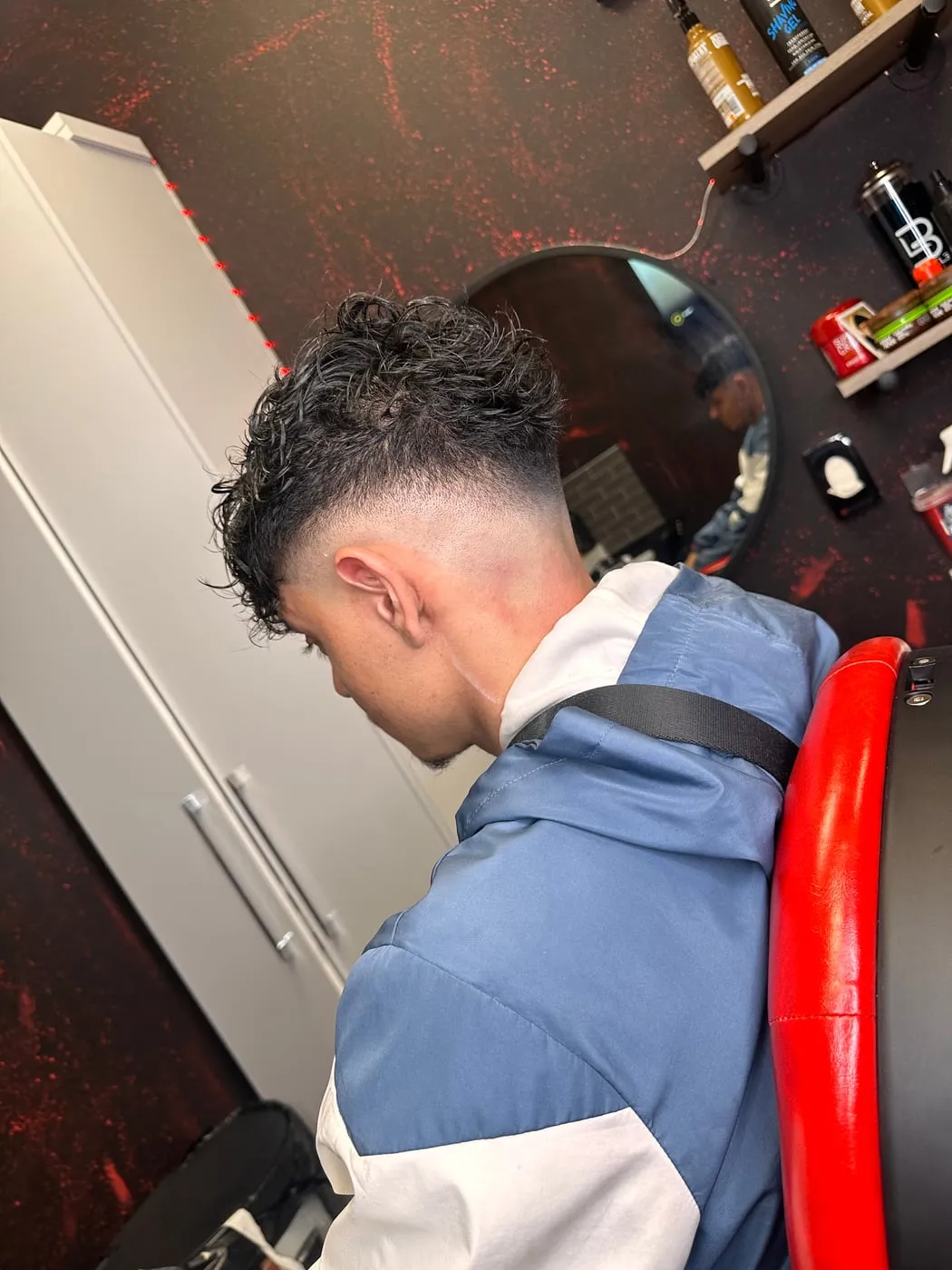
| Burst | A half-circle around the ear only | Leaves length at the nape, pairs with mullets and curls |
Skin, bald or shadow: the finish at the bottom
The finish is the shortest length the fade reaches, and it changes how sharp the cut looks and how fast that sharpness goes. A skin fade (also called a bald fade) is taken to bare skin with a zero-gap trimmer or foil shaver. A shadow fade stops at a half guard or a 1, leaving a faint haze.
Skin gives the crispest outline but shows stubble within a week. Shadow is softer from day one and holds its look a little longer, which makes it a good choice for sensitive scalps and for anyone who burns easily on a July afternoon at the lake.
You can combine any height with any finish: a low shadow fade, a mid skin fade, a high bald fade. For the difference between those last two names, see bald fade vs skin fade.
How a fade differs from a taper and an undercut
A taper shortens only the edges. The sideburns and the neckline are brought down, but the hair above the ear and across the back keeps most of its length, so the outline looks tidy without a band of skin. Our full breakdown is in fade vs taper.
An undercut has no gradient at all. The sides and back are cut to one short length and the top is left long, creating a deliberate hard step where the two meet. That disconnection is the point of the style, whereas a fade exists to hide every step. See undercut vs fade for when each works.
A fade sits between the two: it covers the whole side and back like an undercut, but it blends like a taper. Many cuts use a mix, such as a taper at the neck with a disconnected top.
What you can wear on top of a fade
Almost anything, which is why the fade became the default barbershop cut. The fade handles the sides and the top is a separate decision.
- Short and textured: a textured crop or French crop with a scissor-cut fringe.
- Combed: a side part or comb-over, often with a shaved part line.
- Volume: a pompadour or quiff, where a higher fade makes the top look taller.
- Natural texture: curls, coils or waves left full, with the fade cleaning the perimeter.
- Very short: a buzz on top with a fade underneath, where the blend starts almost at the crown.
How a fade is cut and booked at Markcutit
Every fade here starts with a consultation: we look at the shape of your skull behind the ears, where your hair grows in swirls, and how you actually wear it on a Tuesday, not just in the photo. Then we set the guideline, build the gradient with guards and lever work, detail the bottom, and finish with a razor-clean lineup.
Fades are booked as a Haircut Only on Booksy through our skin fades service, and every visit includes a hot towel, hair wash and head massage. If you are torn on height, our journal piece on choosing a low, mid or high fade walks through it.
What is a fade haircut: common questions
Is a fade the same as a skin fade?
No. Skin fade describes one finish, where the bottom goes to bare skin. A fade can also finish on a half guard or a 1 and still be a fade, as long as the lengths blend with no visible line.
Do fades work on straight or thin hair?
Yes, though the effect is softer because there is less contrast between hair and scalp. On fine hair a mid or low fade usually looks better than a high one, which can make the top look sparse.
Why is my fade darker in one spot?
A dark patch is usually a weight line that was not fully blended, or a cowlick where hair grows in a different direction and sits flatter. A barber fixes it by working that zone again with the lever half open or with a detailer.
Can I get a fade with a beard?
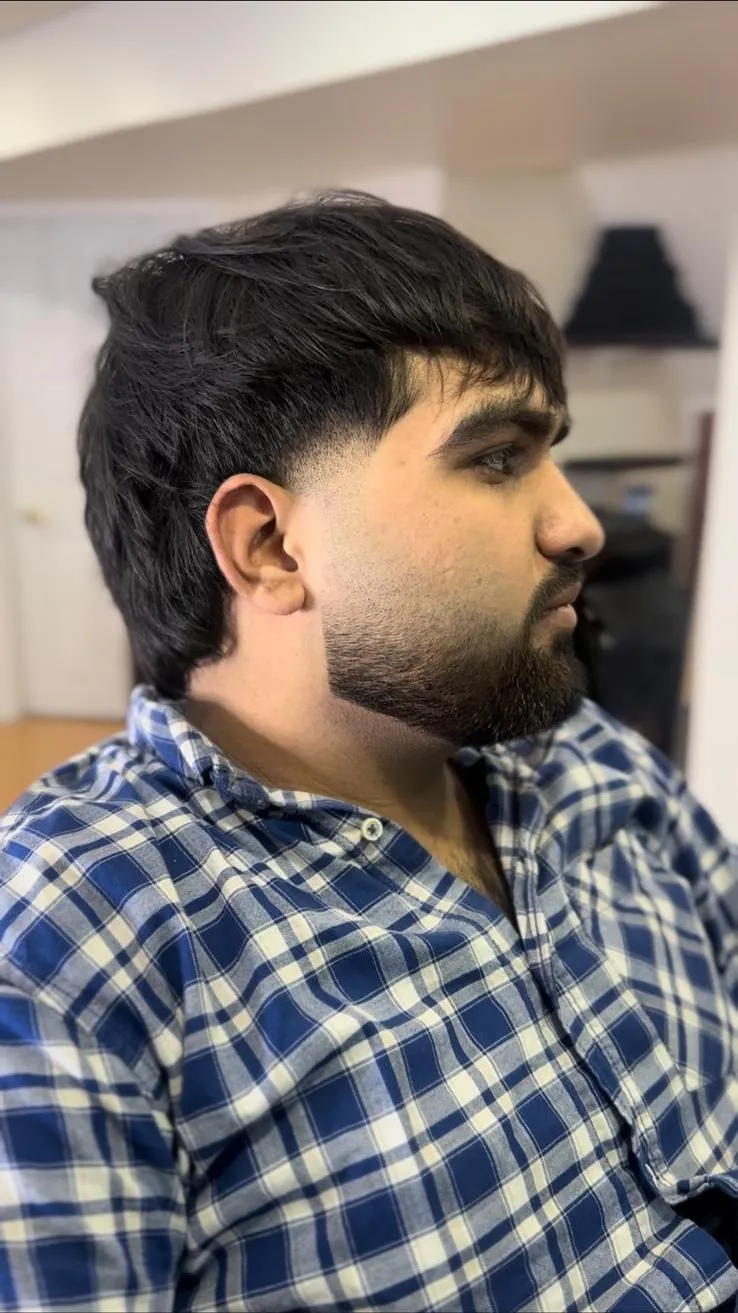
Yes. The fade can be carried down through the sideburns into the beard so there is no break at the ear. That is booked as a Haircut + Beard.