
Haircut Styles
Professional Haircuts for Men: Office-Ready Cuts That Work
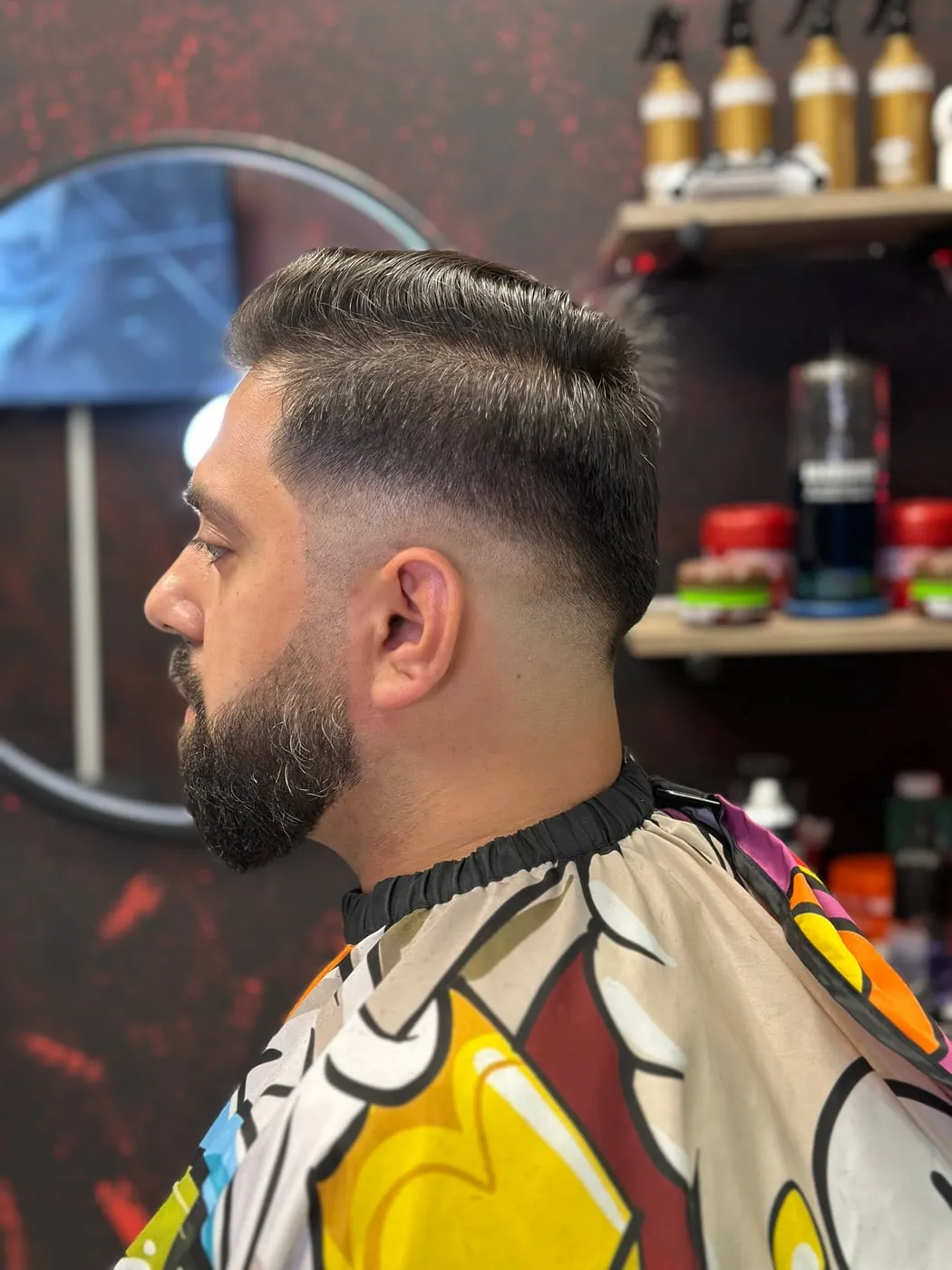
Short answer: The best professional haircuts for men are low fades, side parts, the Ivy League and short textured crops. They share clean, tapered edges, a neat neckline and a top short enough to look tidy by 9 AM without effort. Keep the beard short and defined, and book the cut three to five days before an important presentation so the edges settle.

What makes a haircut look professional
A professional haircut is defined less by style and more by finish. Clean edges, even sides and a top that stays where you put it are what people read as put together. The same cut can look sharp or scruffy depending on how recently the edges were cleaned up.
Office dress codes rarely spell out hair, but a few conventions hold in most client-facing workplaces. Hair should stay off the collar, the sides should not look overgrown, and nothing should need fiddling during a meeting. Beyond that, a modern fade is as acceptable in a Mississauga head office as a traditional scissor cut.
Five cuts that work in any office
These are the cuts we recommend most often to clients in finance, law, sales and anything else client-facing. Each suits a different hair type and level of effort.
| Cut | Why it works | Daily effort | Best hair |
|---|---|---|---|
| Side part | The most familiar formal cut | Comb and cream, 3 minutes | Straight to wavy |
| Ivy League | Neat, short, can be parted | Under 2 minutes | Straight, medium density |
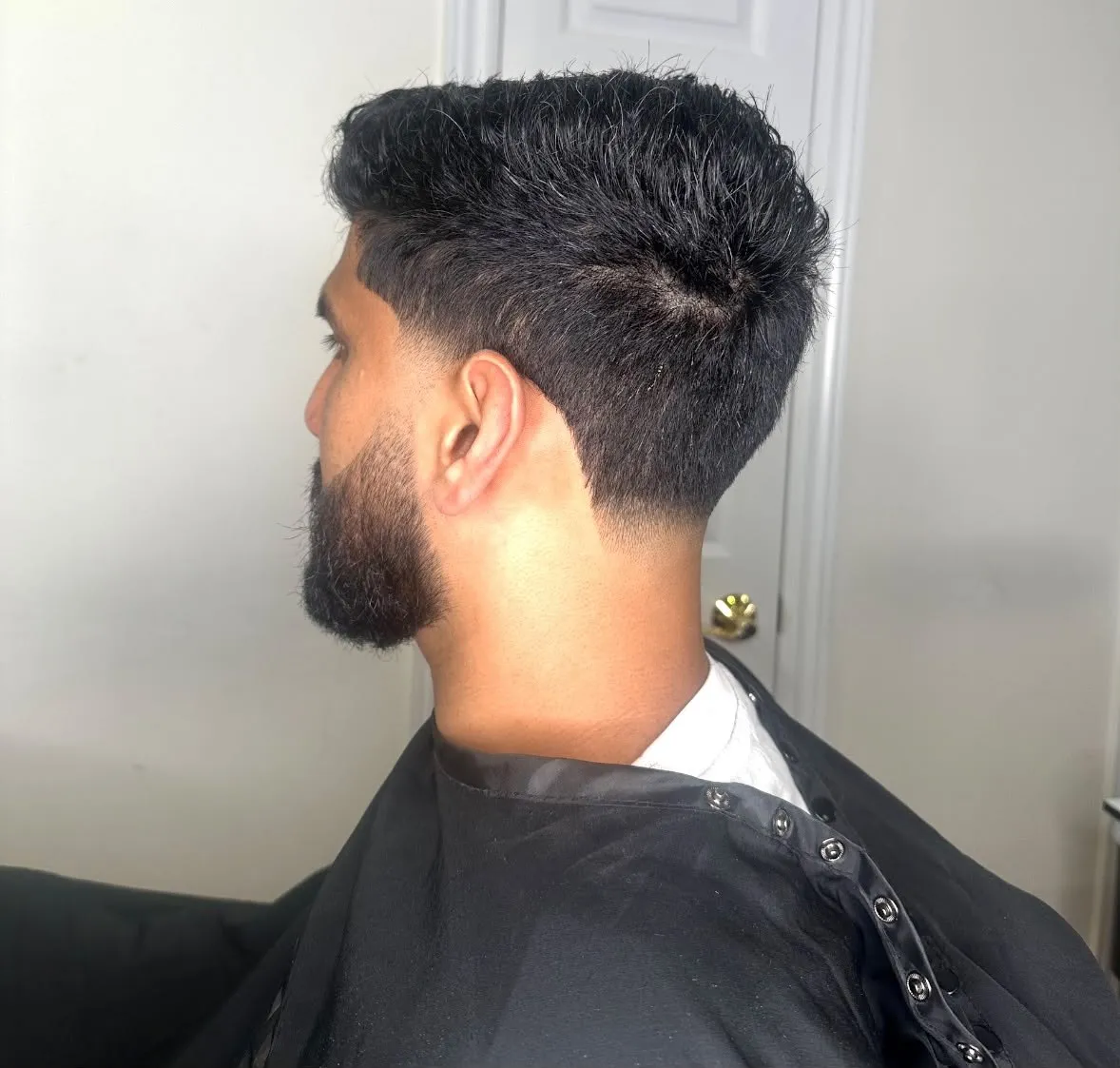
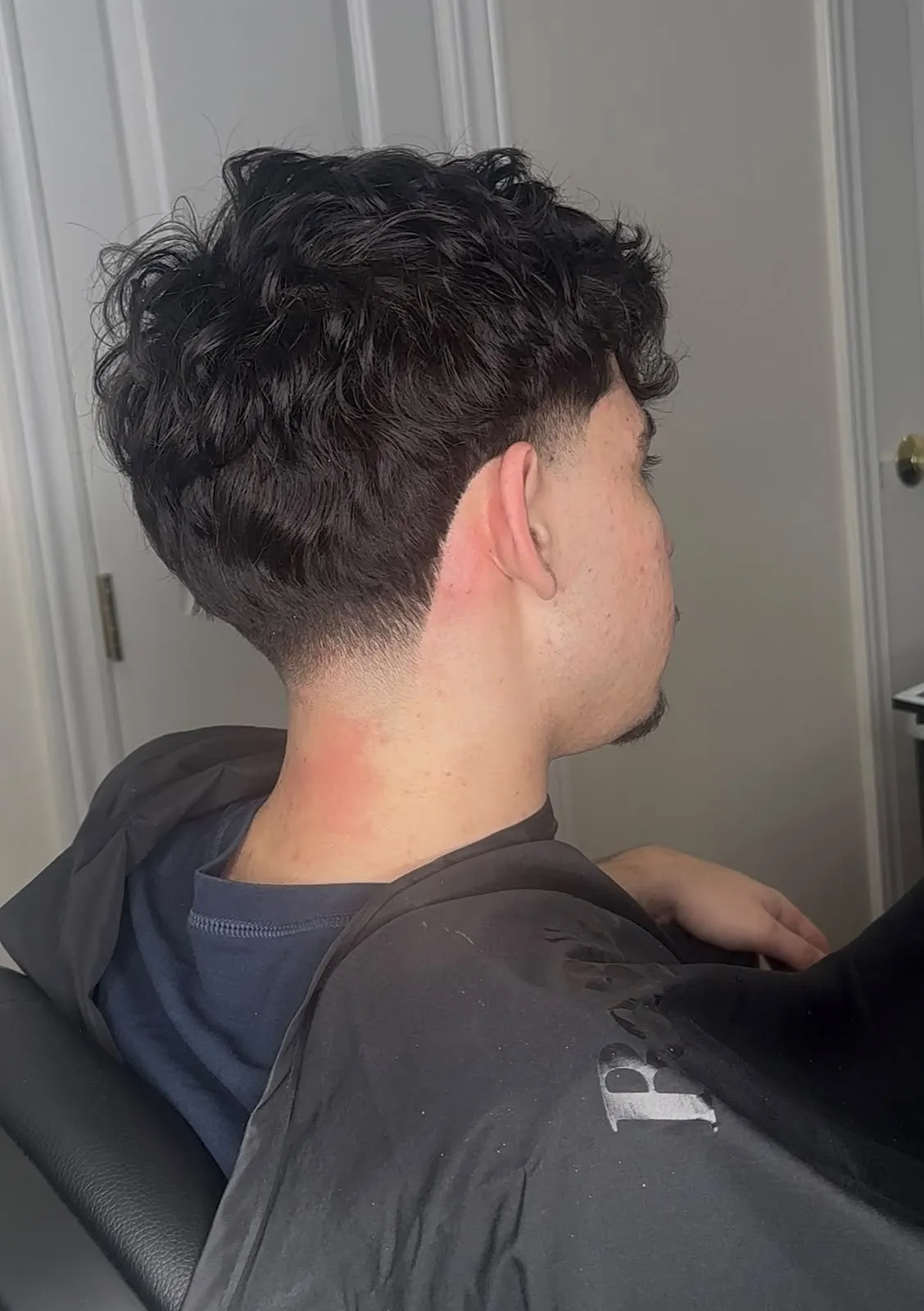
| Low taper | Clean edges, keeps length | Depends on the top | Any |
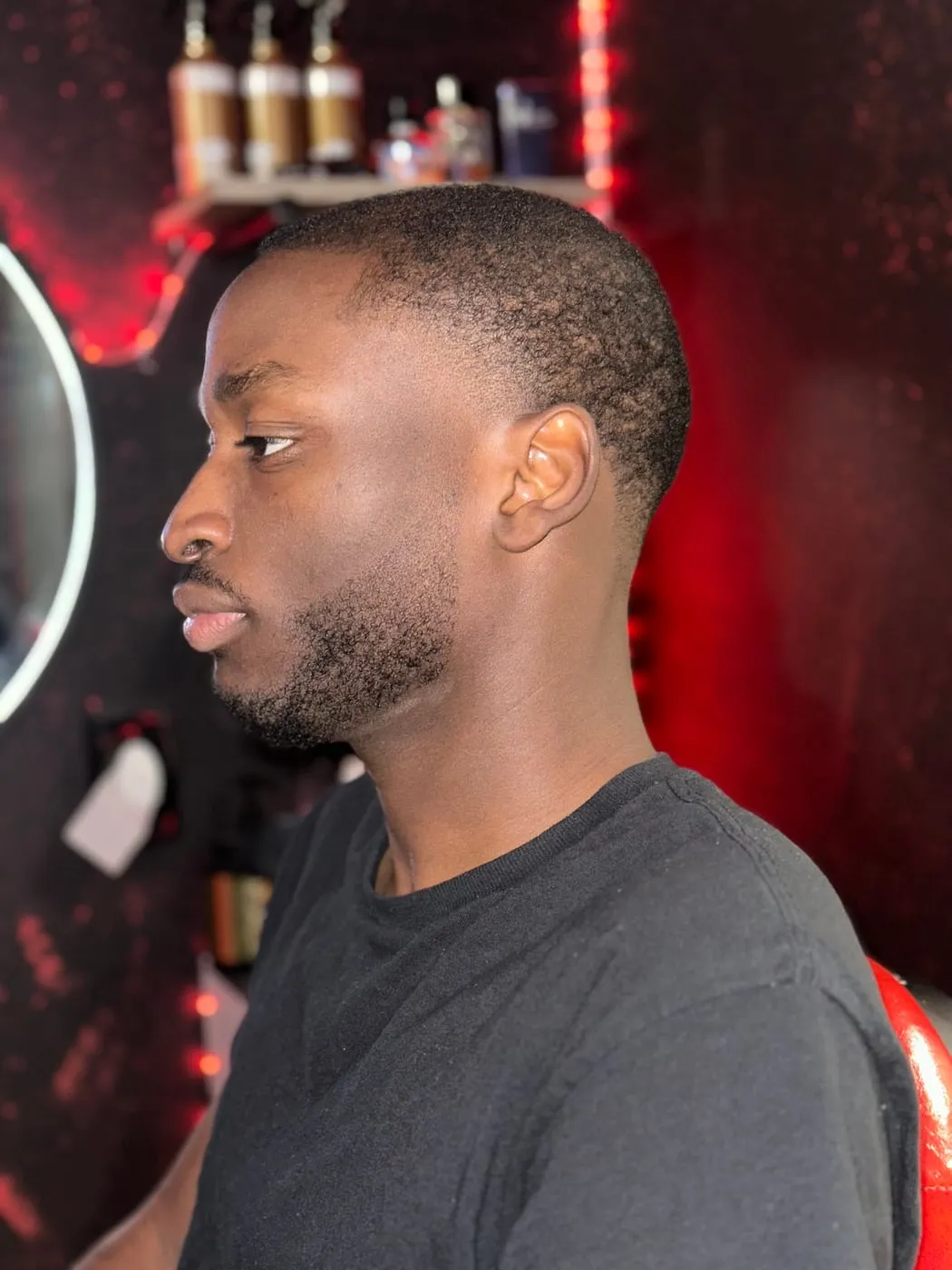
| Low fade with short top | Modern but restrained | 1 to 2 minutes | Any, including coily |
| Short textured crop | Hides a receding hairline | 2 minutes with clay | Straight to wavy |
Keep the fade low and the top controlled
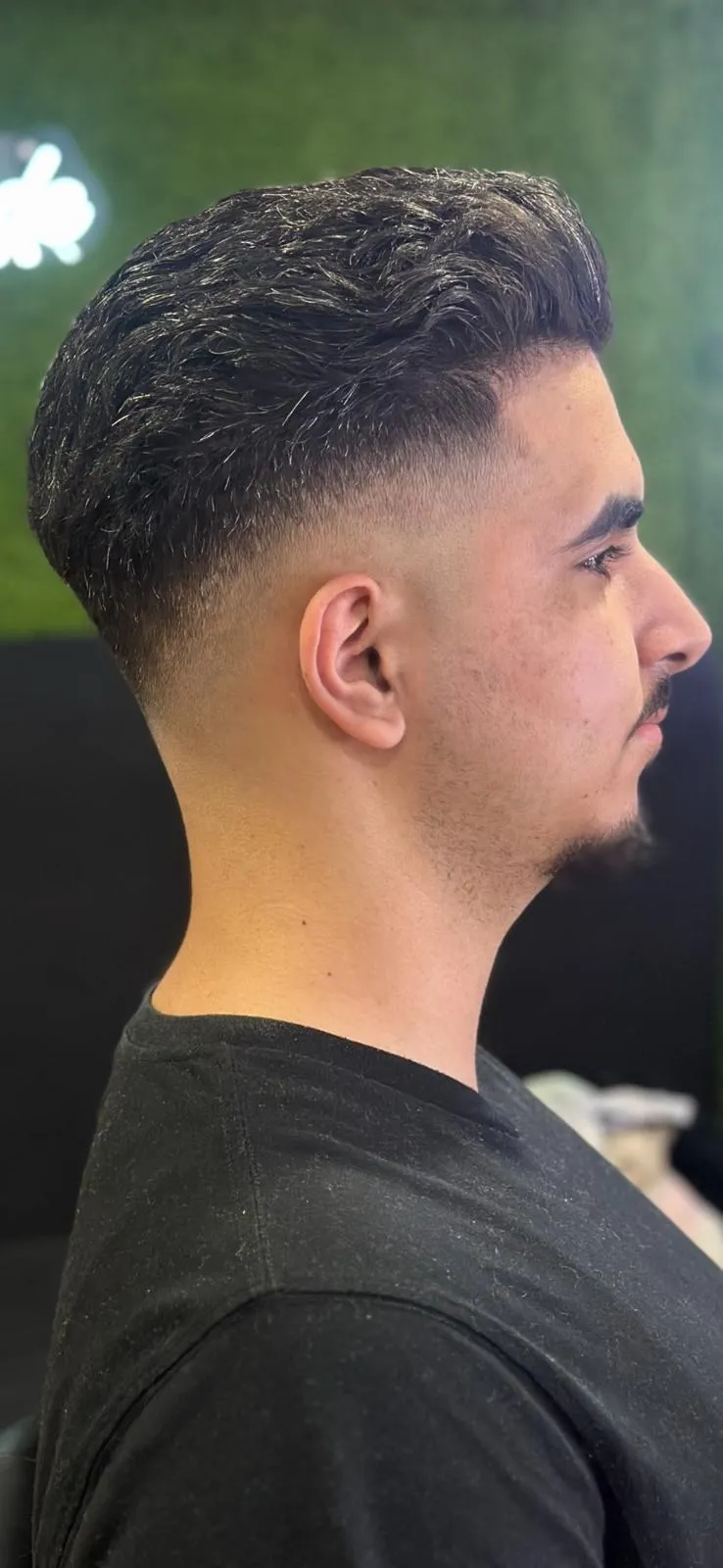
The two things that most often push a cut from office to weekend are a very high fade and a top that needs a lot of product. A low fade or low taper cleans up the sides without showing a lot of skin, and it grows out gracefully, so the cut still looks tidy in week three.
On top, aim for a length that stays in place with a small amount of cream or matte paste. Very long, voluminous styles such as a big pompadour can work in creative industries, but they need daily upkeep and look scruffy when you skip it. A side part haircut or an Ivy League gives structure with much less effort.
Beard standards at work
Most offices accept beards now, but the standard is a beard that looks intentional. Length matters less than definition: a short full beard with a clean neckline and cheek line looks more professional than patchy stubble left to grow unevenly.
- Neckline: set about one to two fingers above the Adam's apple, never left to blend into the neck. Our page on the beard neckline explains placement.
- Cheek line: clean it up so it looks deliberate, but do not cut it too low.
- Length: a short boxed or corporate beard is the safest choice for client-facing roles.
- Moustache: keep it trimmed off the upper lip.
- Stubble: fine if it is even and the neckline is clean.
Timing a cut before a presentation or interview
Book the cut three to five days before an important presentation, interview or photo. A fresh fade can look a little too sharp on day one, and any redness from a razor lineup needs a day or two to settle. By day three the edges look crisp but natural.
If you get a skin fade, lean toward three days before, since fades lose definition fastest. For scissor-cut styles, up to a week before is fine. Markcutit is open seven days a week, 9:30 AM to 9:00 PM, so an evening or weekend slot before a Monday meeting is usually available on Booksy. For more timing advice, see when to get a haircut before a big event.
Keeping it sharp on a busy schedule
The simplest system is a standing appointment. Book your next visit before you leave, every three to four weeks for most professional cuts or every two to three for a fade. That stops the gradual slide from sharp to shaggy that happens when you only book when it looks bad.
If you have a beard, the Haircut + Beard service handles both in one visit, and every appointment includes a hot towel, wash and head massage, which is a good reset in the middle of a busy week.
Professional haircuts for men: common questions
Is a skin fade professional?
A low skin fade is professional in most workplaces. High skin fades can look more casual, so keep the fade low if your office is conservative.
Can I have long hair in a professional job?
Yes, if it is neat and well kept. Long hair tied back or cut in a tidy shape reads as professional; unkempt ends and an overgrown neckline do not.
How often should professionals get a haircut?
Every three to four weeks for most cuts, every two to three for a fade. Our journal piece on how often to get a haircut goes into more detail.
What is the most professional haircut for thinning hair?
A short textured crop or a neat short back and sides. Short even lengths reduce the contrast that makes thinning noticeable.