
Haircut Styles
Flat Top: How Barbers Cut a Level Top and Who Can Wear One
Short answer: A flat top is a haircut where the hair on top stands upright and is cut perfectly level, like a platform, with short tapered or faded sides. It is cut with clippers over a flat-top comb that has a built-in level. It needs dense, coarse hair that stands on its own, so it works best on thick straight hair or coily hair.
The flat top only works on hair that stands up by itself
A flat top depends on the hair standing vertically, so density and texture matter more than anything else. Coarse hair, straight or coily, with a lot of strands per square centimetre will hold the platform. Fine or soft hair flops over and the level surface collapses by midday.
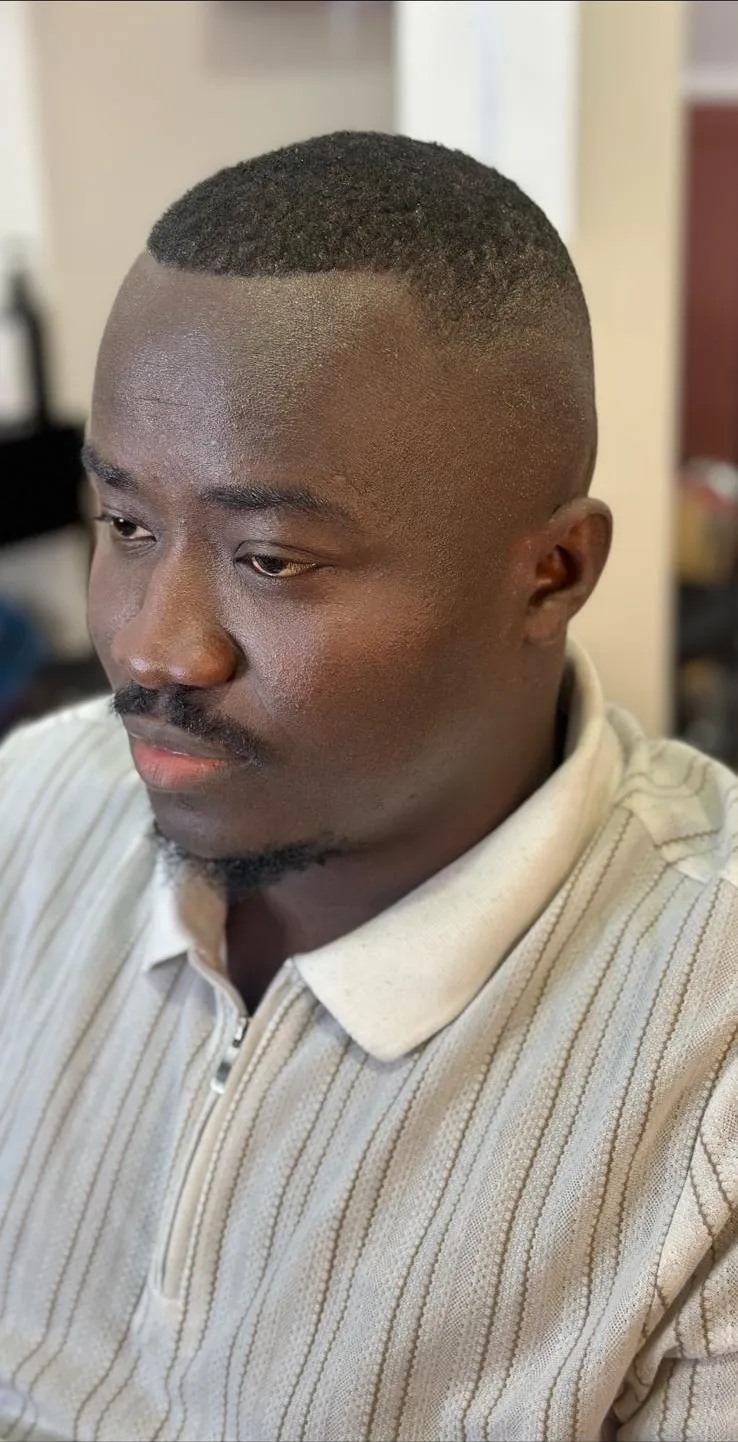
Coily hair is the natural fit, which is why the high-top version became iconic in the late 1980s and early 1990s. Thick, coarse straight hair can also hold a flat top, especially when it is cut on the shorter side. If your hair is fine, a crew cut gives a similar clean, military look without needing the hair to stand.
- Good candidates: coarse coily hair, thick straight hair that sticks up after a short cut, dense hair with no thinning on top.
- Difficult: fine or soft hair, thinning at the crown, strong double crowns that push hair sideways.
How the flat-top comb and clipper-over-comb technique work
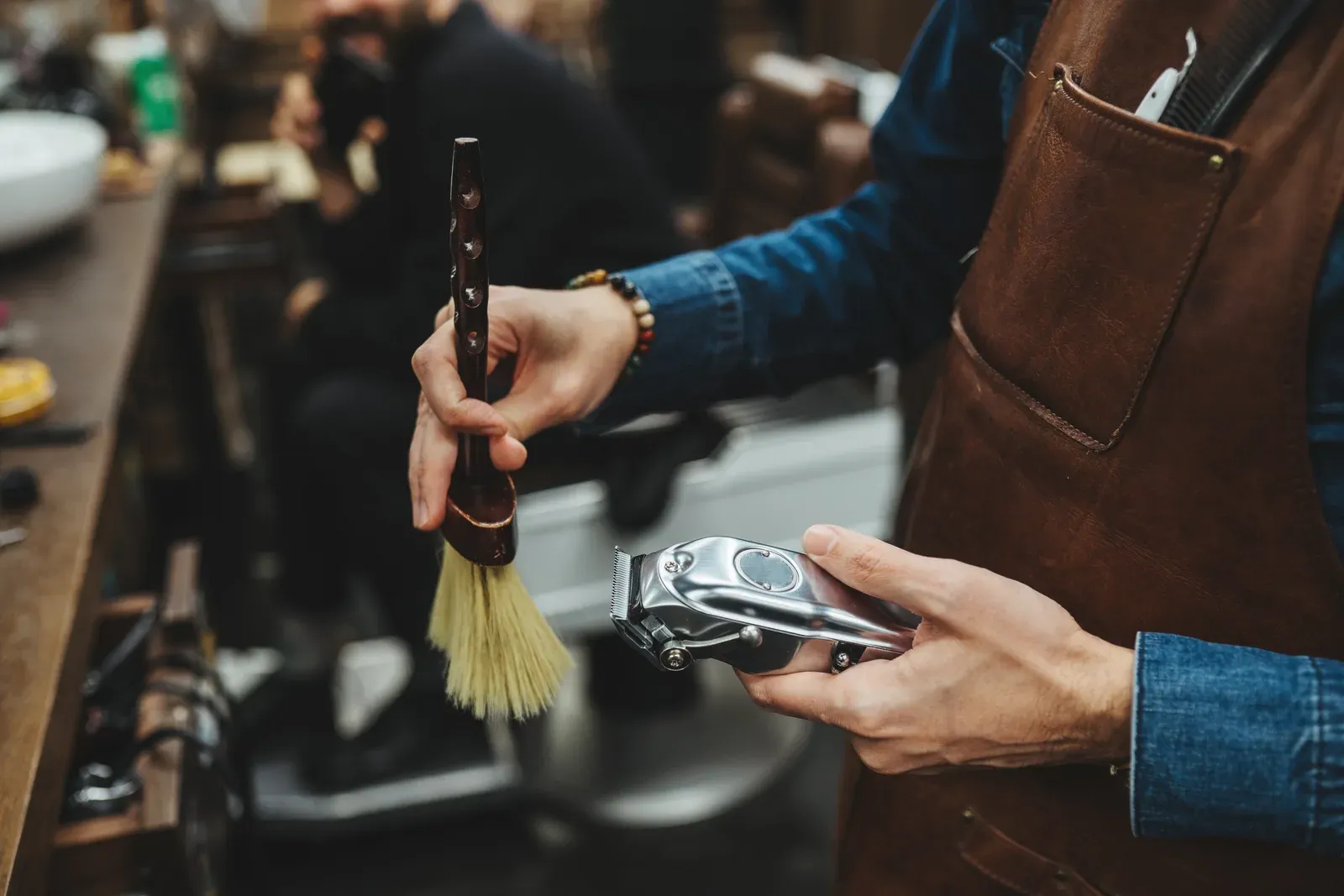
Cutting a flat top is a precision job. The main tool is a flat-top comb, a wide comb with a small spirit level built into its spine. The barber lays the comb across the top, checks the bubble to confirm it is level with the floor, and runs the clipper along the comb to remove everything above it.
The skill is in keeping that plane level from front to back while your head is not perfectly still and your scalp is not perfectly flat. Most heads are higher at the crown, so the hair at the front is left longer than at the crown to create a level surface.
- Dry and pick out or blow dry the hair straight up so every strand is standing vertically.
- Cut the sides and back first, usually a taper or fade, so the platform has something to sit on.
- Set the height at the centre of the top with the flat-top comb and clipper.
- Work outward in overlapping passes, checking the level each time, front to back and side to side.
- Square off the corners where the top meets the sides so the silhouette has crisp edges.
- Detail with a trimmer and razor, then check the level from the front and side with a mirror.
Classic flat top versus the faded version
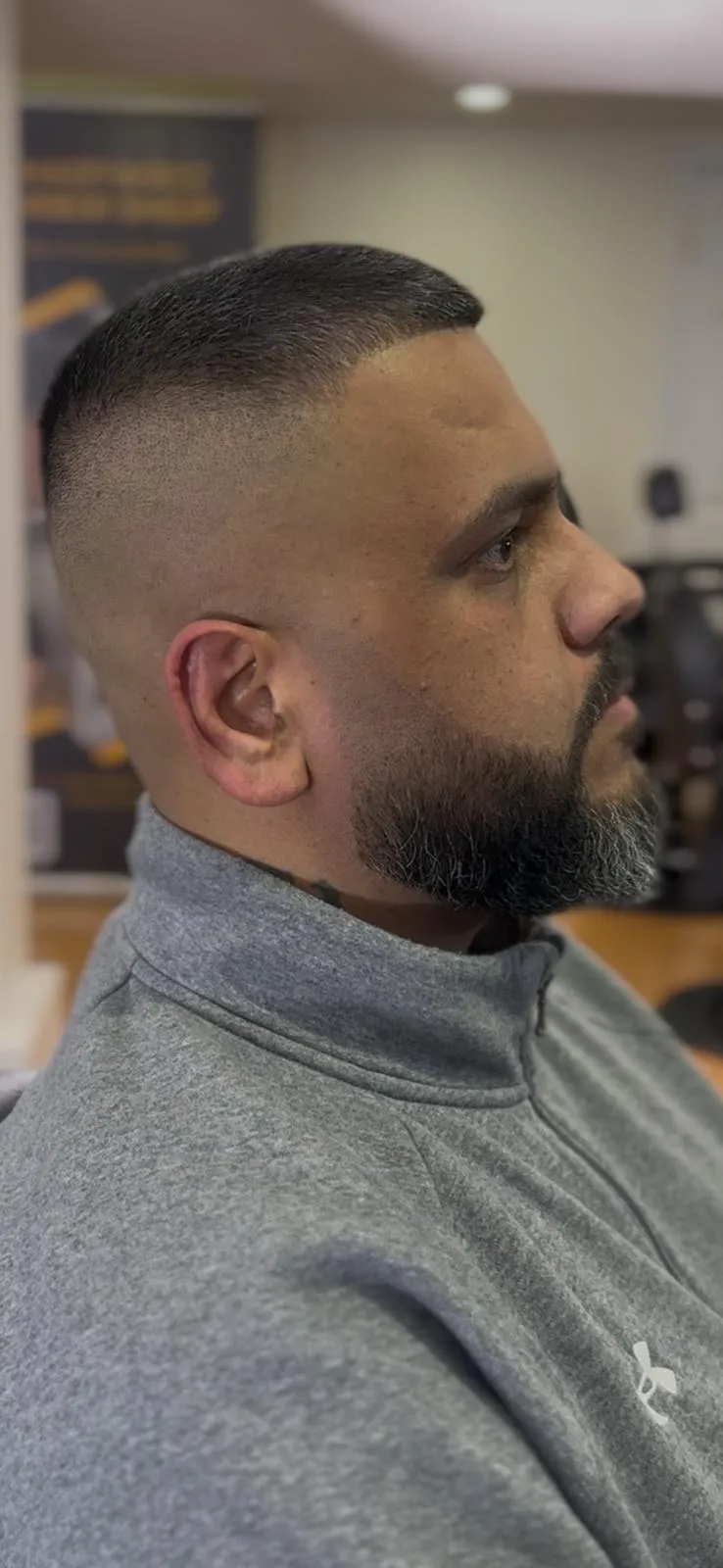
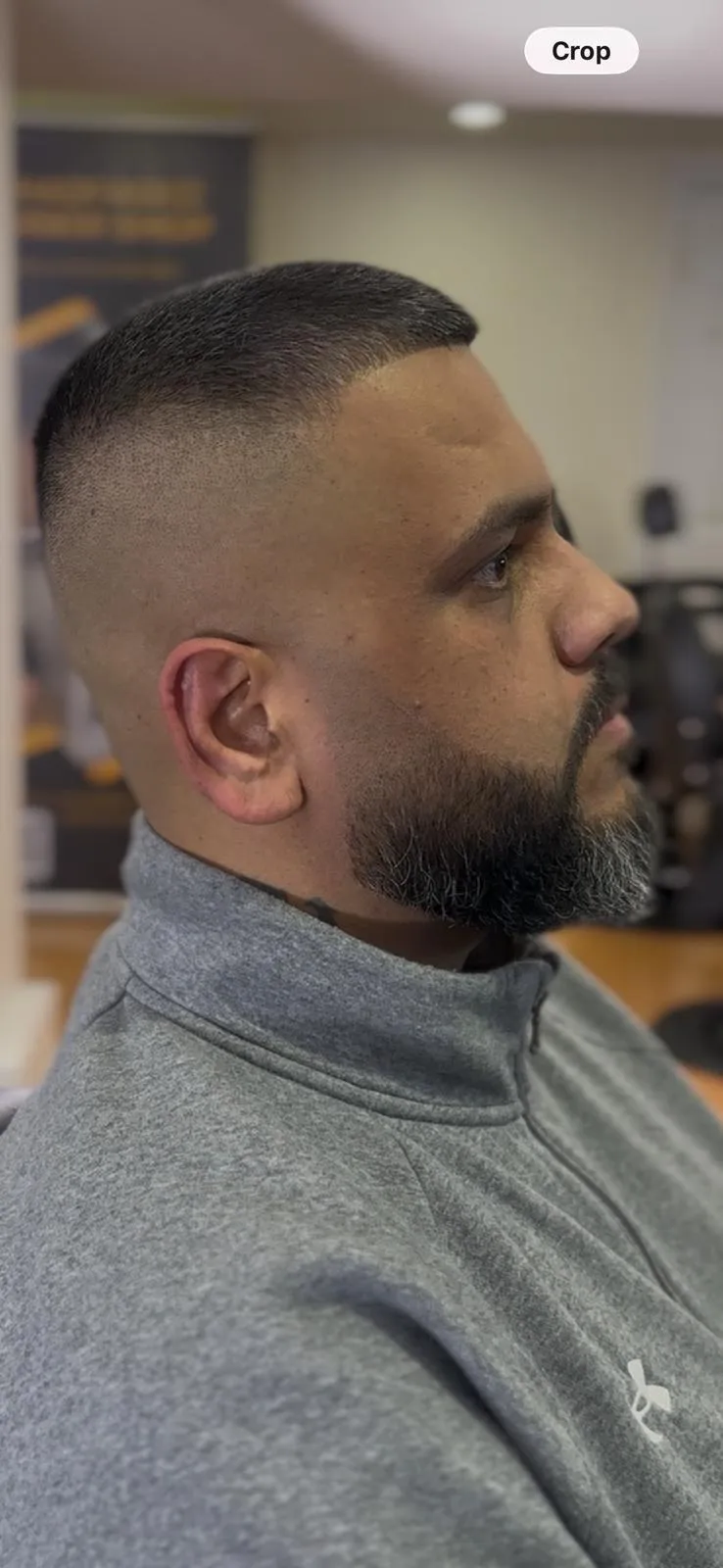
The classic flat top has short tapered sides, often a No. 1 or No. 2, and a relatively short platform around 2.5 cm. It has a clean, military look associated with the 1950s and later with drill sergeants and athletes.
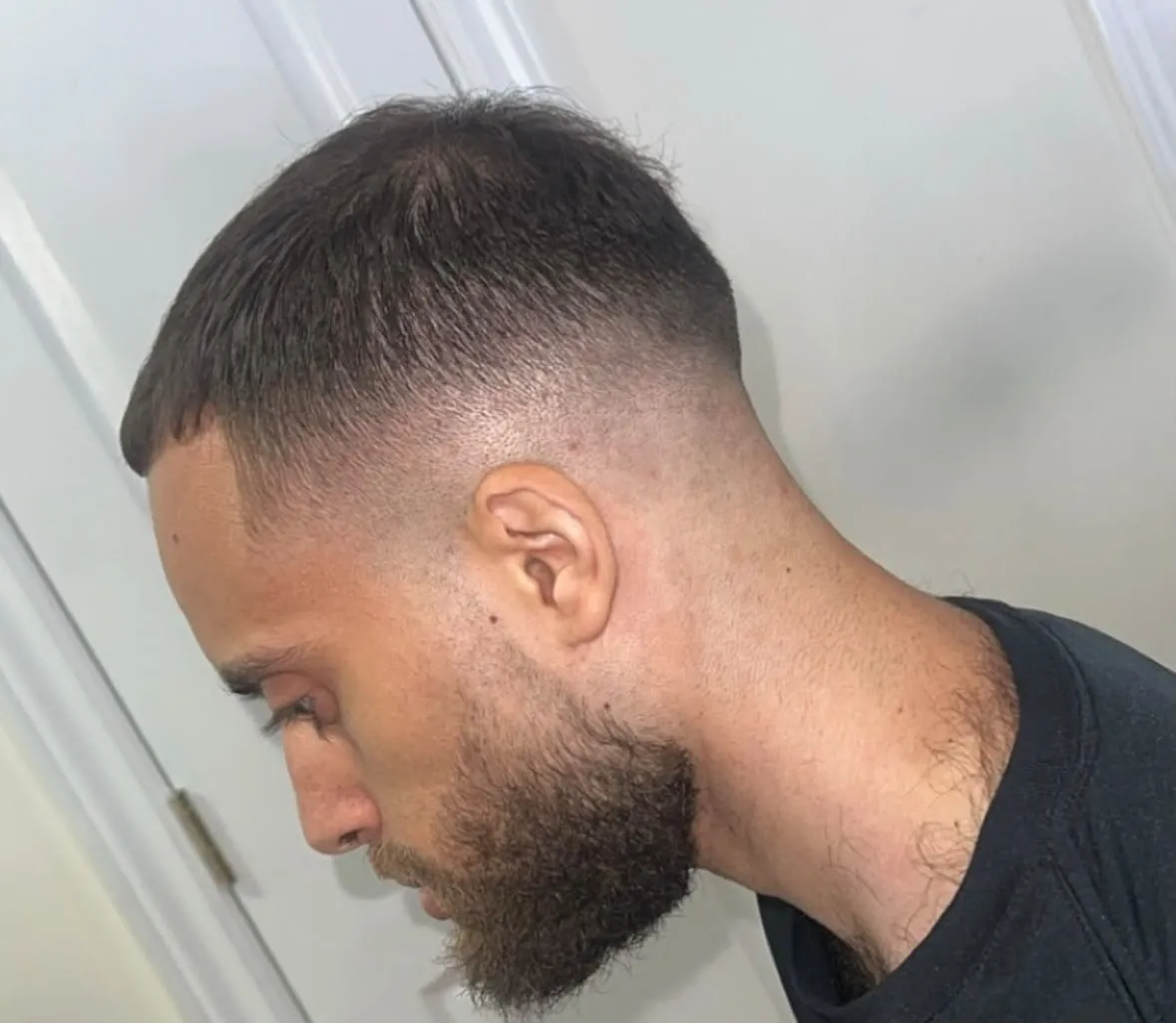
The modern version pairs the level top with a skin fade and sharper corners. On coily hair this is close to a high top fade, though a true high top is much taller. On coarse straight hair, a flat top with a mid skin fade looks bold and deliberate rather than retro. Either version is booked as a Haircut Only.
Keeping a flat top standing between visits
The flat top needs a little help each day to keep standing. After washing, towel dry, then brush or pick the hair straight up while it is still damp.
On coarse straight hair, a small amount of firm-hold matte paste or a light wax applied at the roots helps keep strands upright; the old-school barbershop option was butch wax. On coily hair, a light leave-in moisturizer and picking keeps it shaped. Avoid heavy grease, which flattens the top.
- Sleep: a silk or satin pillowcase or a durag reduces flattening overnight.
- Hats: avoid tight caps and helmets where possible; they press the platform down.
- Growth: the top loses its level after about two weeks, so the cut needs regular visits.
Why people still ask for a flat top
Flat tops come back because they are distinctive in a way few cuts are. The shape is unmistakable, it photographs strongly, and it signals either classic discipline or a 1990s hip-hop reference depending on the fade.
It is also honest about the craft involved. Few people can cut a truly level flat top, and it is a good test of a barber's patience and eye. If you want one, book with a barber who has done them before and bring a reference photo. You can see our barbers' work on the portfolio page.
Flat top: common questions
Can I get a flat top with thin hair?
Usually not. Thin or fine hair cannot stand upright, so the platform collapses. A short crew cut or buzz gives a similar tidy look without relying on density.
What is the difference between a flat top and a high top?
Both are level on top, but a high top is much taller, often 7 cm or more, and is cut on coily hair. A flat top is typically 2.5 to 5 cm and can be done on straight or coily hair.
Does a flat top need product?
Coarse straight hair often benefits from a small amount of firm matte product at the roots. Very dense coily hair may only need moisture and a pick.
How often should I cut a flat top?
Every two to three weeks. Uneven growth quickly makes the top look rounded instead of flat.