
Haircut Styles
Side Part Haircut: Finding Your Part and Picking the Sides
Short answer: A side part haircut is a cut with enough length on top, usually 5 to 10 cm, to comb across from a part on one side, paired with shorter tapered or faded sides. The part should sit where your hair naturally divides, which we find by reading the crown whorl. It is the most interview-proof cut there is: tidy, familiar and never out of place.
Your natural part is set at the crown whorl
The best place for a part is the one your hair already wants. Look at the crown: the hair spirals out from a whorl, clockwise or counterclockwise. The direction of that spiral often hints at which side a part will sit most comfortably, though it is a tendency, not a rule. That is a tendency, not a rule, and it is not the only factor.
In the chair, we wet the hair, comb it straight back and gently push the whole top forward from the crown. It will split naturally along a line, and that line is usually where your part wants to be. Cutting to that part means it falls into place each morning instead of fighting you.
A part placed in line with the outer corner of your eyebrow looks classic. A lower part, closer to the ear, is more dramatic; a higher part near the centre looks softer. If you have a cowlick at the front, the part may need to follow it.
Taper, fade or hard part: three versions of the same cut
The top is similar in all three; the sides decide the character.
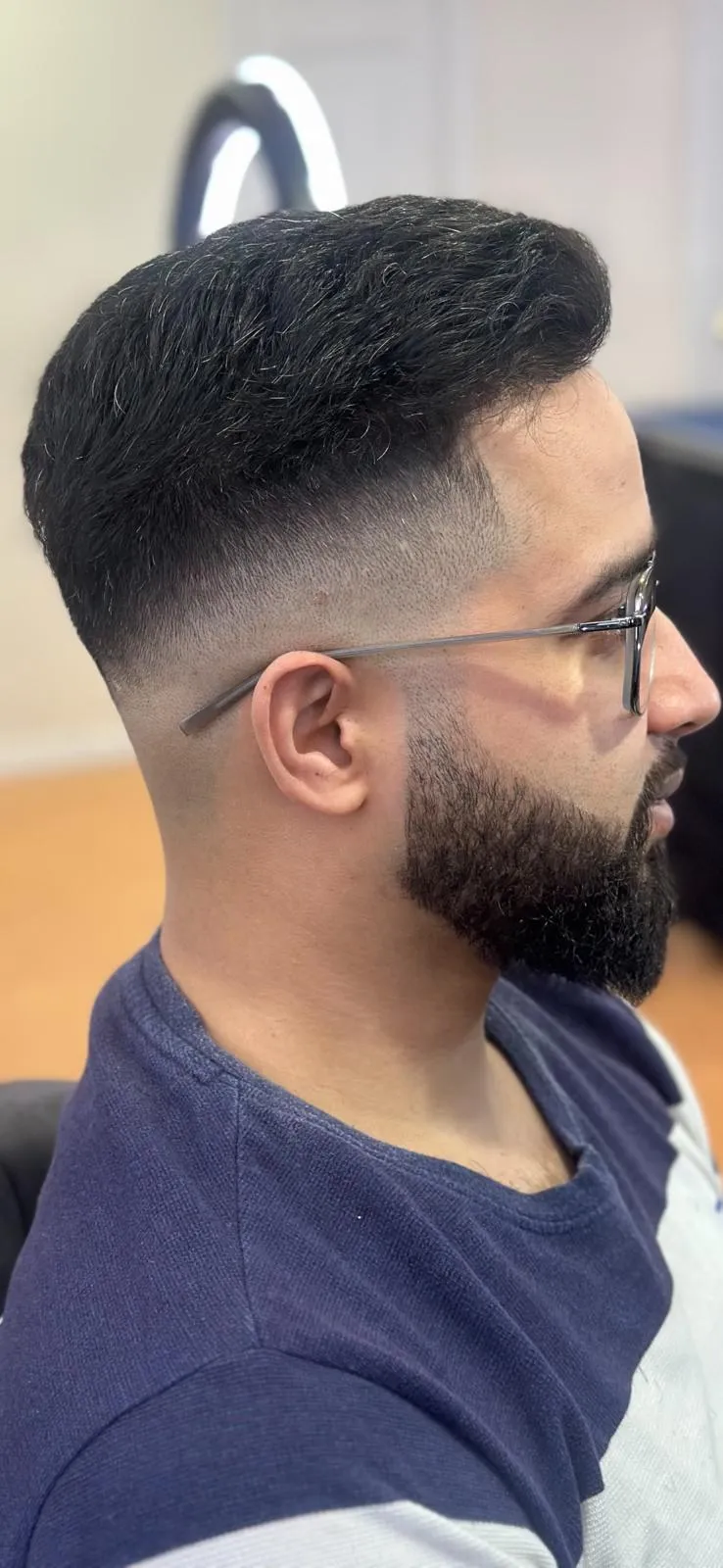
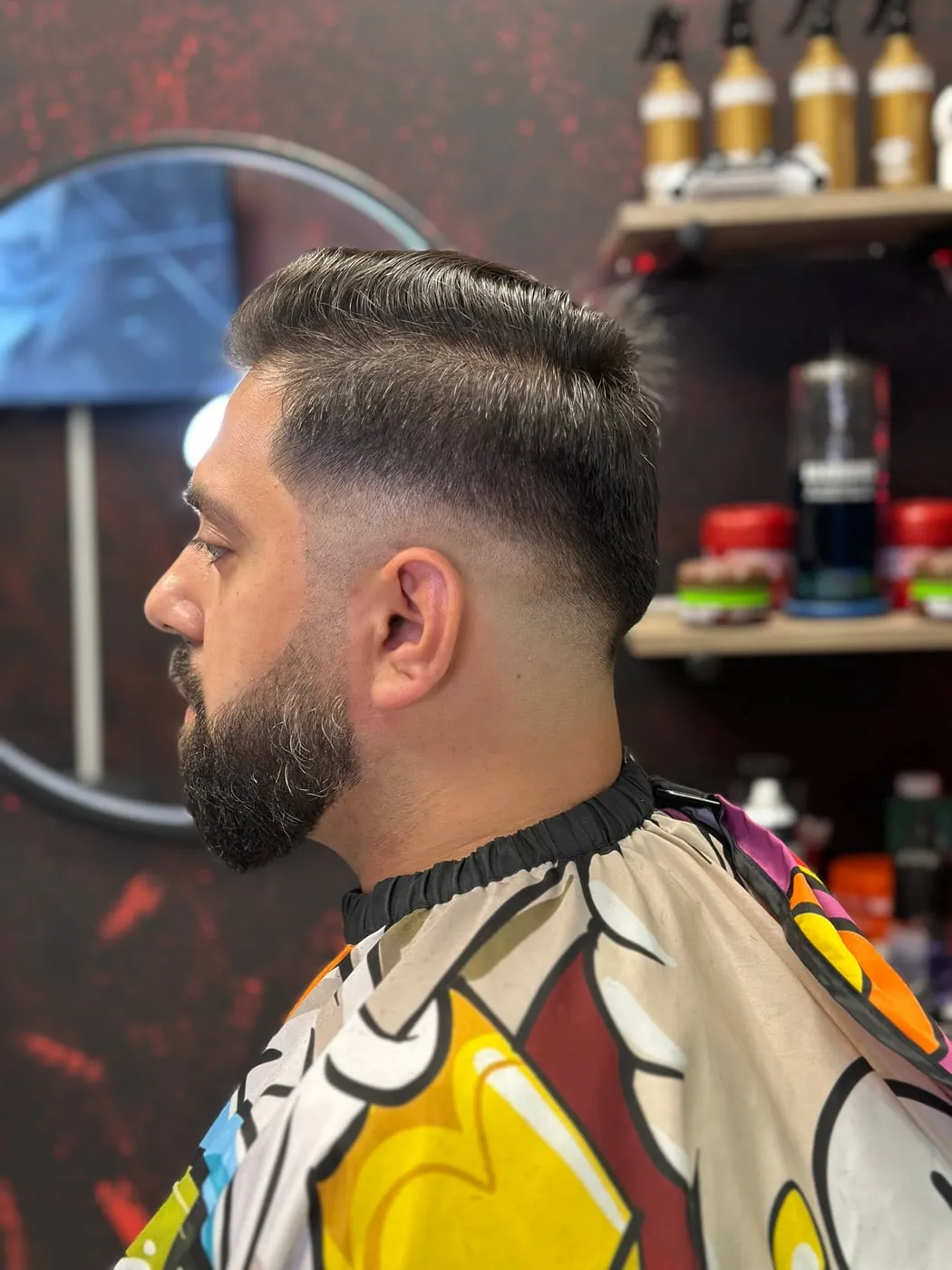
The classic taper version keeps the sides at a scissor-cut length and tapers only at the ears and neckline. It is the gentleman's cut from old film stills: soft, conservative and very forgiving as it grows. A low or mid fade gives more contrast and looks more current. The part stands out more when the sides are tight.
The hard part version adds a shaved line along the part with a trimmer and razor. It makes the part permanent and looks sharp, but it grows out in about a week and is less conservative. Our hard part page explains the technique and upkeep.
- Most conservative: scissor taper, soft natural part.
- Balanced: low fade, combed natural part.
- Boldest: skin fade with a hard part.
The comb and pomade routine
A side part is one of the few cuts that genuinely needs a comb. Fingers leave it too loose; a comb sets the line and the direction.
- Start with towel-dried, slightly damp hair.
- For volume at the front, blow dry the top up and across in the direction of the part.
- Warm a fingertip of pomade or cream between your palms and work it from the back of the top to the front, coating the roots.
- Use the tail or edge of a comb to draw the part from the front hairline back toward the crown, following where it falls.
- Comb the larger side across and slightly up; comb the smaller side down toward the ear.
- Finish by pressing gently with your palm to settle any flyaways.
Shine or matte: choosing the product
Pick the product by the look you want. Water-based pomade gives a clean, medium shine and washes out easily; it is the classic choice. Styling cream gives a softer hold with a natural look, good for everyday office wear. Matte paste or clay gives a relaxed, modern finish with no shine.
Avoid gel for a side part unless you want the stiff, wet look; it flakes as it dries. Our guide on how to use hair pomade explains how much to use for your length.
Why it is the most interview-proof haircut
A side part reads as neat and deliberate to almost any audience, from a bank to a job site. It is familiar enough that nobody will notice the cut itself, only that you look put together.
It also adapts. The same cut can be combed tight for a formal day and pushed back with your fingers on the weekend. If you have an interview coming up, we recommend getting it cut three to five days before so the edges have settled; our guide to the job interview haircut covers timing in more detail.
Side part haircut: common questions
Which side should I part my hair on?
Whichever side your hair naturally falls toward. Your barber can find it by pushing damp hair forward from the crown and watching where it splits.
Can I get a side part with thin hair?
Yes. A lower part lets you comb more hair across the top, and a matte product adds fullness without separating the hair.
Side part or slick back for a formal event?
Both work. A side part is softer and more familiar; a slick back is sleeker. Our side part vs slick back guide compares them.
How often should I cut a side part?
Every three to five weeks for a taper version, closer to every two to three weeks if you have a skin fade or hard part.