
Haircut Styles
Man Bun: Length Needed, Undercut or Not, and Protecting Your Hairline
Short answer: A man bun needs hair around 15 to 20 cm (6 to 8 inches) long on top and at the crown to gather into a tie without pieces falling loose, which usually means a year or more of growth. You can wear it over full-length sides or over an undercut or fade. Tie it loosely and change its position often, because constant tension along the hairline can cause traction alopecia.

How much length a bun really takes
The test is simple: pull all your hair back to the crown, and if the shortest pieces at the hairline reach the tie without slipping out, you have enough. For most people that means 15 cm or more at the front, because the front has the furthest to travel.
Hair at the nape is the last part to reach, since it has to travel up. If you plan on an undercut, that problem disappears: only the top has to be long, so a top knot is possible months earlier than a full bun.
- Top knot (small, high): around 12 cm on top with an undercut.
- Classic bun at the crown: about 15 to 20 cm all over.
- Low bun at the nape: 20 cm or more, and the sides must reach too.
Undercut bun or full-length bun?
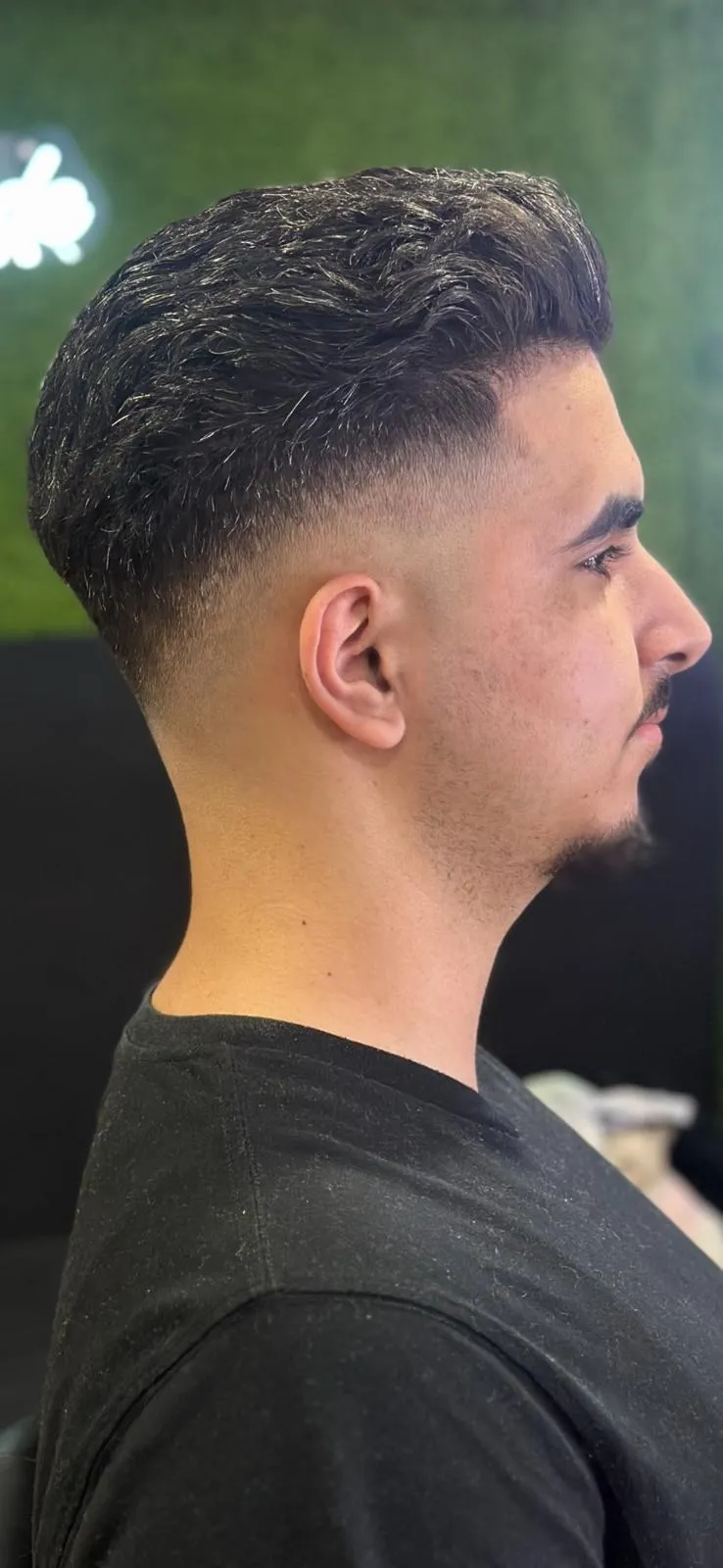
It comes down to how much maintenance you want and how you wear your hair down. With an undercut or fade underneath, the bun looks sharp and the sides stay cool in summer, but you need a clipper visit every few weeks and the hair looks disconnected when you wear it loose.
| With undercut or fade | Full length | |
|---|---|---|
| Time to grow | Faster, only the top | Slower, everything |
| Worn down | Top hangs over short sides | Natural long hair |
| Barber visits | Every 3 to 5 weeks | Every 8 to 12 weeks for ends |
| Look | Sharp contrast | Softer, more relaxed |
Tension, traction and your hairline
Tying hair tightly in the same spot every day pulls on the follicles along the temples and front hairline. Over time that repeated tension can lead to traction alopecia, a form of hair loss that dermatologists link to tight buns, ponytails and braids. It can often be reversed if the tension stops early, but long-term damage may be permanent.
Signs to watch for are soreness where the hair is pulled, small bumps along the hairline, and thinning at the temples that you did not have before. If you notice those, loosen up and see a doctor or dermatologist.
- Tie the bun loosely enough that you can slide a finger under the band.
- Move the bun's position: high one day, lower the next.
- Use fabric-covered ties or spiral ties, never rubber bands.
- Wear it down or loose on days off, especially overnight.
- Do not tie wet hair tightly; it stretches and then shrinks as it dries.
How a barber keeps a bun looking deliberate
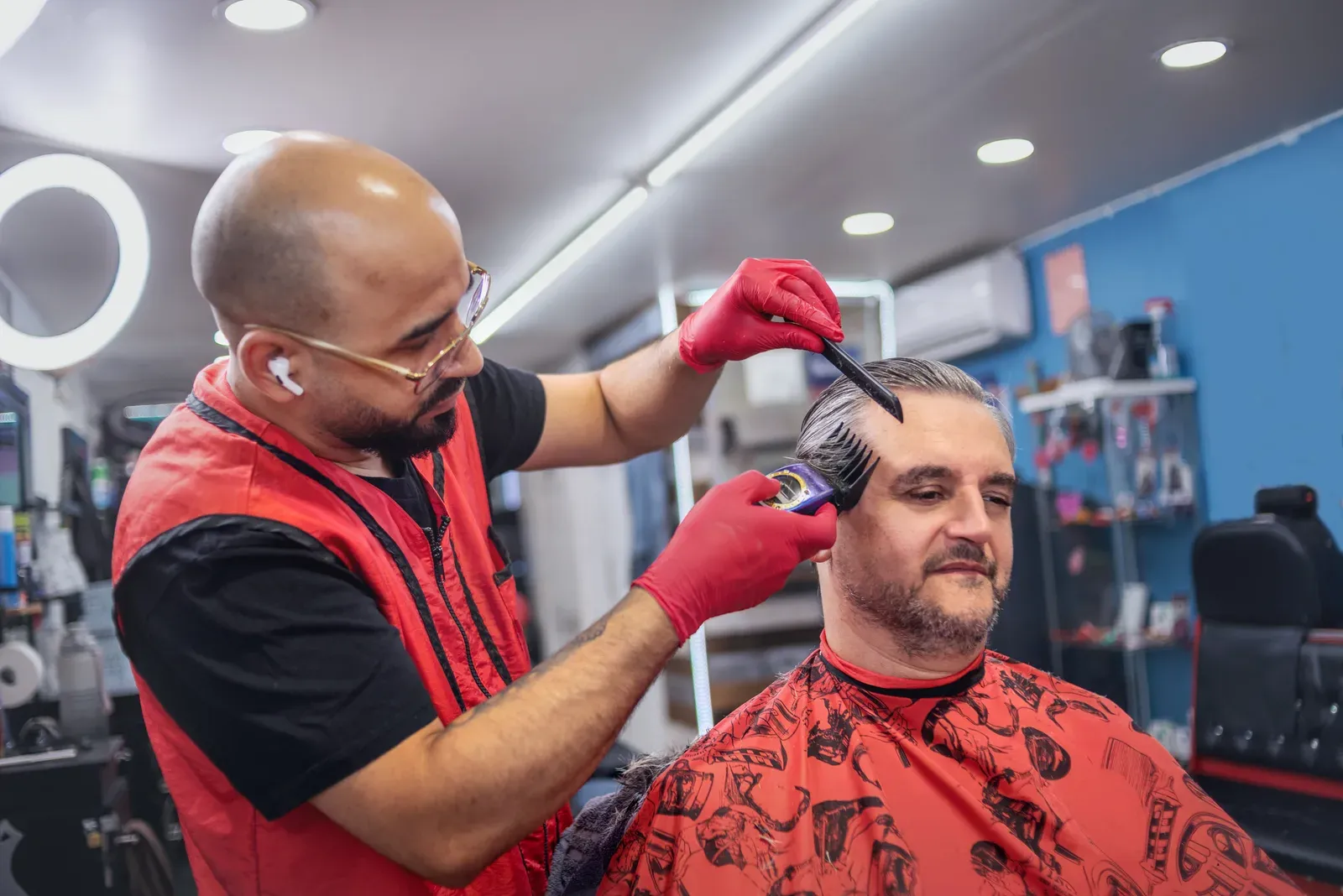
A bun that looks good up close has clean edges. We tidy the neckline, clean around the ears and, if you have one, refresh the undercut or skin fade so the contrast stays crisp.
On the long hair itself we take off split ends and thin out bulk at the crown, so the bun sits smaller and neater. When you come in, arrive with the hair down; we cannot see your length or the edges of the undercut through a tied bun.
If the sides are short, keep the disconnection line just below where the bun gathers so no stray short hairs poke out of the tie. That is similar to the setup on a two-block haircut, which uses the same idea when worn down.
Getting through the growth period
Most men go through a bro flow phase on the way to a bun. Use it: the swept-back stage trains the hair to go backwards, which makes the bun easier to gather later.
Once you can tie the top half back, a half-up bun is a good bridge while the sides and back catch up.
Man bun: common questions
Is a man bun bad for your hair?
Not if you wear it loosely and vary the position. The risk comes from tight, daily tension in the same spot, which can lead to traction hair loss along the hairline.
Can I wear a man bun to work?
A low, neat bun with tidy edges reads as groomed in most workplaces. Loose flyaways and an untrimmed neckline are what make it look scruffy.
Should I cut an undercut before or after growing the top?
You can do it at any point, since only the top needs length. Many people add it as soon as the top can tie back, because it makes the growing phase look cleaner.