
Haircut Styles
Afro Fade: Shaping a Round Afro Over a Fade or Taper
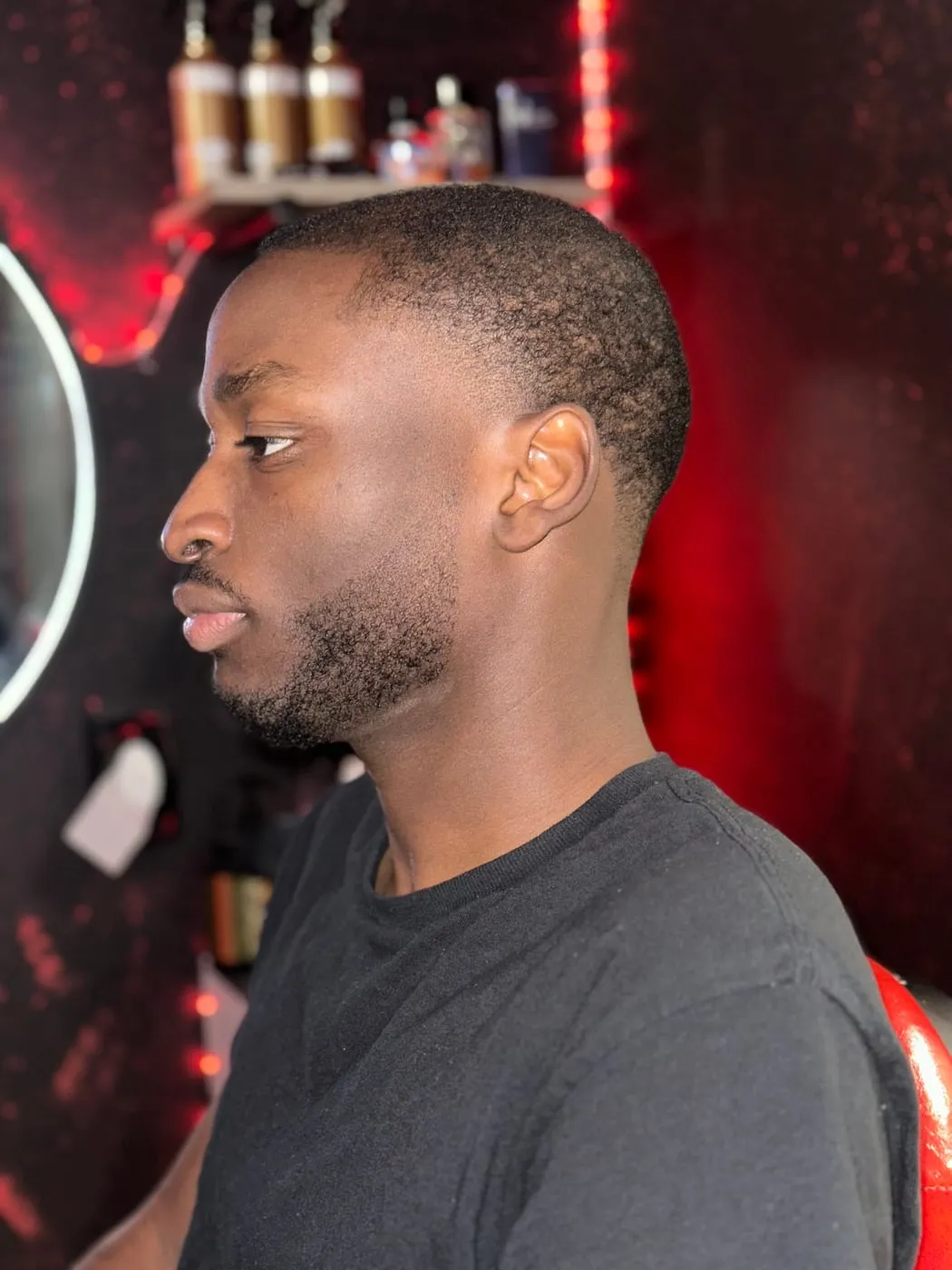
Short answer: An afro fade is a rounded, shaped afro on top combined with a faded or tapered back and sides, so the natural volume of coily hair sits on a clean, tight outline. The barber picks the hair out, cuts it dry into an even curve with clippers and scissors, then fades the sides and lines up the edges. Keeping it round means picking it out daily and reshaping every two to four weeks.
Picking comes before any cutting
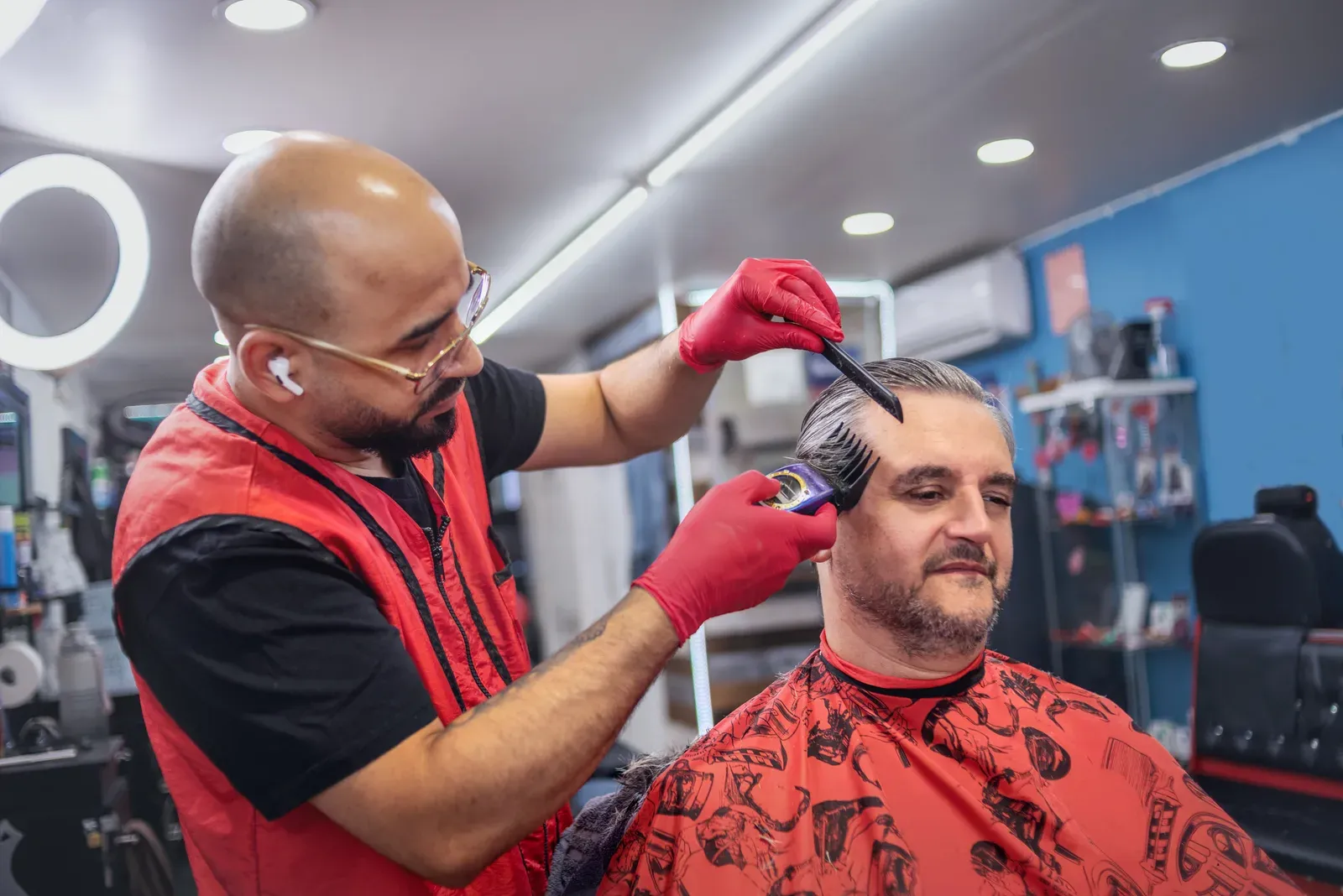
An afro is only cuttable once it is fully extended, so the first thing we do is pick it out from the roots with a wide-tooth pick. That lifts the coils to their full height and shows us the real shape: flat spots from sleeping, denser patches at the crown, and thinner areas at the temples.
Only then do we decide how big the afro will be. Cutting before picking is how you end up with a shape that looks round in the chair and lopsided the next morning when you pick it yourself.
Why coily hair is cut dry
Type 4 hair can shrink to a quarter of its stretched length when it dries, and it shrinks unevenly across the head. Cutting it wet makes it impossible to know where it will end up.
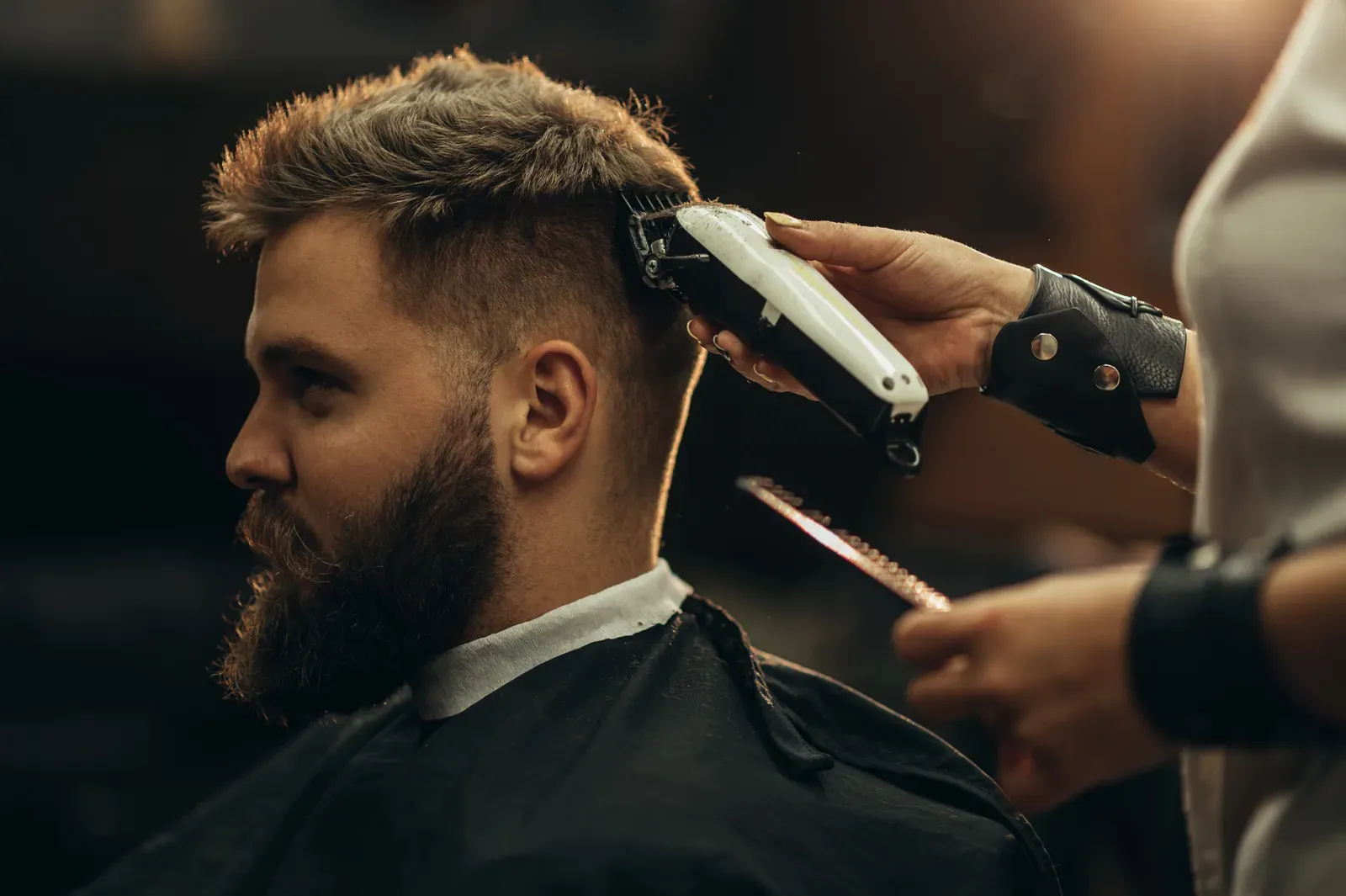
On dry, picked hair we can sculpt with clipper-over-comb or freehand clippers to take the whole surface down evenly, then use scissors on the curve and any strays. This is a sculpting job more than a cutting job; we step back often and check the shape from the front, both sides and the back in the mirror.
- Pick the hair out fully from root to end.
- Set the outer shape from the front, deciding height and width with you.
- Round off the top with clipper-over-comb, working in overlapping passes.
- Fade or taper the sides and back up into the afro so the curve continues down.
- Line up the forehead, temples and neckline, then pick again and trim any coil that pops out.
Fade or taper underneath?
A taper keeps the afro's full width and only cleans the sideburns and nape, which suits a big, round afro. A low or mid fade takes more off the sides, giving a narrower, taller shape. High skin fades under a big afro can make the top look like it is floating, so we usually keep the fade lower. The fade vs taper comparison goes deeper on the difference.
If your hair is on the shorter side, somewhere between 3 and 5 cm, you are closer to a sponge or twist look; see twists with a fade for that route.
The blowout variation
A blowout afro is stretched with a blow dryer before it is shaped, so the hair stands out straighter and bigger with a softer, cloud-like surface. It looks more uniform than a picked afro and holds a sharper geometric edge, but it reverts as soon as it meets humidity or sweat.
It is a different look from the blowout taper, which keeps the length only on top with a taper at the edges. If you want the stretched afro, tell us before we start, since the hair needs to be stretched before cutting, not after.
Keeping the shape round between cuts
Afros go flat where you sleep on them and grow faster in some spots than others, so the shape drifts in a couple of weeks. Daily care keeps it closer to the day you walked out.
- Pick out from the roots every morning, working around the whole head, not just the front.
- Moisturise with a leave-in or light oil; dry coils break and look dull.
- Sleep on a satin pillowcase or in a satin bonnet or durag to reduce flattening.
- Pat the shape into a round with your palms after picking, especially at the crown.
- Book a reshape every two to four weeks; the fade will need it sooner than the top.
Afro fade: common questions
How long does hair need to be for an afro fade?
About 5 cm of coily hair on top, picked out, is enough to see a round shape. Anything from 8 cm up gives the classic fuller look.
Will the lineup push my hairline back?
It should not. We follow your natural hairline and only clean the stray hairs in front of it. Read about whether a barber should push back your hairline if that has happened to you before.
Can I sleep on an afro without flattening it?
Not completely, but a satin bonnet or pineappling the hair loosely at the top of your head helps a lot. A quick pick in the morning brings most of the shape back.