
Face Shape & Hair Type Guides
Haircuts for Receding Hairlines: What Works and What to Avoid
Short answer: The best haircuts for a receding hairline keep the top short to medium and push it forward or break it up with texture, so the temples are never framed by long hair pulled away from them. A textured crop, French crop, buzz cut or short forward quiff all work, paired with tighter sides. Avoid slick backs and long swept styles, and never let a barber cut into your temples to fake a straight line.
Why short, textured tops hide recession better than length
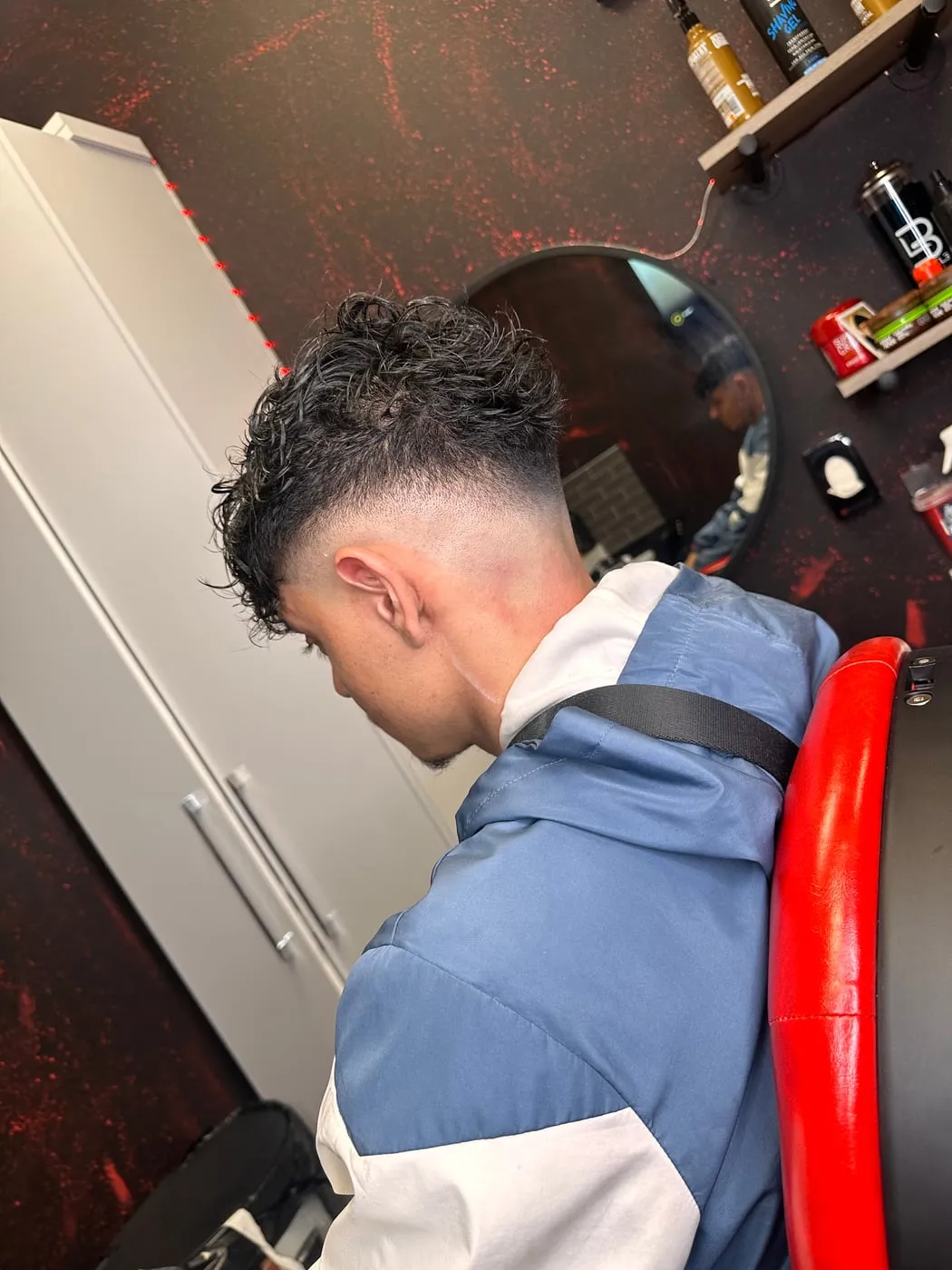
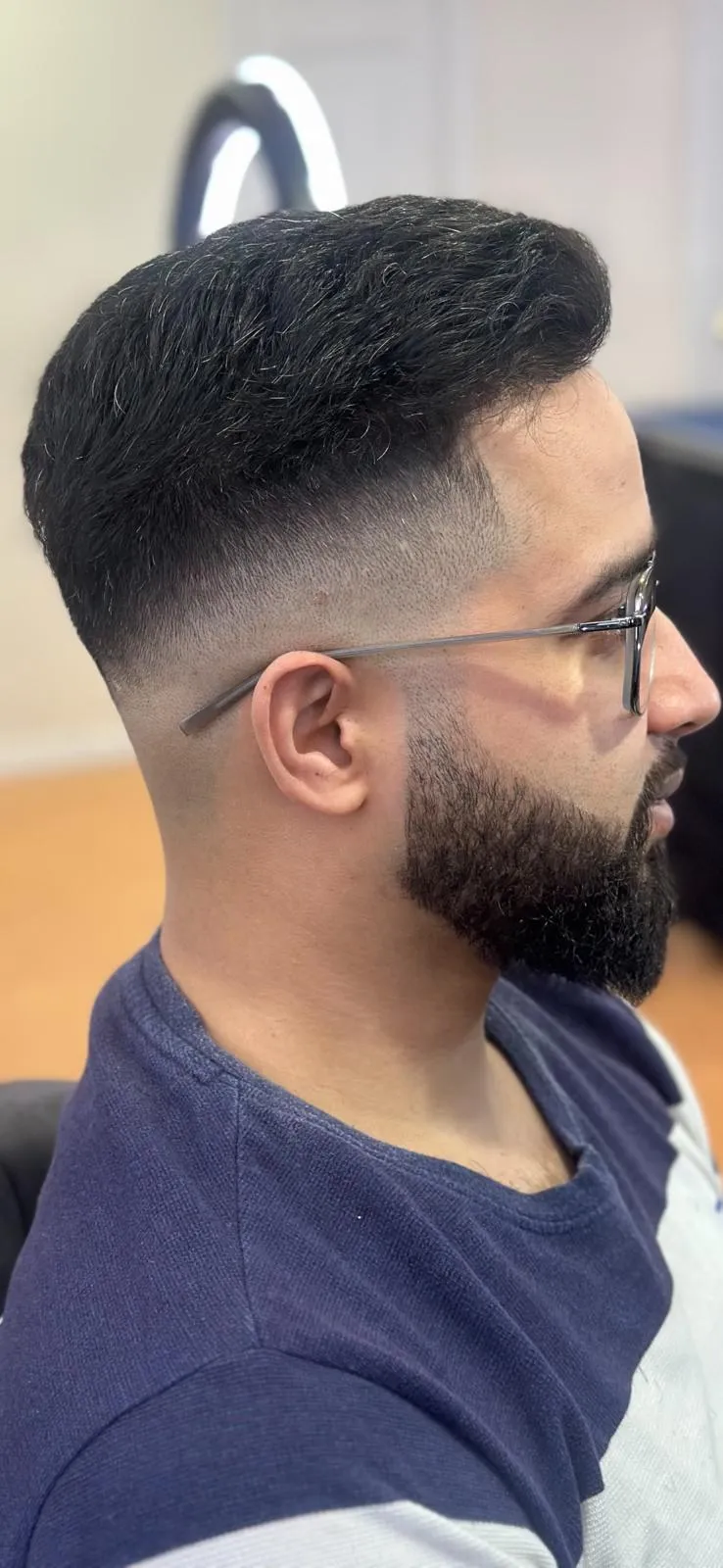
Short, broken-up hair on top hides recession because it removes the contrast between a dense front and thin temples. When the top is long and combed in one direction, every strand points at the gap. When it is cut to 3 to 6 centimetres (about 1 to 2.5 inches) and textured with point cutting, the hair sits in small clusters and the eye reads the whole shape instead of the corners.
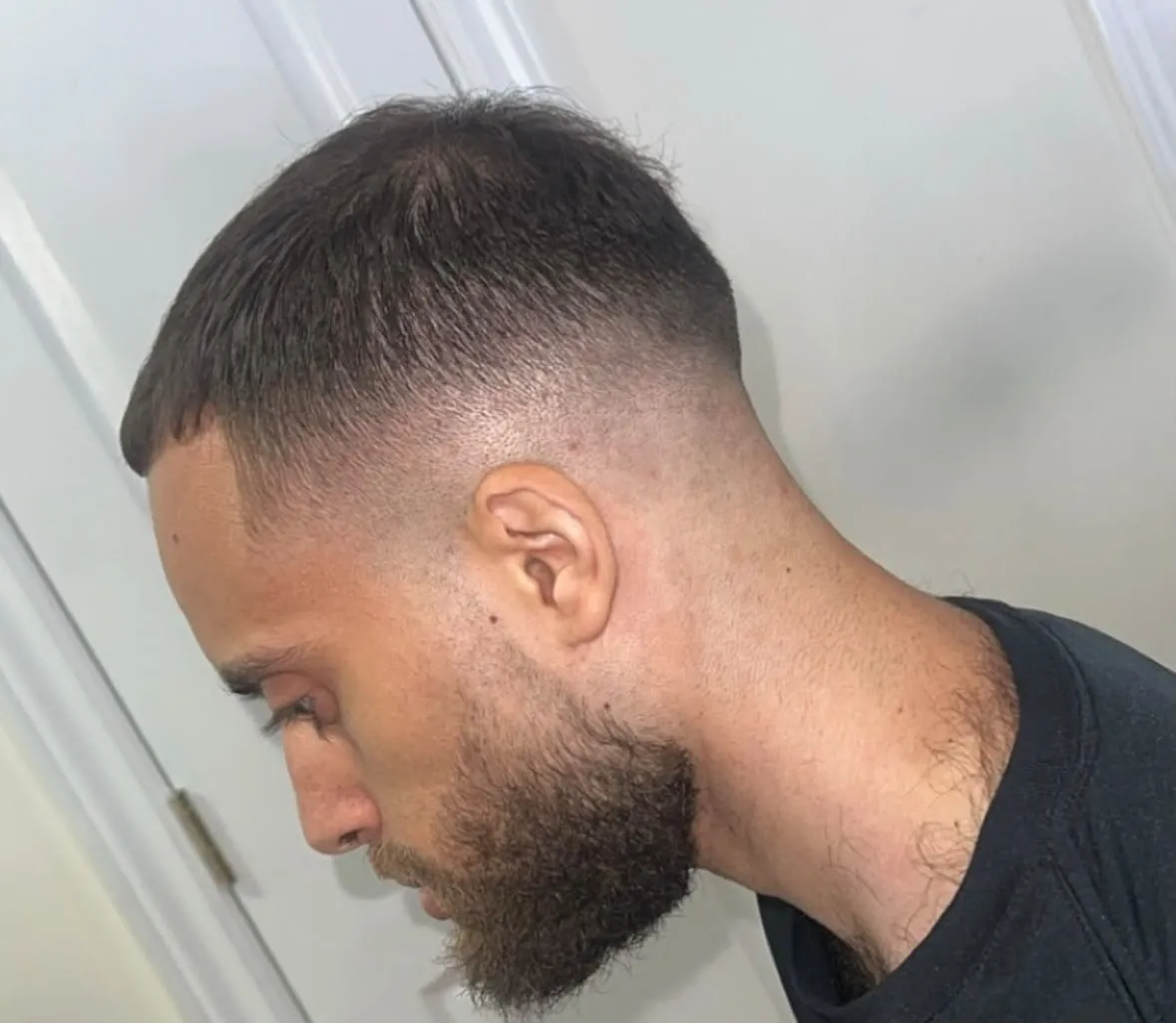
The sides matter just as much. Heavy, puffy sides make the top look narrow and the temples look deeper. Taking the sides down with a low or mid skin fade or a clean taper keeps the head shape compact, so the front reads as full by comparison.
Five cuts that work with a receding hairline
These are the cuts we reach for most often when a client sits down worried about his temples. All of them keep the front short enough that it cannot separate and show scalp.
- Textured crop: choppy length on top pushed forward, with a short fringe that lands just above the recession. The most forgiving option for early to moderate thinning at the corners.
- French crop: a blunter, straighter fringe than the textured crop. Good when the centre of the hairline is still strong and only the temples have moved.
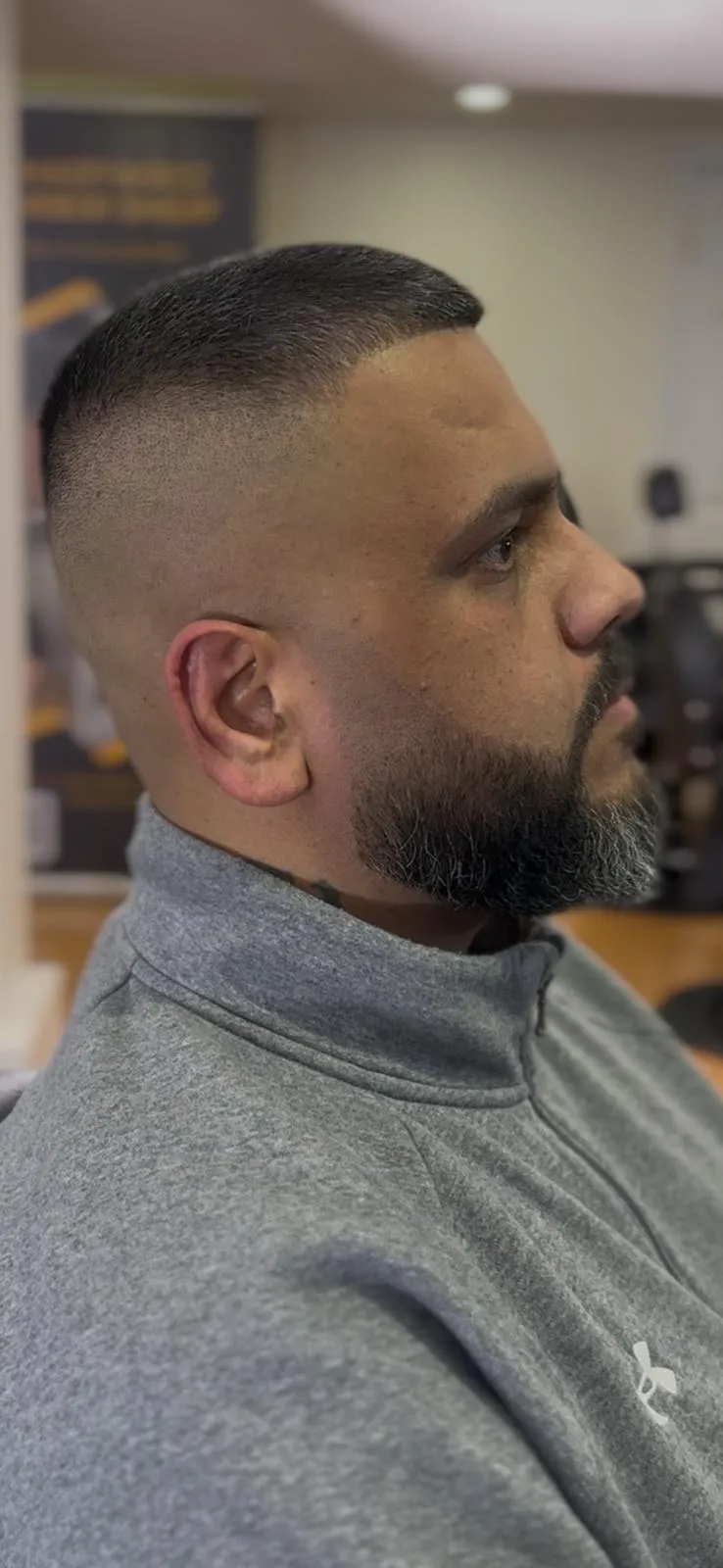
- Buzz cut: one even length all over, often a #2 or #3 guard. When everything is short, the hairline stops being a feature.
- Crew cut: slightly longer at the front than the crown, tapered on the sides. Brush the front up and slightly messy, not back.
- Short forward quiff: only if you have density at the centre. Keep it under about 5 centimetres and push it forward and up rather than back.
Styles that make the temples look deeper
Any style that pulls hair up and back from the forehead exposes the temple corners. The classic slick back is the worst offender, because it lays the hair flat and draws a clean line straight to the recession.
A few others to approach carefully:
- High pompadours: the volume pulls attention straight to the front edge.
- Hard parts shaved high on the temple: they add another bare line right beside the thin area.
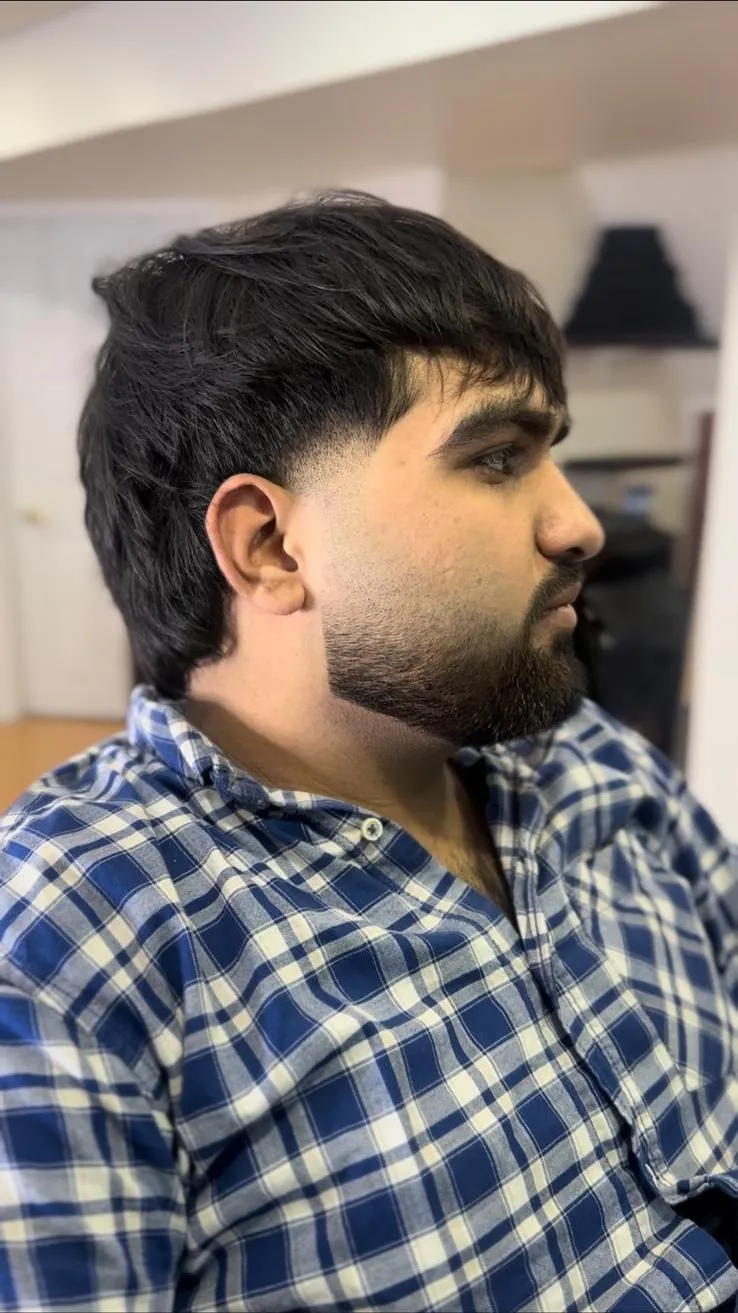
- Long curtains or middle parts: the split tends to fall exactly where density is weakest.
- Very high skin fades with a long top: the extreme contrast makes the top look like it is sitting further back.
What an honest lineup looks like on a receding hairline
An honest lineup follows your natural hairline and only cleans the stray hairs in front of it. It should never square off the corners by shaving into the temples, and it should never push the line back to make it look straight. Every millimetre taken from the front is a millimetre you have to wait to grow back.
On a receding hairline we often soften the corners slightly instead of cutting them sharp. A crisp right angle beside a thinning temple looks drawn on; a gentle curve looks like your own hair. If you want to know more about where the line should sit, read our answer on whether your barber should push back your hairline.
How to ask for it at the chair
Tell your barber about the recession up front instead of hoping they will not notice. Every cut here starts with a consultation, and the more we know about what bothers you, the better we can plan around it.
- Point to the areas you are self-conscious about, usually the temple corners.
- Say how you style it now and how much time you will spend on it each morning.
- Ask for a short textured top that sits forward, and name a side length or fade height you are comfortable with.
- Ask for the lineup to follow your natural hairline without pushing it back.
- Ask what product to use; a matte clay or texture powder suits most short forward styles better than shiny pomade.
When a receding hairline is more than a mature hairline
Many men see the temples move back slightly in their late teens and twenties as the hairline matures, and that on its own is normal. Our guide to what a mature hairline is explains the difference. Recession that keeps moving, thinning that spreads to the crown, or sudden shedding is worth showing to a doctor or dermatologist.
A barber can make any stage look deliberate and tidy, but we cannot diagnose hair loss or slow it. If you are weighing treatment, get medical advice first and keep booking cuts that suit where your hair is today.
Haircuts for receding hairlines: common questions
Do fades make a receding hairline look worse?
Usually the opposite. A tidy fade or taper keeps the sides from looking wide and heavy, which makes the top look fuller. The problem is only a very high fade paired with a long, slicked top.
Should I grow my hair longer to cover the temples?
Longer hair tends to separate and reveal the corners, especially when wet, windy or under a toque. Short and textured covers recession far more reliably than length.
What guard number should I use for a buzz cut with a receding hairline?
A #2 or #3 on top keeps some colour on the scalp while making the hairline far less noticeable. Dropping to a 1 guard or lower works best once most of the top has thinned evenly.
How often should I get a haircut with a receding hairline?
Every 3 to 4 weeks keeps a short crop at the length where it hides the corners. Once the top grows past about 6 centimetres it starts to split and show the recession again.