
Barber Answers
What Tools Do Barbers Use? Clippers, Shears, Razors and More
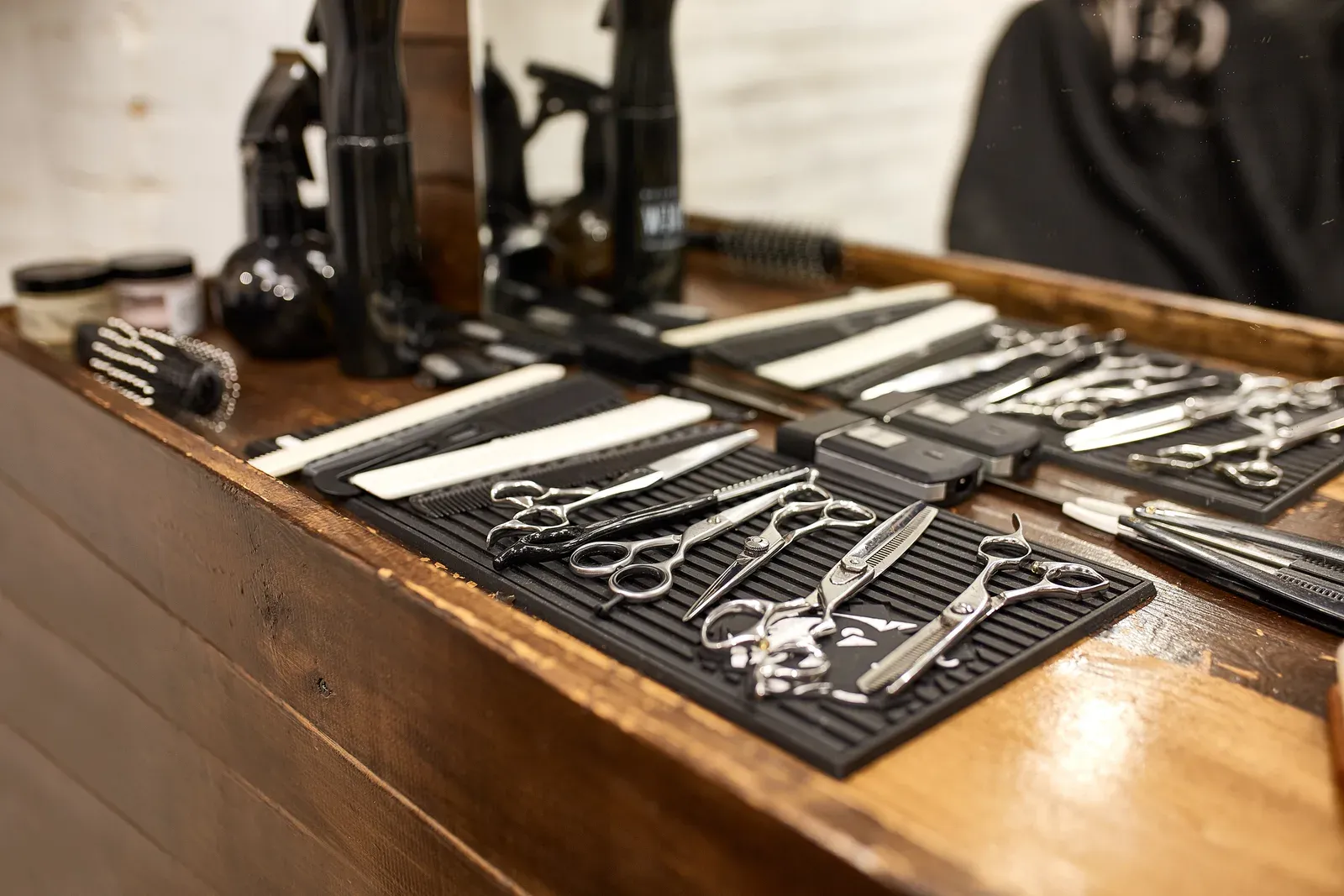
Short answer: Barbers work with a core kit: clippers with guards for bulk and fades, trimmers or detailers for edges and fine blending, a foil shaver for skin-level finishes, straight shears and thinning shears for hand-cut length and texture, a straight razor for lineups and neck work, plus combs, brushes and a neck duster. Each tool handles a specific stage of the cut, from taking weight off to setting the final edge.
Clippers do the heavy lifting
Clippers remove bulk quickly and set the lengths that a fade is built from. They have a wider blade than trimmers and a lever on the side that opens and closes the blade slightly, which gives in-between lengths without changing the guard.
Barbers use that lever constantly in a fade. Opening it cuts a touch longer, closing it cuts a touch shorter, and flicking between the two across a band is how the line between guard lengths is erased. That technique is explained in how barbers blend a fade.
Clippers also handle clipper-over-comb work, where the barber lifts hair with a comb and cuts across it with the blade. That gives a controlled length on areas too long for a guard, as covered in what clipper over comb is.
Guards set the length
Guards are the plastic or metal attachments that clip onto the clipper and hold the blade a fixed distance from the scalp. The number on the guard refers to that distance, so a higher number leaves more hair.
Most barbers work with half guards too, such as a 0.5 or 1.5, to make smoother steps in a fade. Numbers are a shared shorthand, which is why guard numbers are so useful when describing a cut; see clipper guard numbers explained for the millimetre equivalents.
The full barber kit at a glance
Here is what you will usually find at a working barber's station and the job each tool does.
| Tool | What it does in a cut |
|---|---|
| Clippers | Remove bulk, set fade lengths, clipper-over-comb |
| Trimmer or detailer | Outline the hairline, clean sideburns and necklines, fine blending |
| Foil shaver | Takes the bottom of a skin or bald fade to a smooth, skin-level finish |
| Straight shears | Cut length by hand on tops and longer styles |
| Thinning or texturizing shears | Remove weight and add movement without losing length |
| Straight razor | Crisp lineups, clean neck and cheek edges |
| Combs | Section, lift and guide hair for scissor and clipper work |
| Brushes and neck duster | Clear clippings and help check the blend |
| Spray bottle and blow dryer | Dampen hair for control, dry and shape before styling |
Shears for length and texture
Straight shears cut hair by hand, which gives the barber control over length and weight that guards cannot. They are the main tool in a scissor cut, and they finish the top in most fades.
Thinning shears have teeth on one or both blades, so each close cuts only some of the hairs. They take out bulk in thick hair and soften heavy lines. Texturizing shears have wider gaps between teeth and remove more at a time for a choppier result.
Barbers also use shears for point cutting, snipping into the ends vertically so the edge looks broken up rather than blunt. That is how textured crops get their movement, and it is covered further in what texturizing means.
Razors, trimmers and the finishing work
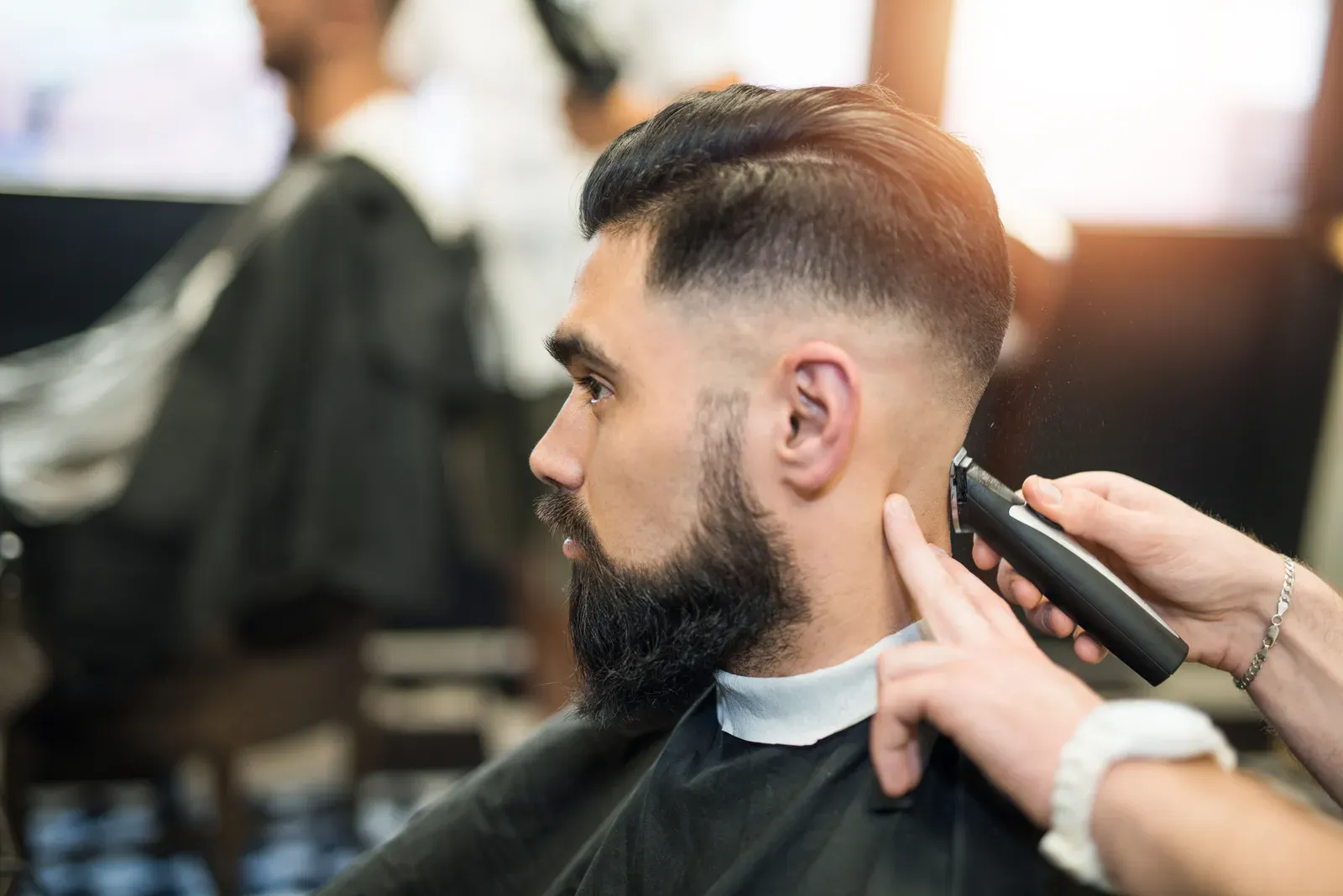
The last few minutes of a cut belong to the smallest tools. A trimmer sets the outline around the ears, sideburns and neckline, and handles fine blending at the very bottom of a fade.
A straight razor, fitted with a fresh single-use blade, then cleans the edge beyond what the trimmer can reach. It gives the sharp, clean finish of a lineup at the temples, forehead and neck. At Markcutit every cut ends with a razor-clean lineup.
A foil shaver sits between the two for skin fades. It is gentler on the skin than a bare trimmer blade and gives the smooth bottom band of a bald or skin fade.
Should you buy the same tools for home?
A decent trimmer is the one tool worth owning for home touch-ups, mostly for the neckline and beard edges. Clippers, guards and razors are harder to use well on your own head, and a slip is hard to hide.
If you do want to try, read whether to touch up your fade at home first. It explains what is safe to maintain yourself and what to leave to the next appointment.
What tools do barbers use: common questions
What is the difference between clippers and trimmers?
Clippers have a wider, more powerful blade for bulk and guard work. Trimmers are narrower and finer, built for outlines, edges and detail.
Do barbers use scissors or clippers?
Both. Clippers handle fades and short sides, while scissors shape longer tops and hand-cut styles. Our clippers vs scissors comparison goes into when each is better.
Why do barbers oil their clippers?
Oil reduces friction so the blade runs cooler and cuts cleanly instead of pulling. It also helps the blade last longer.
Is a straight razor dangerous?
In trained hands it is a precise, controlled tool. A fresh blade for each client and a steady head are what keep it safe.