
Barber Answers
What Does Texturizing Mean? Point Cutting, Slide Cutting and More
Short answer: Texturizing means cutting into the hair to break up blunt ends and remove some weight from within, so the hair moves, separates into pieces and sits lighter instead of looking like a solid block. Barbers do it with point cutting, slide cutting or texturizing shears, and it works best on thick, straight or wavy hair that tends to look heavy or helmet-like.
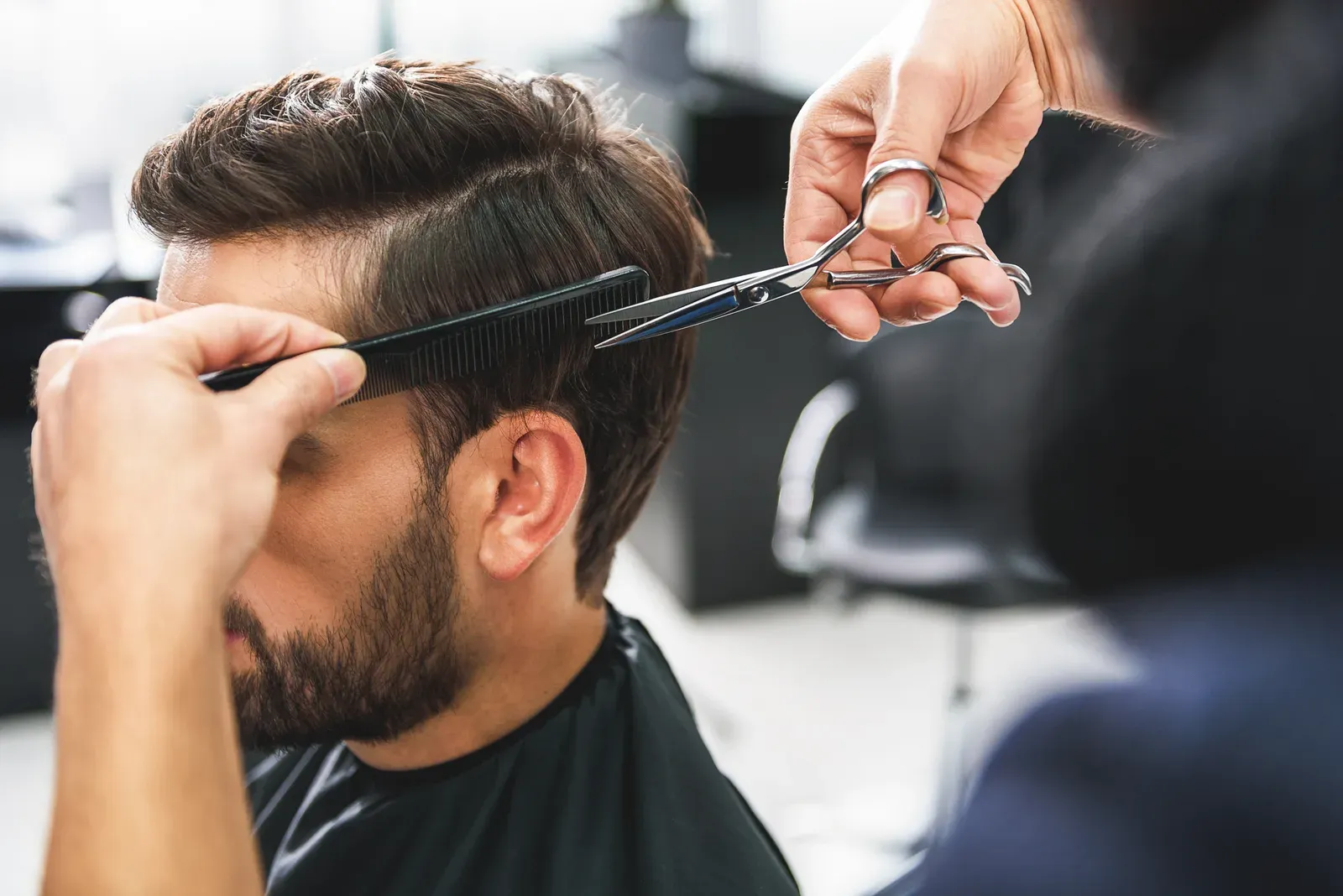
What texturizing actually changes
Texturizing changes how the hair behaves rather than how long it is. A blunt scissor cut leaves every hair in a section ending at the same point, which looks clean but heavy, like a thick straight edge. Texturizing staggers those ends and removes a little weight within the section, so the hair breaks into separate pieces.
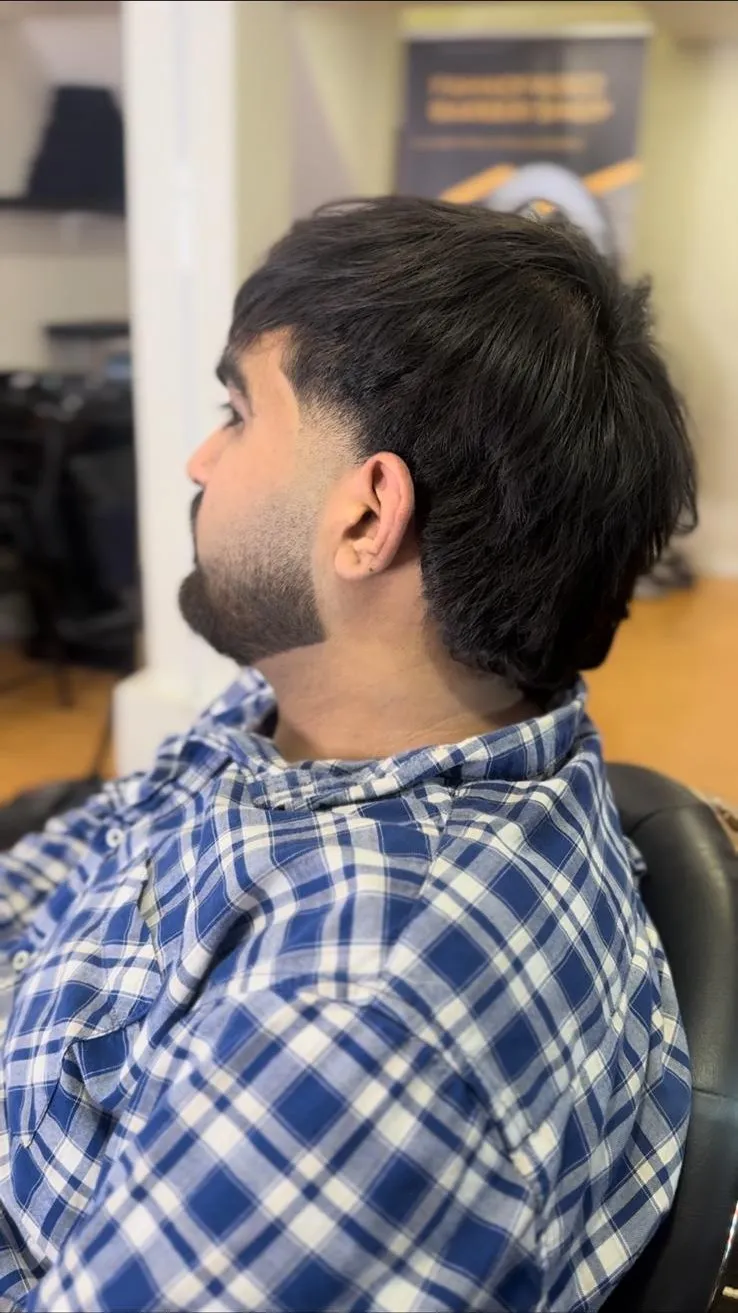
The visible result is movement. A textured crop falls in chunky, piecey strands instead of a flat fringe; a quiff lifts because the weight that held it down is gone; wavy hair shows its bend instead of being pulled straight by its own mass.
The four main techniques
Barbers choose the technique by how much weight they want out and how soft they want the ends. Most cuts combine two or more.
- Point cutting: the barber holds a section up and snips into the ends with the tips of the scissors at an angle, creating small V-shaped notches. It softens a blunt line and adds separation without losing much bulk.
- Slide cutting: the scissors are held slightly open and slid down the length of a section, shaving off hairs at different points. It removes more weight and creates long, tapered pieces, useful on longer tops.
- Texturizing shears: scissors with one smooth blade and one blade with a few wide teeth. Each close removes chunks of hair, giving a piecey result faster than point cutting.
- Razor cutting: a straight razor drawn along the hair creates very soft, tapered ends. It suits straight hair but can fray curly or fragile hair.
Texturizing vs thinning: not the same thing
Texturizing is about shape and separation, while thinning is mostly about reducing overall bulk. Texturizing shears have few, widely spaced teeth that take out distinct pieces; thinning shears have many fine teeth that remove small amounts evenly throughout.
In practice the line blurs, and some people say one when they mean the other. The key difference for you is the result: texturizing gives visible, piecey movement, whereas thinning makes the hair less bulky without much visible change in shape. We cover the second one in what thinning out hair means.
Which hair benefits, and which does not
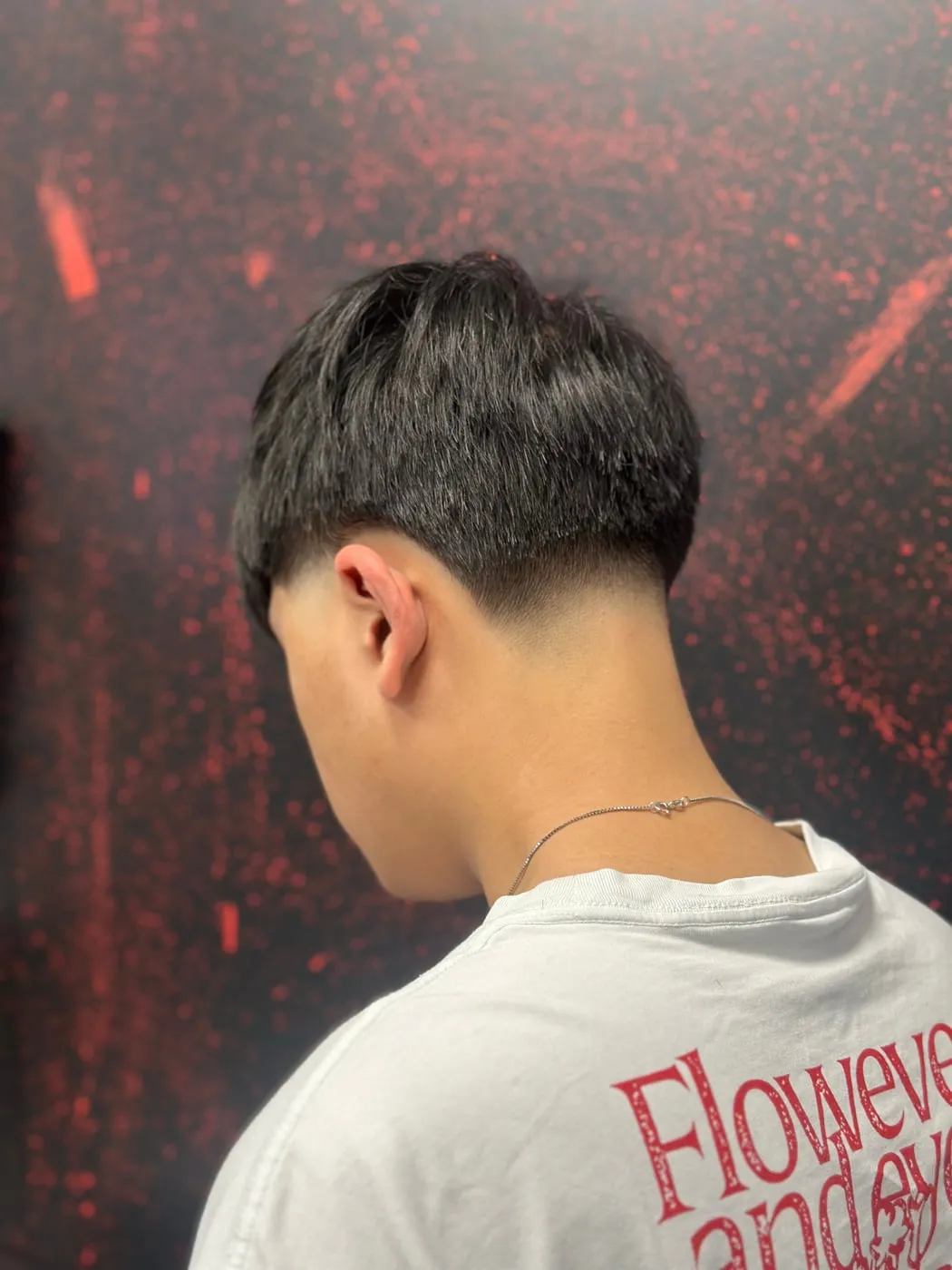
Thick, straight hair benefits most, because its weight is exactly what stops it from moving. Wavy hair also does well, since removing some bulk lets the wave show. Coarse Asian hair, which tends to stick out straight when cut blunt, often looks softer and more natural with careful texturizing, a big reason the textured crop is so popular.
Fine or thin hair needs a lighter touch. Taking weight out of hair that has little to begin with can make it look sparse and wispy. In those cases a barber might only point cut the very ends. Tightly curly and coily hair is different again: it is usually shaped curl by curl or with the outline cut, since slide cutting and razors can cause frizz and breakage.
How to ask for texture without losing too much
Describe the result you want rather than the tool. "I want it to look piecey and move, not flat" tells the barber more than "thin it out". Mention how you style it: if you push it forward with a matte clay, the texture should be cut to fall forward; if you comb it back, it needs weight left in the right place to hold.
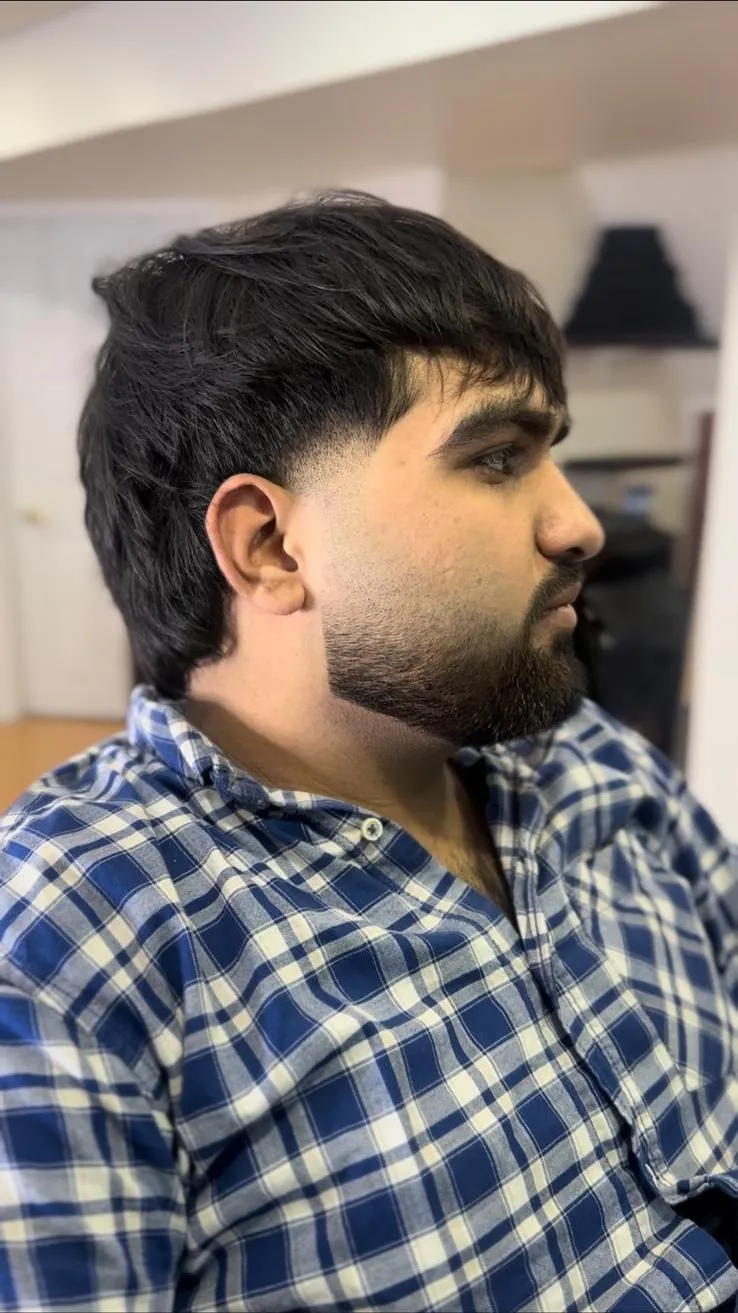
At Markcutit, texture work is done with scissors as part of any Haircut Only, whether the sides are faded or not. Marcel Shabo is especially known for texture on top, and you can see his work on Marcel's barber profile. The scissor cuts service page shows more.
Styling hair once it is texturized
Texturized hair wants lighter, matte products that grip without gluing. A pea-sized amount of clay or paste worked through dry hair with the fingertips, then twisted into a few pieces, is enough for most crops. Sea salt spray before blow-drying adds grit and volume if the hair is fine.
Heavy, shiny pomades tend to clump texturized pieces back together and can undo the effect. Our guides to using hair clay and texture powder cover the technique.
What does texturizing mean: common questions
Does texturizing make hair grow back weird?
No. The cut ends grow at the same rate as the rest, and after a few weeks the pieces just become a little less defined. Your next cut restores the shape.
Can texturizing help a cowlick?
Sometimes. Removing weight around a cowlick can let it sit more naturally, though it will not change the direction of growth. See haircuts for cowlicks.
Is texturizing done on wet or dry hair?
Both. Many barbers cut the shape wet, then add texture on dry hair so they can see exactly how each piece falls.