
Barber Answers
How Barbers Sanitize Their Tools Between Clients
Short answer: Barbers sanitize tools in two stages: first cleaning, which removes hair, skin and product with a brush and soap or cleaner, then disinfecting, which applies a disinfectant for the contact time on its label. Clipper blades are brushed out and treated with a disinfectant spray, combs are cleaned and soaked, and straight razors take a fresh single-use blade for every client. In Ontario, barbershops fall under the provincial rules for personal service settings.
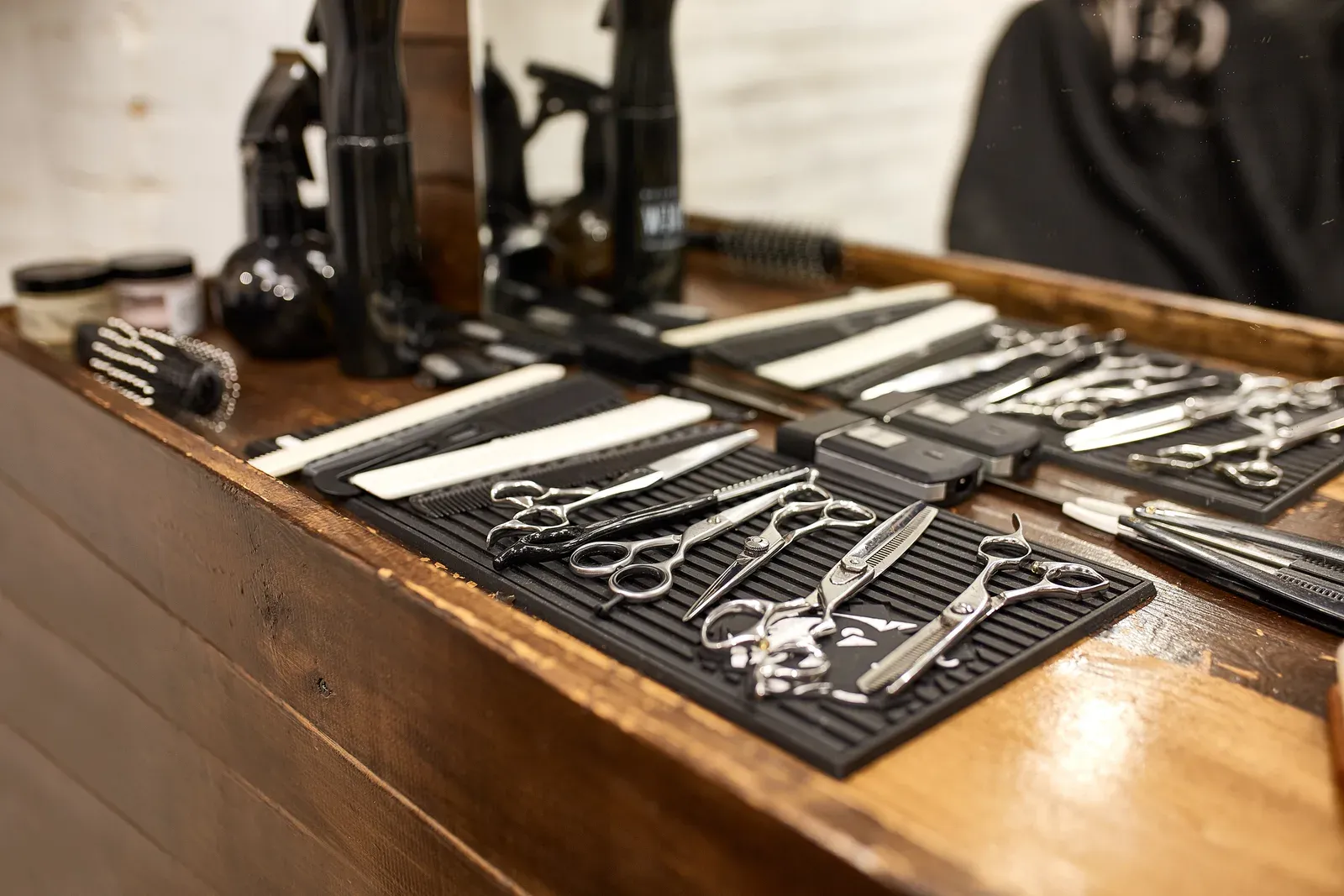
Cleaning and disinfecting are two different steps
Cleaning comes first and disinfecting comes second, and skipping the first makes the second far less effective. Disinfectants work on surfaces they can reach; a comb clogged with hair and pomade shields whatever is underneath.
Cleaning means physically removing debris: brushing hair out of a clipper blade, washing a comb with soap and water, wiping product off a chair. Disinfecting means applying a product designed to kill germs on that cleaned surface and leaving it wet for the contact time the manufacturer specifies.
That contact time is the step most often rushed. A quick spray that is wiped off immediately may not do what the label promises, which is why a careful barber sprays, waits, and then wipes or lets it dry.
Clippers, trimmers and foil shavers
Clippers are the hardest tools to clean because hair packs into the blade and the teeth. A careful routine between clients looks like this.
- Brush loose hair out of the blade and from between the teeth with a stiff clipper brush.
- Remove any guard that was used; guards are cleaned and disinfected separately.
- Spray the blade with a disinfectant made for clipper blades, following the label's contact time.
- Wipe off any residue once the contact time has passed.
- Apply a drop of clipper oil to keep the blade cutting smoothly and cool.
- Foil shavers get their foil and cutter brushed out and treated in the same way, since they touch skin directly at the bottom of a fade.
Razors, combs, brushes and the chair
Each tool type has its own handling, depending on whether it can break skin and whether it can be fully immersed.
| Item | Typical handling between clients |
|---|---|
| Straight razor blade | Fresh single-use blade for each client, used blade into a sharps container |
| Razor handle | Cleaned and disinfected after each use |
| Combs and plastic guards | Washed free of hair and product, then disinfected |
| Neck duster and brushes | Cleaned of hair and disinfected or swapped regularly |
| Chair, headrest and armrests | Wiped down with disinfectant |
| Cape and neck strip | Fresh neck strip every client; cape kept clean so it does not touch bare skin |
Neck strips, capes and towels
A paper neck strip is the barrier between a shared cape and your skin, so a fresh one should go on for every client. It also stops clippings slipping down your collar.
Towels used on the face or scalp, including hot towels and the towel from a hair wash, should be fresh for each person and laundered before reuse. A good shop keeps clean towels separate from used ones rather than in the same pile.
Hands matter too. Barbers wash or sanitize their hands between clients, and before and after any work that could break the skin, such as razor edges.
What the Ontario rules cover, in general terms
In Ontario, barbershops are personal service settings, the same category as hair salons, nail salons and tattoo studios. They operate under a provincial regulation for personal service settings, and local public health units can inspect them.
Public Health Ontario publishes infection prevention and control guidance for these settings, covering areas such as cleaning and disinfecting equipment, handling single-use items and hand hygiene. The exact requirements depend on the tool and the service, so this page is a general overview rather than a compliance guide.
If you have a concern about hygiene at any shop, you can raise it with the shop first, or contact your local public health unit. In Mississauga, that is Peel Public Health.
What you can watch for as a client
You do not need to audit your barber, but a few signs tell you hygiene is taken seriously.
- A fresh neck strip goes on before the cape.
- Clippers are brushed out and sprayed between clients rather than going straight from one head to the next.
- A new blade goes into the straight razor before your lineup.
- The station looks tidy, with clean and used items kept apart.
- Your barber is happy to answer if you ask how they clean their tools.
How barbers sanitize their tools: common questions
Is it okay to ask my barber how they clean their tools?
Yes. It is a reasonable question, and a professional barber will be comfortable explaining their routine. It is also one of the signs covered in how to find a good barber.
Why do barbers use a new razor blade every time?
Because a straight razor can nick the skin, and a single-use blade removes the risk of passing anything from one client to the next. The used blade goes into a sharps container.
Can I get an infection from a haircut?
It is uncommon when tools are properly cleaned and disinfected. If you notice painful, spreading or pus-filled bumps after a cut, see a doctor; our page on skin irritation after a haircut covers milder causes.
Do clipper guards need disinfecting?
Yes. Guards touch the scalp on every pass, so they should be cleaned of hair and disinfected between clients like combs.