
Barber Answers
What Is Clipper Over Comb? The Technique and When Barbers Use It
Short answer: Clipper over comb is a technique where the barber lifts a section of hair with a comb, angles the comb to the length and shape they want, and runs the clippers across the comb's teeth to cut whatever sticks out. It gives freehand control over length and shape, which makes it the go-to for flat tops, longer tapers and blending lengths beyond the reach of standard guards.
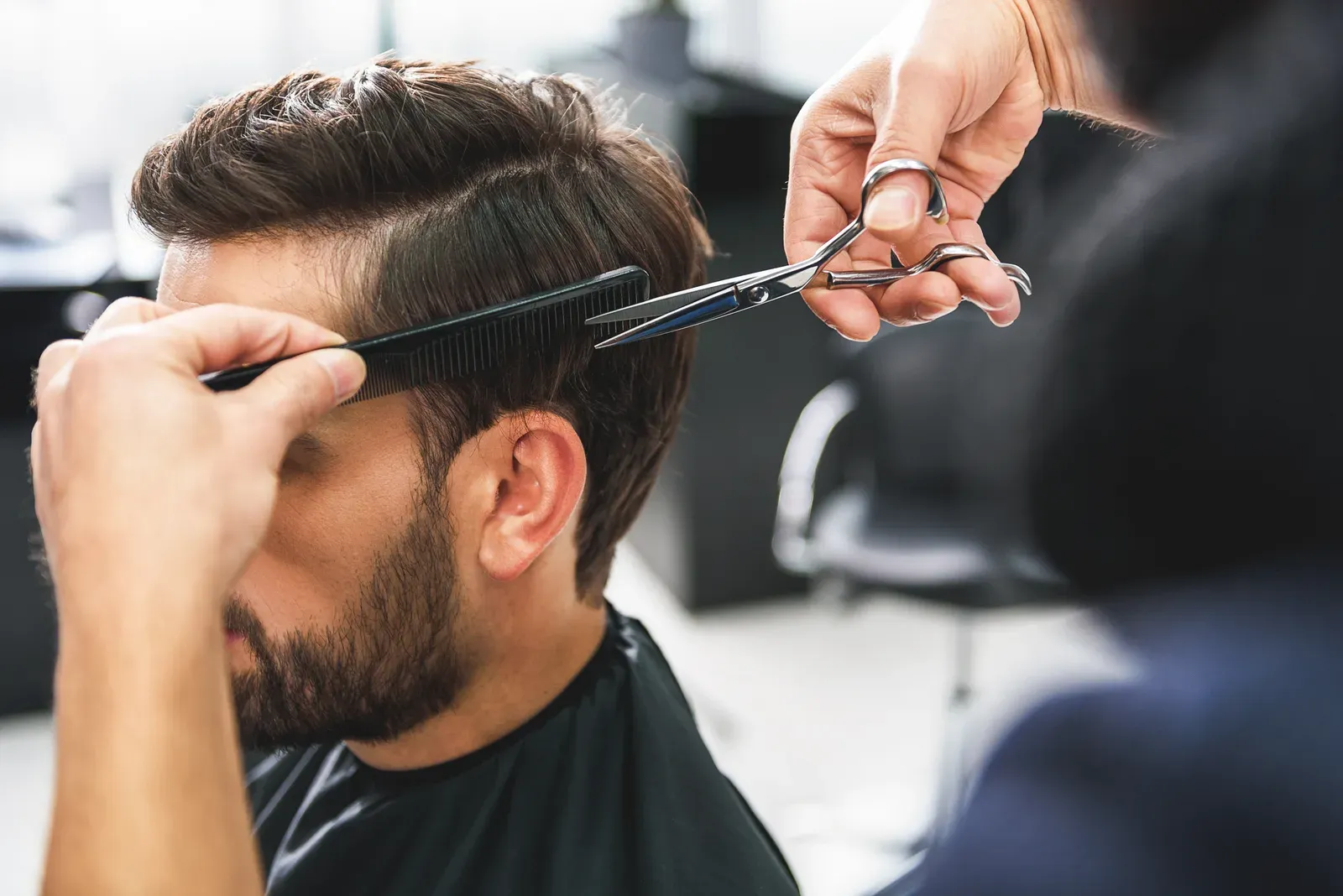
How clipper over comb works
The comb does the job a guard would do, but the barber decides its distance from the scalp on every pass. Holding the comb at a steeper angle away from the head leaves more length; tilting it closer leaves less. The clipper, usually without a guard, glides flat along the teeth and cuts only the hair poking through.
Because the angle can change continuously, a barber can graduate length smoothly up the side of the head in a single movement. That is what makes it so useful for tapers on longer hair, where you want the sides to go from 25 mm at the top to a few millimetres at the neck without a single visible step.
- Comb the hair against the direction of growth so it stands away from the scalp.
- Slide the comb into the section with the teeth pointing up and set its angle.
- Run the clipper blade flat along the comb, cutting the hair above it.
- Move to the next section, overlapping slightly with the last one to keep the line continuous.
- Comb through and repeat on any area that still looks heavy.
Why not just use a guard?
Guards are faster and very consistent, but they have limits that clipper over comb does not. A guard cuts every hair to one length relative to the scalp, so it copies the shape of your skull exactly, including flat spots and bumps. Clipper over comb cuts relative to an imaginary line the barber chooses, so it can build up a flat area or take down a bulge.
The longest standard guard is an 8, about 25 mm, and guards tend to skip or push over thick hair at the longer sizes. Beyond that, the comb takes over. It is also useful around the ears and the occipital bone, where the head curves too sharply for a guard to sit flat.
- Use guards for: short, even lengths, most fades from skin to about a 4, speed.
- Use clipper over comb for: lengths over 25 mm, correcting head shape, flat tops, longer tapers.
- Use both for: a fade that blends into a longer, scissor-length top.
The cuts that depend on it
Some classic cuts are almost impossible without this technique. A flat top needs a level, horizontal platform across the crown, which a barber creates by holding a wide flat-top comb perfectly level and cutting across it, checking against a mirror behind for the horizon line. No guard can make a round head flat.
An Ivy League haircut, a longer crew cut or a traditional short back and sides also rely on it, because the length changes gradually from the neck to the parting line and stays long enough to comb. On curly or coily hair, clipper over comb shapes the outline of a high top or an afro fade while keeping the texture intact.
Scissor over comb: the gentler cousin
Scissor over comb follows exactly the same idea, but the scissors cut instead of the clipper. The barber lifts hair with the comb and snips along the teeth, which leaves a softer edge and gives even finer control, especially on longer sides and fine hair that clippers can leave looking flat or choppy.
It is slower, and it is how many barbers finish the upper sides of a scissor cut or blend the top into the sides on a longer taper. If you ask for a cut with no clippers at all, most of the side work will be scissor over comb. Our scissor cuts service covers that work, and our clippers vs scissors comparison explains the trade-offs.
What it feels like and what to ask for
You will feel the comb lifting and the clipper buzzing close to the scalp without touching it, since the comb teeth sit between. It takes more passes than a guard, so do not be surprised if the barber goes over the same area several times at different angles; that is the blending.
If you like a longer, softer side than any guard gives, ask for it directly: "Clipper over comb on the sides, keep it long enough to comb, tapered short at the neck." At Markcutit it falls under a Haircut Only, whether the rest is fade, taper or scissor; see our taper fades service for the tapered look.
What is clipper over comb: common questions
Is clipper over comb harder than using guards?
Yes. It relies on the barber keeping the comb angle consistent across the whole head, which takes practice. A shaky angle shows as uneven patches, particularly on straight dark hair.
Can I do clipper over comb at home?
On the front and sides you can see, a little, but it is very easy to take too much. Start with a long setting and short passes, and leave the back to a barber.
What kind of comb do barbers use for it?
A tapering comb with fine teeth at one end and wide teeth at the other for most work, and a wide, flat comb for flat tops.