
Barber Answers
Should You Touch Up Your Fade at Home? What Is Safe and What Is Not
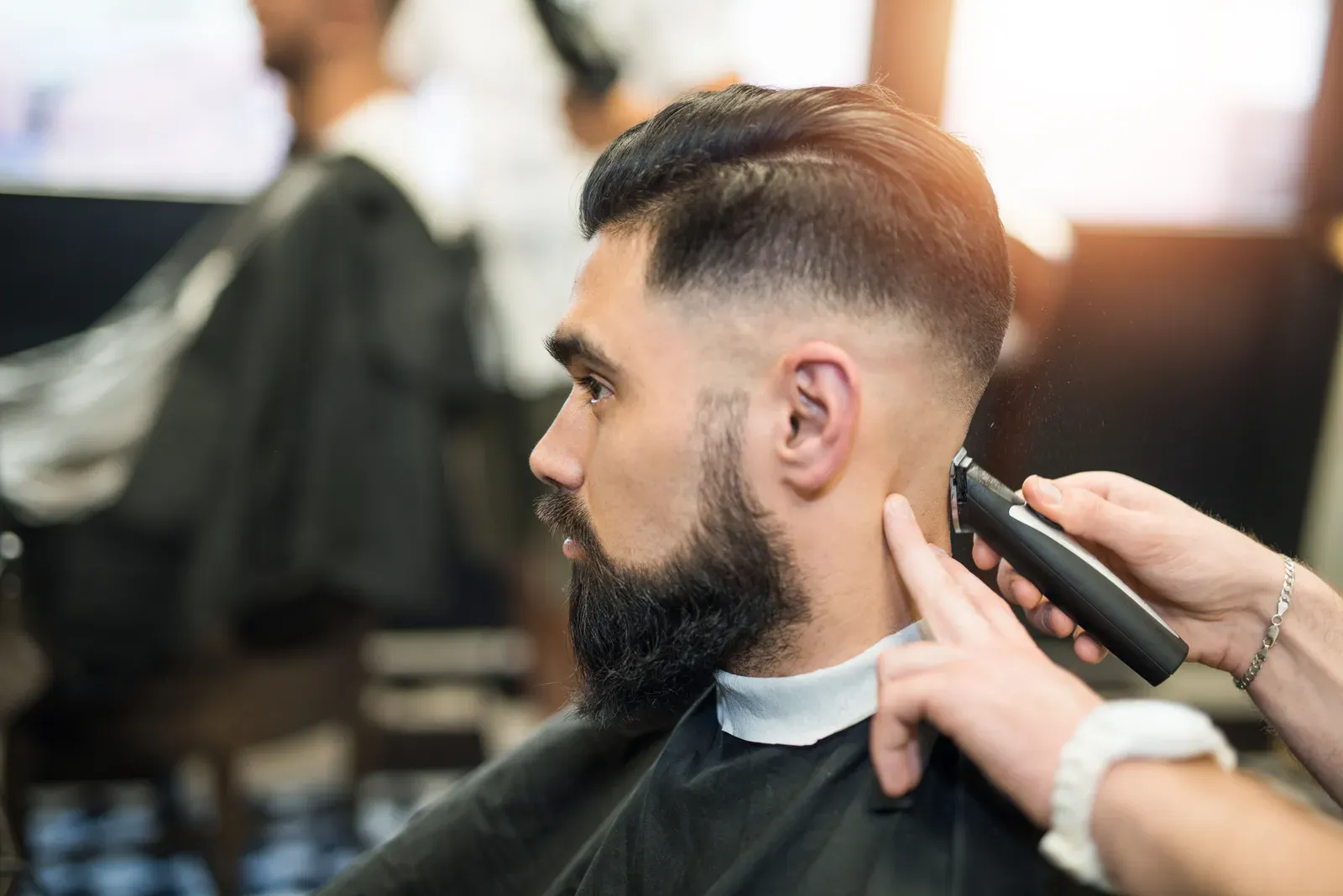
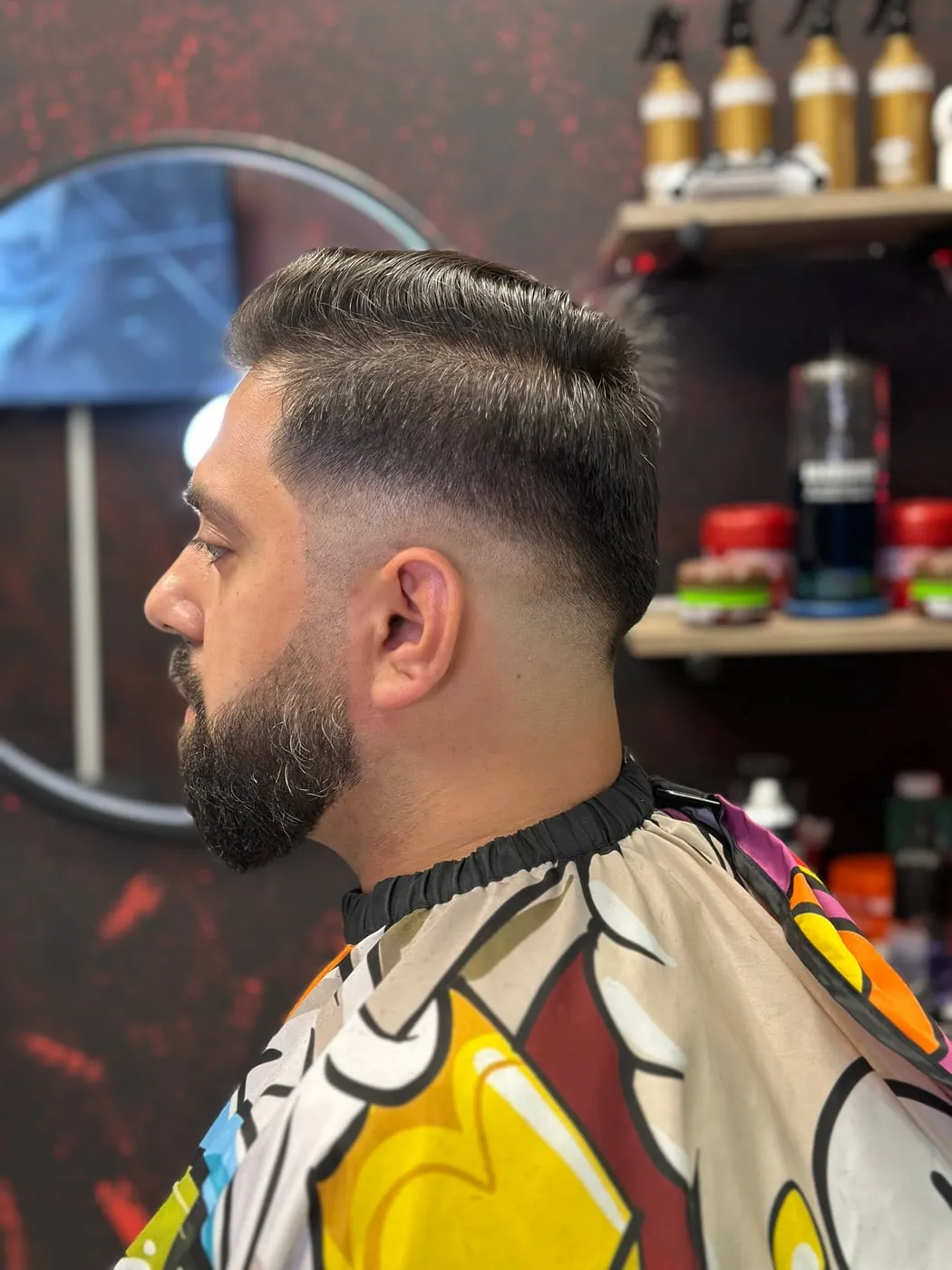
Short answer: You can safely touch up the neckline below your fade and stray hairs around the ears at home, but you should not try to re-blend the fade or edge your own hairline. A fade depends on seeing the back of your head and controlling several guard lengths, and a hairline pushed back with a trimmer can take weeks to grow in. Keep home touch-ups below and outside the cut.
The short answer: tidy below the fade, never inside it
The line we draw for clients is simple. Anything that sits outside the shape of the cut, like fuzz on the back of the neck or a few hairs over the ear, is fair game. Anything that is part of the blend, or the front hairline, should wait for your barber.
That rule keeps a three-week-old fade looking tidy without creating a problem that needs a full correction to undo.
What you can and cannot touch
Here is how the common home jobs break down, along with the reason each one is safe or risky.
| Area | OK at home? | Why |
|---|---|---|
| Fuzz on the neck below the hairline | Yes | It sits outside the cut and grows back fast if you slip |
| Hairs over and behind the ears | Yes, carefully | Easy to see with a hand mirror; take only what sticks out |
| The fade blend itself | No | Needs several guard lengths and a clear view of the back |
| Front hairline and temples | No | Easy to push back too far, and slow to grow in |
| Beard neckline | Only stray hairs | Moving the line changes the beard's whole shape |
| Length on top | No | Uneven cuts show immediately and are hard to balance |
Why re-blending a fade at home goes wrong
A fade is built from the bottom up in bands of length, and the transitions between them are what make it look smooth. Doing that on yourself means working blind at the back of your head, reversing every movement in a mirror and holding clippers at angles your wrist does not want to go.
The usual result is a hard line or a hole where the guard came off, and the only fix is taking the fade higher than you wanted. If you are curious how the blend is actually done, see how barbers blend a fade.
Why your hairline should stay off limits
Home lineups are the most common repair job we see. It only takes a millimetre too far on each pass to move the forehead or temple line back, and once that edge is gone it grows back slowly and unevenly.
A barber follows your natural hairline, often keeping the corners softer than you would expect, because pushing it back makes the face look older and the line harder to maintain. For more on this, read whether your barber should push back your hairline.
Safe tools and technique for neck tidy-ups
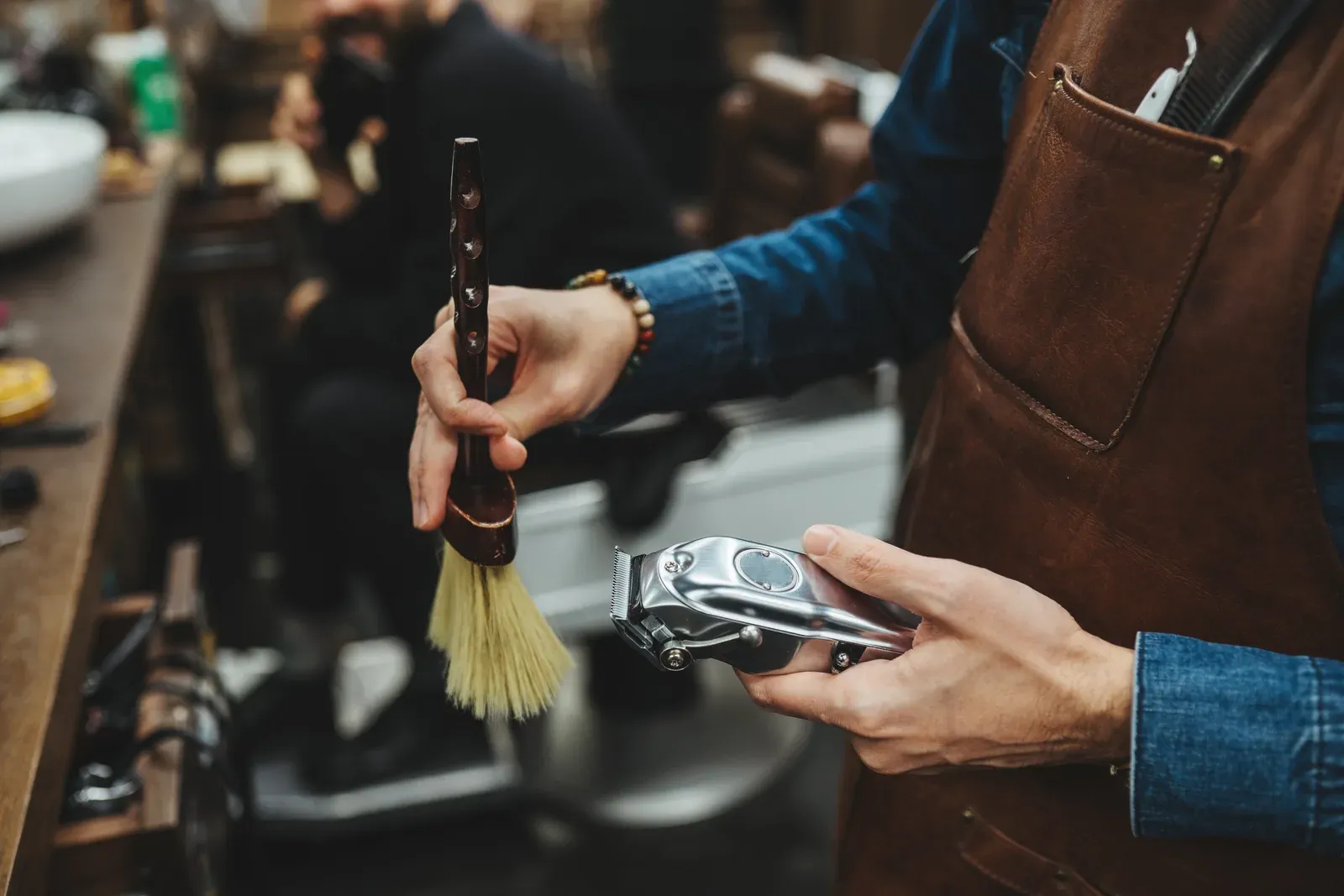
A small cordless trimmer with a T-blade or a guarded detail head is enough. Avoid a foil shaver or open razor at home; they take skin-level passes that are easy to overdo and more likely to irritate.
- Stand with your back to the bathroom mirror and hold a hand mirror in front so you can see the nape.
- Identify the bottom edge of your fade and stay at least a finger-width below it.
- Trim downward with light pressure, removing only the fuzz that sits under the natural neckline.
- Use small scissors for single hairs over the ears rather than the trimmer.
- Clean and disinfect the blade afterwards and moisturize the skin if it feels warm.
When to stop touching up and rebook
Once the blend itself looks soft rather than just the edges, the fade needs a barber. For most skin and bald fades that is two to three weeks; for tapers it can stretch a little longer.
Booking a skin fade before it fully grows out is also faster for us to rebuild cleanly, and every visit finishes with a razor-clean lineup so you are not tempted to do the edges yourself.
Should you touch up your fade at home: common questions
What trimmer is best for home neck tidy-ups?
A small cordless detail trimmer with a guard or rounded T-blade. It is precise enough for the nape without the aggressive cut of a foil shaver.
I messed up my fade at home. Can it be fixed?
Usually, but it may mean taking the fade a bit higher than before to erase the line. Book sooner rather than later so there is less to blend around.
Can I shave my neck with a razor between cuts?
It is possible, but razors on the neck are a common trigger for bumps and irritation. A trimmer is the gentler option for most men.
Is it OK to use my partner's or roommate's clippers?
It is better not to share. Clippers touch skin and can carry bacteria between people, so if you do borrow them, clean and disinfect the blades before and after use.