
Face Shape & Hair Type Guides
Haircuts for Thin Hair: Shorter Sides and a Fuller-Looking Top
Short answer: The best haircuts for thin hair are short and textured: tight sides with a fade or taper, and a top of about 3 to 6 centimetres that is point-cut so it stands with some separation. The contrast makes the top look denser. Textured crops, French crops and short quiffs all work. Avoid long, flat styles and heavy greasy products, which clump fine strands together and let the scalp show through.

Fine hair and thinning hair are different problems
Fine hair means each strand has a small diameter, even if you have plenty of them; thinning hair means there are fewer strands in an area than there used to be. Both look flatter and show more scalp, but they respond slightly differently to cutting.
Fine hair with normal density often just needs the right length and product to look full. Thinning concentrated at the temples or crown needs a cut planned around those areas, which our guides on the thinning crown and receding hairline cover in detail.
If you notice sudden shedding, patches or a rapid change over a few months, see a doctor or dermatologist; a haircut can disguise thinning but it cannot diagnose or treat it.
Why shorter sides make the top look thicker
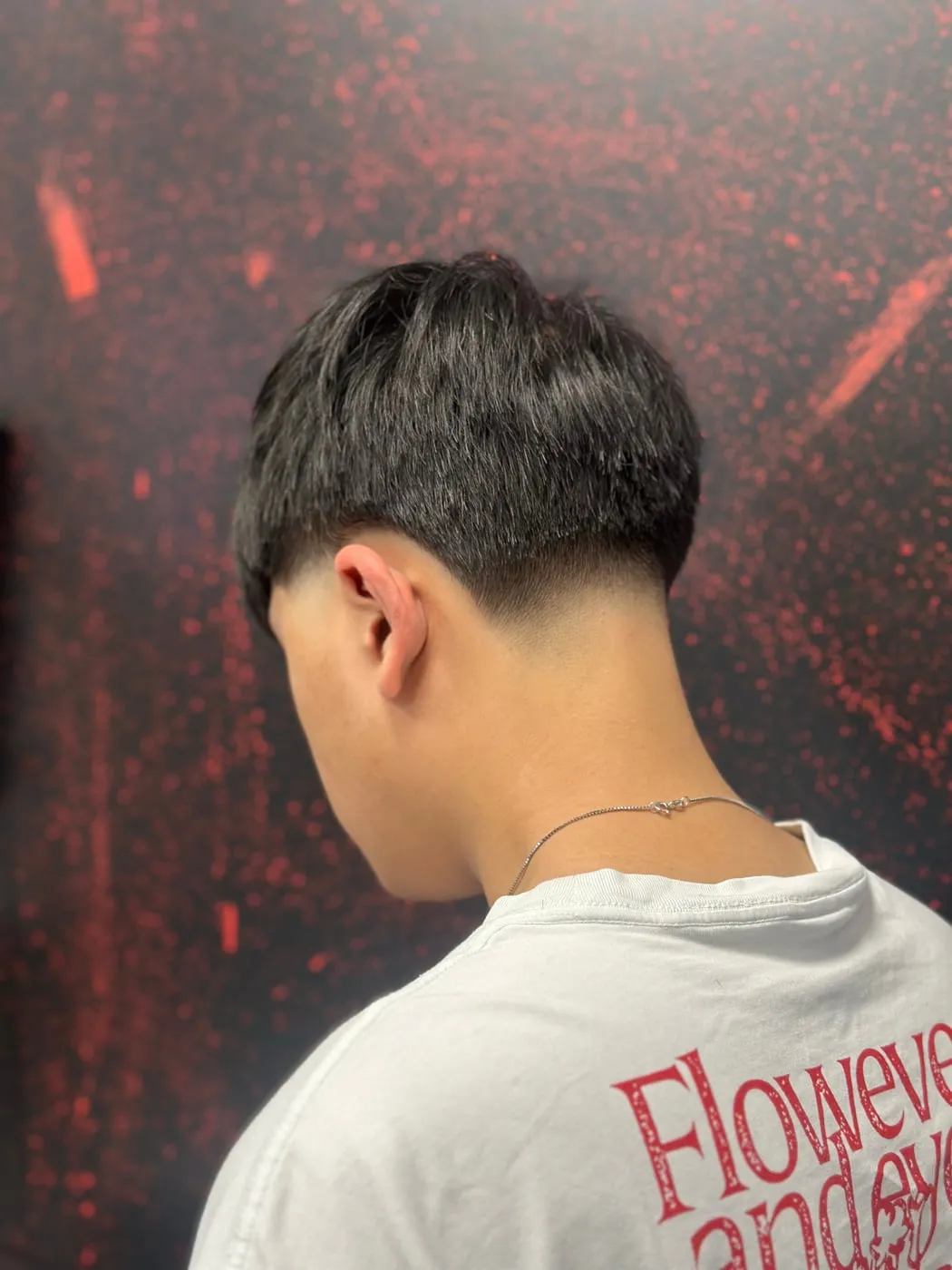
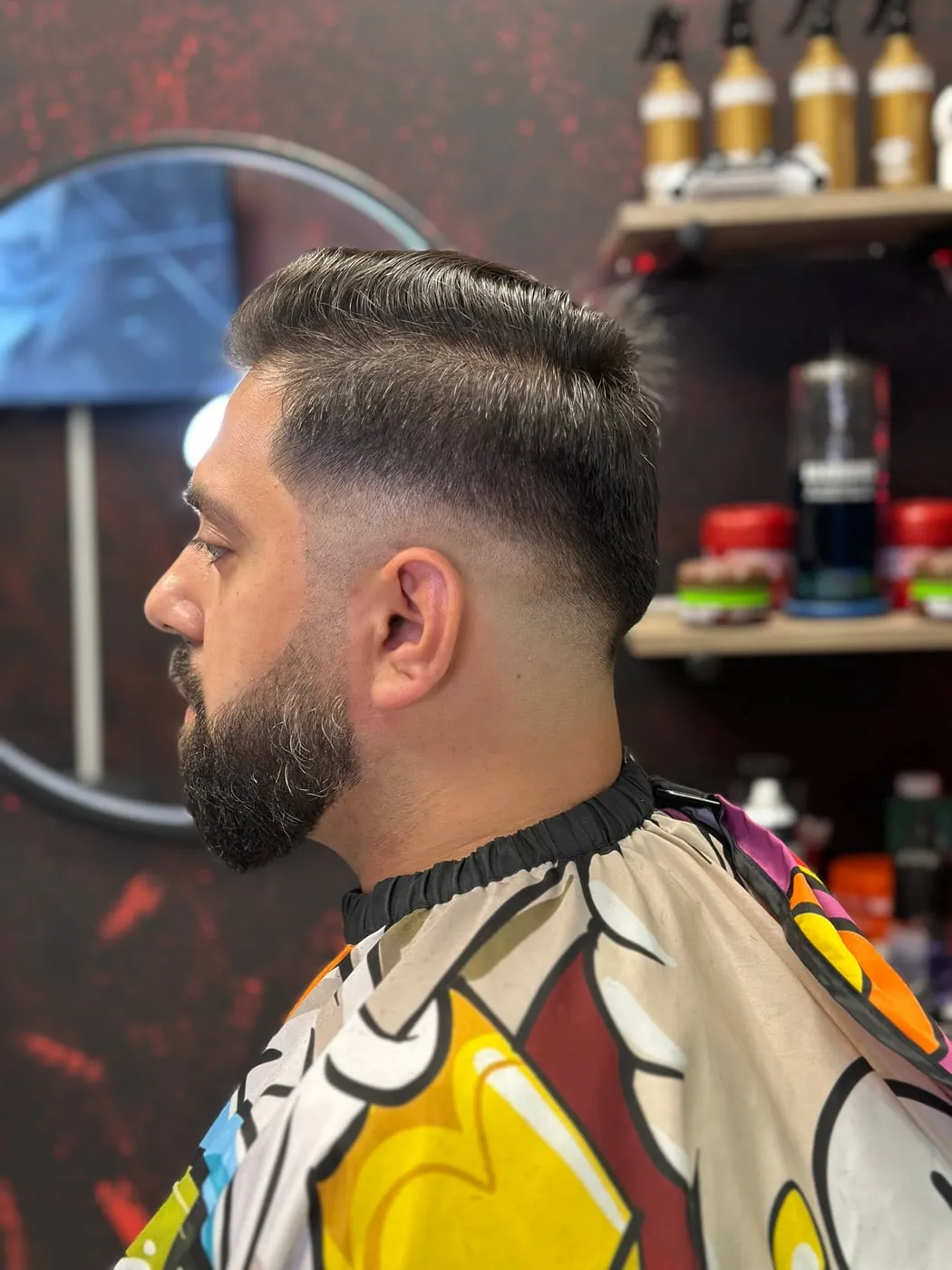
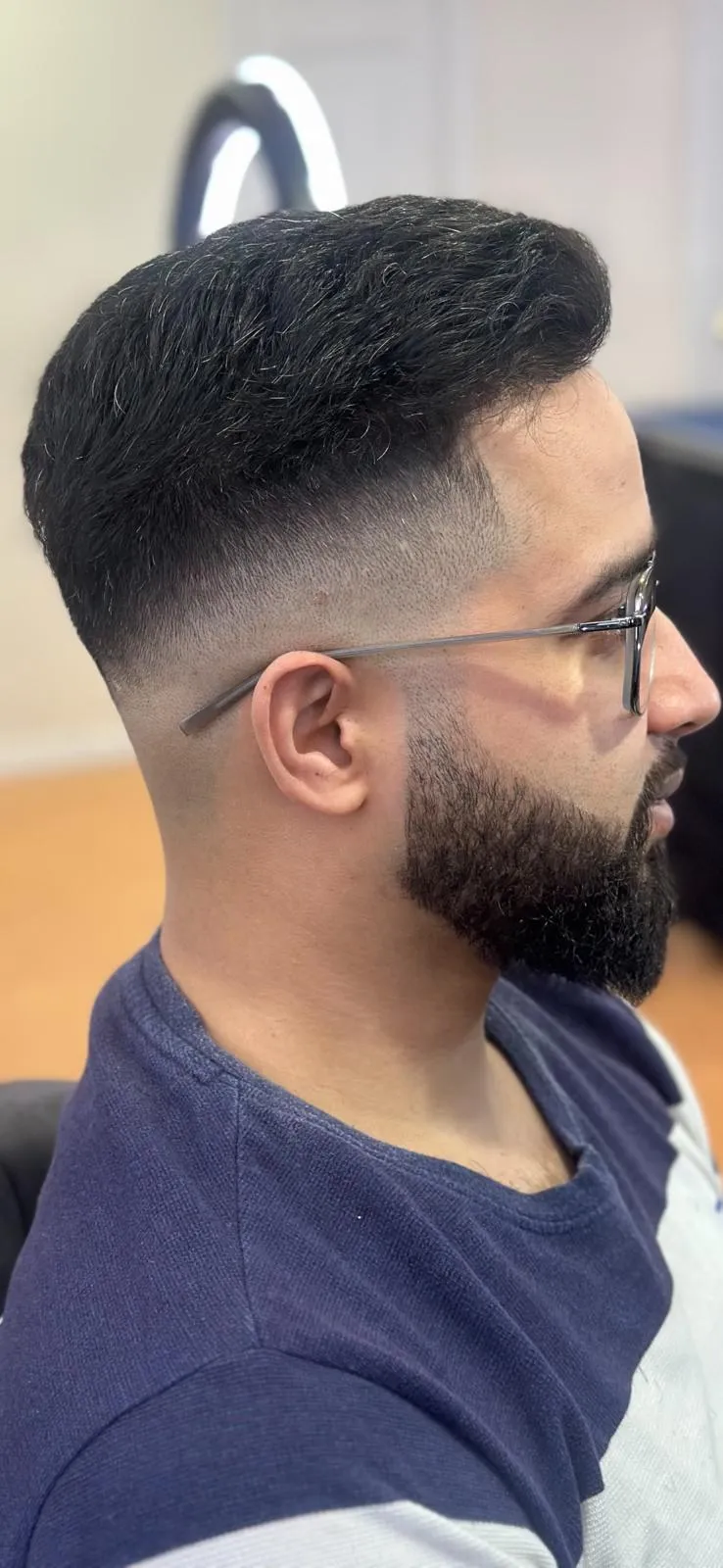
Tight sides make the top look fuller by contrast, because the eye compares the two areas and reads the longer one as denser. A skin fade or low taper under a short top is a classic trick for this reason.
It also removes the part of the haircut that tends to lie flattest. Fine hair at the sides often clings to the head and looks see-through; cut short, it simply looks neat.
A mid fade is a safe default. If your scalp is very visible on top, keep the fade a little lower so the difference between skin on the sides and scalp showing through the top is not too stark.
Long and flat hair looks thinner
Longer fine hair gets pulled down by its own weight, lies flat to the scalp and separates into strands, which exposes the scalp in between. The longer it grows, the more obvious this becomes, especially at the part and the crown.
Shorter hair is lighter, so it stands up more and overlaps itself. That overlap is what creates the look of coverage. For most men with fine hair, somewhere between 3 and 6 centimetres (1 to 2.5 inches) on top is the sweet spot.
Cuts that work well on thin hair
The strongest options are short, textured and slightly messy, because irregular pieces hide more scalp than a smooth, combed surface. Here are the ones we recommend most often.
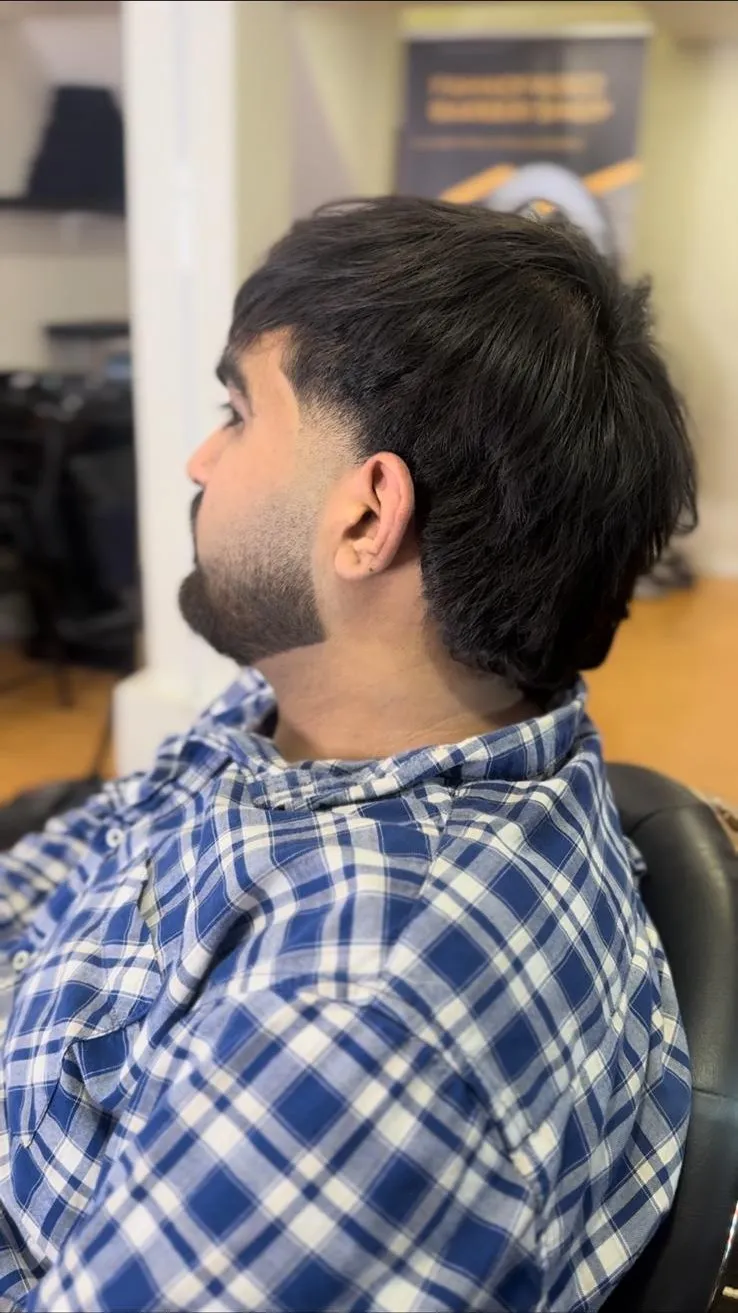
- A textured crop: point-cut on top with a short fringe pushed forward, which covers the hairline and adds visible bulk.
- A French crop: a blunter fringe that sits low and hides thinning at the front.
- A short quiff with the front lifted by a blow-dryer, best if the hairline is still strong.
- A crew cut with a slightly longer front for a tidy, office-friendly option.
- A buzz cut, if you would rather stop managing thin hair altogether; very short hair makes density less visible.
Which products to avoid on thin hair
Heavy, oily products are the biggest problem for thin hair, because they weigh the strands down and stick them together into clumps with scalp visible between them. Shiny pomades, thick waxes and wet-look gels are usually the culprits.
Lighter, matte products do the opposite. A small amount of texture powder, a light matte clay or a sea salt spray on damp hair adds grip and lift without weight. Use less than you think you need and work it in at the roots.
Conditioner matters too. Heavy conditioners left on the roots can flatten fine hair, so apply it to the lengths and rinse well.
How we cut thin hair
We cut fine hair mostly dry or lightly damp so we can see how it actually falls, since wet fine hair can look far thicker than it is once dried. The cut is usually a scissor cut on top and a fade or taper on the sides.
- Look at the top under good light to see where scalp shows most: front, part or crown.
- Set the side length so the fade or taper frames the top without making it look sparse.
- Cut the top to a length that stands on its own, often shorter than the client expects.
- Point-cut rather than thin, because thinning shears take out hair you cannot spare.
- Style with a light matte product and show how to rough it up with fingers at home.
Haircuts for thin hair: common questions
Does cutting thin hair short make it grow thicker?
No. Cutting does not change how many hairs grow from the scalp or how thick each one is. It only changes how full the hair looks.
Should I avoid a side part with thin hair?
A crisp side part can highlight the scalp along the line. A soft, messy part or a forward style usually hides more.
Is a blow-dryer bad for fine hair?
Used on a medium heat setting, it is one of the best tools for fine hair, because drying against the direction of growth lifts the roots.