
Style Comparisons
Mullet vs Wolf Cut: Short Sides and Long Back, or a Layered Shag
Short answer: A mullet contrasts short sides, usually a burst fade or taper around the ear, with deliberate length at the back of the neck. A wolf cut is a shaggy, heavily layered style with volume at the crown, curtain bangs and length that runs down to the neck, and it has no fade at all. Choose a mullet if you want short, clean sides and a bold back; choose a wolf cut if you have longer, wavy hair and want movement everywhere.
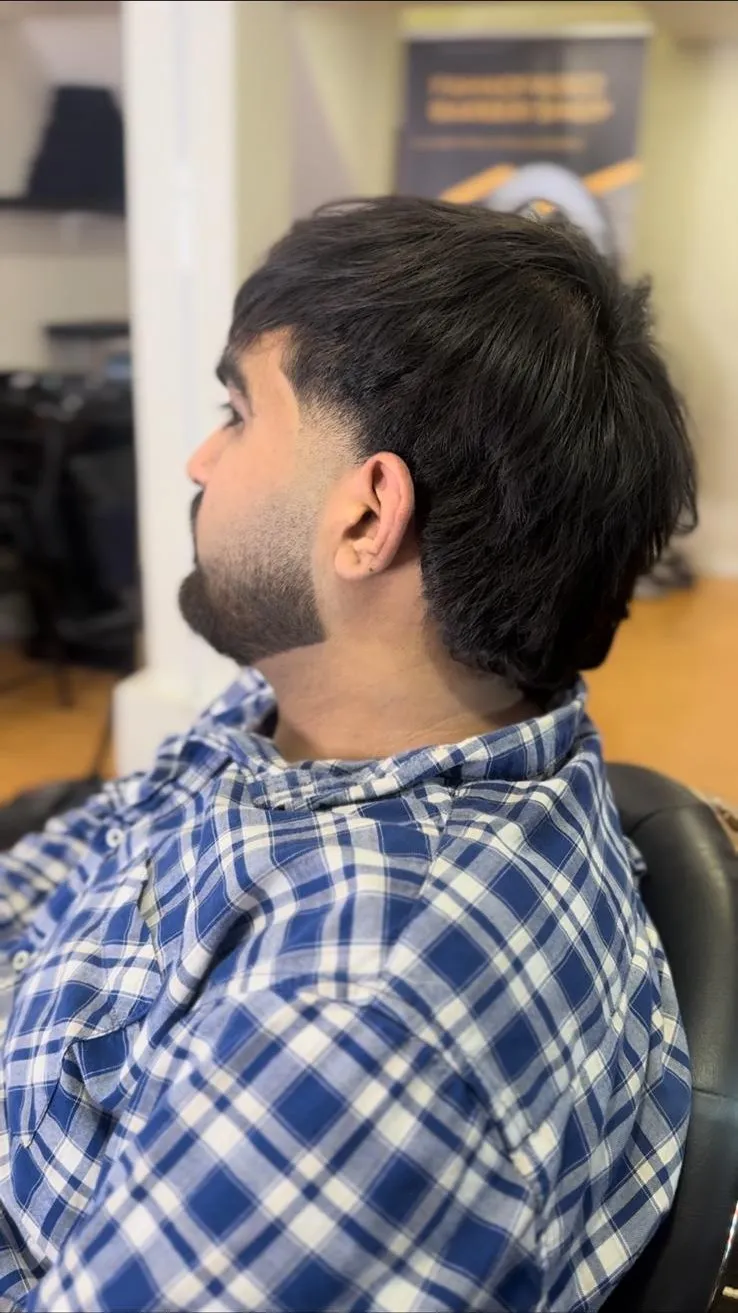
A shelf of contrast against an all-over shag
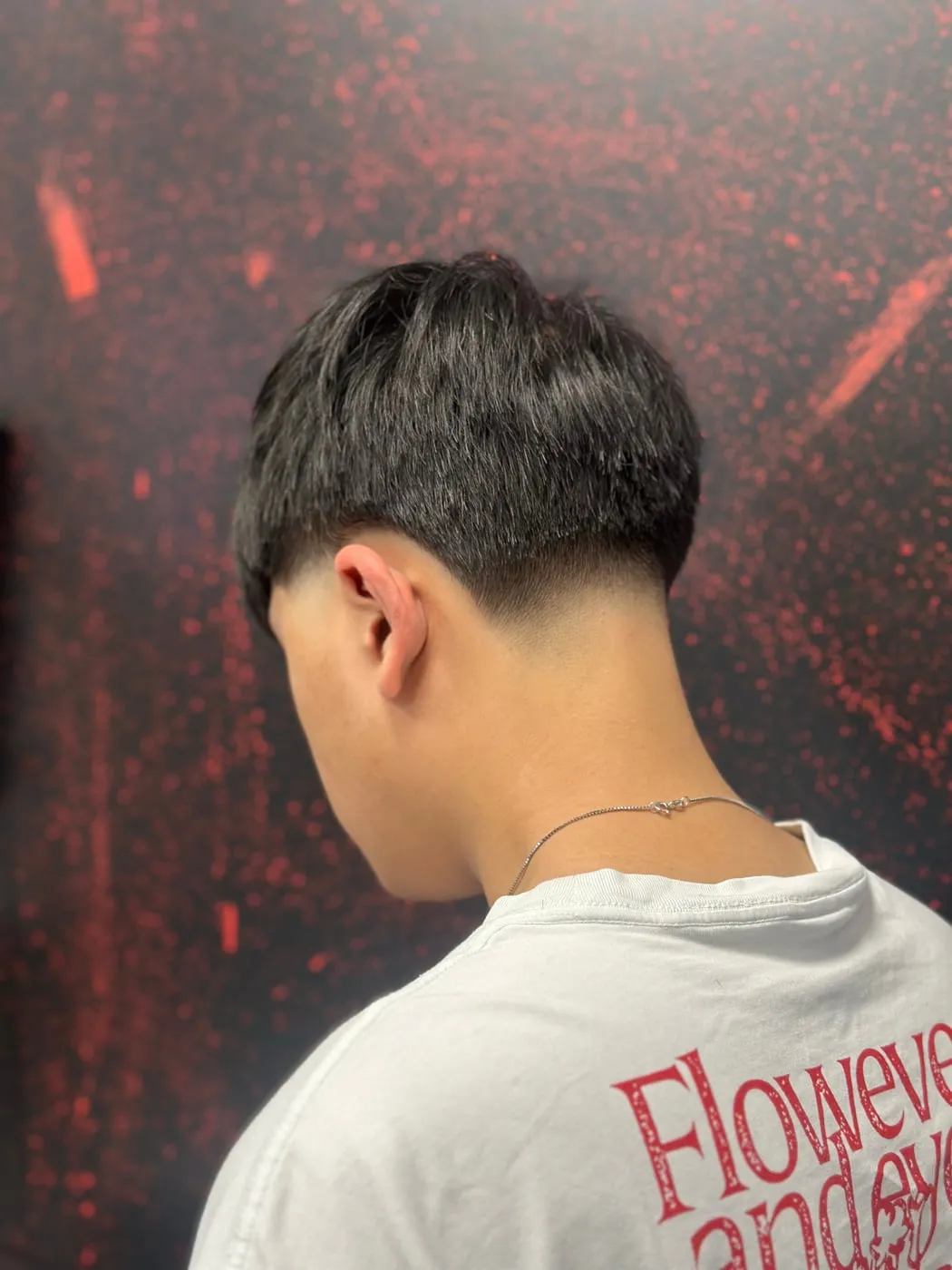
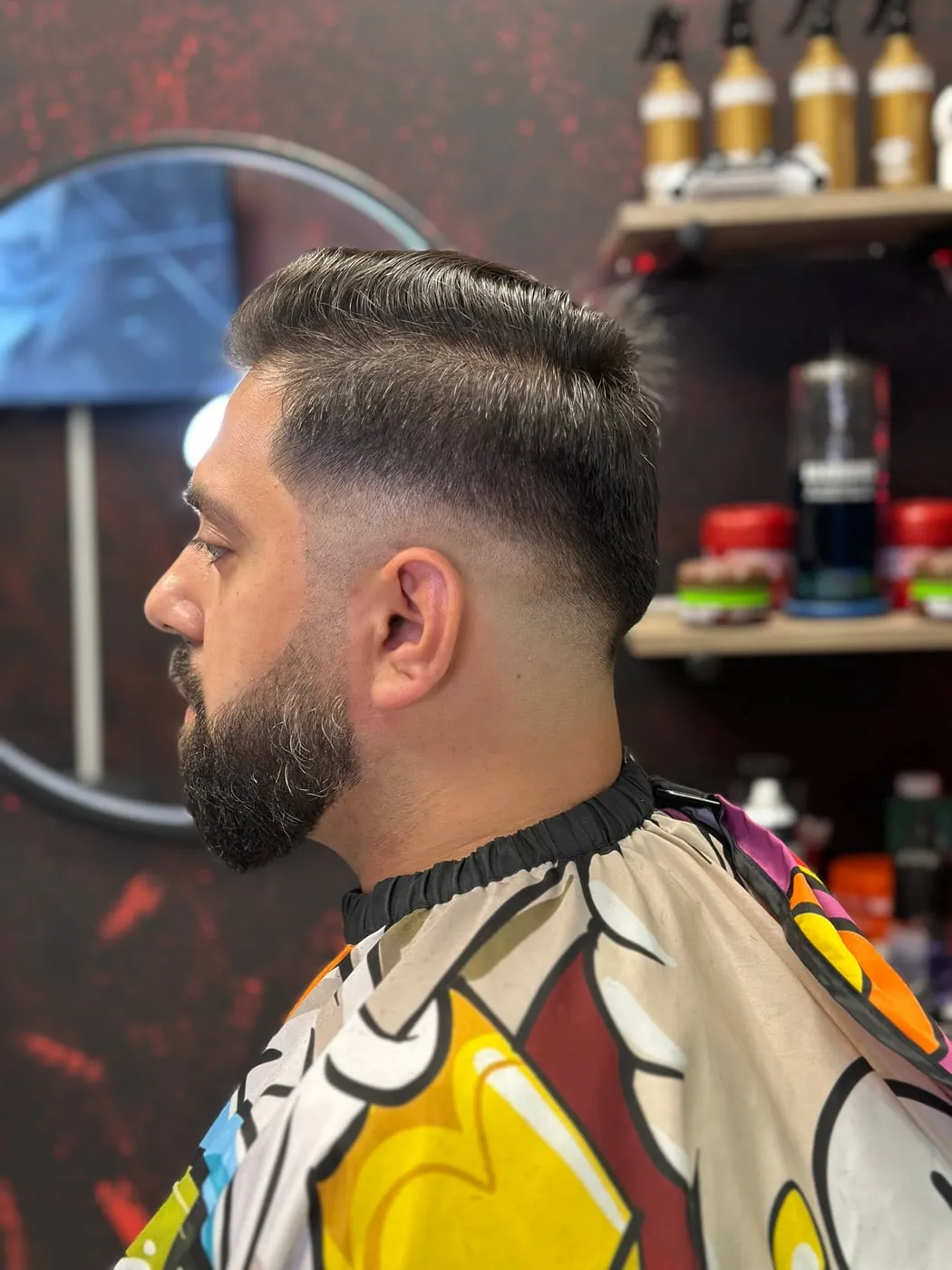
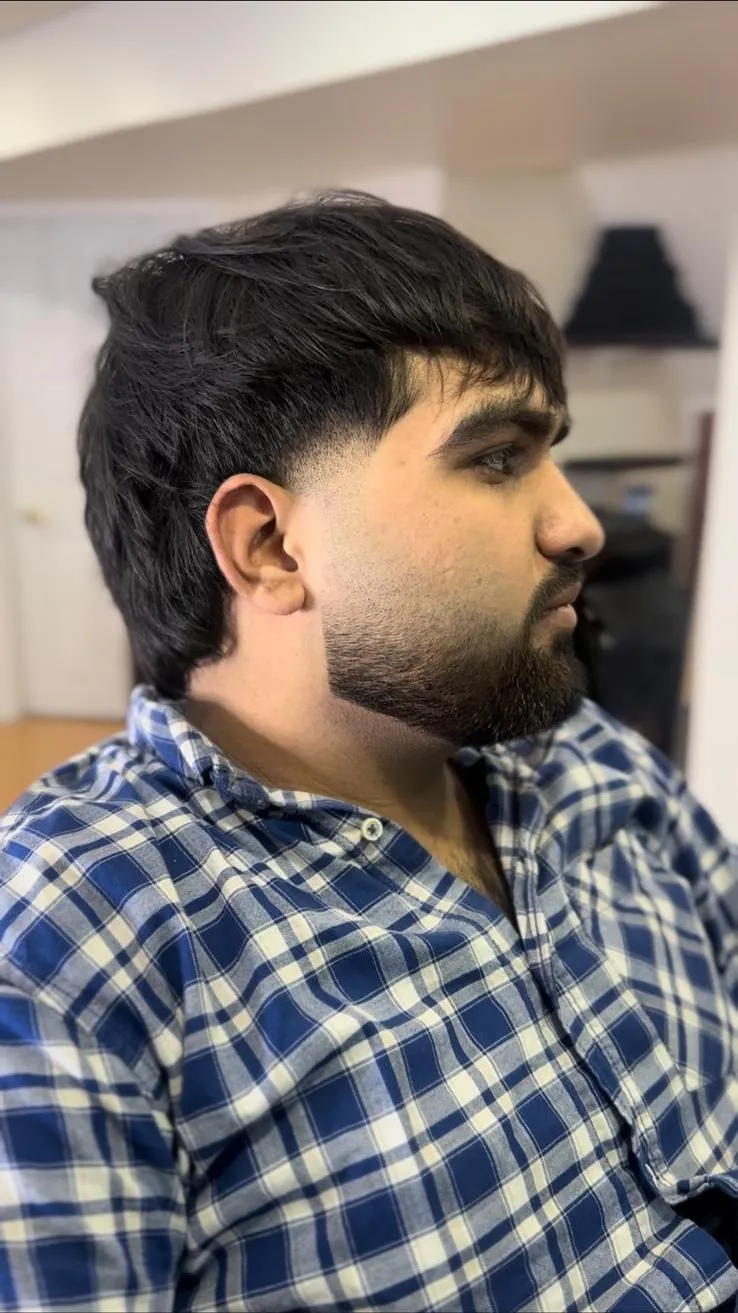
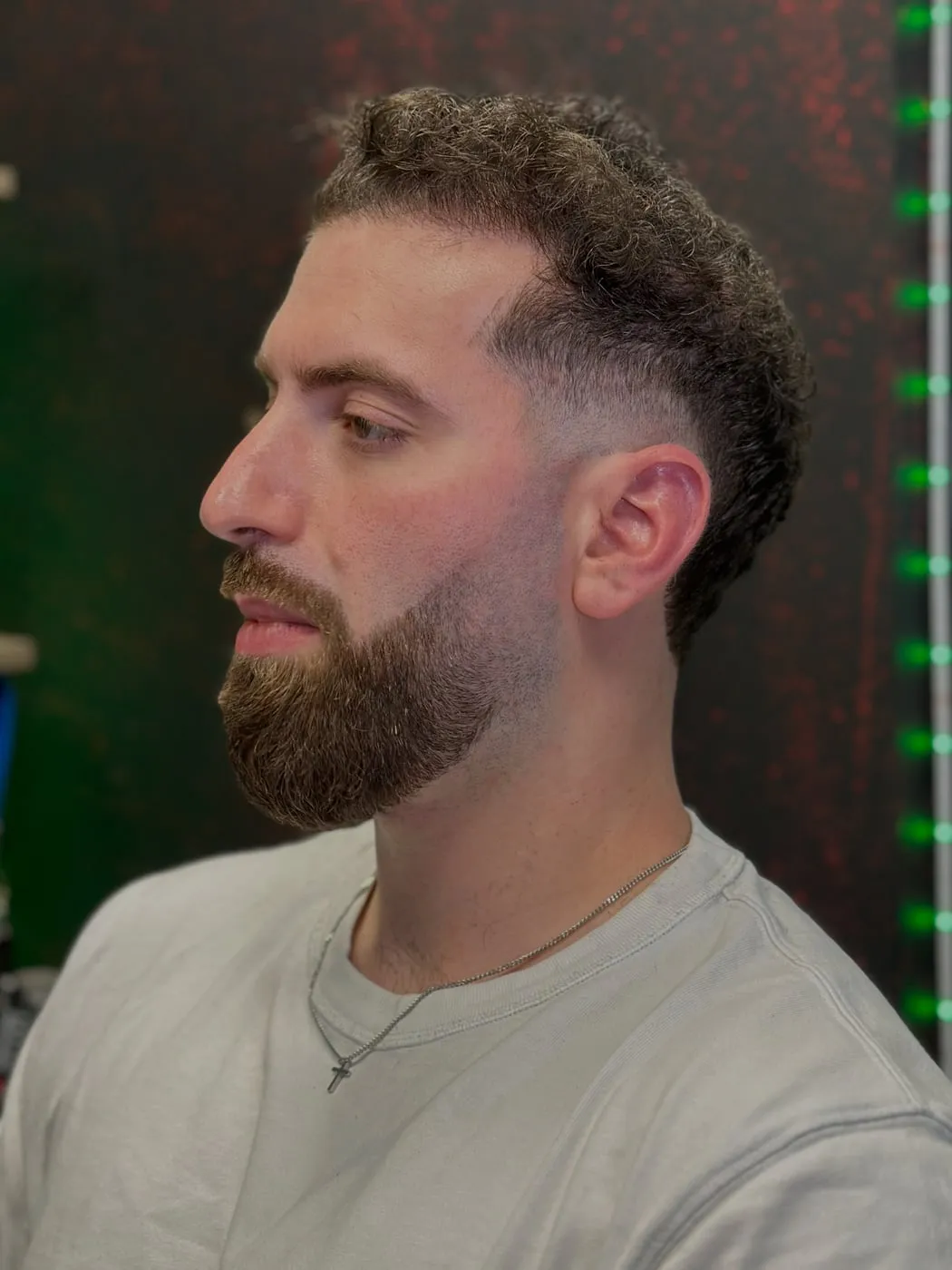
The mullet is built on contrast and the wolf cut on layering. A modern mullet takes the sides short, often a burst fade around the ear, keeps some texture on top and then lets the hair at the back hang past the nape. The eye reads two distinct zones: tight sides and a long back.
A wolf cut blends everything. Short, choppy layers at the crown create height, curtain bangs frame the face, and the layers get longer toward the neck, so the outline is one continuous shaggy shape. It borrows the long back from the mullet and the layering from a 1970s shag, which is why people often confuse the two.
Clippers or scissors
A mullet is usually part clipper, part scissor; a wolf cut is scissor and razor work almost from start to finish. On a mullet the sides are faded or tapered with clippers, the top is scissor-cut and textured, and the back is shaped with scissors so it looks planned rather than overdue.
On a wolf cut there is no fade. The layers are cut with scissors, point cut and often softened with a razor so the ends look feathered. If you have ever wondered why our clippers versus scissors comparison matters, this is a good example: the two cuts need very different hands in the chair.
Mullet and wolf cut compared
Read across the rows to find the deciding factor for you.
| Mullet | Wolf cut | |
|---|---|---|
| Sides | Short, faded or tapered | Layered, with length |
| Top | Short to medium, textured | At least 10 cm, heavy layers at the crown |
| Back | 5 to 12 cm past the nape | To the neck, blended into the layers |
| Fringe | Optional, usually short | Curtain bangs are part of the look |
| Minimum growth from a short cut | About 3 to 6 months at the back | Often 6 months or more overall |
| Upkeep | Sides every 3 to 4 weeks | Reshape every 6 to 8 weeks |
| Styling | Light texture on top, back left natural | Sea salt spray or cream, diffuse or air dry |
Which hair types suit each
Both look best with some natural movement, but the mullet is far more flexible. Curly and wavy hair make the best mullets because the back curls up instead of hanging flat, and even straight hair can work with texture on top. Coily hair suits a mullet well too, often as a burst fade with a fuller top.
The wolf cut really wants wavy or loosely curled hair. Straight, fine hair tends to fall flat and loses the choppy crown within a day, and very thick straight hair can puff into a triangle unless the layers remove enough weight. Tight curls can work, but the layering has to be planned around shrinkage.
What the grow-out looks like
Growing either from a short cut is a project, and the mullet is the faster of the two. For a mullet, you only need length at the back, so we keep the sides and top tidy while the nape grows; most people have a wearable mullet in about three months. A wolf cut needs length everywhere at once, and the in-between months look like shaggy, overdue hair, so plan for six months or more.
There is also a shortcut: many wolf cuts start life as a longer mullet. Once the back is there, the sides and top are allowed to catch up and the layers are cut in. If you are not sure which one you want, grow toward a mullet first and decide once you see how your hair falls.
Picking between them
Get a mullet if you like short sides, want the cooler option for Ontario summers, play sport in a helmet, or want a bold cut that still looks clean from the front. Get a wolf cut if your hair is wavy or curly, you enjoy longer hair, and you like a soft, messy outline over sharp contrast.
Either one is booked as Haircut Only, and the consultation is where we look at your texture and how much length you already have. For the scissor-led side of both cuts, see our scissor cuts service; bring photos of the back and side, as the front view hides most of what makes each cut.
Mullet vs wolf cut: common questions
Is a wolf cut just a long mullet?
Not quite. It shares the longer back, but the sides are layered rather than short and there is far more volume at the crown, so it reads as a shag.
Can I get a mullet at work?
A modern mullet with a low taper and a short back usually passes in casual workplaces. The longer and more contrasted it gets, the more of a statement it becomes.
Which is lower maintenance?
Day to day the mullet is simpler, but it needs the sides tidied every few weeks. The wolf cut goes longer between cuts yet needs more styling each morning.