
Face Shape & Hair Type Guides
Haircuts for Diamond Faces: Balancing Wide Cheekbones
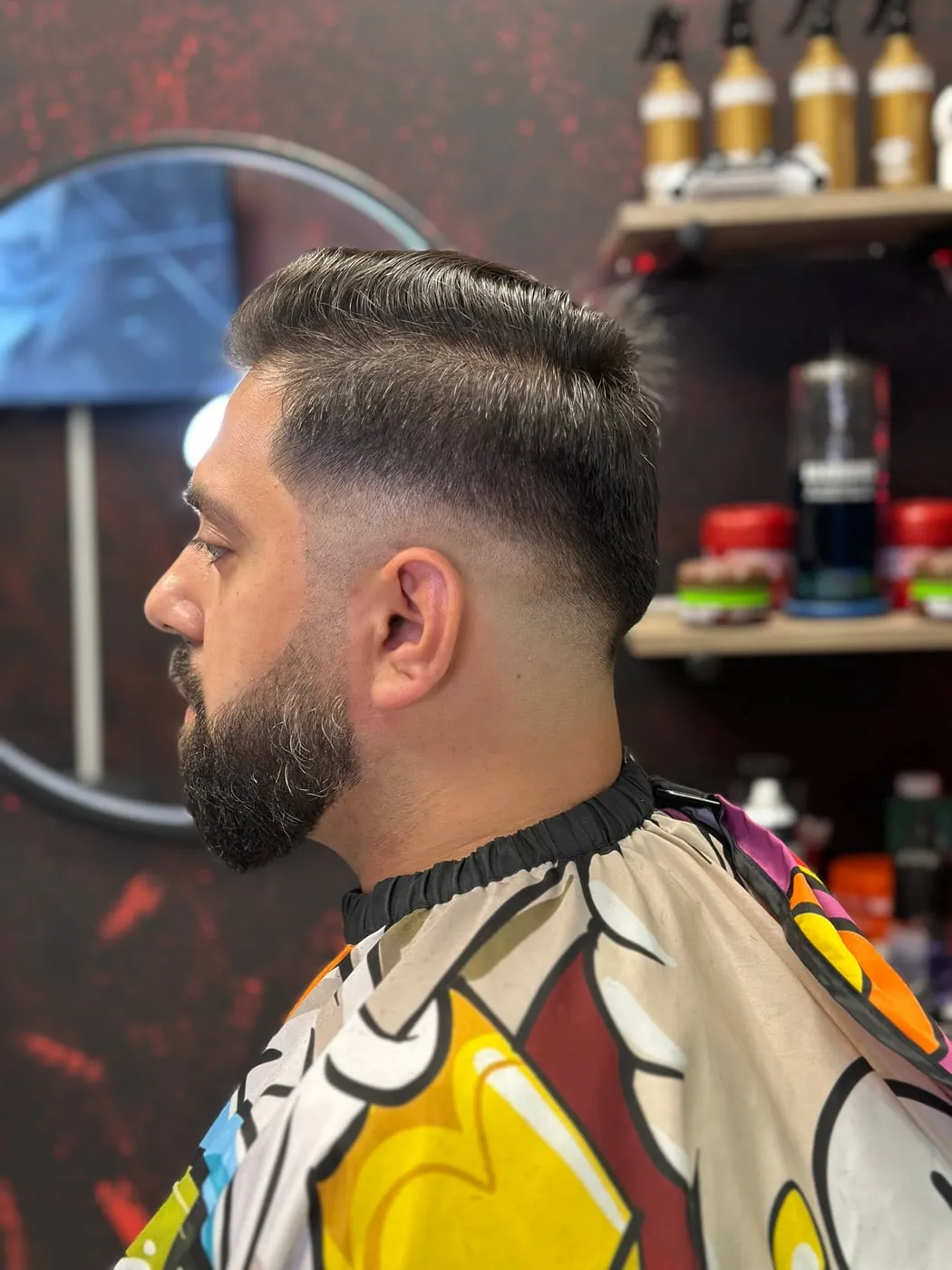
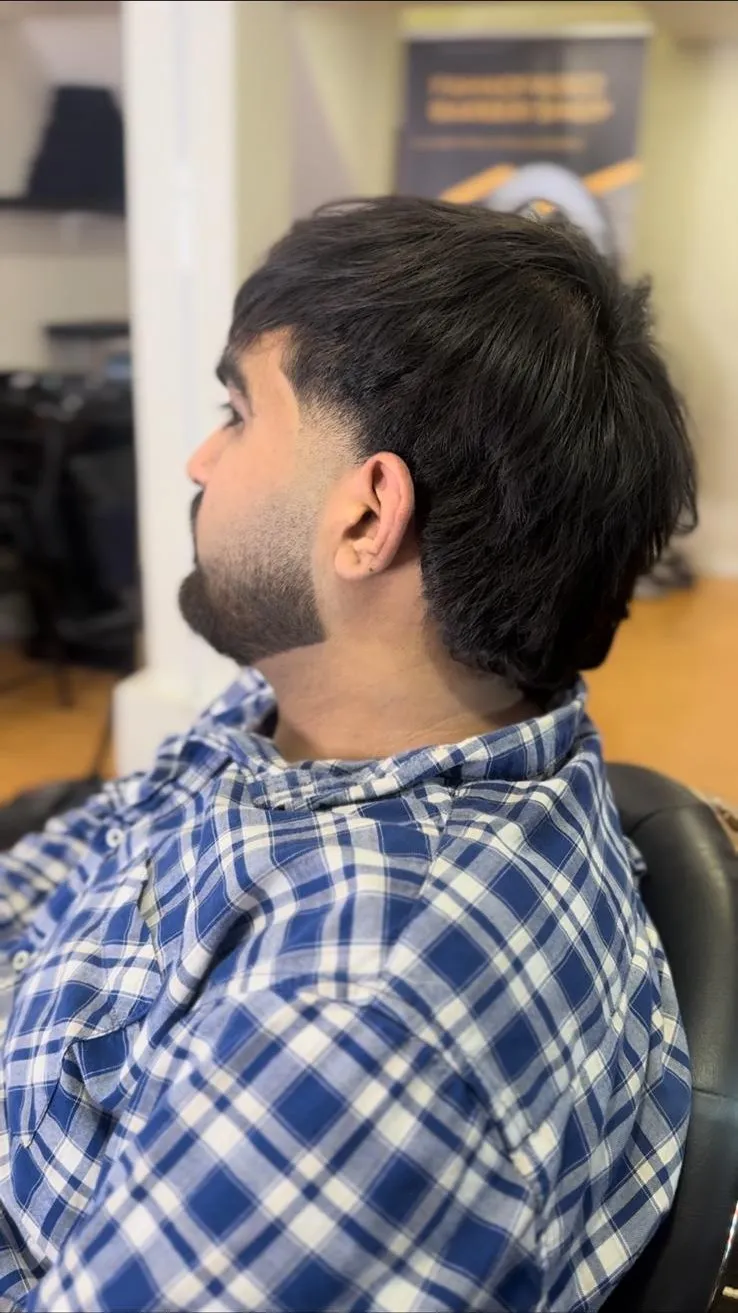
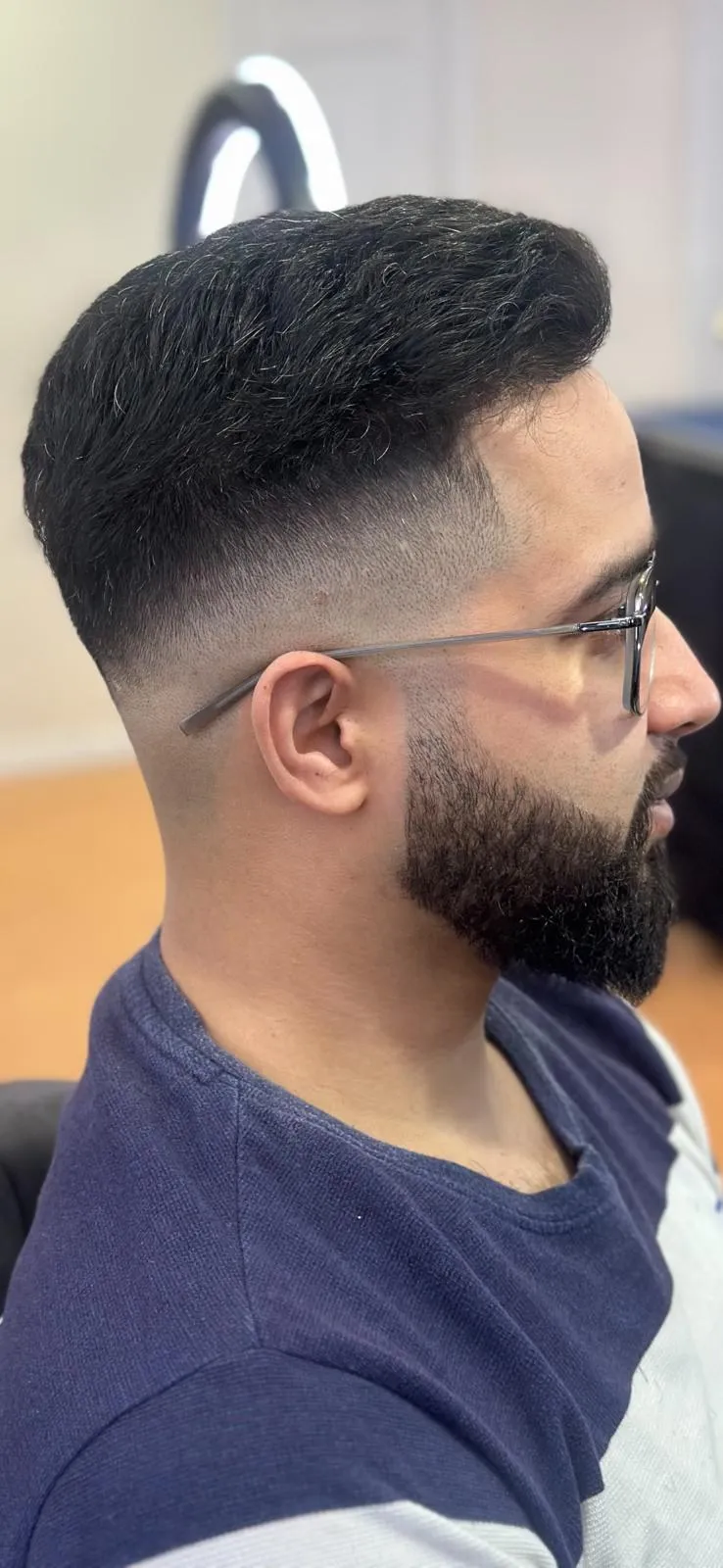
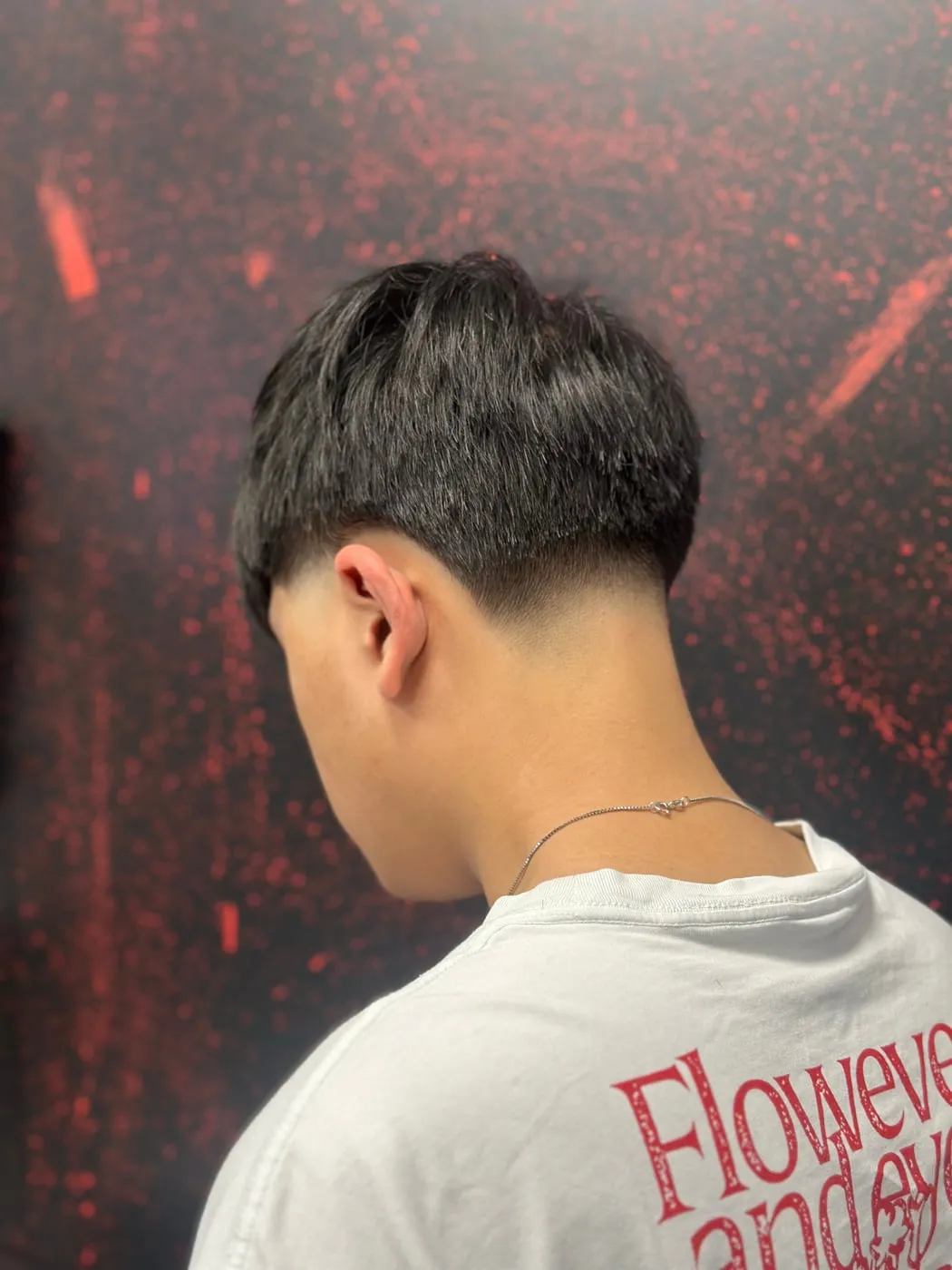
Short answer: Haircuts for diamond faces add fullness at the forehead and avoid cutting tight at the cheekbones. A textured fringe, a two-block with length draping over the temples, or a side-swept medium cut widens the narrow forehead, while a low taper keeps some hair beside the cheekbones. Skip high skin fades, and pick a beard that builds width at the chin and jaw rather than the cheeks.
What defines a diamond face
A diamond face is widest across the cheekbones, with a noticeably narrower forehead above and a narrow, often pointed chin below. The outline looks like two triangles meeting at cheekbone height, and the face is usually longer than it is wide.
It is one of the less common shapes and one of the most striking, because the cheekbones are so prominent. People often mistake it for oval; the giveaway is the temples, which dip in above the cheekbones instead of continuing in a smooth curve. The mirror method in our guide to finding your face shape makes that dip easy to spot.
Add fullness at the forehead
The main goal for a diamond face is widening the upper third so it matches the cheekbones. Hair that sits on or across the forehead, or that fans out toward the temples, fills in the narrow part of the diamond.
Forward-falling and side-swept styles do this naturally, and they can be cut short or medium depending on how much hair you want to manage.
- A textured fringe haircut that is slightly wider at the corners than in the middle.
- A two-block haircut with the top left long enough to drape over the shorter sides at the temple.
- A side-swept medium cut, with the sweep landing across the forehead toward one temple.
- A messy textured crop worn forward, with the front edge point-cut for softness.
- Curtains, where the length falls outward from a centre part and adds width at the temples.
Why tight sides at the cheekbones make it worse
Cutting the sides very short right where the head narrows above the cheekbones exaggerates the diamond. With no hair at the temples, the cheekbones become the only width in the silhouette, and the forehead looks narrower still.
That is why a high skin fade is usually the wrong call here. A low taper, a soft low fade or scissor-cut sides leave enough coverage at temple height to smooth the outline, and the neckline and sideburns can still be cleaned up sharply.
Sideburns deserve attention too. Taking them very high removes hair beside the widest point; leaving them at mid-ear keeps a little softness there.
How we cut a diamond face
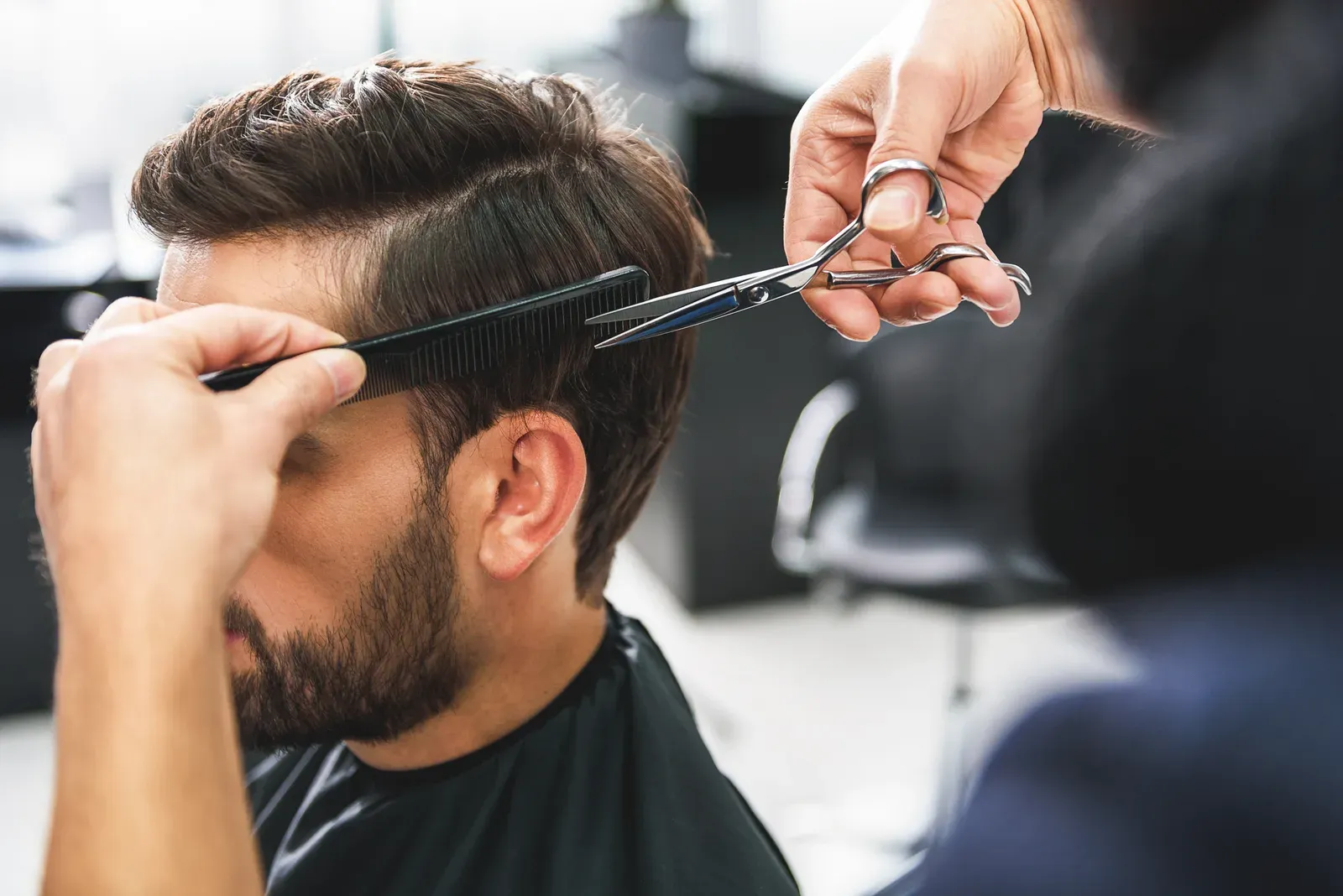
Diamond faces are mostly a scissor-cut job, because the goal is controlled weight in specific places rather than a uniform clipper length. We usually work in this order.
- Check where the temples dip and how wide the cheekbones sit, from the front and in the mirror at an angle.
- Taper the nape and around the ears low, leaving the upper sides long enough to cover the temple.
- Cut the top with the most length at the front corners, so the fringe or sweep widens as it meets the temples.
- Texturise through the fringe so it moves and does not form a heavy block.
- Keep the lineup soft at the temple corners; a razor-sharp squared temple draws attention to the narrow forehead.
Beards that widen a narrow chin
A diamond face benefits from a beard that adds width and weight at the chin and jaw, because that fills out the narrow bottom point. Keep the cheeks lighter so you do not add bulk at the cheekbones, which are already the widest part.
A full beard kept short at the upper cheeks and fuller along the jaw, with the bottom squared or gently rounded, is the most balanced option. A chin-focused style such as a circle beard can also work if it is kept broad rather than narrow.
Avoid tapering the beard to a point at the chin. A narrow goatee or a pointed Van Dyke repeats the lower half of the diamond and makes the chin look sharper.
What to avoid with a diamond face
Anything that removes hair at the temples or adds bulk at cheekbone height works against the shape. A few common requests fall into that category.
- High and bald fades that expose the temple dip.
- Slick backs that pull all the hair off a narrow forehead.
- Tall, narrow quiffs that lengthen the face without widening it.
- Long hair that ends at cheekbone level, framing the widest point.
Haircuts for diamond faces: common questions
Can I wear a slick back with a diamond face?
It is not ideal, because it shows the full width difference between the forehead and cheekbones. A looser side-swept version, with some hair left to fall forward at the temple, is a better compromise.
Is a diamond face rare?
It is less common than oval or square. Many people who think they are oval turn out to be diamond once they notice their temples narrow in above the cheekbones.
What fade height is best for a diamond face?
Low. A low taper or low fade keeps hair at the temples where you need it and still gives a clean finish around the ears and neck.