
Face Shape & Hair Type Guides
Haircuts for a Bumpy Head: Guard Lengths That Smooth It Out
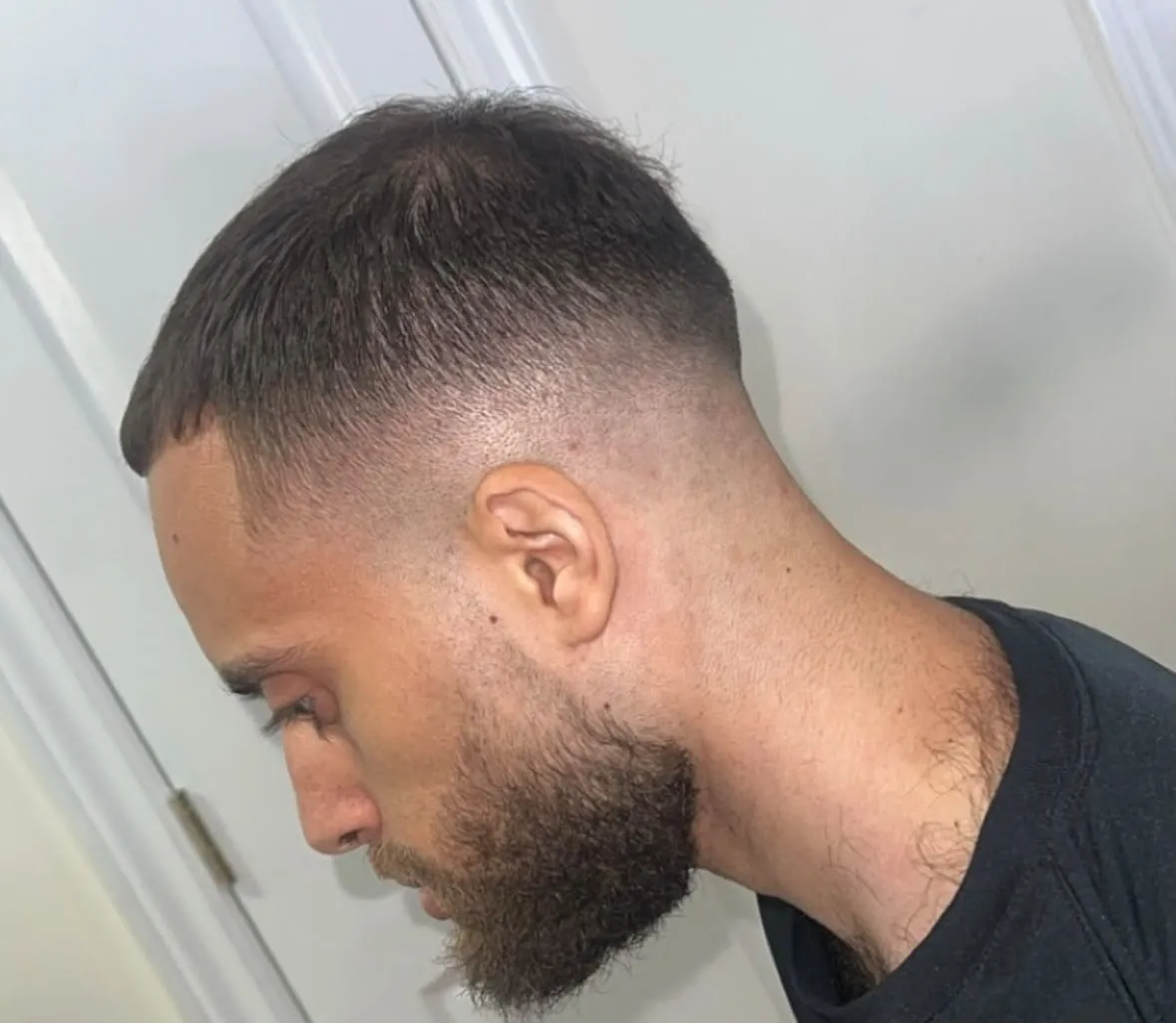
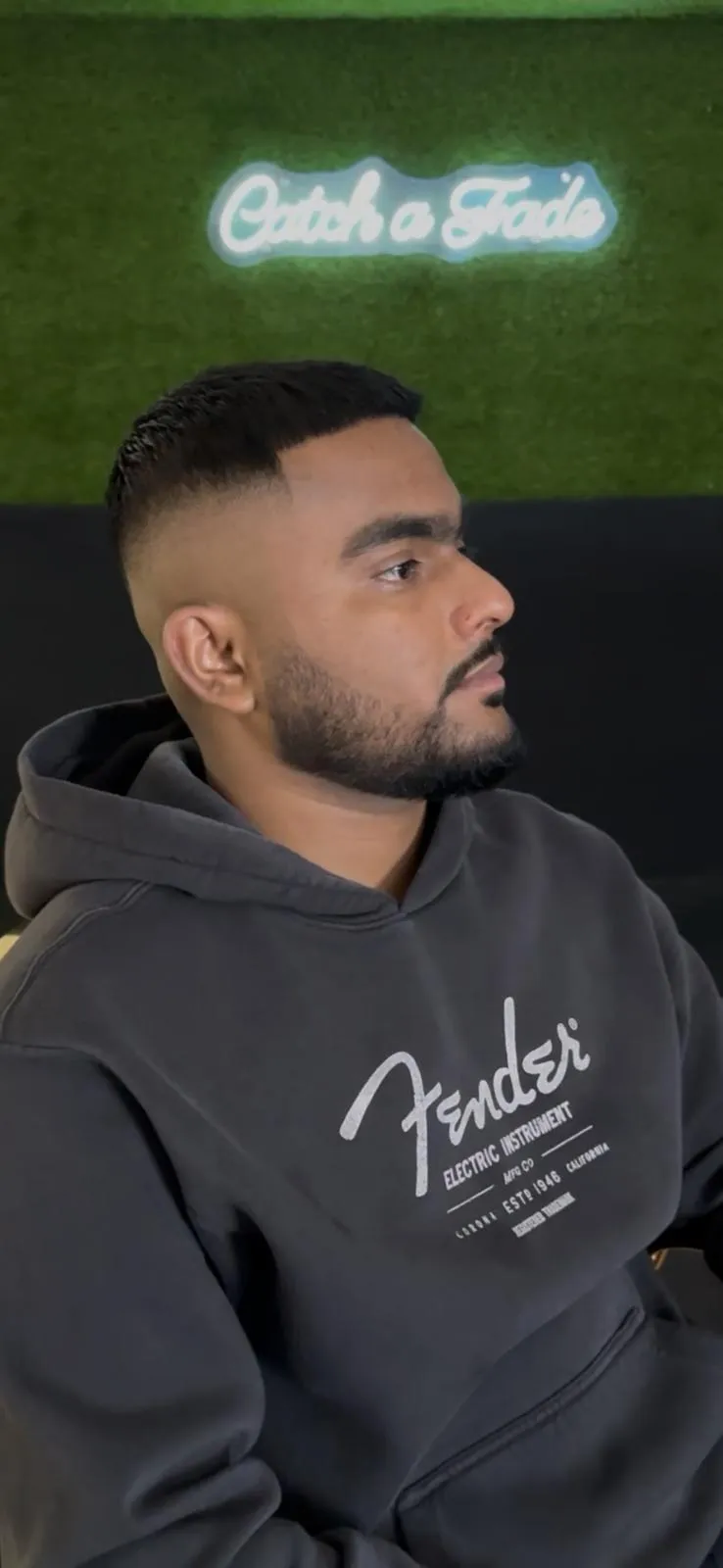
Short answer: Haircuts for a bumpy head hide lumps, ridges and dents by keeping enough length over them, usually a No. 3 guard (about 1 centimetre) or longer, and by stopping any fade below the uneven area. A low taper, a crew cut at a No. 3 or No. 4, or a short textured crop smooths the outline. Very short buzz cuts and high skin fades show every contour, because hair shorter than about 6 millimetres follows the skull exactly.
Why short hair shows every bump
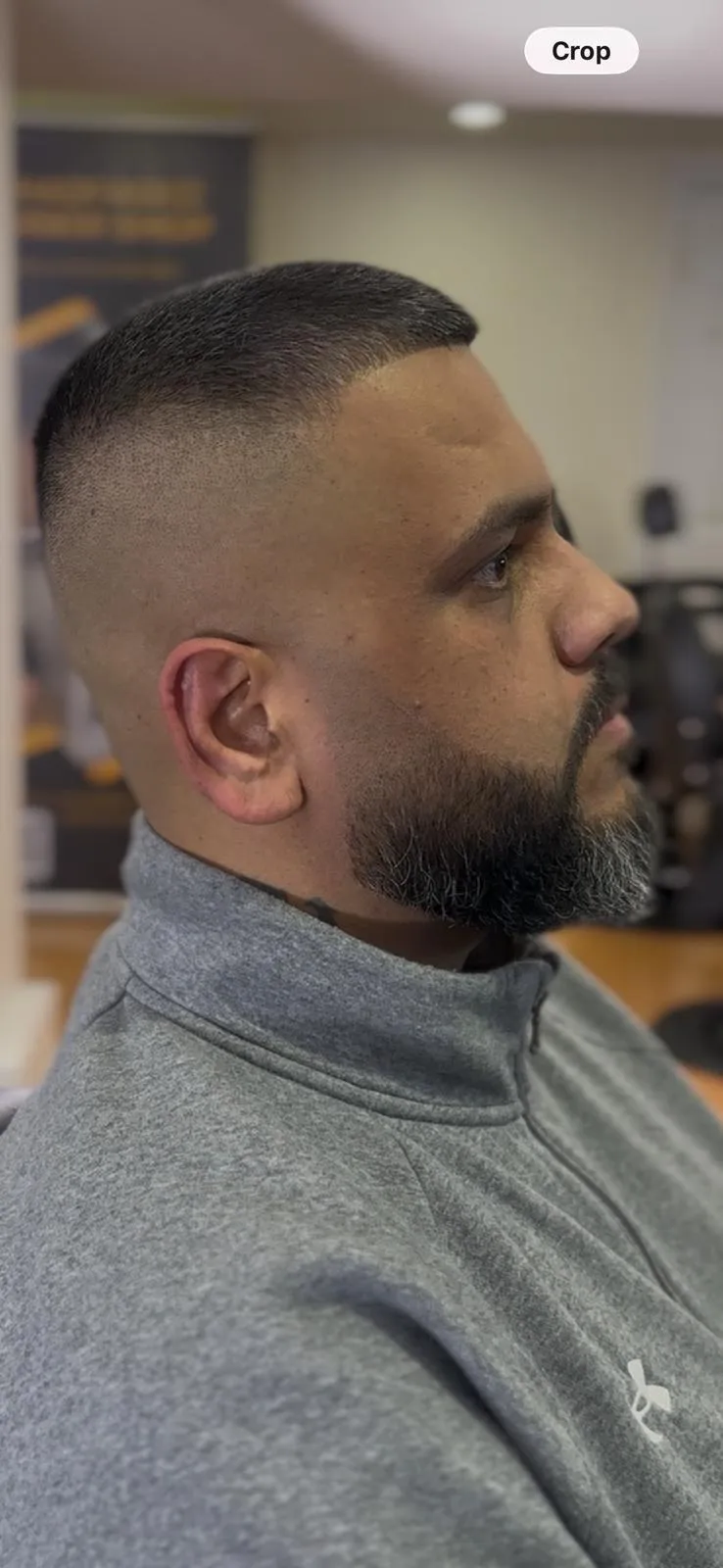
Hair shorter than about 6 millimetres (a No. 2 guard) follows the skull closely, so any ridge, lump or dent appears as a shadow on the surface. Longer hair has room to lie over a dip or bridge a bump, which evens out the silhouette.
Almost everyone has some unevenness: a pronounced occipital bump, a ridge along the top, a dent near the crown or a slight step where two skull plates met. Most people never see theirs until they get a buzz cut and look at the back in two mirrors.
The guard lengths that hide bumps
The guard length that hides bumps depends on how pronounced they are. As a starting point, these are the lengths we reach for over the uneven areas.
| Guard | Length | What it hides |
|---|---|---|
| No. 1 | 3 mm | Almost nothing; shows every contour |
| No. 2 | 6 mm | Very mild unevenness, in good light only |
| No. 3 | 10 mm | Small ridges and minor dents |
| No. 4 | 13 mm | Most bumps, including a pronounced occipital |
| Scissor length | 2 cm and up | Deep dents and large lumps |
Where the fade should stop
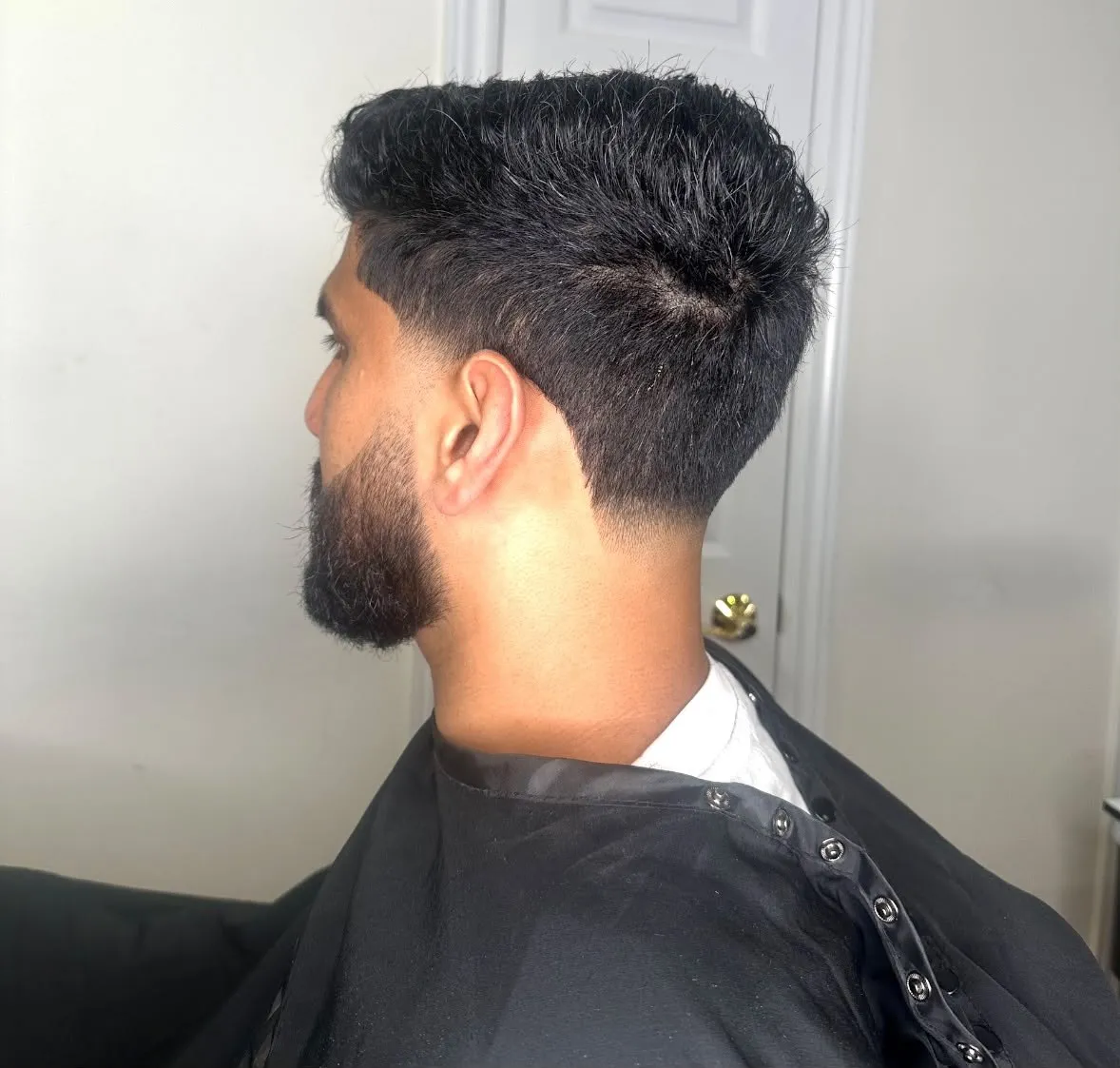
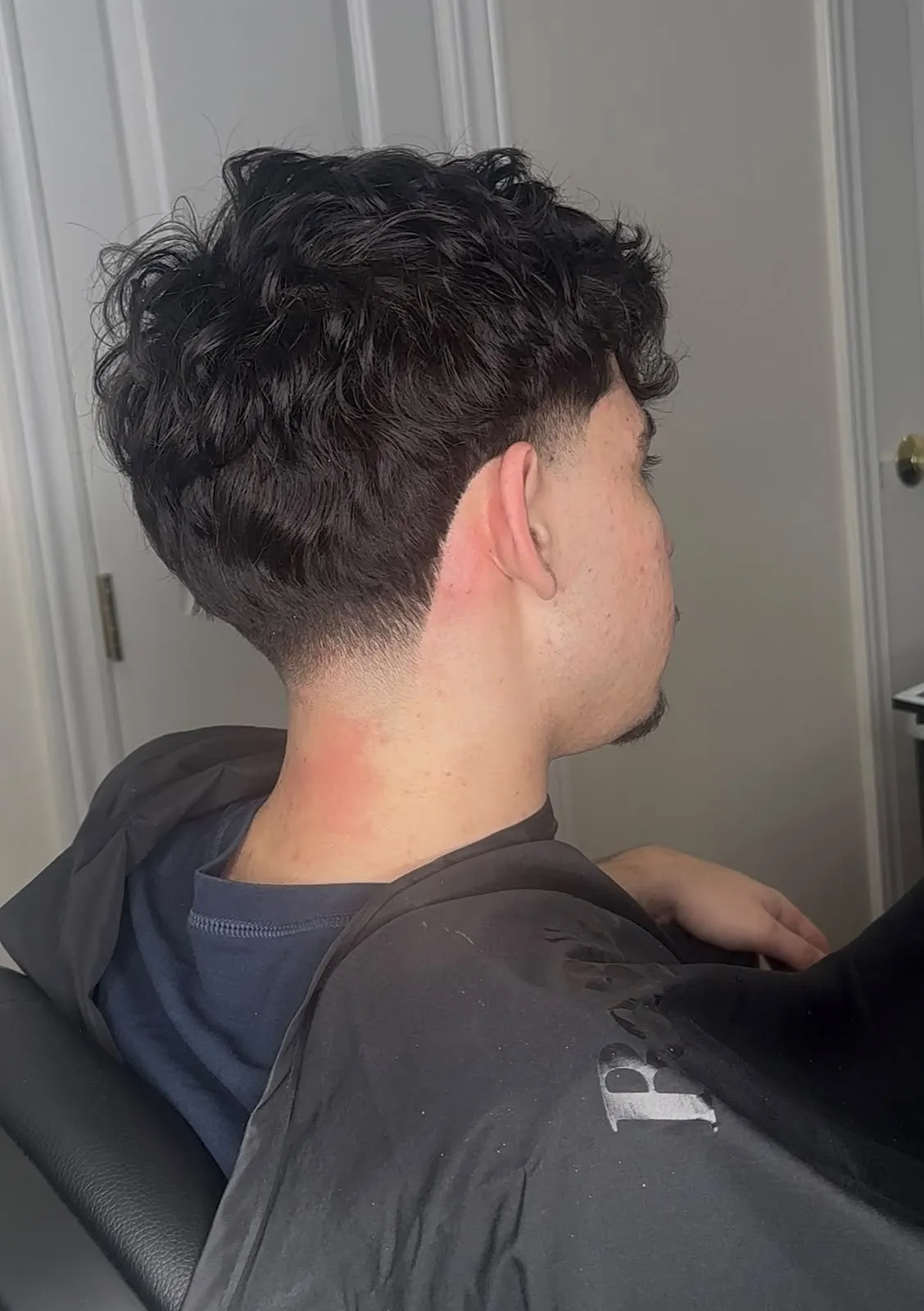
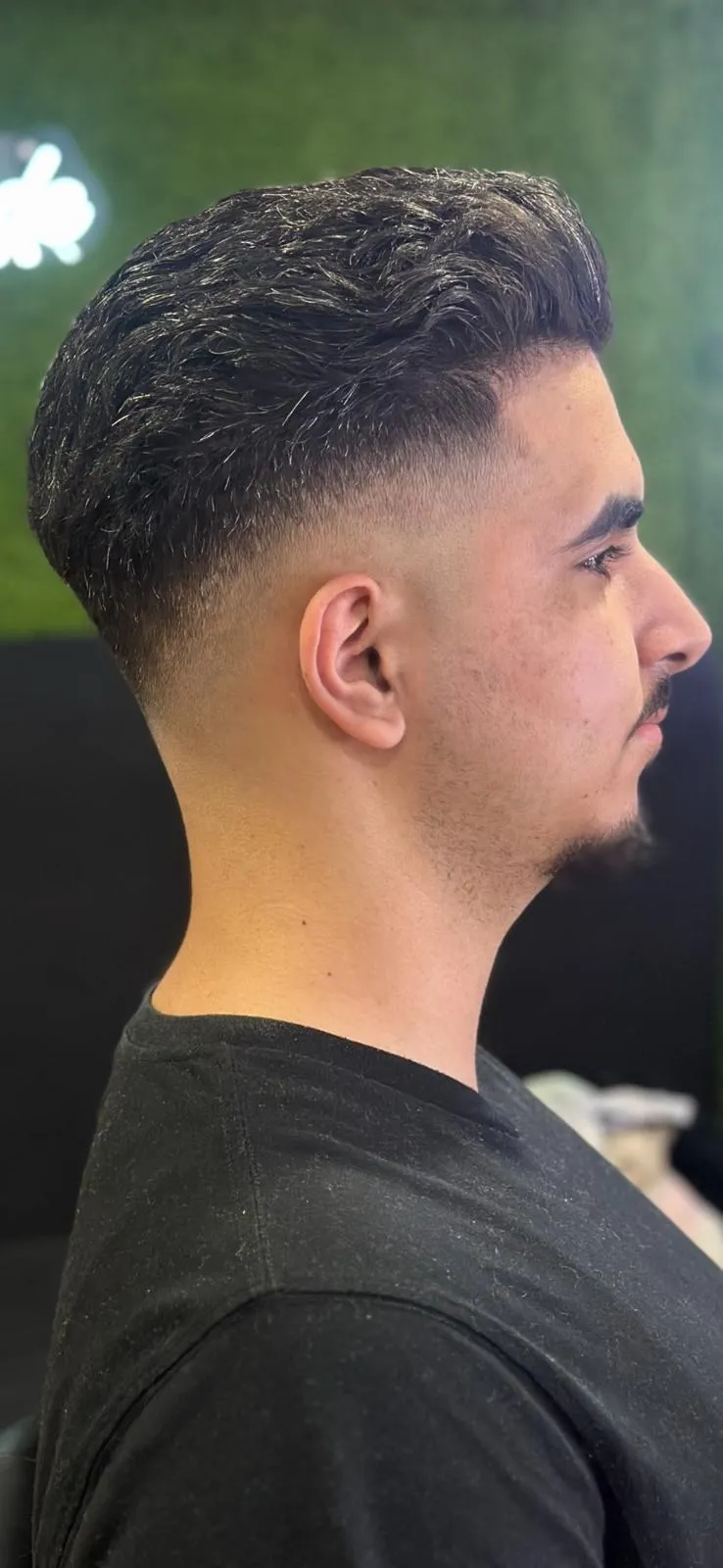
A fade on a bumpy head should stop below the uneven area, so the shortest hair is never sitting on top of a lump or dent. If a ridge runs across the back at mid height, a mid fade will draw a line straight across it; a low taper fade keeps the short section underneath.
Bumps at the top of the head are usually easy, because the top is longer anyway. Dents at the temples or behind the ears are the tricky ones, since that is exactly where fades are tightest. In those cases we keep the blend soft and a guard or two longer through that section.
How we cut around lumps and dents
Cutting around lumps and dents means adjusting the length locally rather than running one guard over the whole head. We map the unevenness first, then change technique over it.
- Feel the head during the consultation to locate ridges, lumps and dips, since they are often invisible under longer hair.
- Set the fade height below the lowest problem area.
- Over a raised lump, take a slightly shorter guard than the surrounding area so the hair surface stays flush instead of sticking out.
- Over a dent, leave a slightly longer guard or finish with clipper over comb so the hair fills the hollow.
- Check the silhouette from the side and back in the mirror under direct light before the lineup.
Cuts that suit a bumpy head
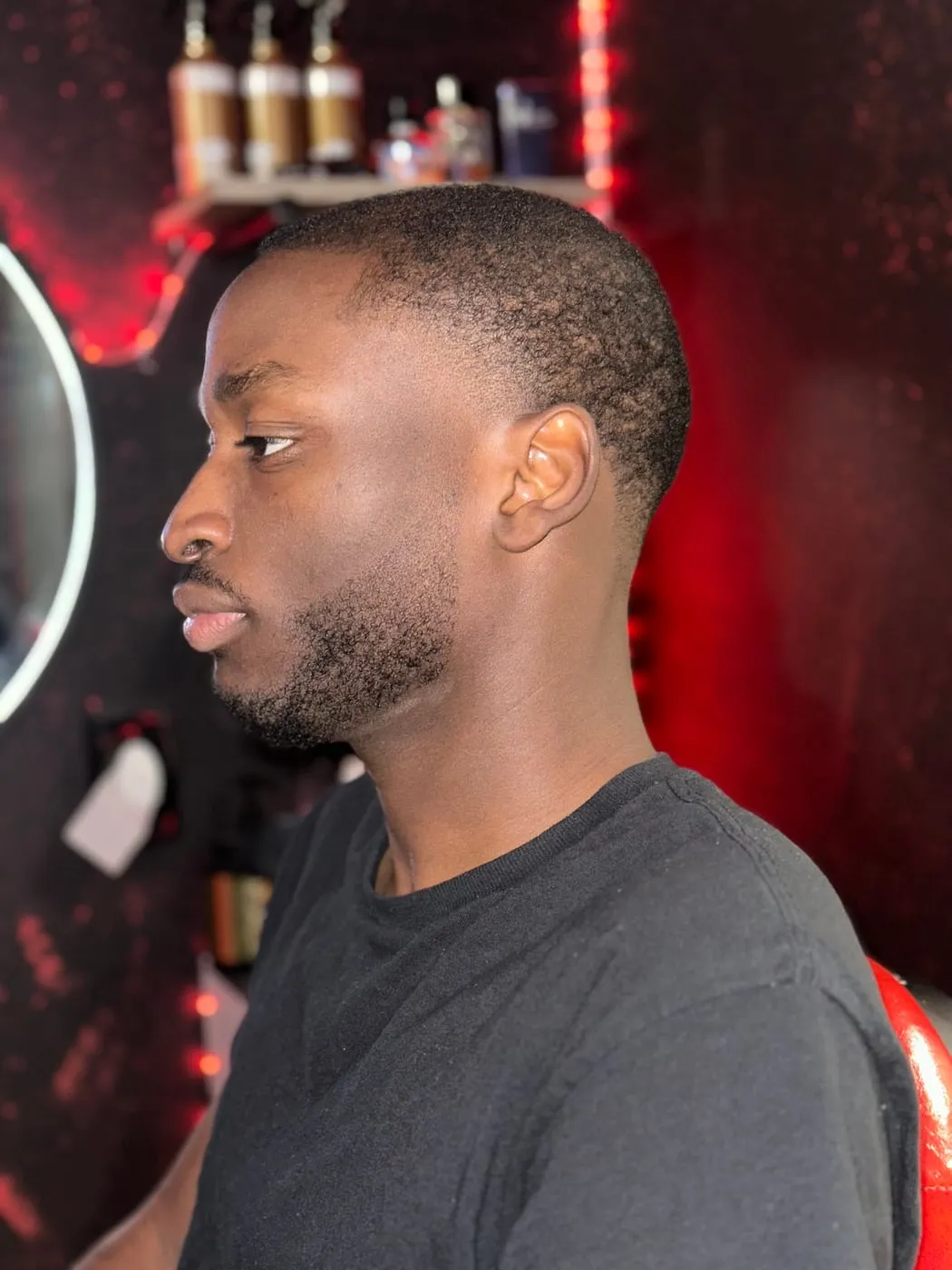
Cuts with a short but not skin-tight finish suit a bumpy head best, because they stay neat without exposing the skull.
- Crew cut at a No. 3 or No. 4 on the sides with a slightly longer top. See the crew cut.
- Textured crop with a low taper, which adds movement on top and hides a ridge along the crown.
- Ivy League or short side part, which keeps enough length everywhere to bridge small dents.
- Buzz cut at a No. 4, if you want one length all over. Try it before committing to a No. 2.
When to mention a bump to a doctor
Most bumps on the head are simply bone shape, and they have been there your whole life. If you notice a lump that is new, growing, tender or changing, have a doctor look at it rather than cutting around it.
We will point out anything we notice during a haircut, such as a mole or lump you may not be able to see, but a barber cannot tell you what it is. Only a doctor can.
Haircuts for a bumpy head: common questions
Can I get a buzz cut with a bumpy head?
Yes, but choose a No. 3 or No. 4 rather than a No. 1. Our buzz cut vs crew cut comparison helps if you want slightly more length on top.
Does a beard help distract from a bumpy head?
A beard draws the eye downward to the face, which makes the shape of the head less noticeable from the front. It does not hide bumps at the back, so length there still matters.
Is a bump at the back of my head normal?
The occipital bone at the back of the skull is a normal bump, and on some people it is more pronounced. A new or changing lump should be checked by a doctor.