
Hair & Beard Care
How to Use Hair Wax for Piecey, Pliable Texture
Short answer: To use hair wax, start with dry or nearly dry hair and take an amount smaller than a pea. Rub it hard between your palms until it softens and spreads thin, then rake it through the roots before pinching and twisting the ends into separate pieces. Wax stays pliable rather than setting hard, so you can push the shape around again later in the day with your fingertips.
Wax is for definition you can rework
Hair wax gives separation and flexible hold, which makes it the product for styles built from visible pieces rather than one smooth surface. Where pomade lays hair flat and shiny, and clay adds matte bulk, wax grips individual strands and holds them apart.
Most waxes are built on beeswax or a plant wax with some oil. That base never fully dries, so the hair can be moved again at lunch without adding more. The trade-off is weight: on very fine hair a heavy wax can drag the top down, and we would steer you toward hair clay or powder instead.
If you are unsure which of the three fits your cut, our pomade vs wax vs clay comparison lays out shine, hold and washability side by side.
How to use hair wax, step by step
Dry hair, a tiny amount and a thorough warm-up are the three things that make wax work. Skip any one of them and you get clumps.
- Dry your hair fully, or leave it only faintly damp. Blow dry the front upward or in the direction you plan to wear it, since wax holds shape better than it creates it.
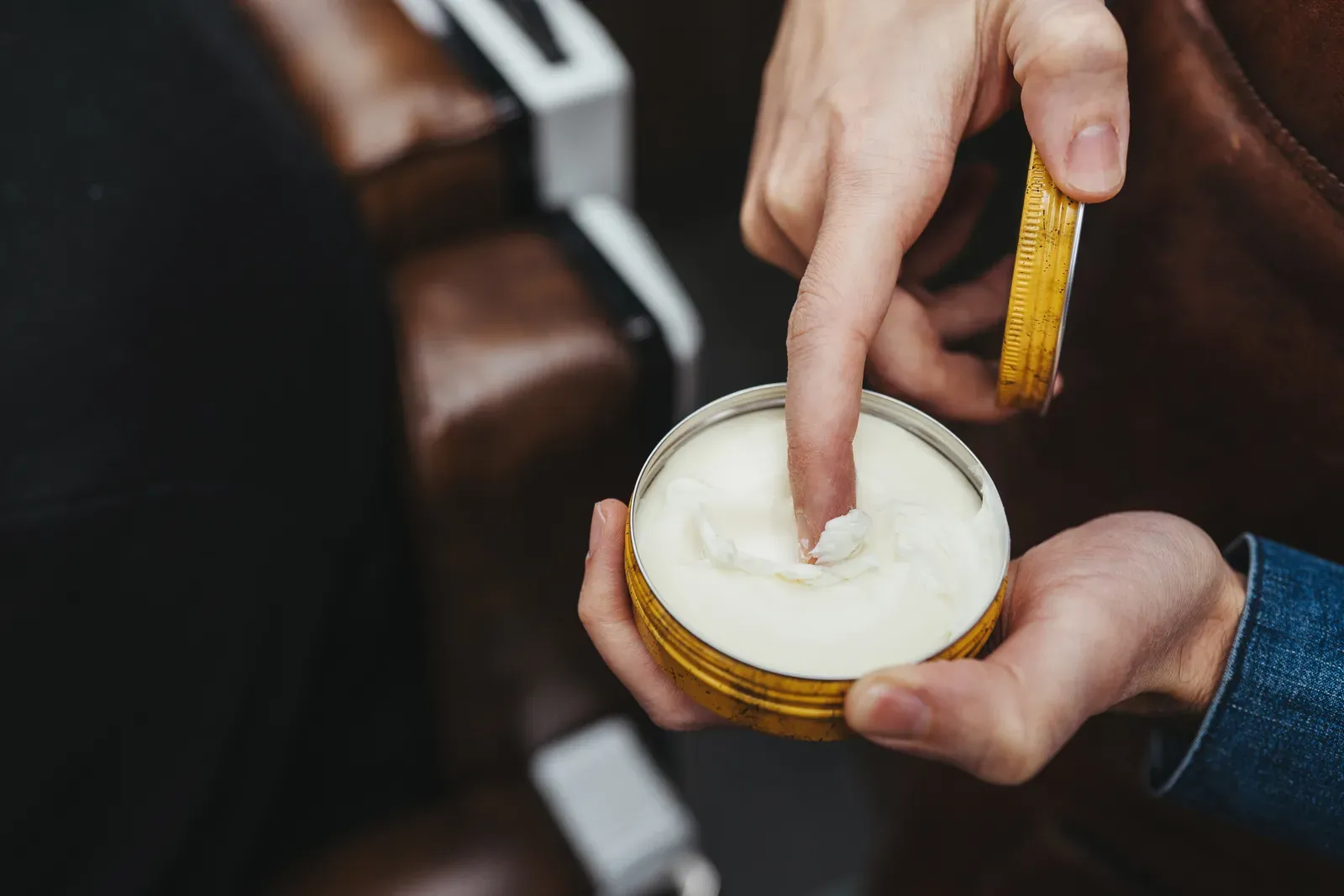
- Scrape out a portion smaller than a pea with the back of your thumbnail. Firm waxes come out in flakes; that is normal.
- Rub your palms together for 10 to 15 seconds, pressing hard, until the wax has turned soft and you can barely see it on your skin.
- Spread your fingers and rake through the hair from the crown forward, getting product to the roots before the ends.
- Pinch small sections between your thumb and forefinger and twist or pull them upward to separate pieces.
- Look in the mirror from both sides. Add a second, smaller amount only to any area that looks flat, never to the whole head.
Why warming the wax matters so much
Cold wax does not spread; it sticks to the first hairs it touches and leaves the rest bare. That is why a stiff product can look patchy and greasy at the fringe while the crown stays unstyled.
Working it between your palms raises its temperature enough to turn a firm paste into a thin film. In a cold Mississauga bathroom in January, or with a tin left in the car overnight, this takes longer. Hold the closed tin in your hands for a few seconds first, or run the back of it under warm water, and the warm-up becomes easy.
A good test: after rubbing, press your palms together and pull them apart. If you see strings or lumps, keep rubbing. If your hands just look slightly shiny, it is ready.
Separating pieces without making them greasy
Definition comes from your fingertips, not from extra product. Once the wax is distributed, the styling is all in how you handle the ends.
- For a textured crop, push the fringe forward with your palm, then pinch a few pieces at the front and flick them in slightly different directions.
- For a messy quiff, lift the front with open fingers, then twist the very tips of the tallest section so it looks piecey rather than solid.
- For wavy hair, scrunch gently instead of twisting, letting the wax outline each wave.
- To tame fly-aways on the sides, rub whatever is left on your palms flat over the surface. There is almost always enough left over.
Matching wax to your length and cut
Wax performs best on hair between about 3 and 10 cm (1 to 4 in) on top. Below that, there is not enough length to twist into pieces; above it, the weight starts to pull the style down by mid-afternoon.
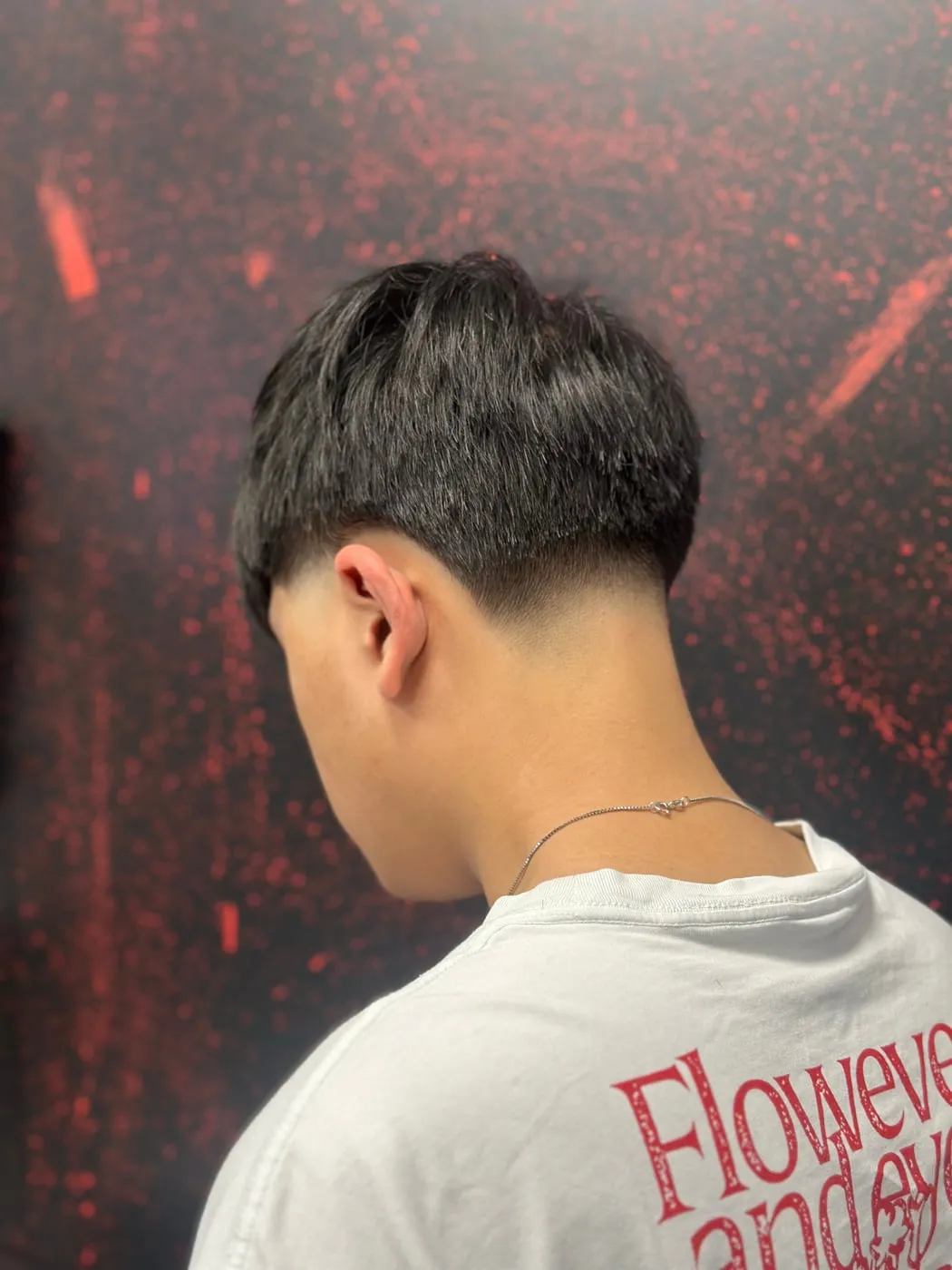
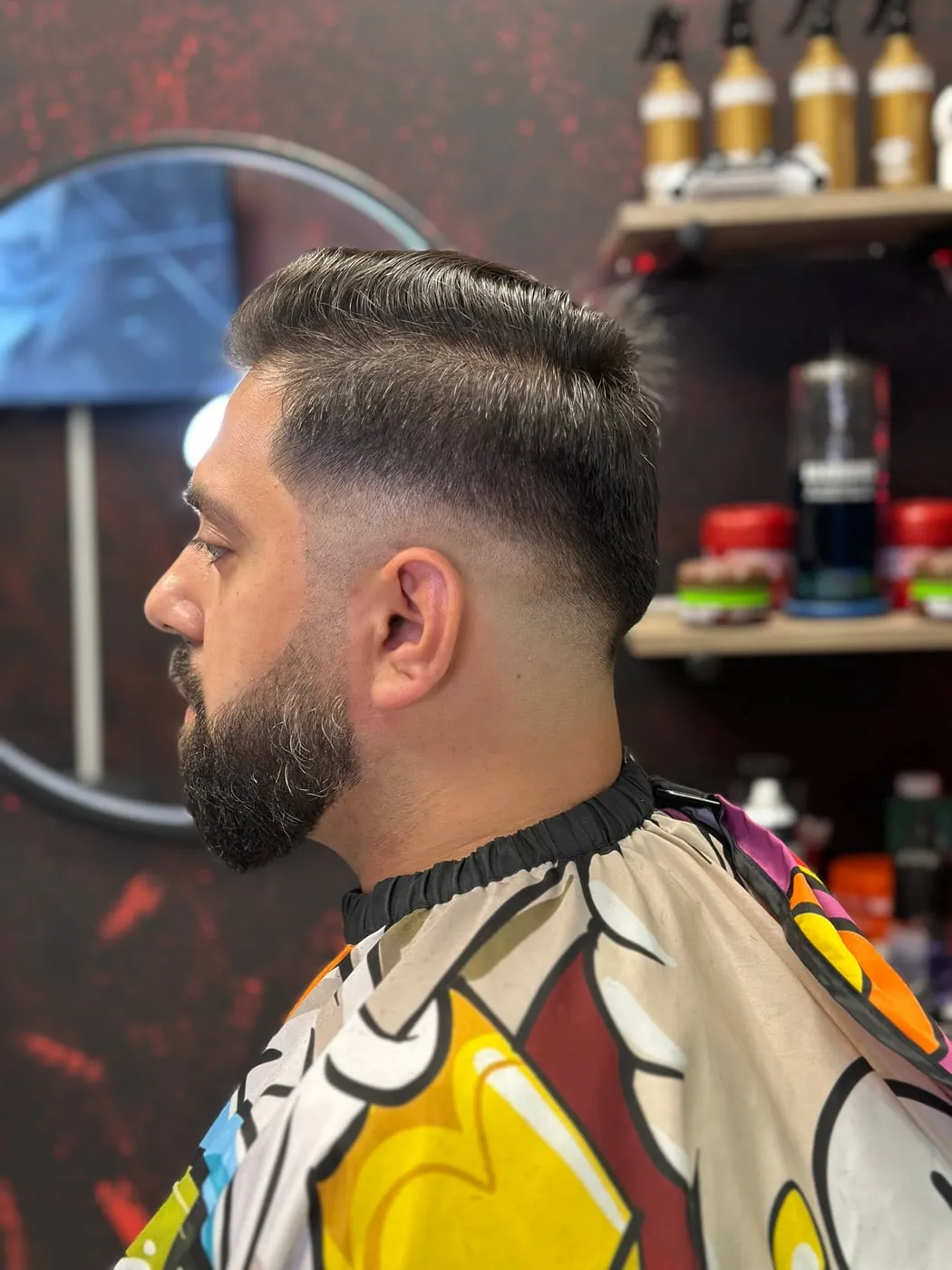
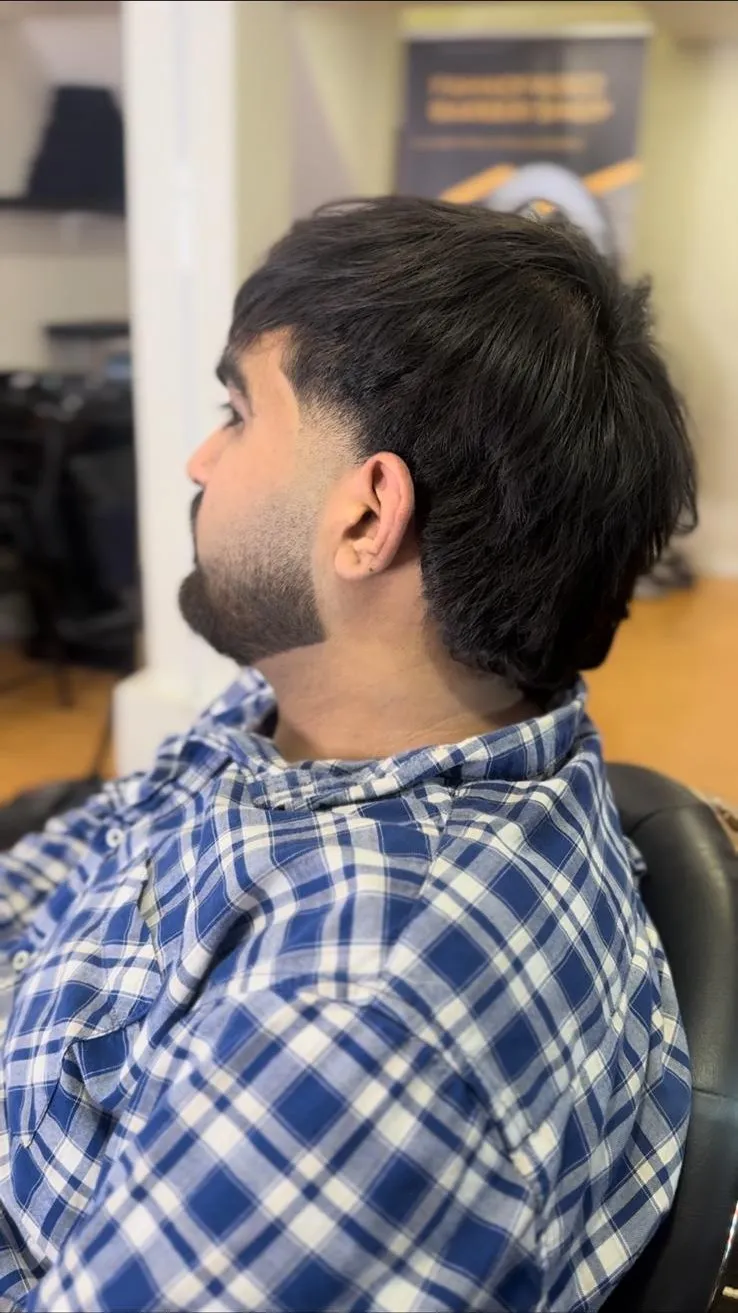
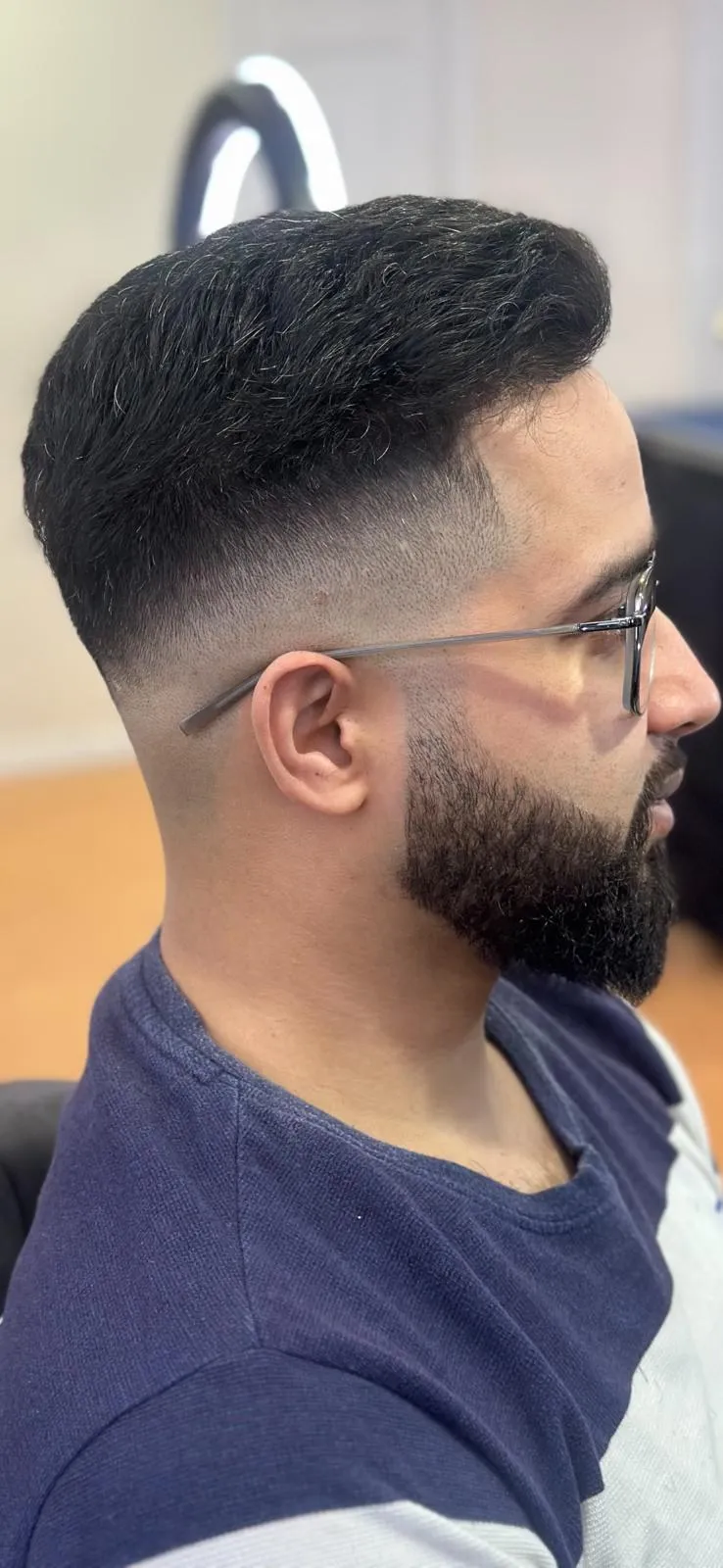
Cuts we often finish with wax include a textured crop, a short quiff and a choppy fringe. On a slick back or a sharp side part, where you want one polished surface, pomade does the job better. If you are not sure, ask during your cut and we will show you how much we used.
| Top length | Amount of wax | What to aim for |
|---|---|---|
| Under 3 cm | Skip it or use a trace | Powder or nothing looks cleaner |
| 3 to 6 cm | Half a pea | Short pieces pushed forward or up |
| 6 to 10 cm | One small pea | Twisted ends, movement at the front |
| Over 10 cm | Small pea, plus a pre-styler | Pair with a blow dry for lift |
Getting hair wax out at night
Wax is oily, so a single quick shampoo often leaves a coated feel. Wet the hair with warm water, lather once to break the wax down, rinse, then lather again and massage the scalp before rinsing thoroughly.
If you use a heavy wax daily, a clarifying shampoo once a week clears the build-up that makes hair look flat and dull. Follow with conditioner on the lengths only, since a coated scalp is the last place you want extra weight.
How to use hair wax: common questions
Can I put hair wax on wet hair?
You can on barely damp hair, but on wet hair the water stops the wax gripping and it slides off in streaks. Dry first for real hold.
How much hair wax should I use?
Less than a pea for most short cuts. It is far easier to add a second small amount than to rescue hair that has been overloaded.
Is hair wax bad for your hair?
Not in itself. Problems come from build-up, so wash it out properly and use a clarifying shampoo now and then if you style daily.
Why does my hair wax look greasy?
Usually too much product, or wax that was not warmed enough and went on in lumps. Blot with a dry towel, then restyle with just the residue on your hands.