
Barber Answers
What Is a Mature Hairline? How It Differs From Receding
Short answer: A mature hairline is the slightly higher, more defined hairline that most men develop from their late teens into their twenties, when the low, rounded hairline of boyhood moves up by roughly a finger-width and the temples take on a gentle M or V shape. It is a normal part of adult hair and, unlike a receding hairline, it usually settles and stays put.

What a mature hairline looks like
The typical mature hairline sits about 1 to 2 cm above where it did in childhood, with the change most noticeable at the temples. The centre often keeps a slight point or rounded front, while the corners move back a little, giving a soft M shape.
The hair along the edge stays fairly dense, and the line is roughly even on both sides. Some men keep an almost straight line; others get a more pronounced widow's peak as the corners rise. Both are within the normal range, and many people have a mature hairline without ever noticing it change.
Mature or receding? The signs to compare
The difference is whether the line stops moving and whether the hair behind it stays dense. A mature hairline shifts a modest amount and then holds; a receding hairline keeps moving back, often unevenly, and the hair near the front becomes finer and sparser.
| Sign | Mature hairline | Receding hairline |
|---|---|---|
| How far it moved | About a finger-width | Keeps moving over months or years |
| Temples | Soft, shallow corners | Deepening corners, often uneven |
| Density at the edge | Similar to the rest of the hair | Finer, lighter, see-through hairs |
| Crown | Unchanged | May also start thinning |
| Timeline | Settles by early to mid twenties | Can begin at any adult age and continue |
A simple way to track it at home
Photos are more reliable than memory. Take the same shot every few months, in the same light, with your hair pushed straight back, and compare the temple corners and the density along the front.
- Stand facing a window, hair wet or pushed back off the forehead.
- Take one front photo and one from each side at temple level.
- Repeat every three to six months under the same conditions.
- Compare the corners and how much scalp shows through the front 2 cm of hair.
When to talk to a doctor
A doctor or dermatologist is the right person if the line keeps moving back, if you see thinning at the crown too, or if hair loss is sudden, patchy, itchy, painful or accompanied by redness or scaling. Those are signs of something other than a normal mature hairline, and some causes are treatable, particularly when caught early.
A barber can tell you what we see on your head and how it has changed between visits, which is useful information to bring to that appointment, but we cannot diagnose hair loss. Anything that feels like more than a haircut question deserves a medical opinion.
Haircuts that suit a mature hairline
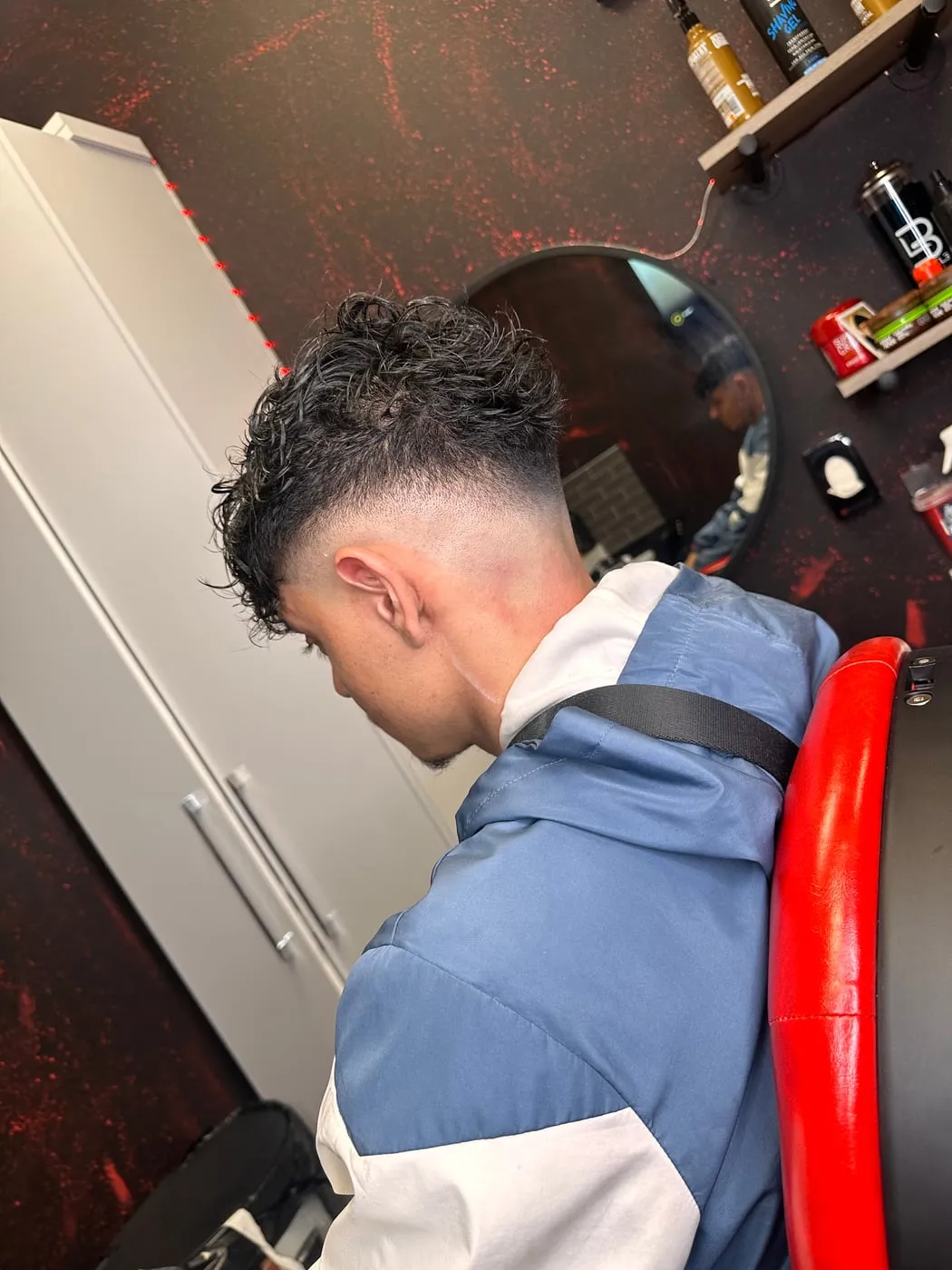
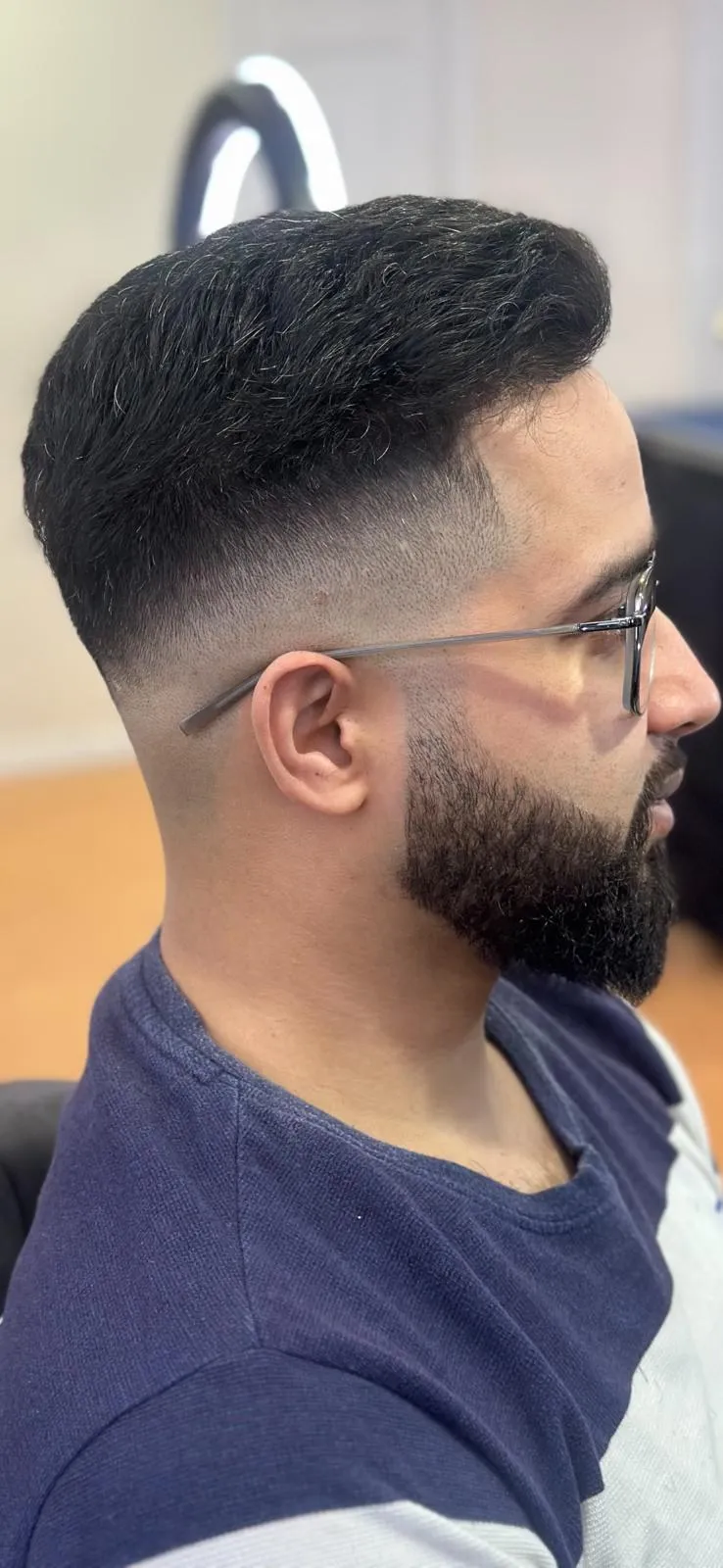
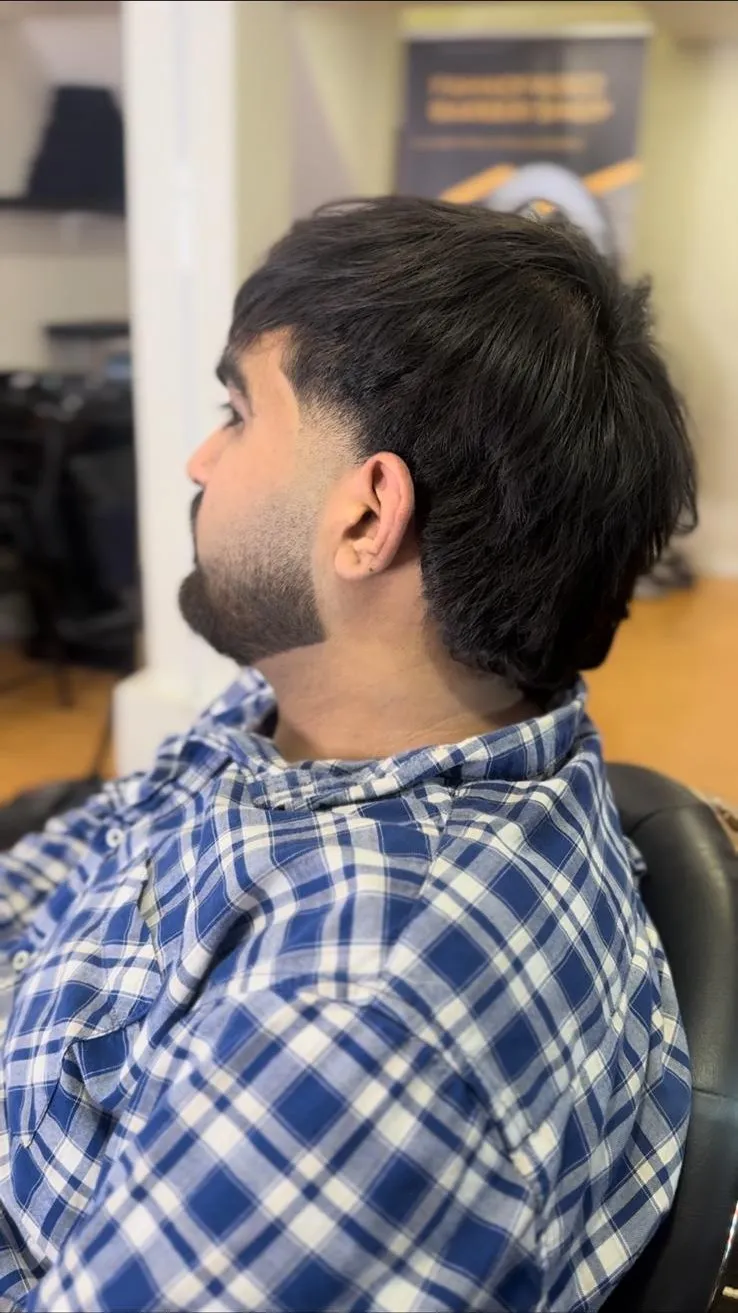
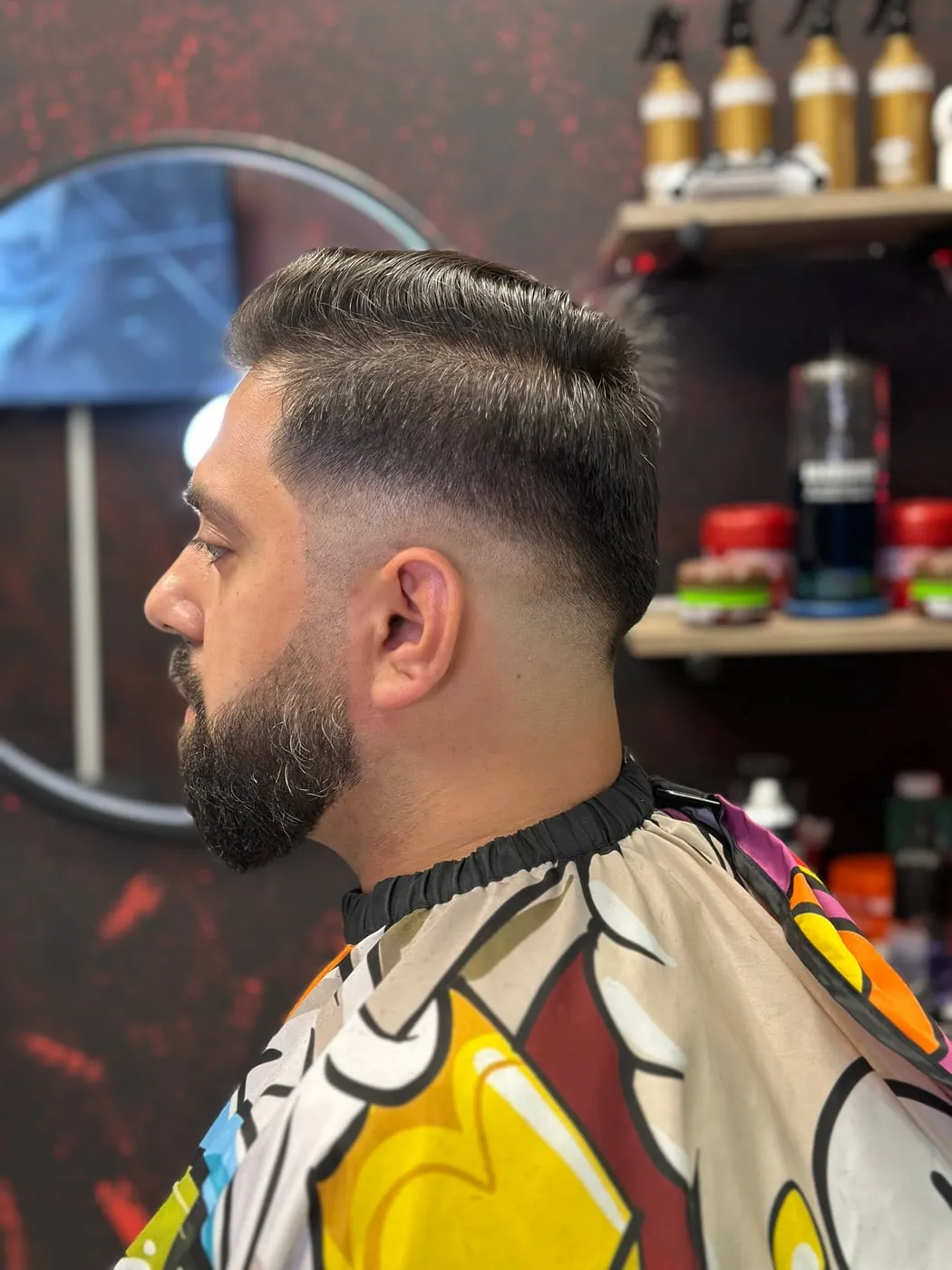
Most cuts work, because a mature hairline is not a problem to hide. The goal is to frame the new shape rather than fight it, which usually means some texture at the front and shorter, cleaner sides that keep the eye from the corners.
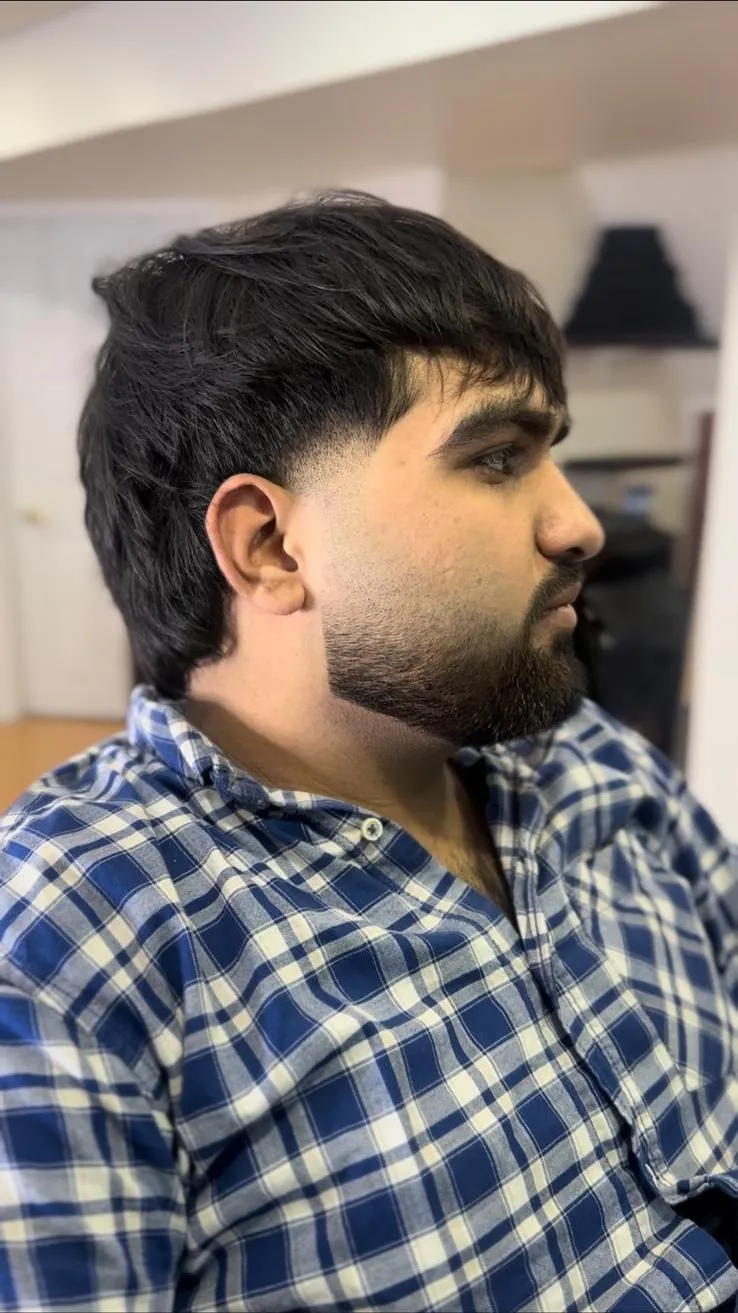
- A textured crop, which puts movement across the front and softens the temples.
- A classic side part or Ivy League cut, which looks sharp with a slightly higher line and suits offices.
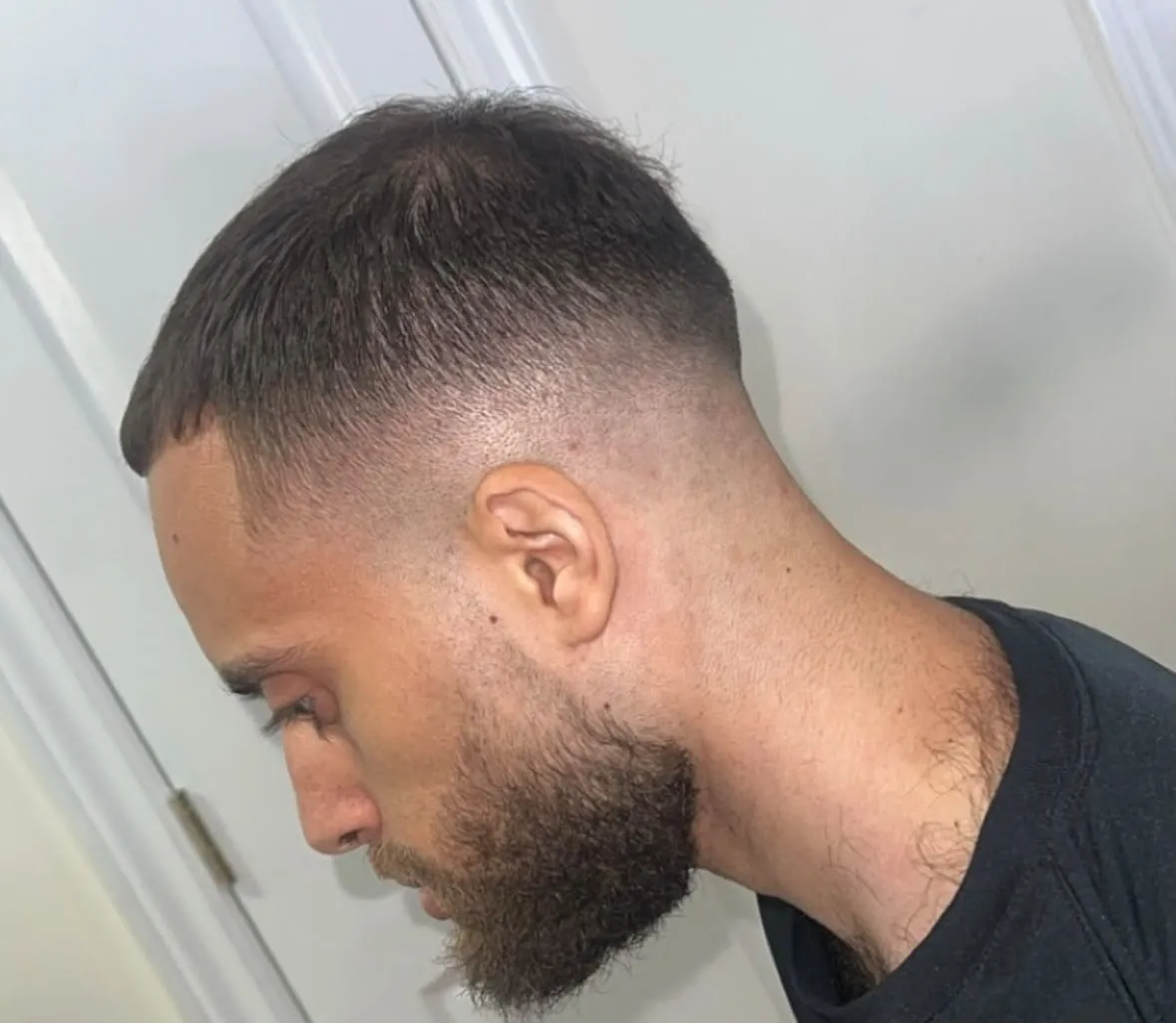
- A quiff or brushed-up front with a mid fade, where lifting the hair makes the higher line look deliberate.
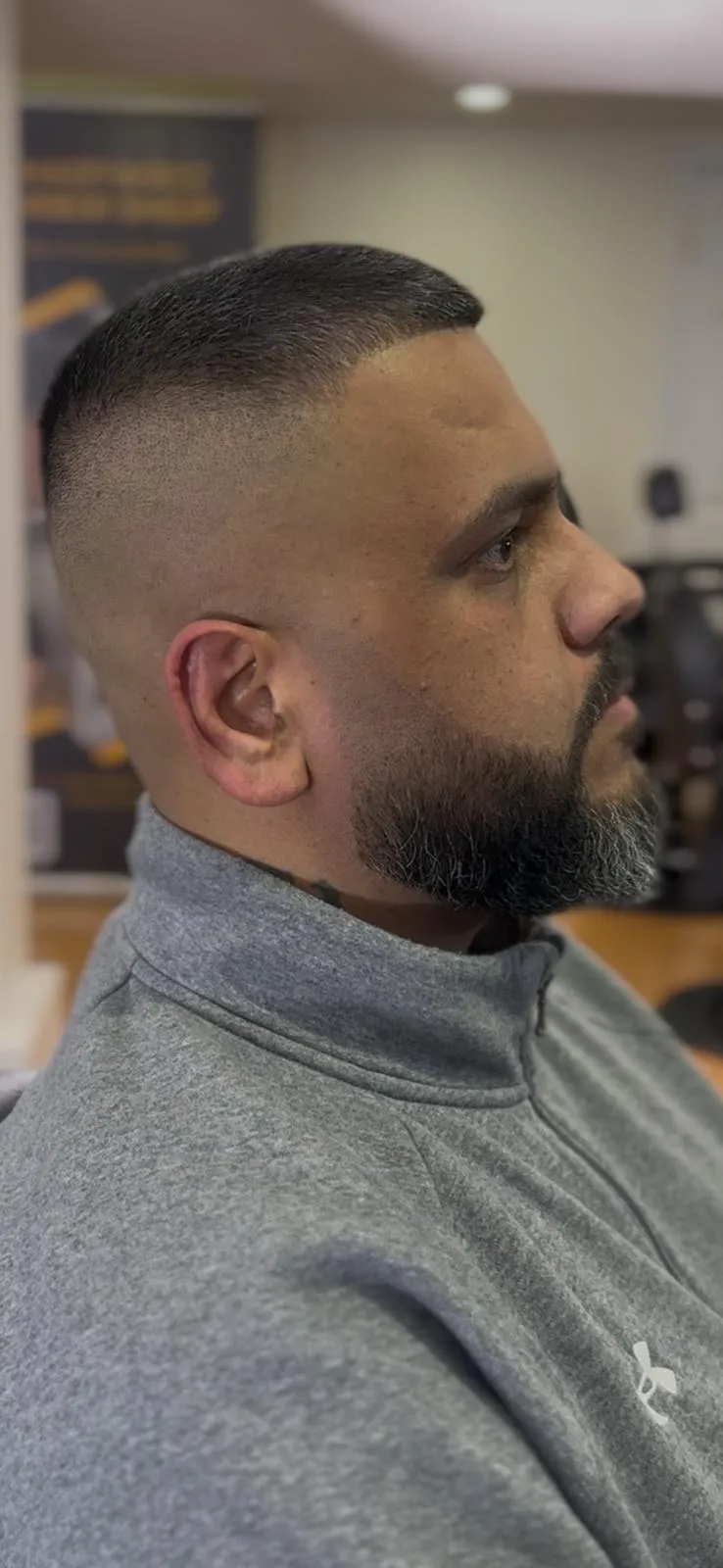
- A crew cut, short and tidy with no heavy fringe that would make the corners look deeper.
- Slicked straight back only if the corners are shallow, since it shows the whole hairline at once.
How we handle the lineup
With a mature hairline we sharpen the natural edge and never draw a new one in front of it or behind it. Squaring off rising temples with a hard, straight line tends to make the corners look deeper, so we usually keep them softer and slightly rounded.
Every cut at Markcutit starts with a consultation, and this is where to mention if you are worried about your hairline. We will show you in the mirror what we see and suggest a cut that suits it; book a Haircut Only through our scissor cuts service or a fade if you prefer shorter sides. If your line is moving further, see our guide on haircuts for receding hairlines.
What is a mature hairline: common questions
At what age does a mature hairline appear?
It commonly develops between the late teens and mid twenties, though the timing varies. Some men see the change so gradually they only notice it in old photos.
Can a mature hairline turn into balding?
A mature hairline by itself does not mean you will go bald. If the line keeps receding or the crown starts thinning, that is a separate process worth discussing with a doctor.
Should I grow a fringe to cover it?
There is no need to hide a mature hairline, and heavy fringes can look forced. Light texture falling forward is usually more flattering than a thick curtain of hair.