
Barber Answers
Haircut With Scalp Micropigmentation: Matching the Length to the Dots
Short answer: A haircut with scalp micropigmentation works when the real hair is kept at the same short length the pigment dots imitate, usually a close clipper cut with no guard or a very short guard, so the two read as one texture. The barber should follow the tattooed hairline rather than cut a new one, keep the sides and beard in proportion, and you should protect the pigment from sun between cuts.

The cut is there to hide the difference between hair and pigment
Scalp micropigmentation, usually shortened to SMP, places thousands of tiny dots of pigment in the scalp to look like the shadow of freshly cut hair follicles. It only looks convincing when the real hair around and among those dots is about as short as a follicle shadow. Let the hair grow out and the natural hairs start to stand above the dots, so the tattooed areas suddenly look flat by comparison.
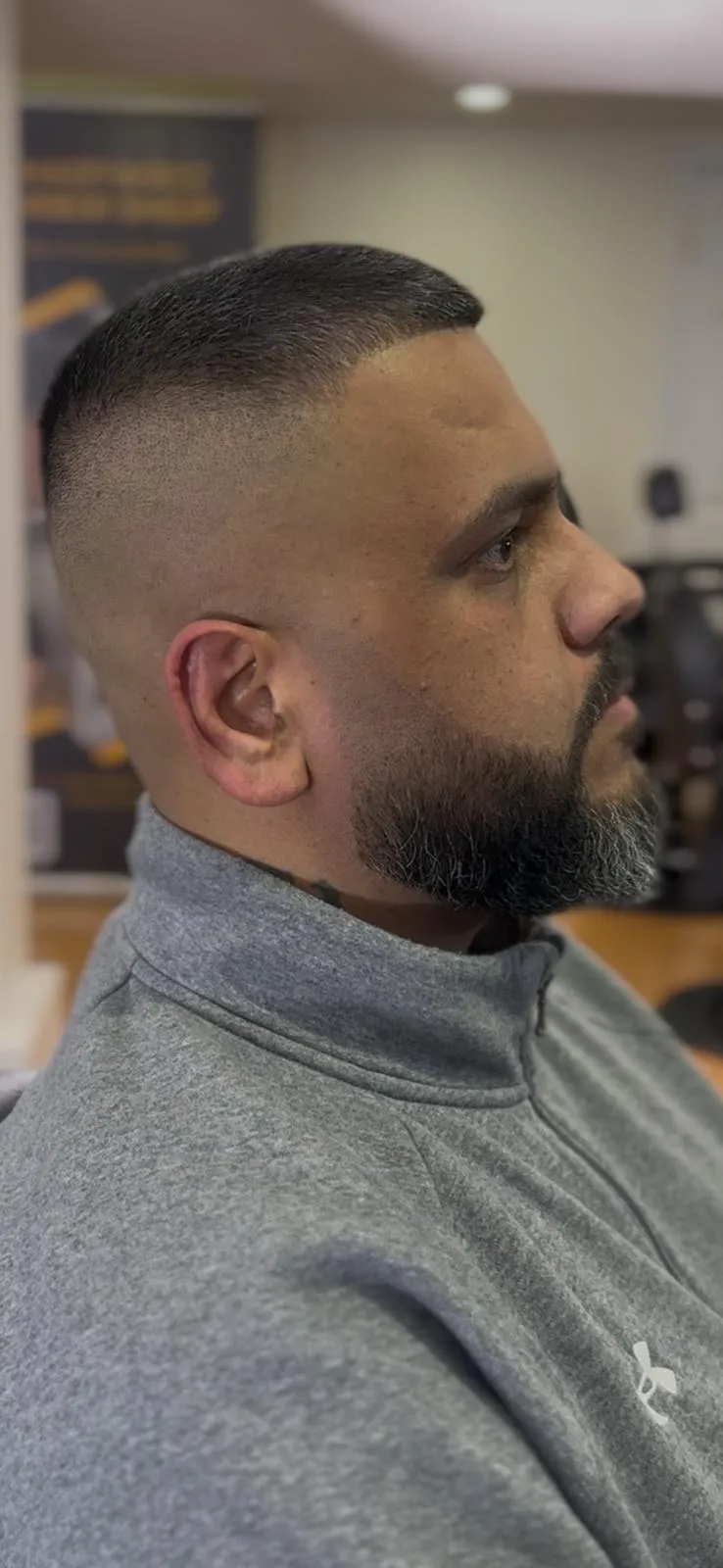
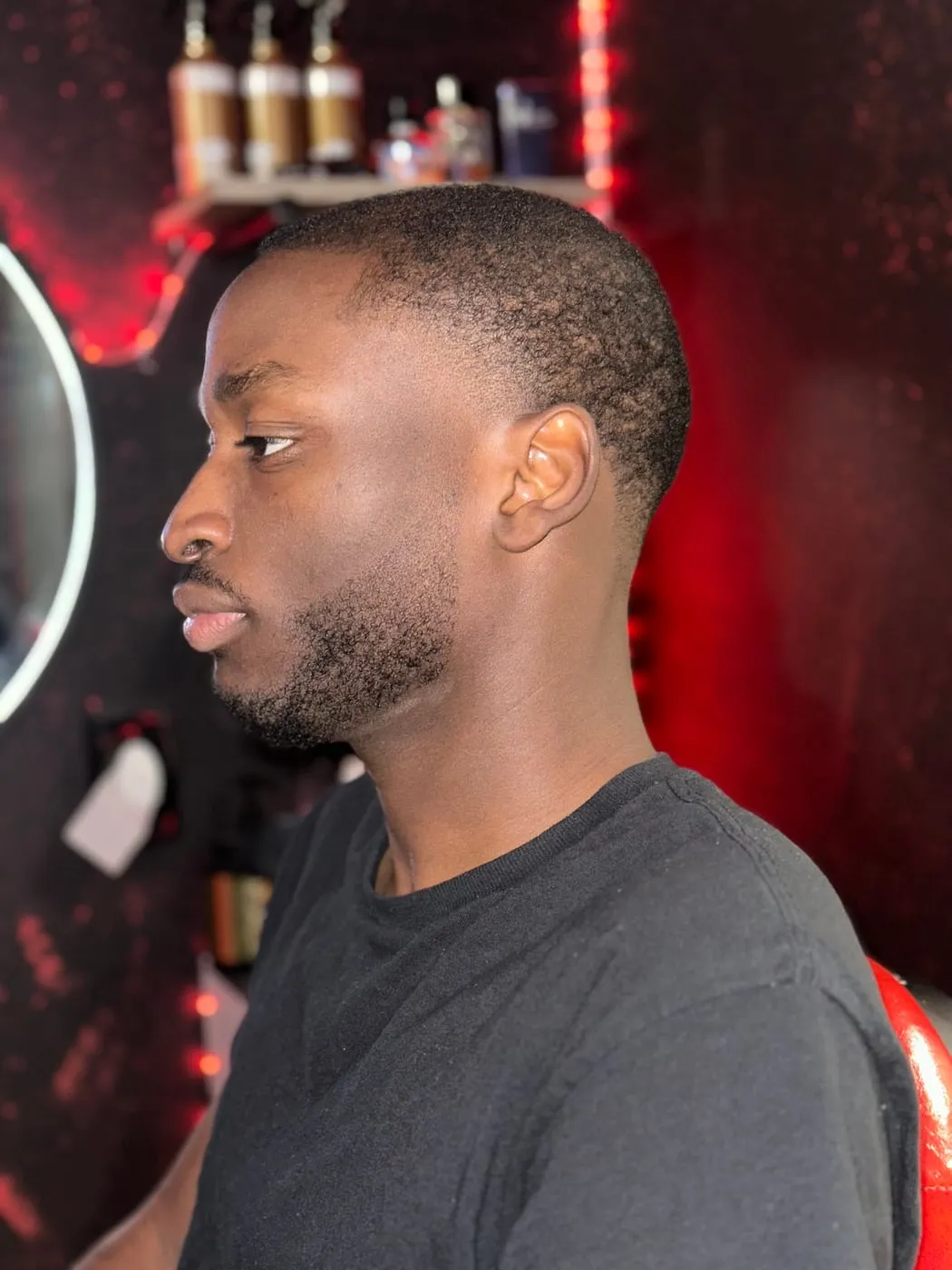
That makes the barber's job narrower than on most cuts. Instead of shape and texture on top, the goal is an even, very short length over the whole head, a clean outline and a beard that matches the scale. Think of it as maintaining a buzz cut with less room for error.
Which clipper length matches SMP
Most people with SMP wear their hair somewhere between a bare clipper and a number 1, and the right answer is whatever length your practitioner designed the dots to imitate. Ask them directly; many will tell you the exact look they had in mind. Then bring that information to your first cut and we will test a length on the back before committing to the whole head.
Hair colour and density matter as much as the guard number. Dark, dense hair shows up strongly even at a short length, so it often needs to be kept closer to match the dots. Lighter or greying hair can sit a little longer before it separates from the pigment.
| Length | What it looks like with SMP | Suits |
|---|---|---|
| Foil shaver or razor | Pigment carries the whole look; skin shows between dots | Fully bald patterns where the SMP was designed as a shaved finish |
| Bare clipper, no guard | Stubble shadow, close to what most SMP imitates | The most common match for full-head SMP |
| Number 0.5 (about 1.5 mm) | Slightly softer, more visible real hair | Density SMP on a head that still has a lot of hair |
| Number 1 (about 3 mm) | Real hair clearly visible; can outgrow thin dot areas | Only if the practitioner designed for it |
Why the hairline must follow the pigment
Your SMP hairline is drawn into the skin, so it is the one line on your head that cannot be moved. A barber who runs a razor or trimmer up the forehead to create a sharper edge risks cutting away real hairs that sit in front of the pigment, leaving a gap, or leaving real hairs that sit ahead of the tattooed line. Either way the illusion breaks.
When we line you up, we trace the edge the practitioner created and only clear stray hairs outside it. The same caution applies around the temples, which are often softened deliberately with sparse, feathered dots. Our page on whether your barber should push back your hairline explains why that rule matters for everyone, and doubly so with SMP.
If the pigment is new, ask your practitioner how long to wait before a clipper, razor or hot towel touches the treated area, and follow their aftercare. We will not work on freshly treated skin.
Balancing the sides, back and beard
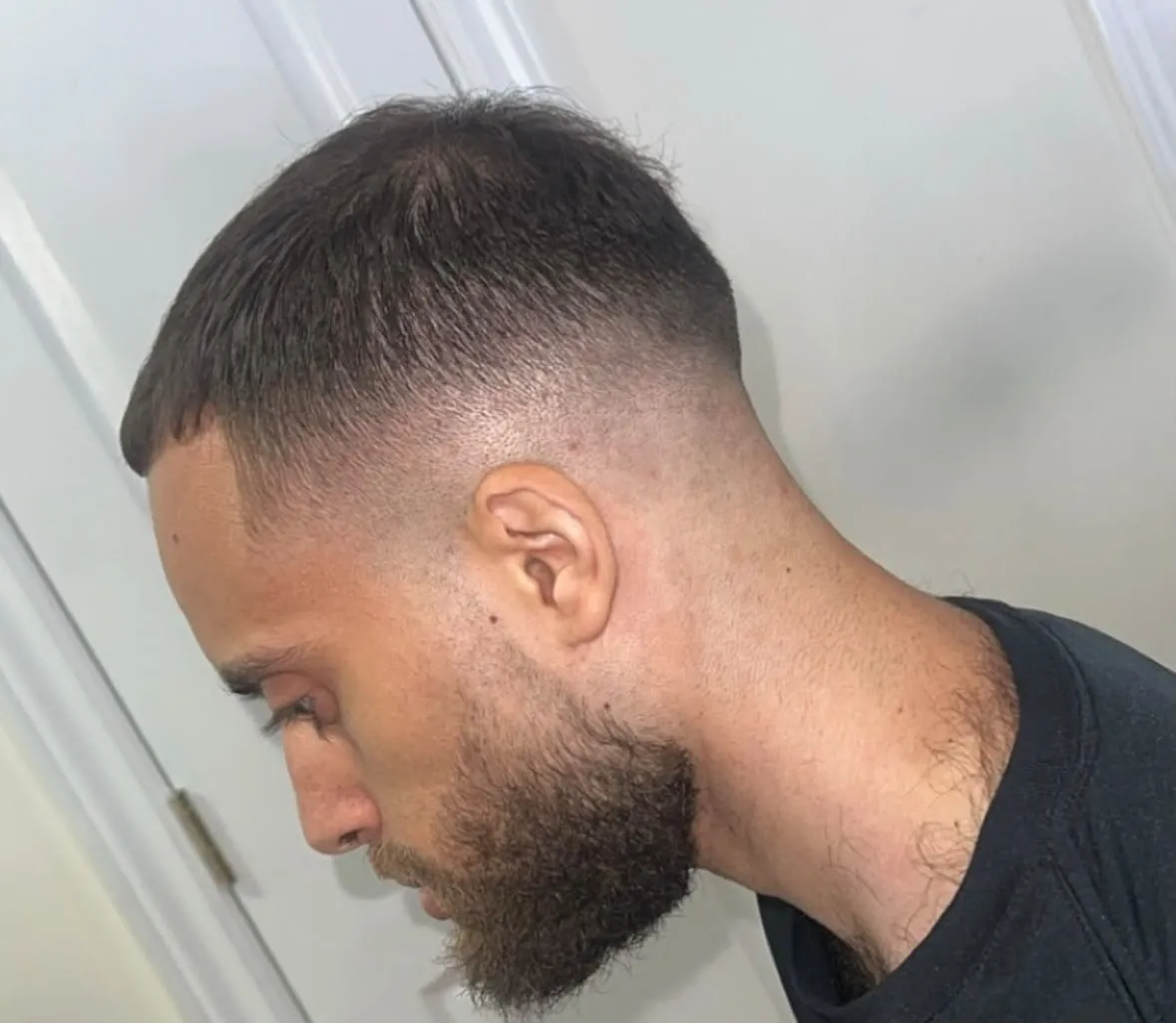
The whole head should read as one length, so the sides and back are usually taken to the same guard as the top. A faded back and sides can work with SMP, but only when the top is so short that there is little contrast to fade from. A skin fade into a bare-clipper top is a subtle way to add shape without breaking the match.
Beards need attention too. A thick, long beard under a near-bare head can look out of scale, while a short boxed or stubble beard ties everything together. Our guide to going bald with a beard covers proportion for very short heads, and booking Haircut + Beard lets us set both to match on the same visit.
Keeping the match between visits
Hair grows a little over a centimetre a month, so a length that matches perfectly today looks noticeably different in two weeks. That is why most SMP wearers see a barber every week or two, or keep it down at home between visits.
- Use the same clipper setting every time at home, and let the barber handle the outline so the hairline edge never drifts.
- Wear sunscreen on the scalp or a hat in strong sun; UV exposure is one of the things that fades tattoo pigment over time, and Ontario summers are long enough for it to matter.
- Moisturize the scalp with a fragrance-free lotion, because dry, flaky skin dulls the dots.
- Avoid harsh scrubs on the treated area unless your practitioner says they are fine.
- If the dots start to look blurry, greyish or patchy, talk to your practitioner about a touch-up rather than trying to hide it with a longer cut.
Haircut with scalp micropigmentation: common questions
Can a barber tell I have scalp micropigmentation?
Usually, yes, up close, but a good barber will simply cut around it. Telling us at the start saves time and makes sure nobody reshapes your hairline.
Does a hot towel affect scalp micropigmentation?
On healed SMP, a warm towel is generally fine. On new pigment, follow your practitioner's aftercare, which usually restricts heat and moisture for a period.
Can I grow my hair out if I have SMP?
You can, but the treated areas will show more as the real hair lengthens. Speak to your practitioner before you commit, since density SMP under longer hair is a different design from a shaved look.
How is SMP different from hair fibres?
SMP is a tattoo, so it is semi-permanent and needs no daily application. Hair fibres cling to existing hair and wash out, so they suit longer thinning hair rather than a close crop.