
Face Shape & Hair Type Guides
Haircuts for Dry Hair: Cuts and Habits That Calm Frizz
Short answer: Dry hair looks best in cuts that keep some weight and are trimmed often enough to remove rough, split ends. Scissor-cut crops, medium-length cuts with blunt ends, curly tapers and short, even cuts all suit it. Avoid heavy thinning and razor-cut ends, which rough up the tips and add frizz. Pair the cut with gentler washing, conditioner every wash and a leave-in or light oil.
Why the cut matters for dry hair
Dry hair frizzes because its outer layer, the cuticle, is lifted and rough, so it absorbs moisture from the air unevenly and catches against neighbouring strands. The oldest part of every hair, the end, is also the driest and most damaged part.
A haircut helps in two ways. It removes those damaged ends, which are where most visible frizz lives, and it can shape the hair so the strands lie together instead of separating. It cannot change your hair's natural texture or how it reacts to humidity, but the right cut makes a big difference to how dry hair behaves day to day.
Cuts that suit dry, frizz-prone hair
Each of these keeps the ends healthy or the weight where dry hair needs it.
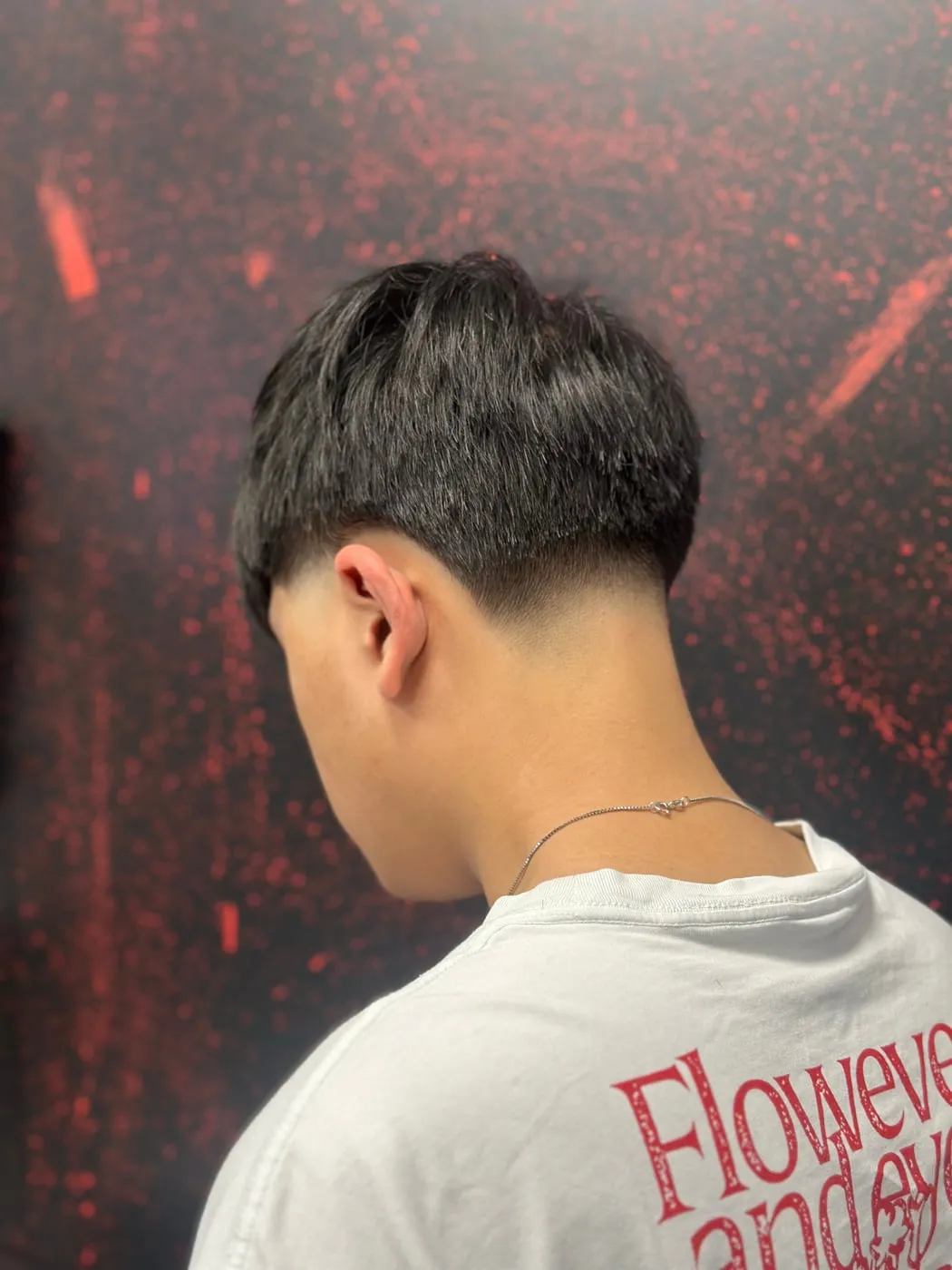
- Scissor-cut crop, 3 to 6 cm on top: short enough that the ends are always fairly new, long enough to style.
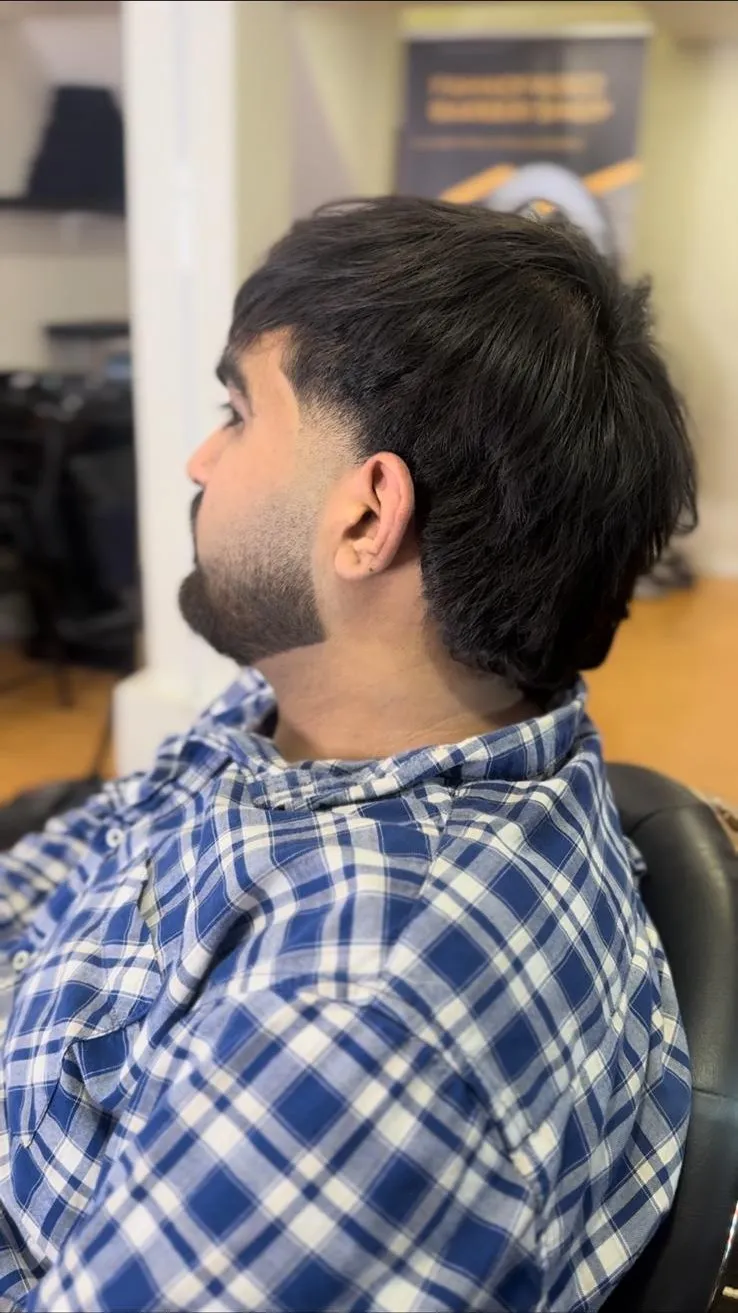
- Medium-length cut with blunt ends: a solid perimeter keeps the strands together, so frizz reads as texture rather than fuzz.
- Curly taper or low fade under a curly top: keeps curls long enough to clump, which reduces frizz; see the curly fade.
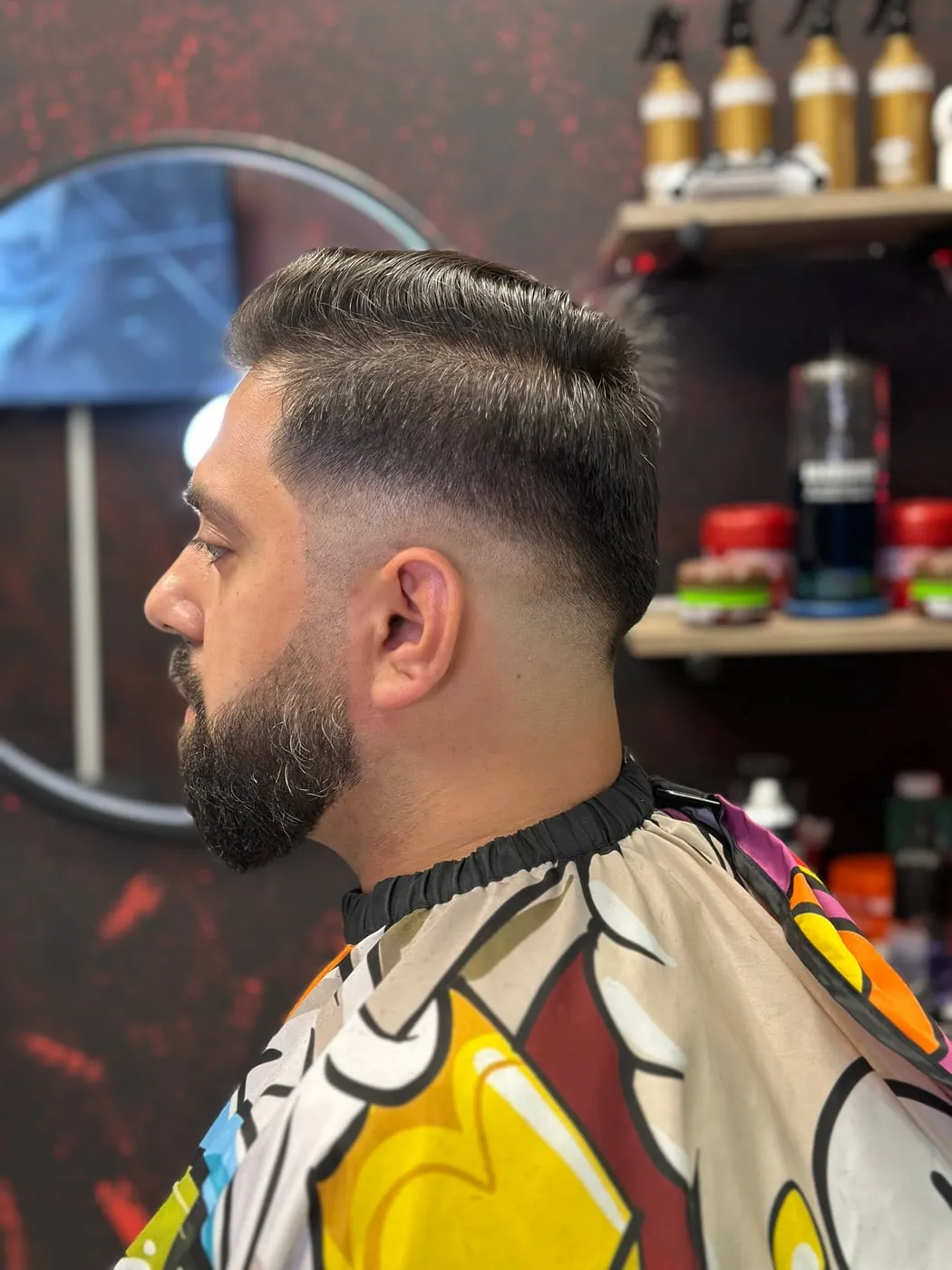
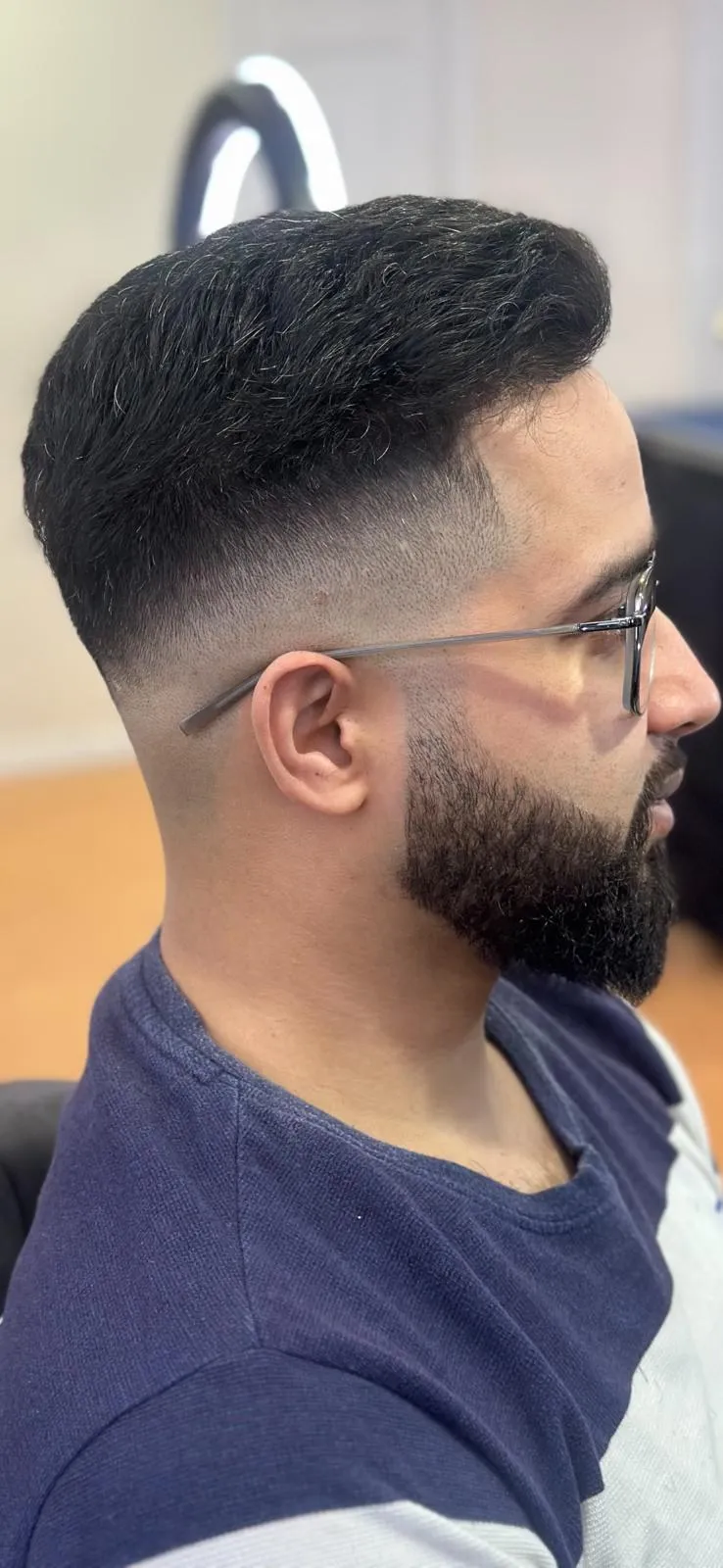
- Short, even cut such as a crew or Caesar: the least dry length to manage.
- Buzz cut: the simplest answer if you are tired of fighting it, since there are no old ends at all.
What to avoid in the chair
Some techniques that suit healthy hair make dry hair worse. Heavy thinning with texturizing shears leaves lots of short, loose ends inside the hair, and on dry hair those short pieces stick out as frizz. Ask for texture to be added with point cutting in small amounts, or not at all.
Razor cutting through the ends gives a soft, feathered finish on healthy hair but can fray dry or fragile ends. For dry hair we usually cut the ends with scissors instead. Very long gaps between cuts are the other common mistake: once split ends have travelled up the strand, more length has to come off to clear them.
How often to trim dry hair
Match the trim schedule to the length of the cut.
- Short cuts with faded or tapered sides: every 3 to 4 weeks, which also clears the ends on top.
- Crops and medium-length cuts, 4 to 10 cm on top: every 5 to 6 weeks, taking a small amount off the ends each time.
- Longer hair past the ears: every 6 to 8 weeks, removing about 1 cm to keep splits from travelling.
- Curly hair: shape the curls dry every 6 to 8 weeks, with side tidy-ups in between if you wear a fade.
Habits that support the cut
A cut buys you a head start, and daily habits keep it. Shampoo two or three times a week with a gentle formula rather than daily, condition every time you shampoo, and blot rather than rub with a microfibre towel or cotton T-shirt. A leave-in conditioner or a few drops of a light oil on damp ends seals in moisture; our guide to fixing frizzy hair covers the full routine.
Ontario weather adds its own pressure. Heated indoor air and toques dry hair out from November to March, and chlorine and sun do the same in summer. A weekly deep conditioner in those months helps, as does a rinse after swimming.
If your hair suddenly turns much drier, starts breaking easily or sheds more than usual, see a doctor or dermatologist, since that can have causes a haircut will not touch.
What to ask your barber
Tell us your hair feels dry or frizzy before we start, and say how you wear it at home. We will cut the ends with scissors, go easy on thinning and check how the hair sits after the wash. Every service includes a hair wash, which also lets us see how your hair behaves once it is clean.
A useful phrase: 'My hair gets dry and frizzy, so please take off the damaged ends, keep some weight in it and do not thin it heavily.' Book as Haircut Only through our scissor cuts service.
Haircuts for dry hair: common questions
Does cutting dry hair make it healthier?
It removes the damaged ends, so the hair you have left looks and feels healthier. It does not change the hair that grows from the scalp.
Is short hair better for dry hair?
Short hair is easier because the ends are always new, but dry hair can be worn longer with regular trims and good conditioning.
Should I use hair oil every day?
A few drops on damp ends is fine daily. More than that can make hair look greasy, especially if it is fine.
Does blow-drying make dry hair worse?
High heat can. Use a medium setting, keep the dryer moving and finish on cool, or let hair air dry most of the way first.