
Hair & Beard Care
Rosemary Oil for Hair: What the Evidence Shows and How to Use It Safely
Short answer: Rosemary oil for hair has limited but real evidence behind it: one small 2015 trial found men with pattern hair loss who used it for six months saw hair count increases similar to a group using 2% minoxidil. That is a single study, not proof it works for everyone. If you try it, always dilute it in a carrier oil, patch test first, and see a doctor or dermatologist about hair loss.
What the one well-known trial actually found
The evidence most often quoted for rosemary oil is a randomized trial published in the journal Skinmed in 2015. It compared rosemary oil with minoxidil 2% in 100 people with androgenetic alopecia, the common pattern hair loss, split into two groups of 50 and followed for six months.
Neither group showed a significant increase in hair count at three months. By six months, both groups did, and the difference between them was not statistically significant. Scalp itching went up in both groups, more often with minoxidil. Dry hair and dandruff did not change significantly in either group.
That is a genuinely interesting result, and it is why the oil became popular. It is also narrower than the way it is usually repeated online.
What that evidence does not show
One trial is a starting point, not a settled answer. Before you treat rosemary oil as a proven hair-loss treatment, keep these limits in mind:
- It was a single study of 100 people over six months. Larger and longer trials would be needed to be confident about the effect and who it works for.
- The comparison was with 2% minoxidil. Stronger formulations are also available, so matching the 2% strength is not the same as matching every option a doctor might discuss.
- The study had no untreated or placebo group, so it cannot show how much of the change came from the oil itself.
- It looked at pattern hair loss only. It says nothing about thinning caused by stress, illness, thyroid problems, low iron, medications or alopecia areata.
- It does not show that rosemary oil makes normal, healthy hair grow faster or thicker.
How to dilute and apply it
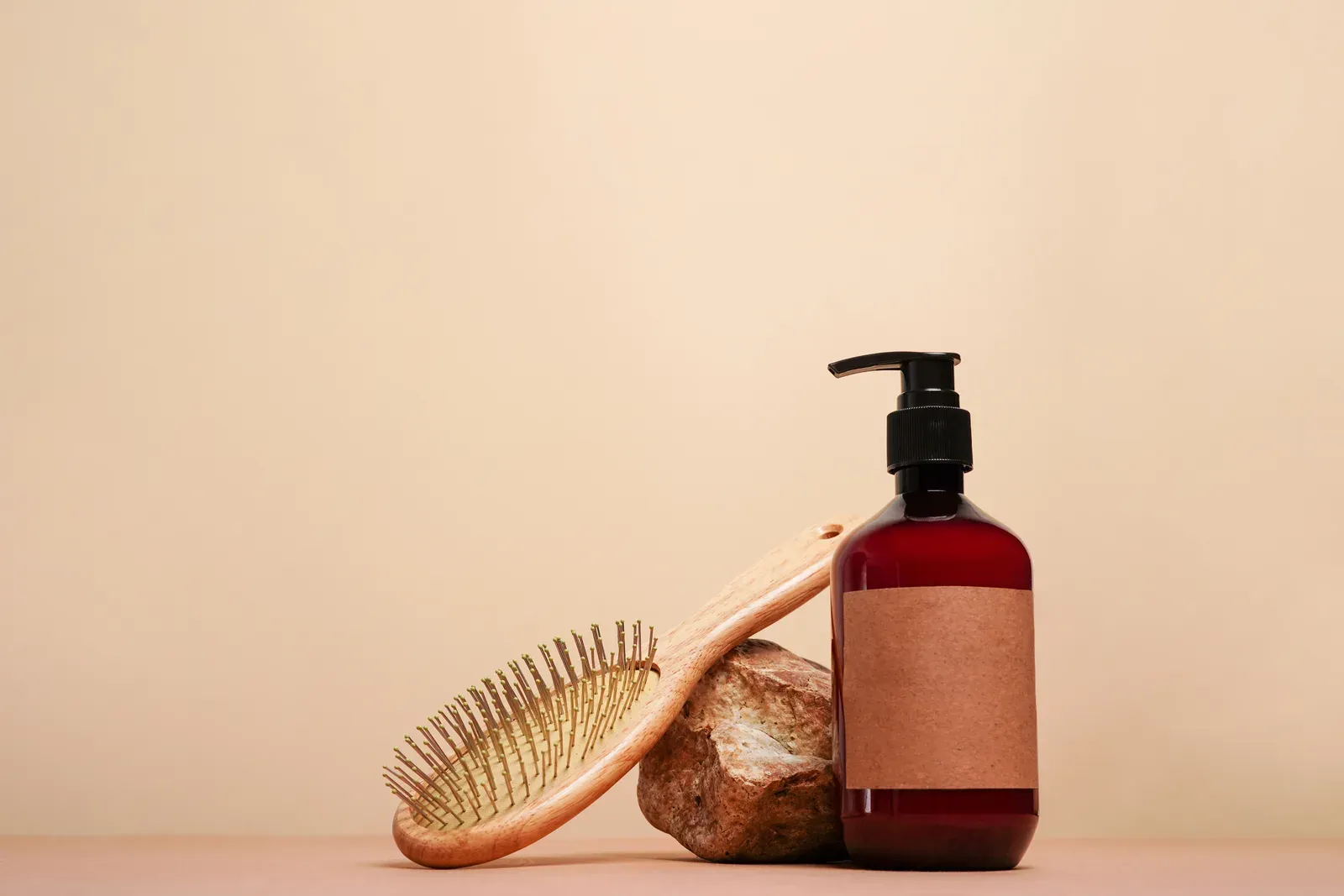
Rosemary essential oil is concentrated and should never go on the scalp undiluted. Mix it into a neutral carrier oil such as jojoba or coconut oil, as Cleveland Clinic's guidance also recommends. A common approach is a few drops of essential oil in a tablespoon (about 15 mL) of carrier; start at the weaker end.
Here is a cautious way to try it:
- Patch test first: dab a little of your diluted mix on a small area of the scalp or behind the ear and wait a day or two for any redness, itch or burning.
- If there is no reaction, part dry hair and apply a small amount of the diluted oil directly to the scalp in the thinning area.
- Massage it in with your fingertips for a minute or two.
- Leave it on for several hours or overnight, protecting your pillowcase with a towel.
- Wash it out with a gentle shampoo; you may need two lathers to remove the oil.
- Use it two or three times a week, not daily, and expect to wait months, not weeks, to judge whether anything has changed.
Scalp irritation and who should avoid it
Essential oils can irritate skin, and using too much, too often or too concentrated increases the risk. Stop if you get redness, burning, itching, flaking or bumps, and see a doctor or dermatologist if the reaction does not settle. People with eczema or very sensitive skin should be especially cautious; our guide to haircuts for a sensitive scalp covers how we cut with that in mind.
Cleveland Clinic advises avoiding rosemary oil during pregnancy or breastfeeding. If you use other scalp treatments or prescription products, check with your doctor or pharmacist before layering an essential oil on top.
See a doctor first if your hair is thinning
Thinning hair can have many causes, and several of them are treatable medical conditions. A family doctor or dermatologist can work out which one applies to you and discuss treatments with far stronger evidence than a single trial. Sudden shedding, patchy bald spots, or thinning with an itchy, scaly or painful scalp all deserve a medical opinion rather than a home remedy.
What a barber can do is make the hair you have look its best. A tighter back and sides with texture on top makes thinning less obvious; see our guides to haircuts for thin hair and haircuts for a thinning crown. If you come in with oil in your hair, that is no problem: every cut at Markcutit includes a hair wash.
Rosemary oil for hair: common questions
Can I add rosemary oil to my shampoo?
Some people add a few drops to a fragrance-free shampoo or conditioner. It is quickly rinsed off, so it is milder than leaving diluted oil on the scalp, but a patch test still makes sense.
Does rosemary oil work on a receding hairline?
The 2015 trial looked at pattern hair loss in general and was not designed to answer that. A dermatologist can tell you what is realistic for your hairline, and our page on haircuts for a receding hairline covers the styling side.
Is rosemary water the same as rosemary oil?
No. Rosemary water is a much weaker infusion, and the trial used rosemary oil, so results from one cannot be assumed for the other.
Can rosemary oil make hair fall out?
There is no good evidence that it does, but overuse can irritate the scalp, and an inflamed scalp is best checked by a doctor or dermatologist.