
Barber Answers
How to Describe a Haircut in Numbers: Sides, Top and Neckline
Short answer: Describe a haircut with three numbers and two shapes: the guard for the sides (for example a 2), where the fade or taper starts (low, mid or high), the length on top in centimetres or finger widths, the neckline shape (tapered, rounded or blocked) and the lineup style. "A 2 on the sides faded to skin, mid height, 5 cm on top, tapered neck" is enough for any barber.
The formula barbers actually listen for
Barbers mentally split a head into zones: the lower sides and back, the upper sides where the blend happens, the top, the fringe and the edges. If you give one number for each zone, there is almost nothing left to guess.
A useful order is bottom to top, the same order the cut happens in. Start with the shortest length and how high it goes, then the side length, then the top, then the edges.
- Shortest length at the bottom: skin, a 0.5, a 1, or "no fade".
- Height: low, mid or high, or "taper only at the neck and sideburns".
- Side length above the fade: a guard number such as a 2, 3 or 4.
- Top: how much to keep, in centimetres or finger widths, and whether to texturize.
- Edges: neckline shape and how sharp you want the front lineup.
Sides: guard numbers are the shared language
For the sides, the guard number is the clearest thing you can say. Lower numbers are shorter: a 1 leaves about 3 mm, a 2 about 6 mm, a 3 about 10 mm, a 4 about 13 mm. Our full clipper guard numbers chart lists every size and explains the lever.
If you get a fade, the number you give is usually the length where the fade ends at the top of the sides. "Skin to a 3" means the fade starts at skin and blends up into 10 mm. If you do not know your number, say what you had last time and whether you want it shorter or longer.
Top: centimetres or finger widths
On top, length is easiest to describe as what stays, not what comes off. "Leave 5 cm" is clearer than "take an inch off", because the second depends on how long your hair is right now.
Finger widths work well in the chair: the barber lifts the hair between two fingers and cuts above them. One finger is roughly 1.5 to 2 cm, two fingers about 3 to 4 cm. Ask "leave two fingers on top" and you will get something close to a textured crop length. Longer styles like a quiff usually keep 7 to 10 cm at the front.
- 2 to 3 cm: short crop, Caesar, crew cut top.
- 4 to 6 cm: textured crop, short side part, messy fringe.
- 7 to 10 cm: quiff, pompadour, slick back, longer comb-over.
- 12 cm and up: curtains, flow, tie-back lengths.
Neckline and edges: the shapes with no numbers
Some choices are shapes rather than numbers, and they change how the cut grows out. A tapered neckline fades into the skin and grows out softly; a blocked neckline is a straight horizontal line that looks sharp but shows regrowth sooner; a rounded neckline sits between the two. We compare them in tapered vs blocked neckline.
For the front, say whether you want a sharp, squared lineup or a natural, softer edge, and always add that you do not want the hairline pushed back. Sideburns can be described by where they end: mid-ear, top of the ear, or faded into the beard.
Turning a photo into instructions
A photo is the best starting point, and you can translate it yourself in about a minute. Look at the photo and estimate each zone using the formula above, then say it out loud along with showing the picture.
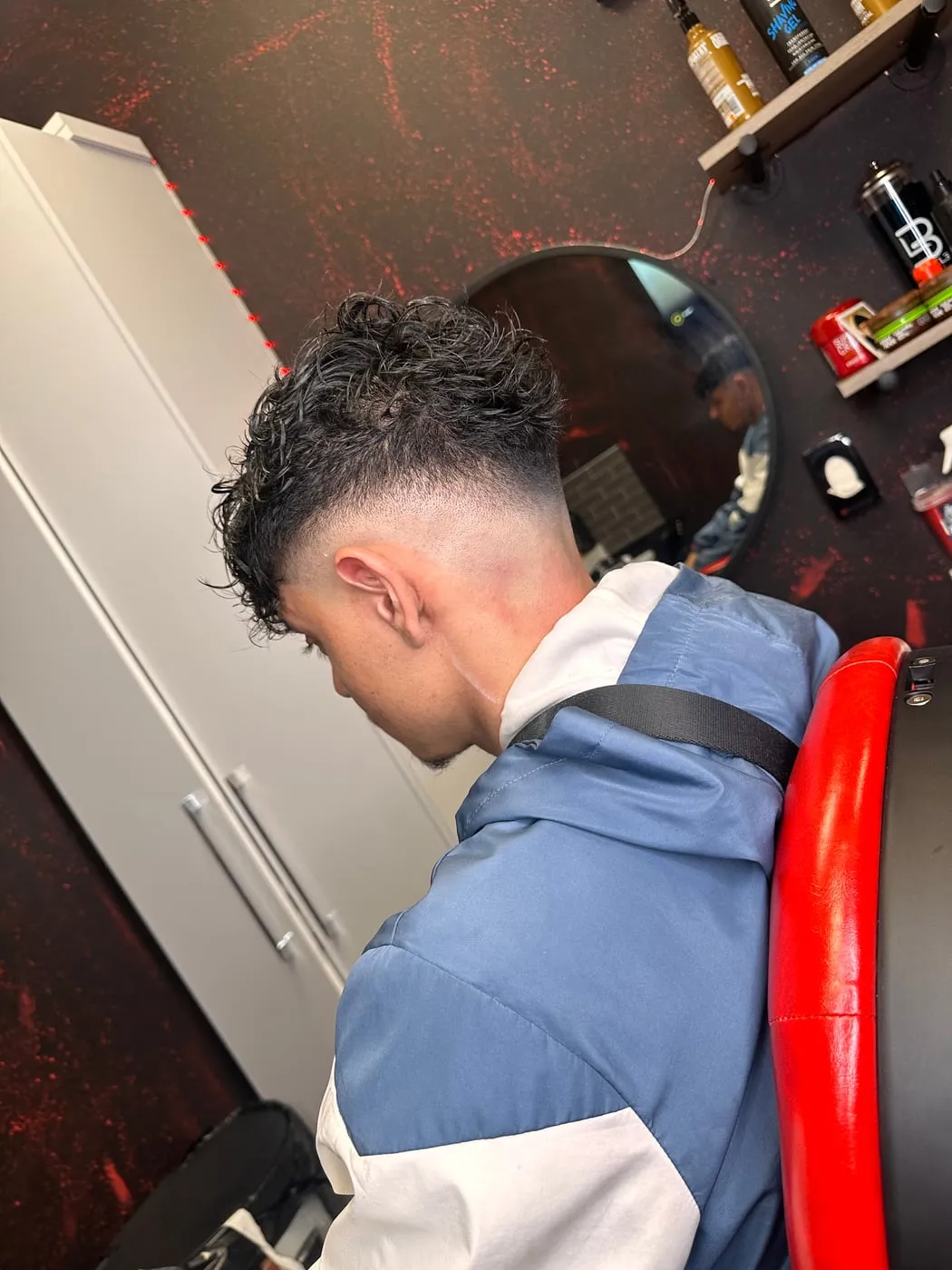
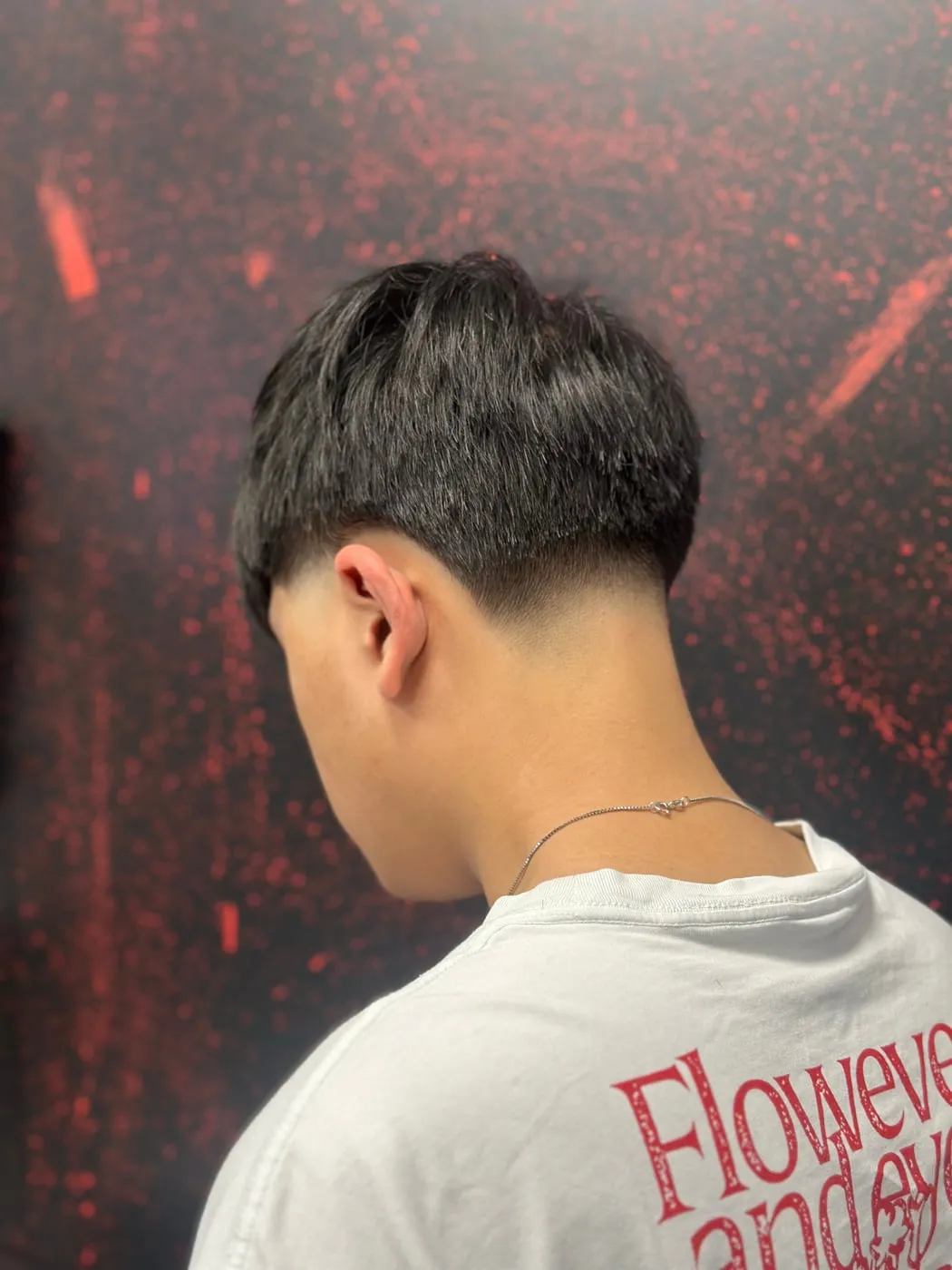
Here is a worked example. The photo shows a crop with skin at the bottom, the blend ending around the temple, short but not bare sides, and a messy fringe just above the eyebrows. Translated: "Mid skin fade, blending into a 2, about 5 cm on top with texture, fringe left long enough to reach my eyebrows, tapered neck, natural lineup."
Ask your barber to check the photo against your hair. A cut photographed on thick, dark hair will look softer on fine or light hair, and they may adjust a number to match the look rather than the literal lengths. Our journal post on what to tell your barber has more example phrases.
Save your numbers for next time
Once you get a cut you like, write down the numbers before you forget. At the end of the appointment, ask your barber what they used on the sides and how much they left on top, then save it in your phone next to a photo of the finished cut.
That note makes every future visit faster, and it helps if you ever see a different barber. At Markcutit, the consultation at the start of each Haircut Only is where we confirm those numbers with you; you can book on Booksy and bring your notes.
How to describe a haircut in numbers: common questions
Is it better to say inches or centimetres?
Either works in a Canadian shop, and most barbers switch easily. Guard numbers are universal, so use them for the sides and whichever unit you know for the top.
What if my barber uses different guard sizes?
Brands vary slightly, so a 2 at one shop may be a touch longer or shorter at another. Describe the look as well as the number, and check in the mirror after the first pass.
How do I describe a taper in numbers?
Give the shortest length at the neck and sideburns, for example "taper to a 1 at the nape", and the length everywhere else. See our taper fades service for examples.