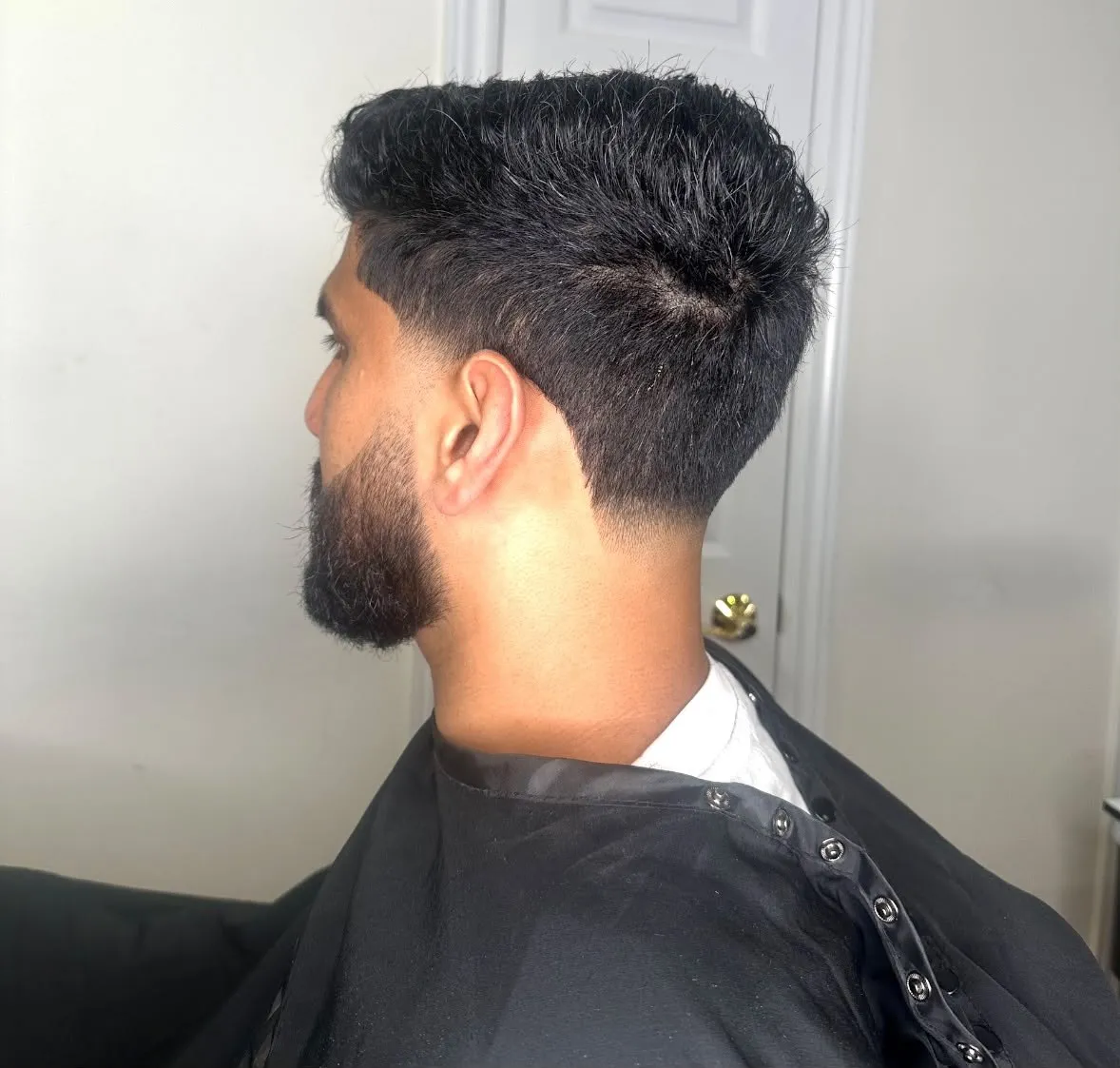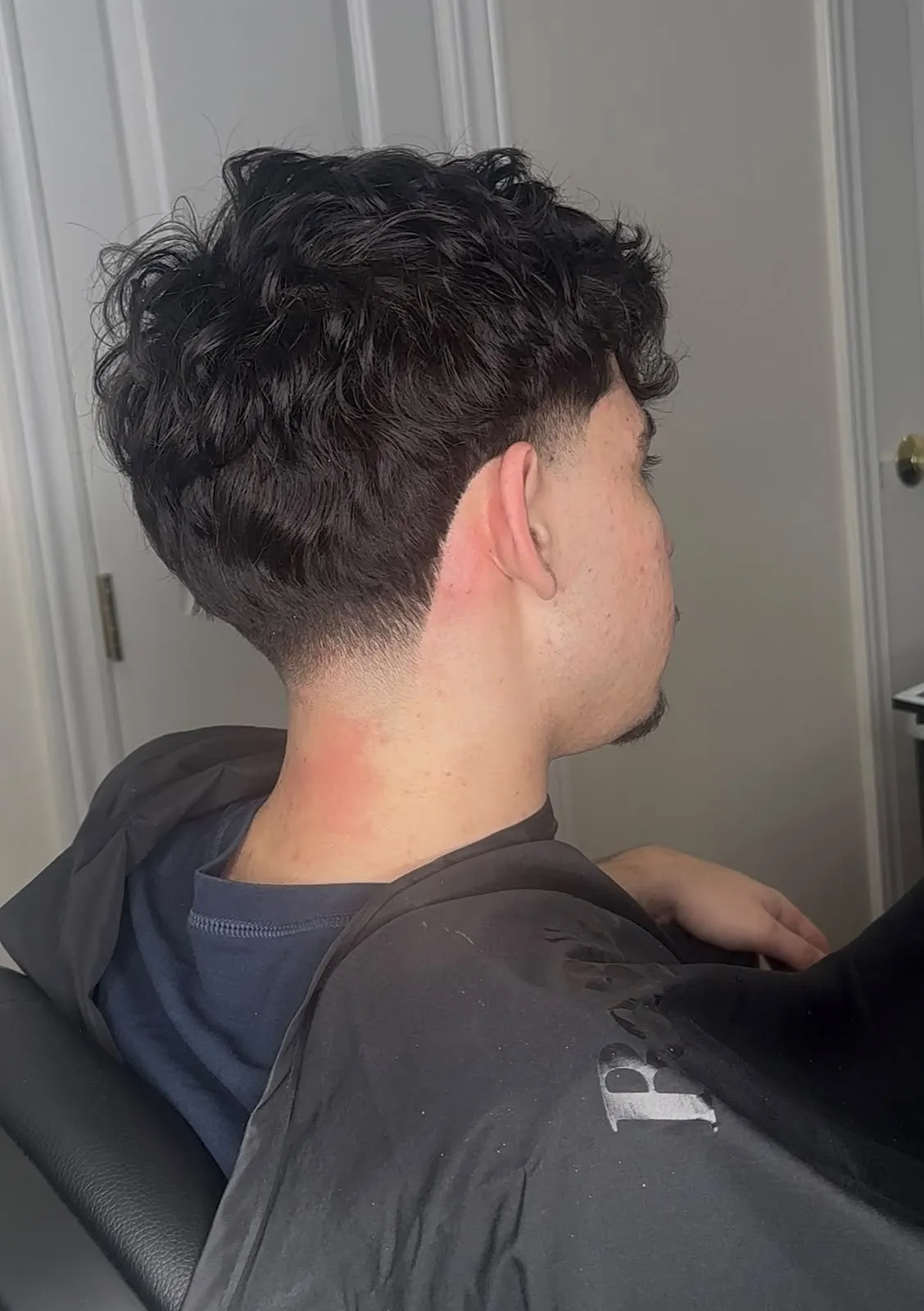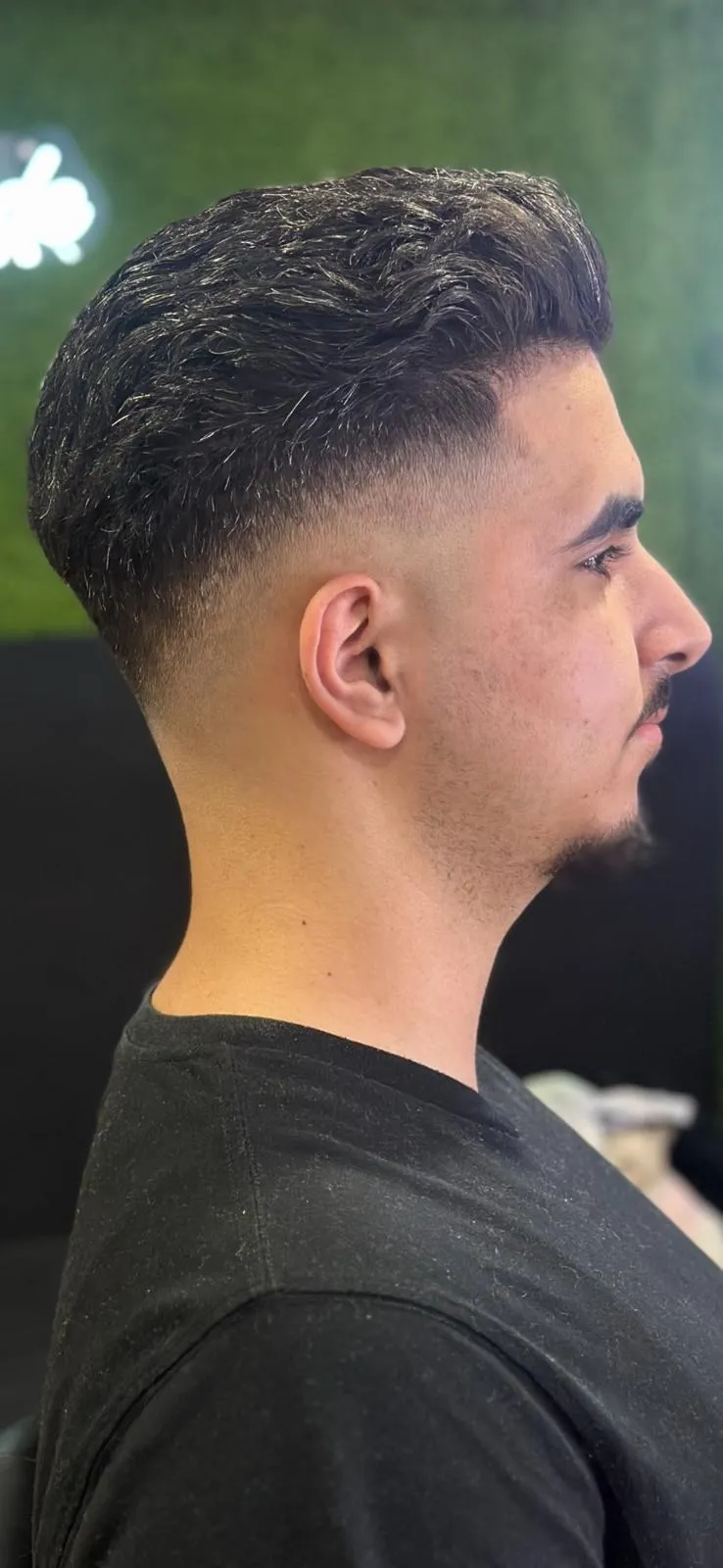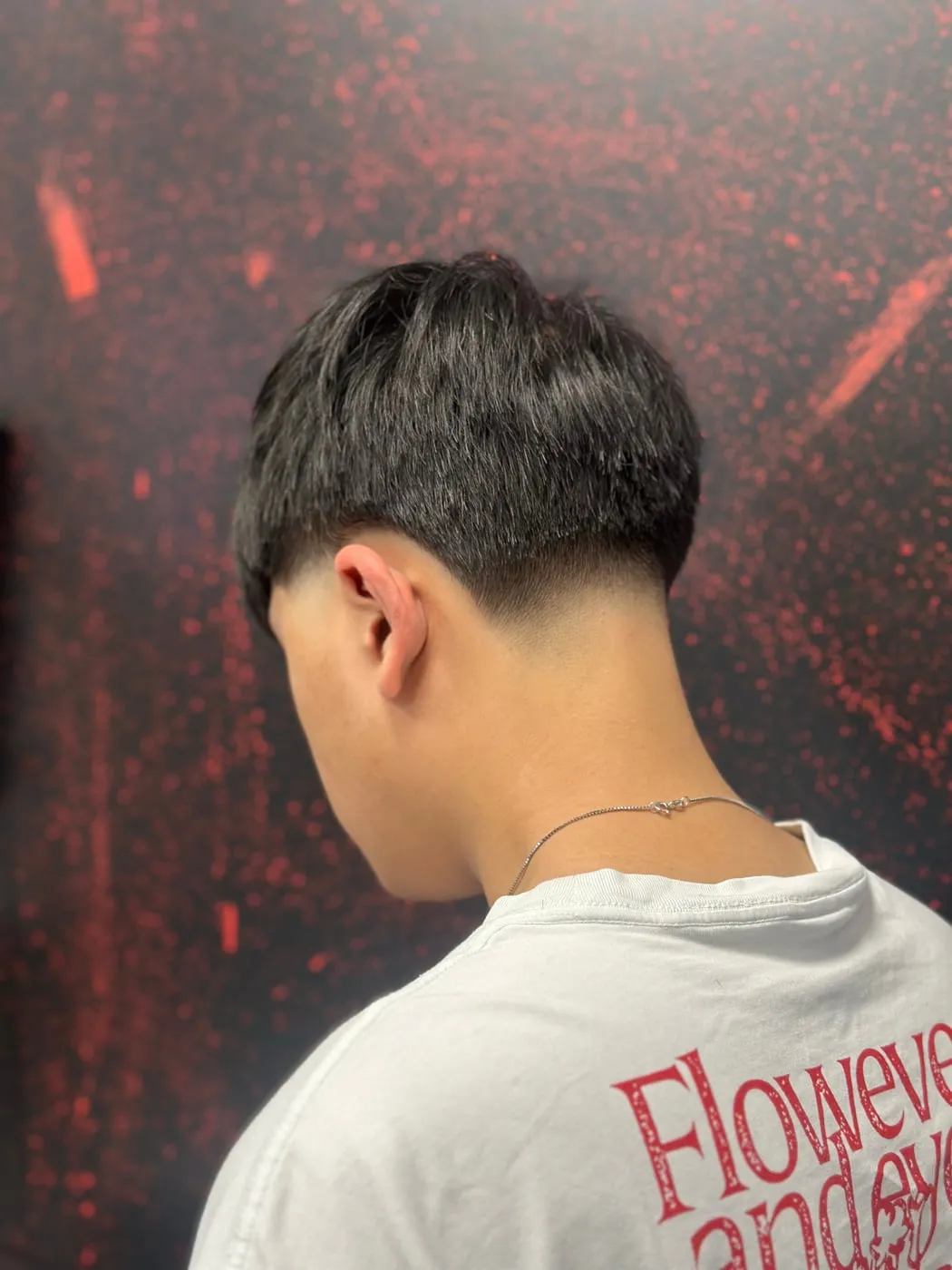

Haircut Styles
Taper for Locs: Keeping the Edges Clean Between Retwists
Short answer: A taper for locs shortens and cleans the hair at the sideburns, around the ears and at the nape, so the outline stays sharp while the locs keep all their length. Your barber maintains the taper and lineup every two to four weeks, and your loctician handles retwists and loc maintenance separately. The locs are tied up and protected during the cut so no loc is caught by the clippers.
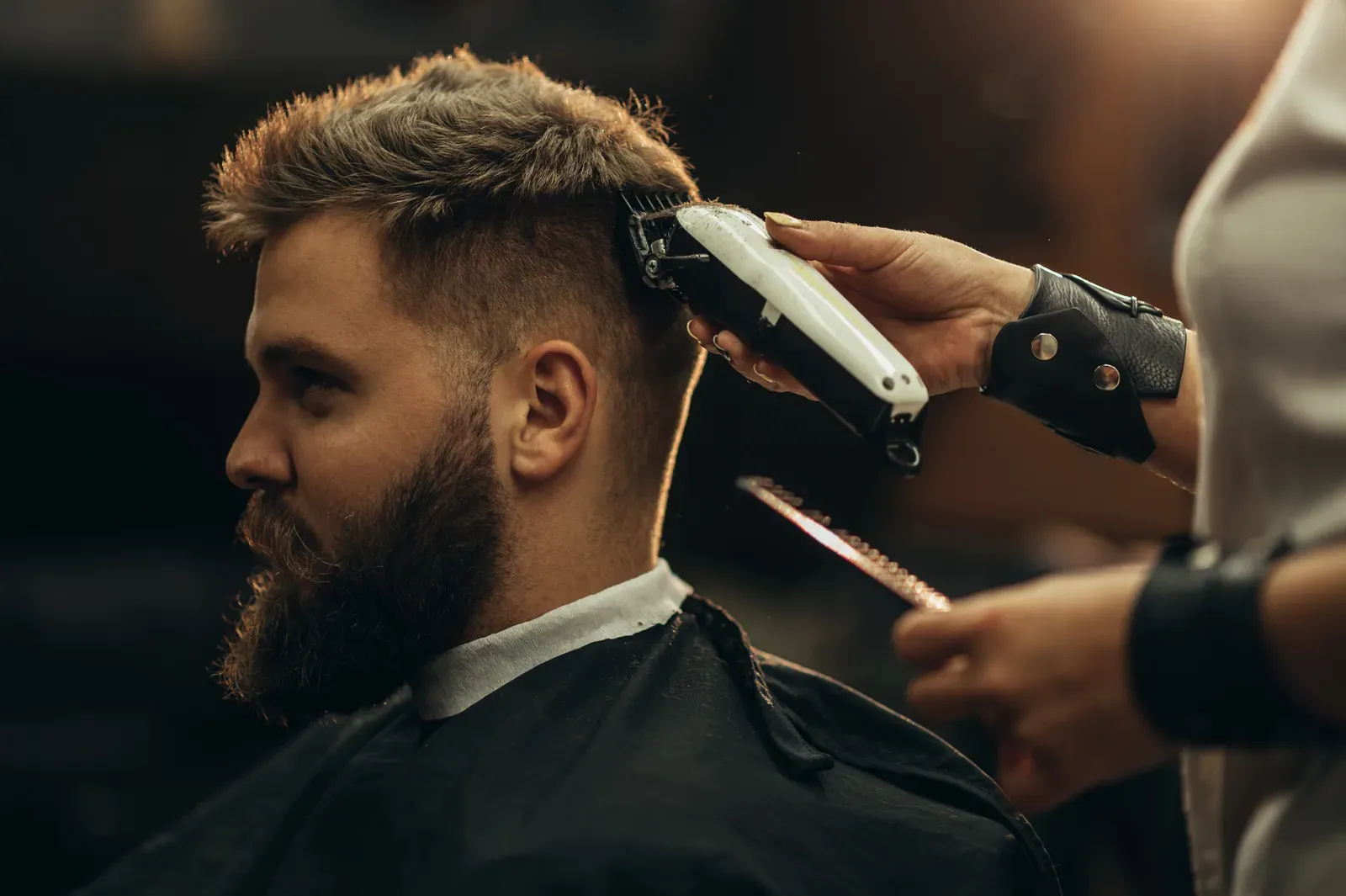
Where the barber's job ends and the loctician's begins
We work on the short hair around the locs, never on the locs themselves. That means the taper at the sides and back, the lineup along the forehead and temples, and the neckline. We do not retwist, interlock, repair or start locs; that is specialist work for a loctician.
The two schedules rarely line up. Retwists are often every four to eight weeks, while a taper looks crisp for two or three. Many people book a barber visit a day or two after a retwist so everything is fresh at the same time, then a quick taper refresh halfway to the next one.
Choosing how high the taper goes
The taper height depends on how your locs are parted and how you wear them. Locs worn down need a taper that stays under the lowest locs, so the short hair does not peek out as a shelf. Locs worn up in a bun or ponytail can take a higher taper, even a mid fade, because the sides are fully visible.
If you are thinking of going higher, look at the parting grid first. A taper that cuts through the bottom row of parts means those locs lose their base, so we plan the line one row below.
- Low taper: sideburns and nape only, best for locs worn down.
- Temple taper: adds a clean curve at the temples, subtle and sharp.
- Mid taper or fade: for locs worn up, where the sides are on show.
Neckline options under locs
The neckline shows most when locs are tied up, so it is worth choosing deliberately. A tapered neckline fades the nape hair out gradually and grows out softly. A blocked or squared neckline is a straight edge; it looks sharp for a week and then shows regrowth faster.
A rounded neckline sits between the two. For more on the trade-off, see our comparison of tapered vs blocked necklines; if you only want the nape tidy, a neck taper is the minimal version.
| Neckline | Look | Grows out |
|---|---|---|
| Tapered | Soft, natural fade into skin | Gracefully, 3 to 4 weeks |
| Rounded | Clean curved edge | Moderately, 2 to 3 weeks |
| Blocked | Straight, sharp line | Quickly, 1 to 2 weeks |
How we protect locs during the cut
Cut hair trapped in locs can work its way inside and form lint build-up, so we take a moment at the end to shake and brush out the base of the locs.
- Before the cape goes on, we gather the locs up and away from the work area with a soft tie or clip, never a tight rubber band.
- We check the parting grid so we know where the first row of locs starts and keep the clippers below it.
- Loose locs near the ears are held back by hand while we taper around them.
- Clipper and detailer work runs downward and away from the locs to avoid snagging.
- After the razor lineup, loose clippings are brushed out of the locs and neck so they do not get trapped in the loc.
Keeping the edges healthy
Locs pulled tight into a bun or ponytail every day put tension on the temples, the same area we line up. Keep ties loose and vary the style; if the hairline at the temples starts thinning, ease off and see a doctor or dermatologist. A lineup should follow your hairline, never cut a new one higher to hide thinning. Our page on whether barbers should push back a hairline explains why.
Taper for locs: common questions
Can I get a fade with locs?
Yes, especially if you wear them up. A mid or high fade works when the locs are started above the fade line, but it has to be planned with your parts, not cut through them.
Do you retwist locs at Markcutit?
No. We handle the taper, fade, neckline and lineup around your locs. For retwists, starting locs or repairs, see a loctician.
Should I come in with freshly retwisted locs?
Coming in a day or two after a retwist is ideal, since the roots are neat and the parts are clear, which makes the taper line easier to place.